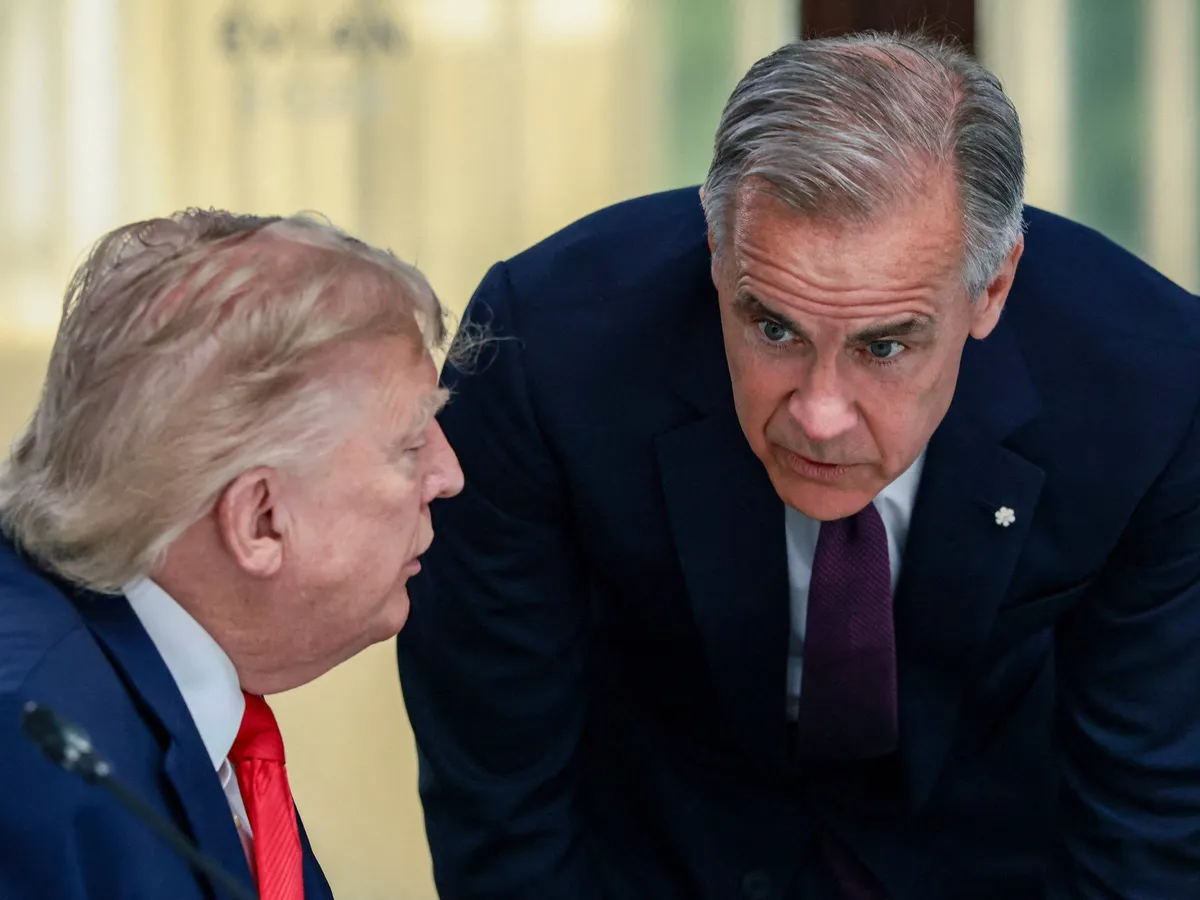
Skip to Content Subscribe My Account Manage My Subscriptions FAQ Newsletters Canada Canadian True Crime Canadian Politics Health World Israel & Middle East Financial Post NP Comment Longreads Puzzmo Diversions Comics NP News Quiz New York Times Crossword Horoscopes Modern Life Eating & Drinking Style Sponsored Play for Ontario Travel Travel Canada Travel USA Travel International Cruises Travel Essentials Culture Books Celebrity Movies Music Theatre Television Business Essentials Advice Lives Told Tails Told Shopping Buy Canadian Home Living Outdoor Living Kitchen & Dining Tech Style & Beauty Personal Care Entertainment & Hobbies Gift Guide Travel Guide Deals Savings National Post Store More Sports Hockey Baseball Basketball Football Soccer Golf Tennis Driving Vehicle Research Reviews News Gear Guide Obituaries Place an Obituary Place an In Memoriam Classifieds Place an Ad Celebrations Working Business Ads Archives Healthing Epaper Manage Print Subscription Profile Settings My Subscriptions My Offers Newsletters Customer Service FAQ Newsletters Canada World Financial Post NP Comment Longreads Puzzmo Diversions Modern Life Shopping Epaper Manage Print Subscription HomeNewsCanadaRepublicans split on Canada as Trump’s trade war escalates: pollsThree new polls offer insight as to how American voters are feeling about their neighbours to the northLast updated 6 days ago Among MAGA Republicans, 47 per cent approve of U.S. President Donald Trump's executive order to rename Lake Ontario to Lake America in the U.S. Photo by DAVID SWANSON/AFP via Getty ImagesAmericans are becoming increasingly divided on their feelings about their northern neighbours and the freshly stoked trade war, according to new polls released this week.Enjoy the latest local, national and international news.Exclusive articles by Conrad Black, Barbara Kay and others. Plus, special edition NP Platformed and First Reading newsletters and virtual events.Unlimited online access to National Post.National Post ePaper, an electronic replica of the print edition to view on any device, share and comment on.Daily puzzles including the New York Times Crossword.Support local journalism.Enjoy the latest local, national and international news.Exclusive articles by Conrad Black, Barbara Kay and others. Plus, special edition NP Platformed and First Reading newsletters and virtual events.Unlimited online access to National Post.National Post ePaper, an electronic replica of the print edition to view on any device, share and comment on.Daily puzzles including the New York Times Crossword.Support local journalism.Create an account or sign in to continue with your reading experience.Access articles from across Canada with one account.Share your thoughts and join the conversation in the comments.Enjoy additional articles per month.Get email updates from your favourite authors.Create an account or sign in to continue with your reading experience.Access articles from across Canada with one accountShare your thoughts and join the conversation in the commentsEnjoy additional articles per monthGet email updates from your favourite authorsSign In or Create an AccountorPolling conducted by YouGov for The Economist found that 38 per cent of Republican voters “now view Canada as unfriendly or an enemy, by far the highest level in the past decade” and up from 22 per cent in February polling. Only 12 per cent of Republicans felt the same way in April 2024, before U.S. President Donald Trump began his second term.Meanwhile, only eight per cent of self-identified Democrats viewed Canada in the same light, up from three per cent this February.Get a dash of perspective along with the trending news of the day in a very readable format.By signing up you consent to receive the above newsletter from Postmedia Network Inc.A welcome email is on its way. If you don't see it, please check your junk folder.The next issue of NP Posted will soon be in your inbox.We encountered an issue signing you up. Please try againOverall, a majority of Americans (net 64 per cent) describe Canada as either an ally (39 per cent) or friendly (25 per cent). Less than a quarter (net 22 per cent) now see Canada as unfriendly (19 per cent) or an enemy (three per cent) — “a new high since 2016.”YouGov also polled respondents about Trump’s renaming of Lake Ontario to Lake America in the U.S., finding most citizens (68 per cent) strongly or somewhat disapproved of the move.The 17 per cent who strongly or somewhat approved were predominantly Republicans, but Republicans more broadly were divided, with 41 per cent disapproving and 37 per cent endorsing it.“The exception is MAGA Republicans: 47 per cent approve of the renaming and 29 per cent disapprove,” YouGov wrote, “while non-MAGA Republicans disapprove by 67 per cent to 22 per cent.”A similar pattern emerged on a question regarding Canada’s trade treatment of the U.S. U.S. President Donald Trump speaks with Prime Minister Mark Carney at a working lunch with leaders of G7 and the Middle East on June 16 in Evian-les-Bains, France. Photo by Evelyn Hockstein/Pool/Getty Images filesAsked whether they felt Canada was treating the U.S. unfairly in trade, 45 per cent said no, 28 per cent said yes and the remaining 27 per cent were unsure. Republicans (49 per cent) were more likely than Democrats (11 per cent) to say Canada was being unfair.But fewer Republicans who identified as non-MAGA (33 per cent) judged Canada to be unfair, compared to 58 per cent of MAGA Republicans.Polling by Ipsos also explored Americans’ feelings on the new 50 per cent tariffs enacted by the Trump administration last month, finding more Republicans support (44 per cent) than oppose (33 per cent) the sanctions, with 22 per cent unsure.Republicans were similarly split on who was most responsible for the trade hostilities — Canada (31 per cent), the U.S. (19 per cent) or both equally (30 per cent). A fifth of respondents (20 per cent) were unsure.And when it comes to ending the trade dispute, the majority of respondents (68 per cent) said the U.S. should be willing to “make tradeoffs with Canada even if it means it doesn’t get most of what it wants.” Only a quarter of respondents (25 per cent) want team Trump to “take a tough stance with Canada and insist on getting most of what it wants.”Across political lines, while Democrat voters are overwhelmingly (88 per cent) in favour of concessions that would leave the U.S. short of its desires, Republicans were largely split on the matter — 47 per cent on the side of trade-offs and 50 per cent in support of holding firm.Ipsos also asked about the contentious Lake Ontario-Lake America issue, garnering results similar to Leger’s.More Republicans oppose (43 per cent) than support (33 per cent) the change, but 24 per cent remain unsure. Across the board, 63 per cent of Americans are against Trump’s executive order. Donald Trump’s Truth Social post about renaming Lake Ontario to Lake America. Photo by Donald Trump/Truth SocialA third poll, conducted by Abacus Data, explored “the political consequences of the trade war in the five states most likely to determine Senate control” following the upcoming U.S. midterm elections — Iowa, Michigan, Ohio, Maine and South Carolina, where 500 people were polled, respectively.It found that those “voters have not turned on Canada.”Positive impressions of Canada are highest in Maine (81 per cent), “where cross-border ties are part of daily life,” but even the low water mark was still high at 66 per cent in Ohio.Their “feelings toward the Canadian people are warmer still,” landing between a low of 74 per cent in South Carolina to 87 per cent in Michigan and 88 per cent in Maine.“Americans are drawing a line between a government dispute and a neighbouring people they continue to like,” Abacus wrote. “For Canadian readers, the audience on the other side of the border is not hostile, it is more conflicted about its own government’s policy.”Data also indicated that Trump’s own approval rating in every state is higher than approval of how he’s handled trade with Canada — even in the red state of South Carolina, where his approval reaches 46 per cent.“When one of the president’s signature economic initiatives polls behind the president himself in his strongest state, the initiative is not building his coalition. It is borrowing from it,” the pollster wrote.Most respondents also predicted the tariffs will be “mostly bad” and hurt the American economy, workers, farmers, their own states and their own households.“Across 25 combinations of measure and state, ‘mostly bad’ beats ‘mostly good’ every single time, usually by wide margins,” Abacus said.And given the chance to have the Canada-U.S. relationship return to what it was before Trump, three times as many respondents said they would prefer that to the present fracturing.“The current state of relations with Canada is not an equilibrium Americans in these states have accepted,” they wrote. “It is a condition most of them want reversed.”South Carolinans were the only ones on side with the current White House strategy, and only by two points (33 to 35 per cent), “a policy defended likely out of loyalty and a weaker bond with Canada.”The overall sample of YouGov’s poll, conducted among 1,592 U.S. citizens between Aug. 28-31, has a margin of error of roughly 3.5 per cent, as did Ipsos’ poll of 1,023 people, conducted Aug. 28-30.Abacus’s survey of 2,500 voters was conducted Aug. 26-28. The overall sample carries a margin of error of 4.4 per cent, while the margin for a probability sample of 500 is two per cent.Our website is the place for the latest breaking news, exclusive scoops, longreads and provocative commentary. Please bookmark nationalpost.com and sign up for our newsletters here. Join the Conversation This website uses cookies to personalize your content (including ads), and allows us to analyze our traffic. Read more about cookies here. By continuing to use our site, you agree to our Terms of Use and Privacy Policy.
Republicans split on Canada as Trump’s trade war escalates: polls
While polling data shows some Americans. particularly Republicans, are turning on Canada, most still view the northern neighbours positively.
1,594 words~7 min read