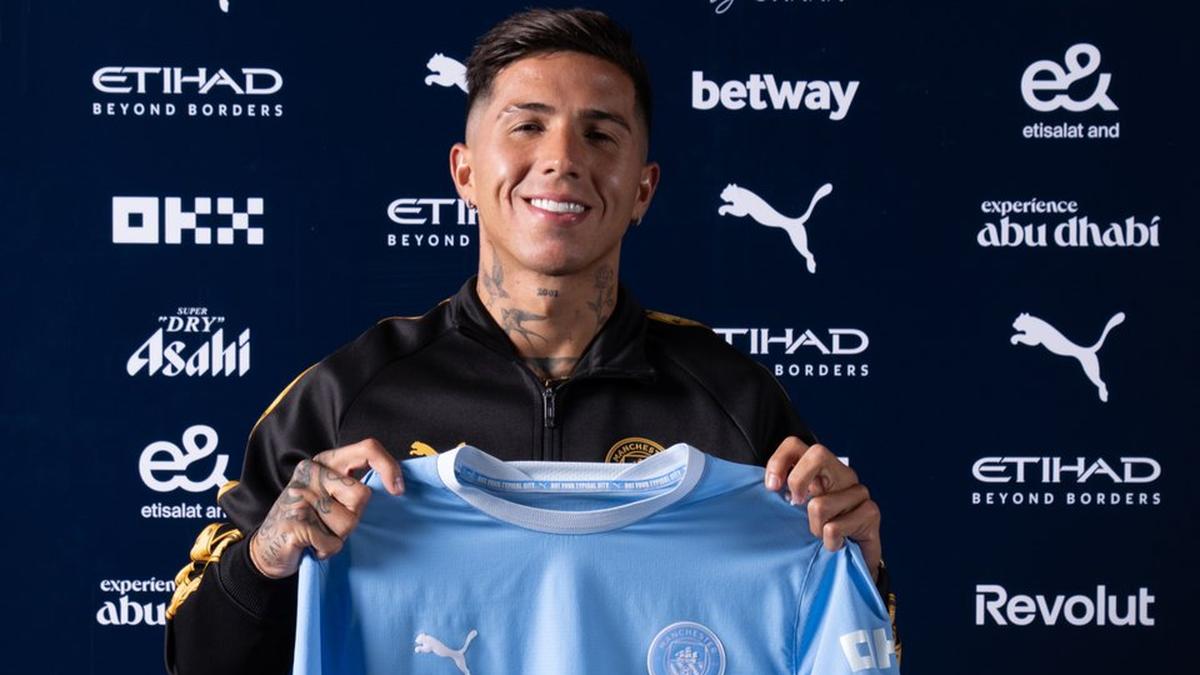
The biggest (read costliest) deadline-day move came as Argentina midfielder Enzo Fernandez swapped Chelsea’s royal blue for Manchester City’s lighter shade.
| Photo Credit: X@ManCity
Every deadline day is an opportunity to remember Parkinson’s Law.C. Northcote Parkinson’s 1955 satirical observation that work expands to fill the time available for its completion was validated once again as English clubs squeezed every last second of the clock before the Premier League summer transfer window closed at 3.30 a.m. IST on Wednesday.The biggest (read costliest) deadline-day move came as Argentina midfielder Enzo Fernandez swapped Chelsea’s royal blue for Manchester City’s lighter shade.The £125 million deal came after the London outfit had reportedly set an August 14 deadline for the player it valued at £120 million. In the end, Man City got its man, and Chelsea pocketed a tidy profit on a player it bought for £107 million in 2023.Chain reaction Waiting until the very last moment is risky business, especially when the whole ecosystem relies on a delicate chain reaction.A player’s transfer from one badge to another doesn’t just affect the two clubs involved. The ripple effect of that one signature may disrupt or open avenues for other teams and players in the ecosystem, setting off or cancelling a slew of incomings and outgoings by virtue of the original transfer.In other words, Ray Bradbury’s Butterfly Effect, too, assumes utmost significance in the world of football. Ask Chelsea, and it will tell you how it came close to signing Monaco’s Lamine Camara as Fernandez’s replacement, only for the French club to renege on the deal because of striker Folarin Balogun’s proposed departure to Everton bringing in enough cash to the club. In a late twist, Balogun chose not to move to Merseyside, a decision that left all three of Chelsea, Monaco and Everton unhappy and blindsided!