When members of Cornell University’s 2016 cohort of biomedical engineering Master of Engineering (M.Eng.) alumni returned to campus for their 10-year reunion, they gathered alongside the next generation of students at the program’s annual M.Eng. Industry Day – a fitting setting for a group whose careers have taken them in different directions, and a reminder that there is no single career path after a Cornell biomedical engineering M.Eng.Over the past decade, program graduates have become leaders in medical devices and pharmaceuticals, founded companies, moved into consulting, robotics, bioinformatics, project management and sales, and advanced across startups, multinational corporations and research organizations.
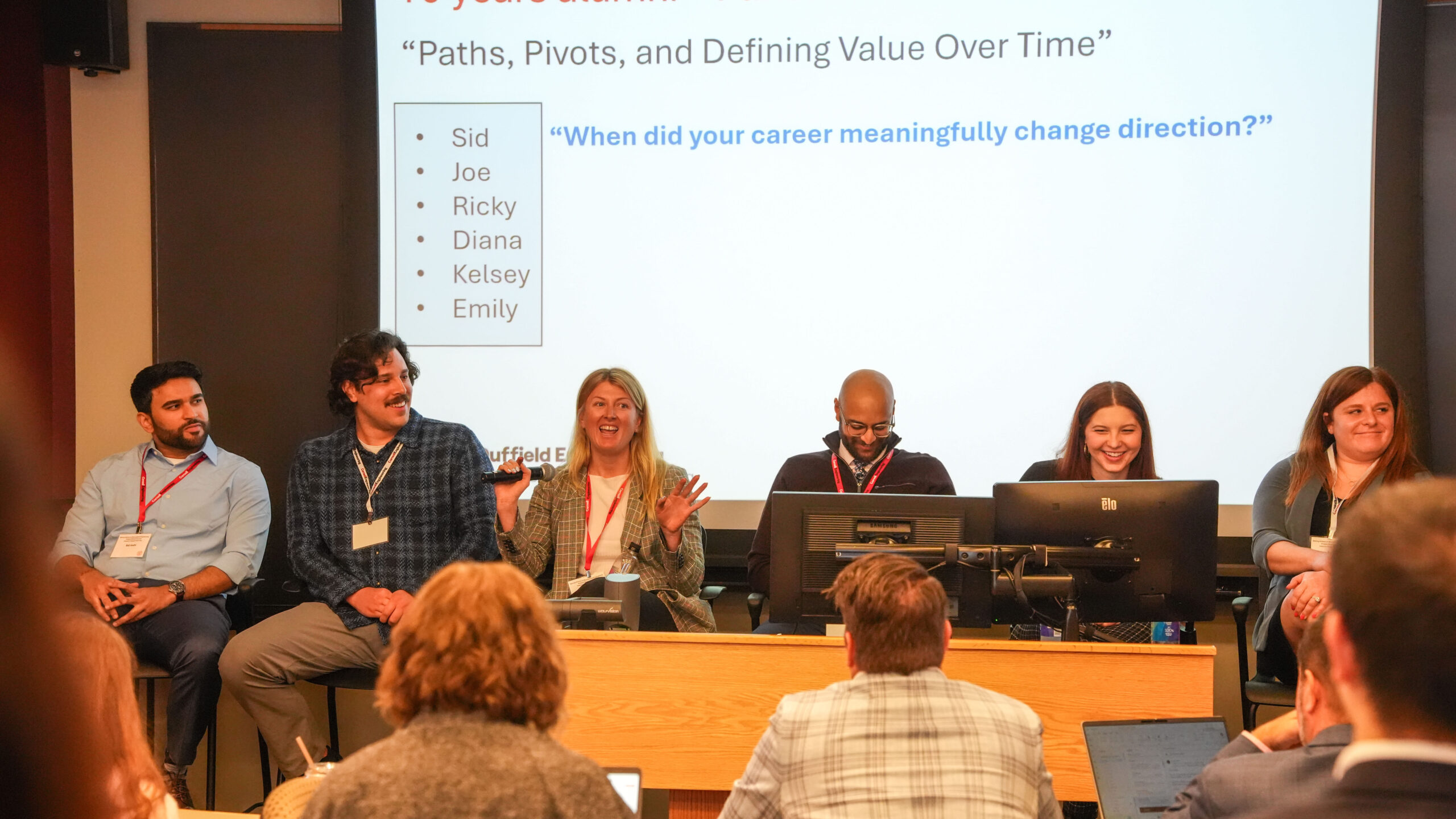
Biomedical engineering M.Eng. alumni present as part of an Industry Day panel.
The reunion gave graduating students a firsthand look at where a Cornell biomedical engineering degree can lead over the course of a decade. The alumni served on career panels, mentored current students, connected with industry partners and watched students present their capstone projects that define the culmination of the M.Eng. experience, while also reconnecting with classmates who remain an important part of their professional and personal lives.“This program is different,” said Rikhabh “Ricky” Jain, M.Eng. ’16, now an associate director of external manufacturing operations at Merck. “It’s great for making connections.”Jain recalled receiving his first job opportunity after meeting a Merck representative who visited campus during the program. Ten years later, he is still with the company, having advanced through multiple roles in manufacturing and operations leadership.Jain wasn’t alone. Many alumni described careers shaped less by carefully mapped plans than by recognizing opportunities as they emerged.Diana Rudz, M.Eng. ’16, is one example. Now a product development manager at Medtronic, she said her career did not unfold the way she originally expected. After starting in manufacturing engineering, she navigated company acquisitions, facility closures and changing roles before eventually moving into product development leadership.“The goal you start with isn’t always the one you end up pursuing,” said Rudz. “You might achieve that initial goal and realize, ‘Based on that experience, I'm going to change direction.’”As careers evolved, so did the value of the relationships alumni built during their year at Cornell.“We’ve all stayed in contact throughout our careers,” Rudz said. “People got jobs or interview recommendations by staying in touch with each other, and that’s a really valuable part of this program.”Gaurang Dimri, M.Eng. ’16, now working in medical device and database applications after roles in surgical robotics and critical care, remembered classmates celebrating with him after he became a U.S. citizen during the program.“They held a big America party for me,” Dimri said during the panel. “I look back on that memory as one of the most important of my life.”