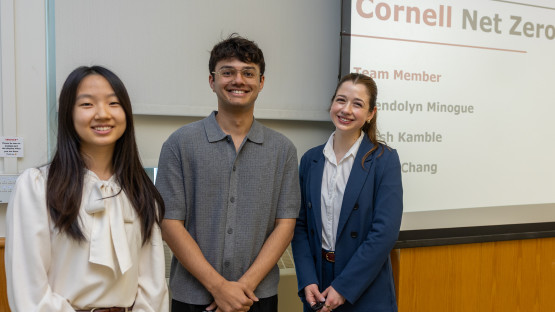
When Gwendolyn Minogue arrived at Cornell University, she didn’t fit the typical mold of a chemical engineering student.
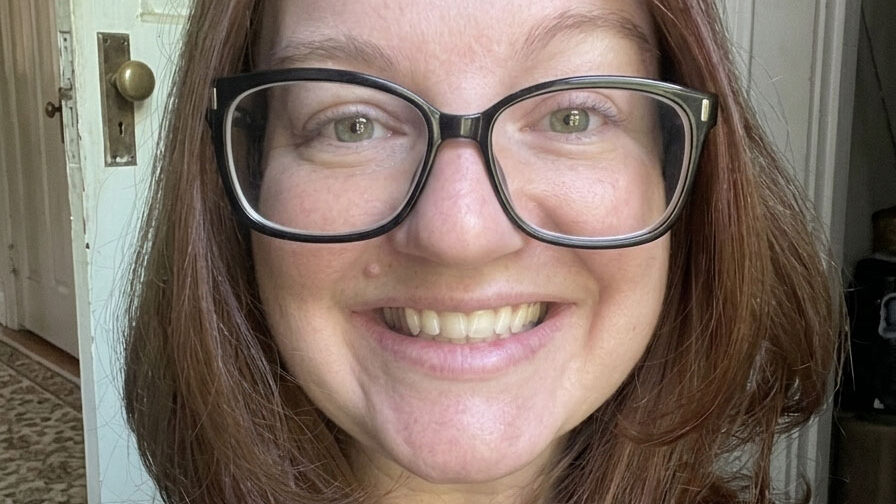
Gwendolyn Minogue
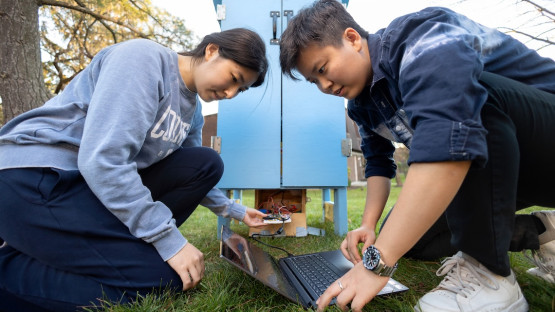
A graduate of College of the Holy Cross, Minogue double-majored in chemistry and political science, exploring a wide range of interests while still uncertain about her long-term path. What she did know was that she wanted an interdisciplinary experience, one that would allow her to combine technical problem-solving with broader perspectives.“I wasn’t really sure what I wanted to do,” she said. “I just knew I didn’t want to put myself in a box.”At Cornell, she found exactly that flexibility in the Master of Engineering (M.Eng.) program in chemical engineering. Over the course of a year, Minogue not only deepened her technical knowledge but also ventured into entirely new areas, including data science, artificial intelligence and finance.Tackling sustainability through real-world engineeringA centerpiece of the M.Eng. experience is the capstone project, where students work in teams to solve applied engineering challenges. For Minogue, that meant contributing to Cornell’s ambitious campus sustainability goals.Her team’s project, part of the Cornell Net Zero initiative, explored alternative methods to meet peak heating demand using renewable resources. The group investigated how campus waste streams, including food waste, manure and used cooking oil, could be converted into renewable natural gas through anaerobic digestion.“We were trying to find ways to use waste that already exists on campus to create energy,” Minogue said. “It really changed how I look at everything – from dining halls to energy systems.”The project required both creativity and technical rigor. With limited available data, the team developed a Python-based model that estimates food waste by pulling nutritional data from campus menus in real time.“That was one of the biggest challenges,” she said. “There wasn’t a consistent way to measure food waste, so we had to create our own system.”Despite entering the program without prior coding experience, Minogue quickly adapted. She credits the program’s supportive structure, and responsible use of AI tools, for helping her gain confidence in programming and data analysis.