os platforms
30 years on, it's still alpha, but 0.4.16 brings plenty of bug fixes and quality-of-life improvements - just in time for Windows XP's 25th anniversary
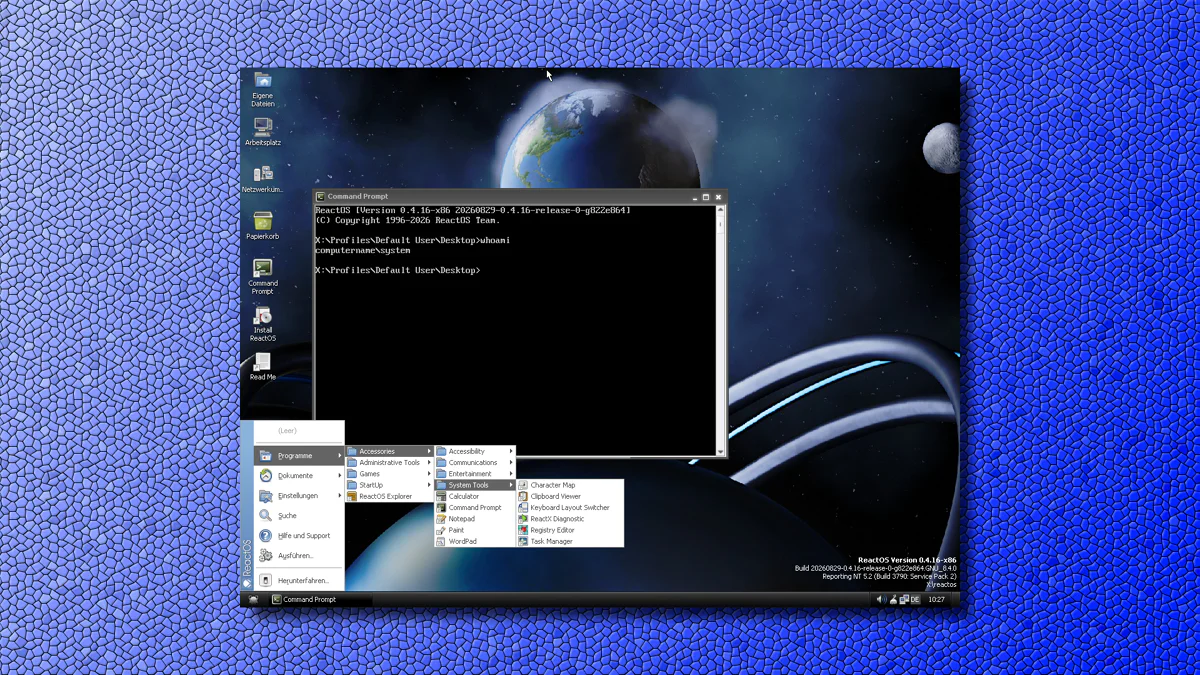
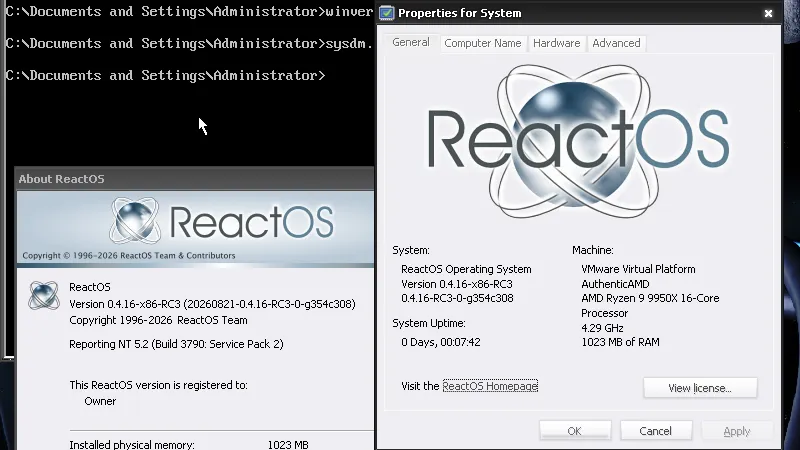
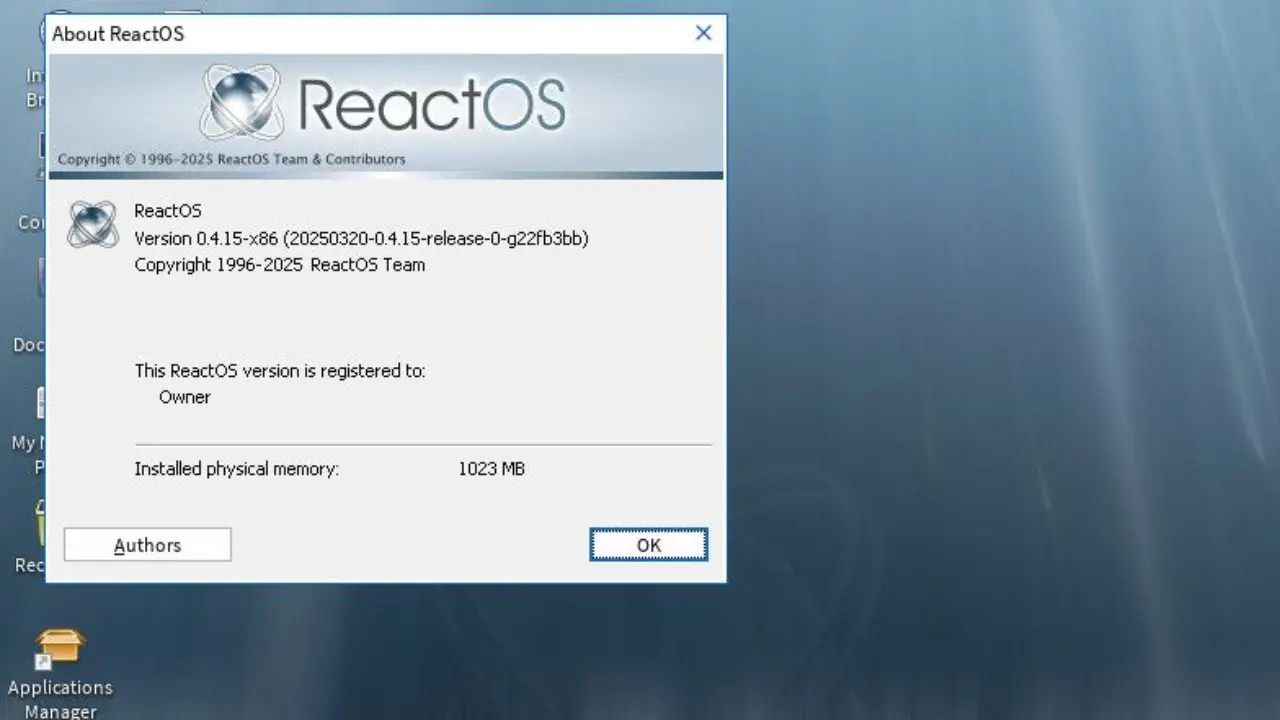
If you're pining away for the days when Windows ran well on 64 MB of RAM, there's a new version of open source NT clone ReactOS promising easier installation and fewer bugs.ReactOS 0.4.16 was announced over the weekend after a year and a half of development, and its list of improvements is substantial. For those unfamiliar with the ReactOS project, it’s a long-running effort (it spun up in 1996) to create an open source equivalent of Windows NT, with the aim of running Windows applications and drivers. If you miss the halcyon days of Windows XP that began a quarter of a century ago, in other words, it's the project for you.
Given that it’s an open source project driven by a group of volunteers who’ve had to dodge accusations that they’re just ripping off old copies of a research kernel, compatibility, ease of installation, and stability have all been sore spots for ReactOS. A number of essential elements have been fixed and improved as of 0.4.16, per the team.
“We’re excited to showcase the improvements we’ve made,” the ReactOS builders said in their release notes, with “a unified bootcd and livecd image; video, audio, networking, and storage stack improvements; a new installation type; and third-party code syncs” all mentioned as having been added.The unified bootcd and livecd mean a single disc can now be used to boot into a temporary version of ReactOS to have a poke around, and to install the OS itself. A graphical installer is also included in the new unified disk image, meaning that there’s no longer a need to navigate a truly old-fashioned interface to get up and running. Fixed OS functionsRunning old-fashioned software (or modern iterations of it) on newer hardware is bound to be a complicated mess, and that’s true for ReactOS.Video drivers from “all major … vendors” have been causing issues in the experimental OS for years, the team notes, but apparently one source of the problem has finally been identified and addressed in 0.4.16. The kernel’s system page table entries, it turns out, were filling up when loading third-party graphics drivers because they eat up more memory than most others, so the memory manager layout was modified to increase the number of system PTEs. A different problem with blank OpenGL windows on AMD video drivers was resolved separately. Both improvements “fixed many edge case bugs in our win32k.sys driver,” the ReactOS team noted. A new HD audio bus driver was brought in to replace an older implementation that was never quite finished, addressing frequent bugchecks when attempting to install HD audio controller drivers. As for storage, the 2009 implementation of UniATA gave ReactOS the ability to recognize disk partitions over 8 GB, but the aging driver has since begun to cause slow boot times and load failures. It’s been replaced with a new ATA driver that also allows ReactOS to boot in more environments, including first-generation Hyper-V VMs. A disk cleanup utility was also added.