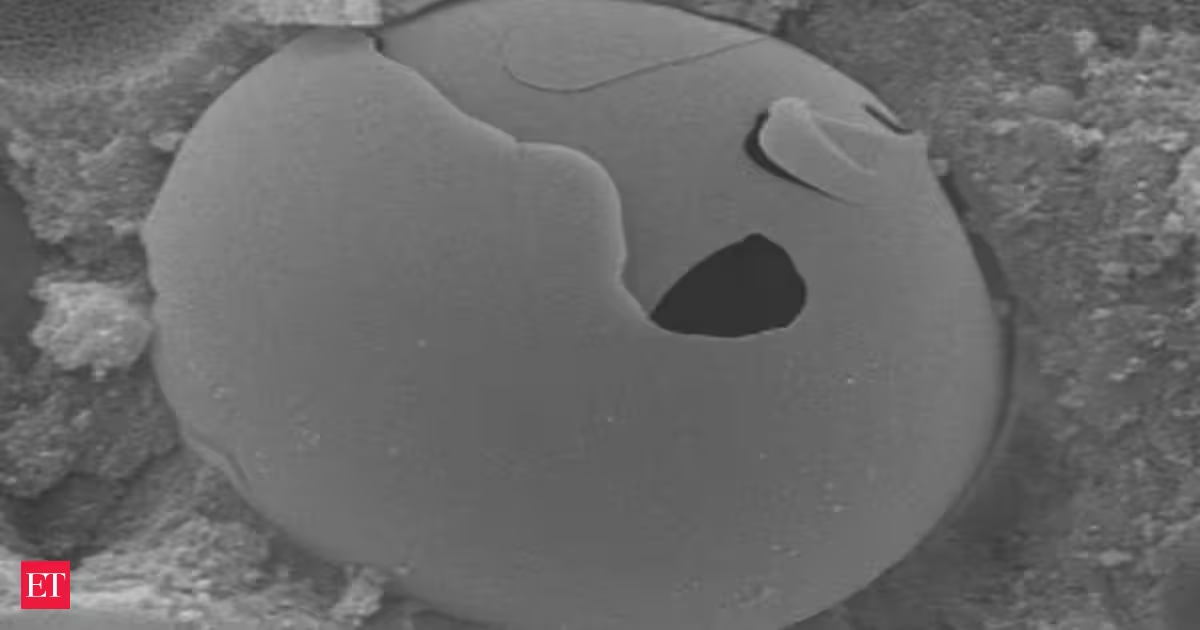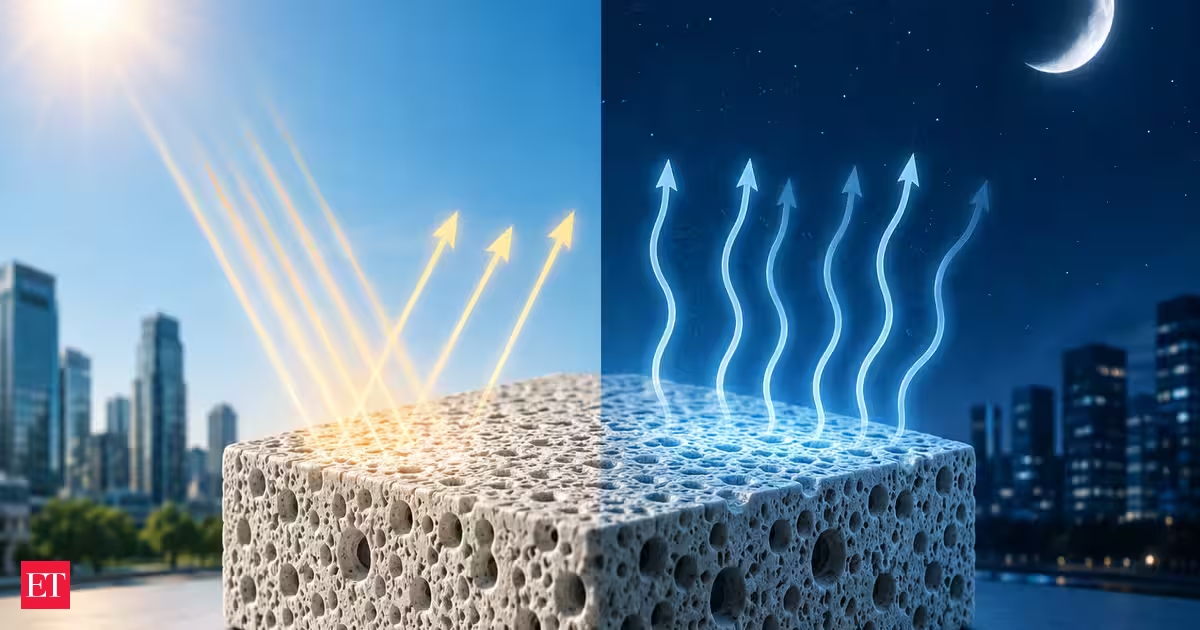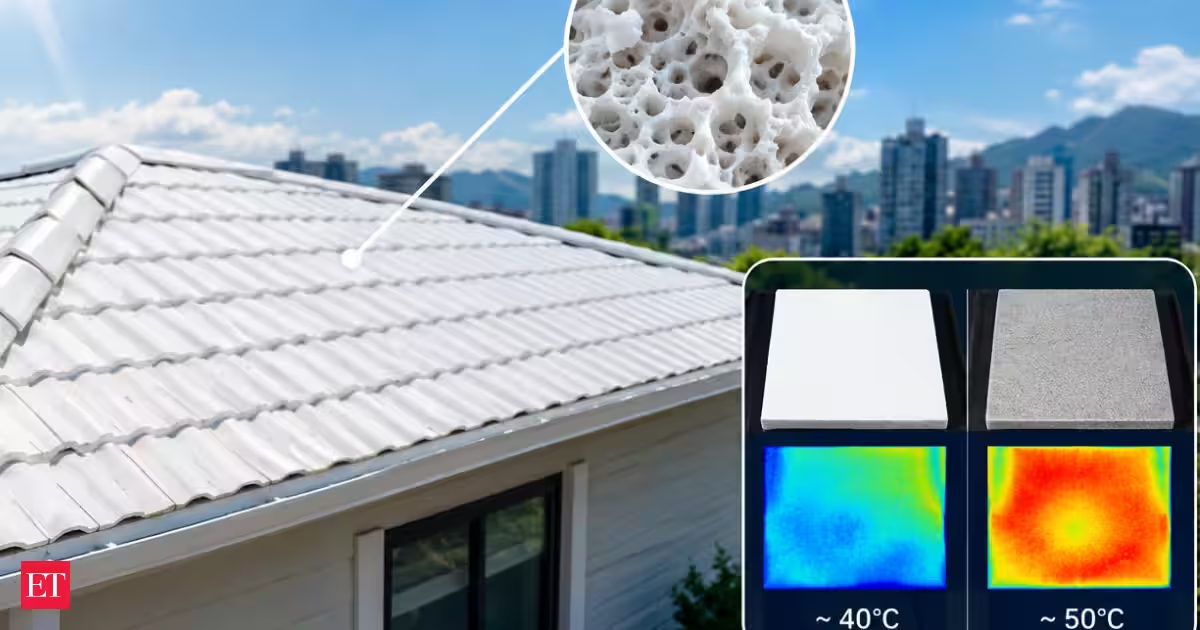
Summer cooling costs are going up. Roofs that soak up heat only make things worse. Researchers at City University of Hong Kong, working with a team at Hong Kong Polytechnic University, have developed a tile that reflects 99.6% of sunlight. This is an exceptionally high reflectivity for a passive material. The results were published in the peer-reviewed journal Science in November 2023, in a paper titled "Hierarchically structured passive radiative cooling ceramic with high solar reflectivity." Professor Edwin Chi-Yan Tso and PhD student Kaixin Lin led the work. This is not a paint or a coating you can apply. It's a tile built from the ground up at the microscopic level, designed to bounce nearly all sunlight back into the sky instead of letting it heat buildings.Why an insect inspired this cooling materialThe design gets ideas from the Cyphochilus beetle, which has some of the most reflective surfaces in the world. The beetle's scales have a random pattern of very small parts that spread light in every direction instead of absorbing it. The CityU group achieved this result using alumina, a common ceramic, by shaping it into a spongy structure that scatters almost all sunlight. The material reflects 99.6% of light. It also releases heat very well in the middle of the infrared range, with a heat release of 96.5%, according to the CityU research notice. The tile reflects most of the heat that comes in and sheds the small amount it absorbs, preventing heat from building up.The ceramic material, engineered for high solar reflectivity, uses biomimicry to copy the natural bio-whiteness of the Cyphochilus beetle. Image Credit: City University of Hong KongHow much cooler is it than a regular white tileThis is where the research becomes especially relevant for households facing higher summer bills. A patent application (US12152843B2) linked to the technology, made public by the US Patent and Trademark Office, includes details from field tests comparing the cooling ceramic with ceramic roof tiles. In testing, the material worked without any color coating and showed a temperature drop of about 5 degrees Celsius compared to standard tiles. When color was added using a separate thin layer over the reflective base, since a pigment applied directly to the surface would absorb some of the visible light the base is designed to reflect, red, yellow, and green versions still stayed between 3.1 and 4.9 degrees Celsius cooler than regular tiles of the same color. A separate, larger-scale rooftop test measuring the whole roof surface, rather than individual tiles side by side, showed the roof surface temperature dropped by 15 degrees Celsius after the cooling ceramic was applied. According to CityU's research summary, using the cooling ceramic on a building roof can reduce cooling electricity use by more than 20% because the roof absorbs much less heat.Why this matters beyond Hong KongCeramic cool roofing is not a new technology. Cities have used roof coatings to cut the heat island effect for many years. The cooling ability of these rooftops has been demonstrated. What makes ceramic material different from coatings is durability. Regular white paint can lose reflectiveness within a year or two as it fades and collects dirt, according to CityU researchers. Ceramic roof tiles solve that challenge because their reflectiveness is built into the material, not added on.The cooling ceramic supports various color options to meet diverse aesthetic demands. Image Credit: City University of Hong KongWhat still needs to happen before this reaches US roofsThis cooling ceramic remains a research-stage and patent-pending technology rather than a product currently sold for roofing in the United States. The research group says the work could eventually be commercialized. Making these tiles in the quantities needed for the U.S. housing and building industry is still a challenge, according to the research team. The technology also needs to follow building rules and be priced so it can be compared with cool-roof materials, according to CityU's research summary.The bottom linePassive cooling is unlikely to replace air conditioning entirely. Passive cooling can cut down the load on an air-conditioning unit. A tile that reflects sunlight and releases absorbed heat can drop a building's temperature before mechanical cooling starts. As heat waves become more common across the United States, materials like this may attract more interest as they move from laboratory experiments toward construction use.
City University of Hong Kong built a radiative-cooling ceramic tile reflecting 99.6% of sunlight; field tests found it about 5°C cooler than standard tiles
Discover the innovative ceramic tile by City University of Hong Kong that reflects almost all sunlight and outperforms traditional roofing materials, promising significant energy savings for homes.
716 words~3 min read