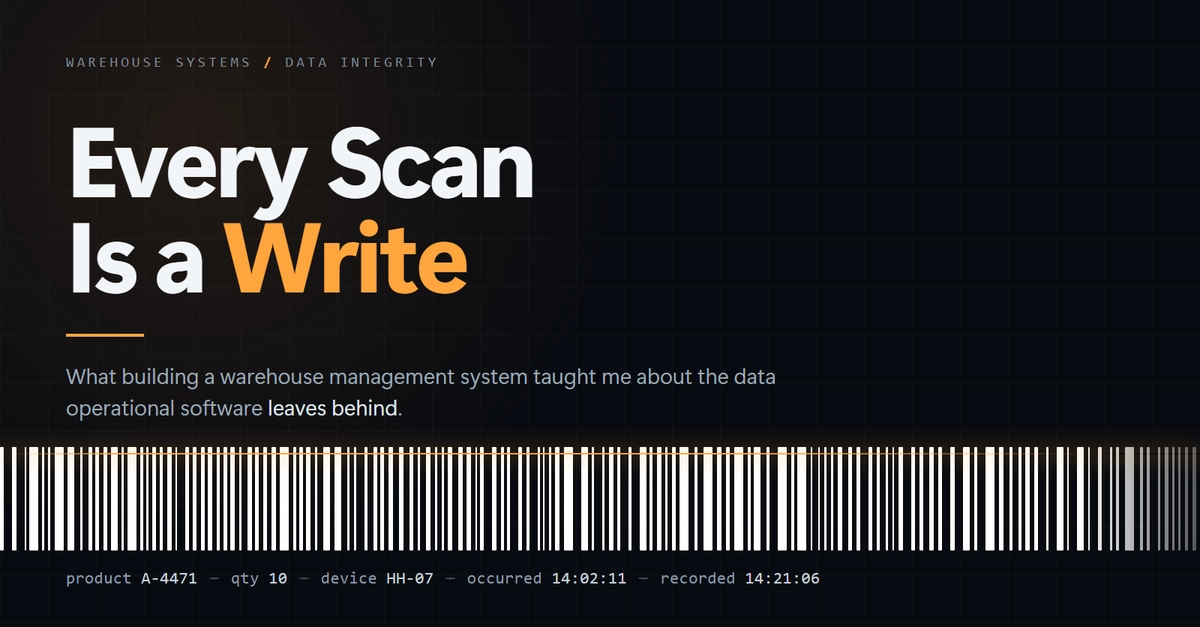
What building a warehouse management system taught me about the data operational software leaves behind — and the engineering it takes to make that data trustworthy.
The second that outlives itself
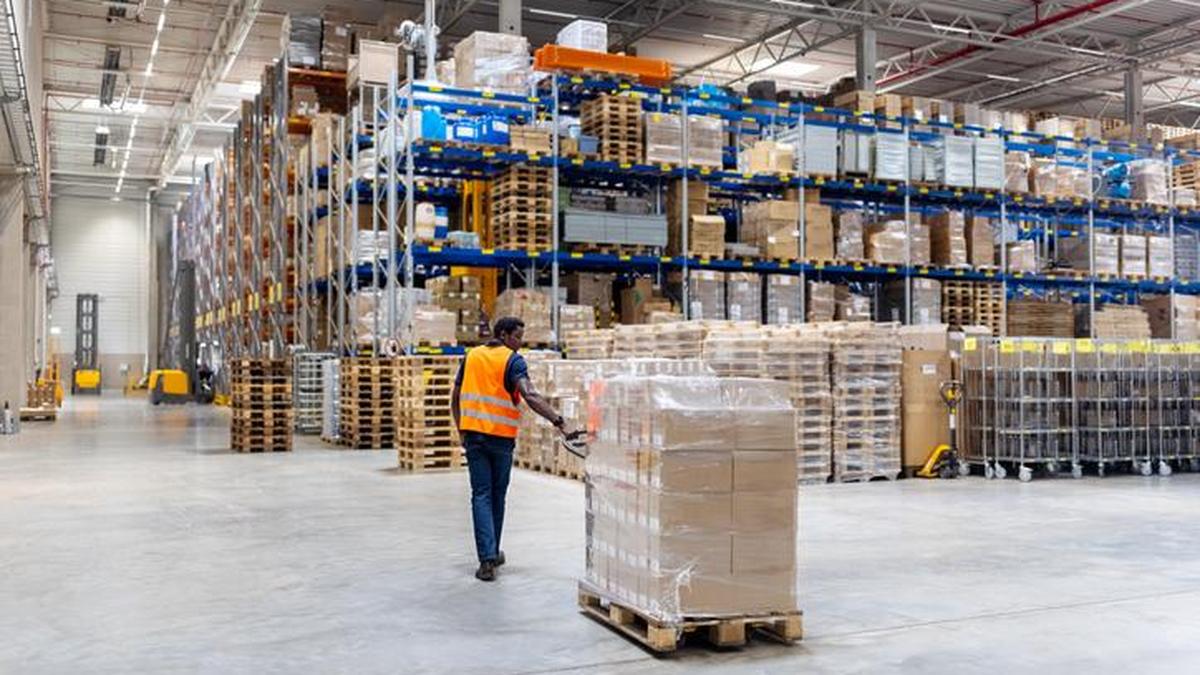
A picker holds a handheld scanner, points it at a carton, and pulls the trigger. There's a beep. They type 10, confirm, and move to the next location. The whole thing takes about a second.
For a long time I thought of my job as making that second work. I built the screen, the endpoint behind it, the repository behind that. My definition of done was that the user completed the workflow, the API returned success, and the right rows landed in the database.
What changed my thinking was noticing what was still there afterwards. The screen closes, the session ends, the app ships a new version, the picker changes jobs, the device is replaced. The row stays — and the row isn't a record of a UI interaction. It's a durable claim about the physical world: at this time, this person, on this device, ten units of this product moved.