Warehousing: Building the software
| Photo Credit:
alvarez
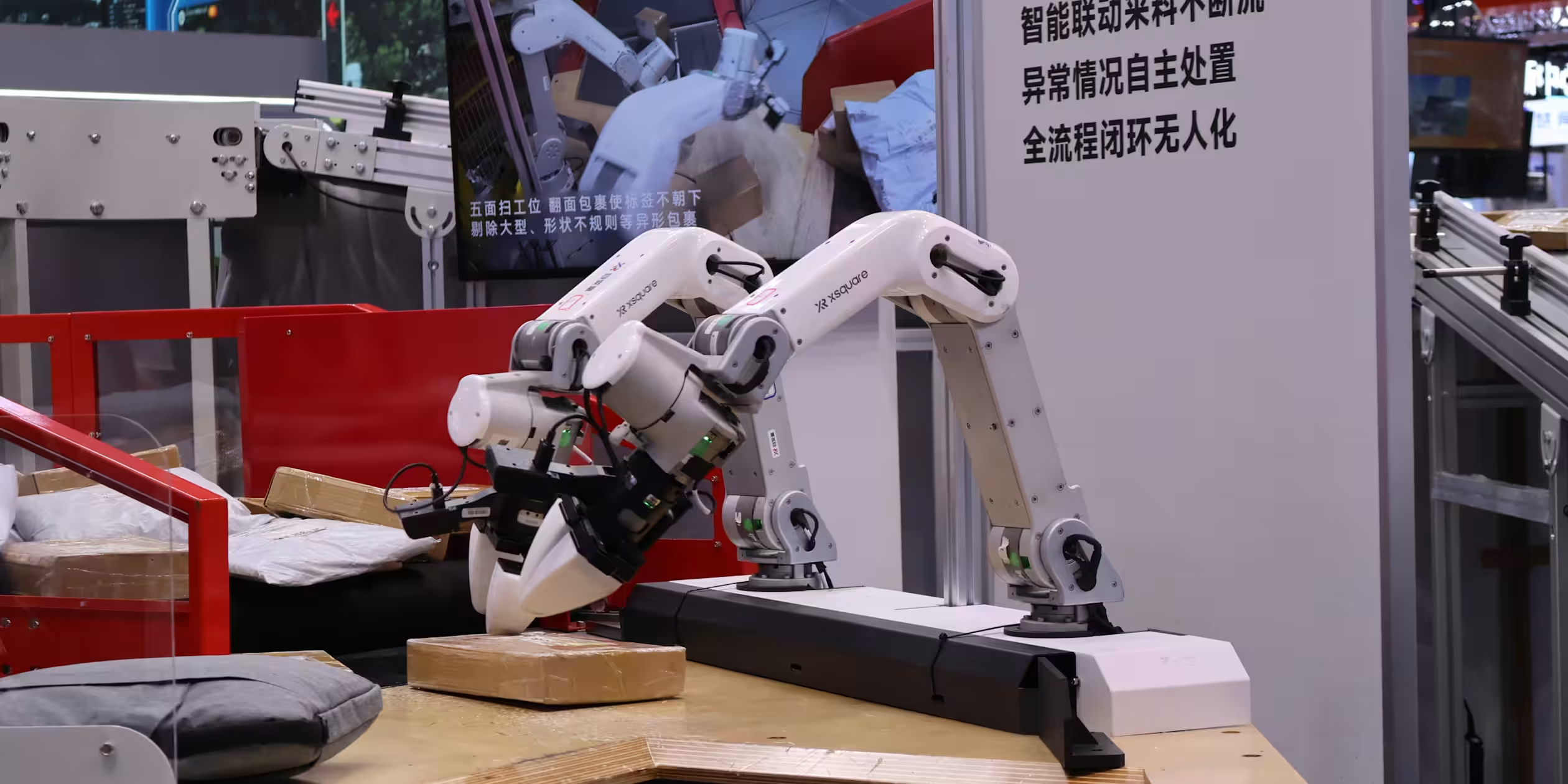
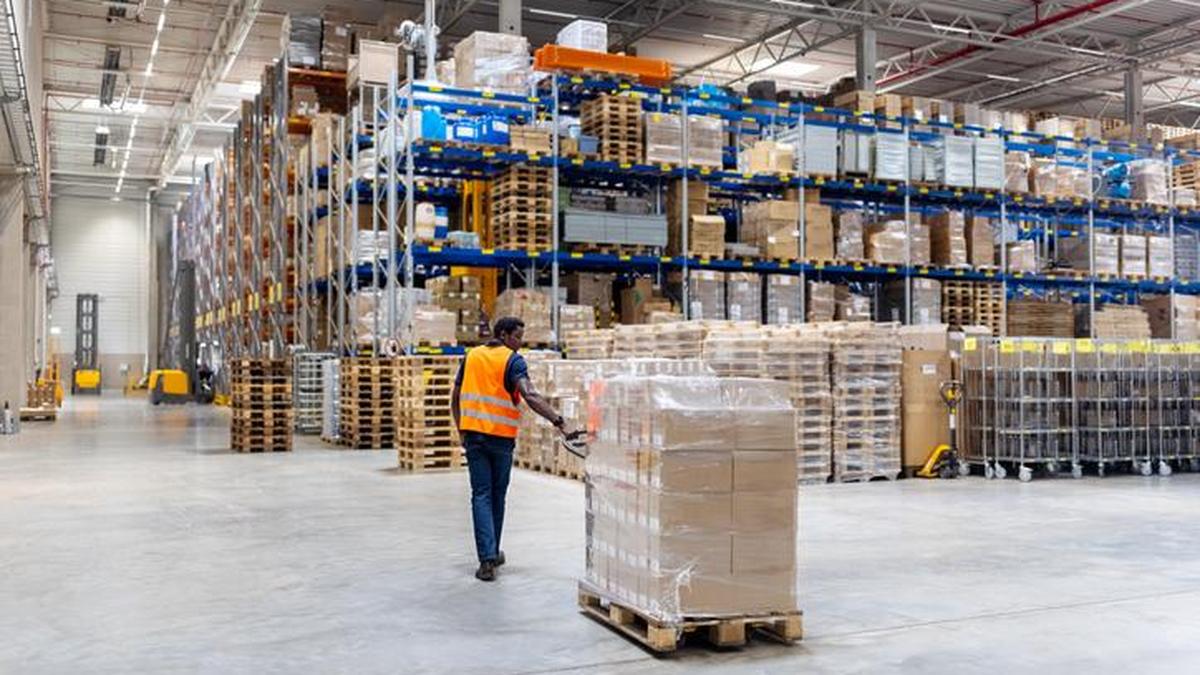
Inside one of the world’s most automated distribution centres in Europe, a scene unfolds that still feels like science fiction. On top of a dense aluminium grid, squat robots glide in every direction, pause over a column, and burrow straight down into stacks of bins piled several deep, fishing out exactly the one an order needs and ferrying it to a waiting packing station. There are almost no people on the floor. The inventory that would sprawl across an Indian godown sits compressed into a fraction of the space, with the machines themselves forming the storage rack. This is the AutoStore-style “cube” warehouse, and walking through one, it is easy to believe the human order picker is already history.It is tempting to look at that scene and conclude that the warehouse of the future is simply a warehouse with more machines in it. For India, in the middle of a warehousing boom driven by e-commerce and the breakneck rise of ten-minute quick commerce, that conclusion would be both very expensive and slightly wrong.Picture the warehouse most Indians actually rely on. A worker receives a pick-list, then walks the aisles (often 10-15 km over a shift) pushing a cart, hunting for items, and backtracking when a new order arrives or the pick-list gets updated. The bottleneck is rarely the building or the shelving. It is the choreography: who picks what, in which order, and along which path, while fresh orders keep landing every few seconds. That choreography is a decision problem, and decision problems are not solved by buying more hardware. They are solved by intelligence.This distinction matters enormously for the country. The sophisticated robots in that gleaming European facility are extraordinary, but they are also capital-hungry and priced for markets where labour is scarce and expensive. India’s economics are the reverse. Most of the country’s warehouses are existing structures, capital is dear, and there is no shortage of workers. Simply transplanting a European cube warehouse wholesale is the least Indian solution imaginable.Indian potentialNone of this is hypothetical. Indian fulfilment centres are already automating fast, and the country has produced genuine champions. India-born GreyOrange and Noida’s Addverb now ship goods-to-person robots and sortation systems to dozens of countries, with a newer generation of machines built specifically for the cramped dark stores behind quick commerce. What these firms market as their edge is the orchestration software: the ‘operating system’ that keeps machines, inventory, and people moving in sync. Notably, the hardware success stories are, at their core, selling a brain. The question is not whether the country automates, but whether it competes on that intelligence layer or merely buys someone else’s.The more promising lever is the software that decides how the warehouse thinks. It is far cheaper, retrofittable, and largely invisible. In a recent study by the writer and collaborators, a self-learning system was built for “dynamic” order picking, where a picker must continuously re-plan their route as new orders stream in, rather than working off a fixed list. Using an artificial intelligence technique, the system learns from experience which sequence of moves keeps the most orders flowing. Under heavy demand, it lifted the share of orders fulfilled on time from roughly 82 per cent to about 98 per cent. No new robots, no new building. The gain came entirely from a better brain.And order picking is only one operation among many. The same artificial intelligence toolkit is reshaping the unglamorous decisions that quietly govern logistics costs: where to place fast-moving items so pickers walk less, how to forecast the next hour’s demand so stock sits in the right location, how to route a fleet of delivery vehicles through real traffic, and, for the autonomous machines themselves, even when a robot should pause to recharge so the whole system never stalls. None of these requires ripping out a warehouse and rebuilding it. They require data and the algorithms to act on it.This points to a distinctly Indian path to automation: not a wholesale swap of people for robots, but an intelligence layer laid over the warehouses, workers, and vehicles the country already has. A hybrid floor — where software directs human pickers more cleverly, and selective automation handles the densest, most repetitive zones — is likely to deliver more value per rupee here than a copy-paste of a European cube warehouse.Reshaping workThat hybrid future also reframes the question everyone asks first: what happens to the jobs? Automation of this kind tends to reshape work more than it erases it, shifting people from walking and searching toward exception handling, machine supervision, and quality control, while creating new demand for technicians and data-literate floor managers. But “reshape, not erase” is only true if it is planned for. The warehousing sector is one of India’s largest new employers, and the reskilling has to be deliberate, not assumed. A worker displaced by a better algorithm is no comfort to that worker unless there is a clear path to the job the algorithm creates.The National Logistics Policy set out to pull India’s logistics costs down toward global benchmarks, and the ten-minute delivery promise that millions of urban consumers now take for granted rests directly or indirectly on warehouses that can pick and pack with very little slack.Both goals are, at heart, optimisation problems. India will not buy its way to them with hardware alone.The right image of the Indian warehouse of the next decade, then, is not just a hall full of robots. It is an ordinary building that has quietly acquired a brain, one that the country would do well to build and operate.The writer is Assistant Professor of Decision Sciences at IIM-BangalorePublished on August 20, 2026