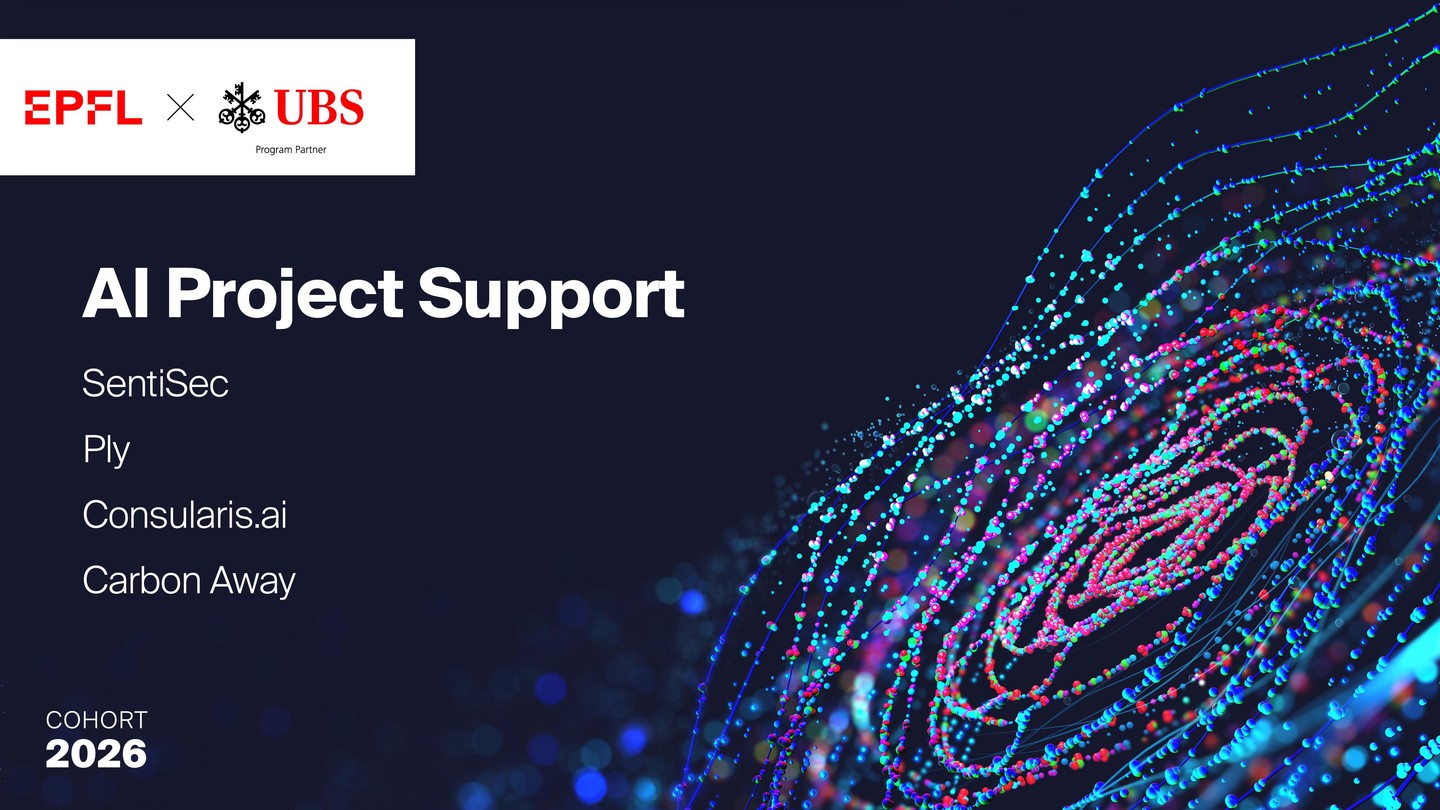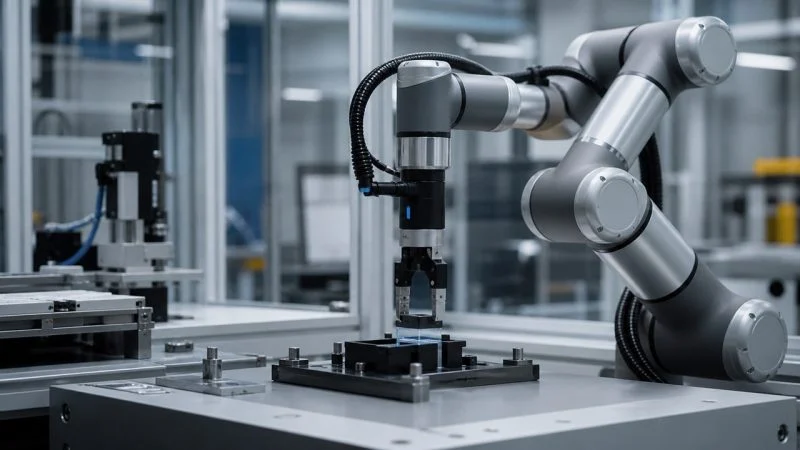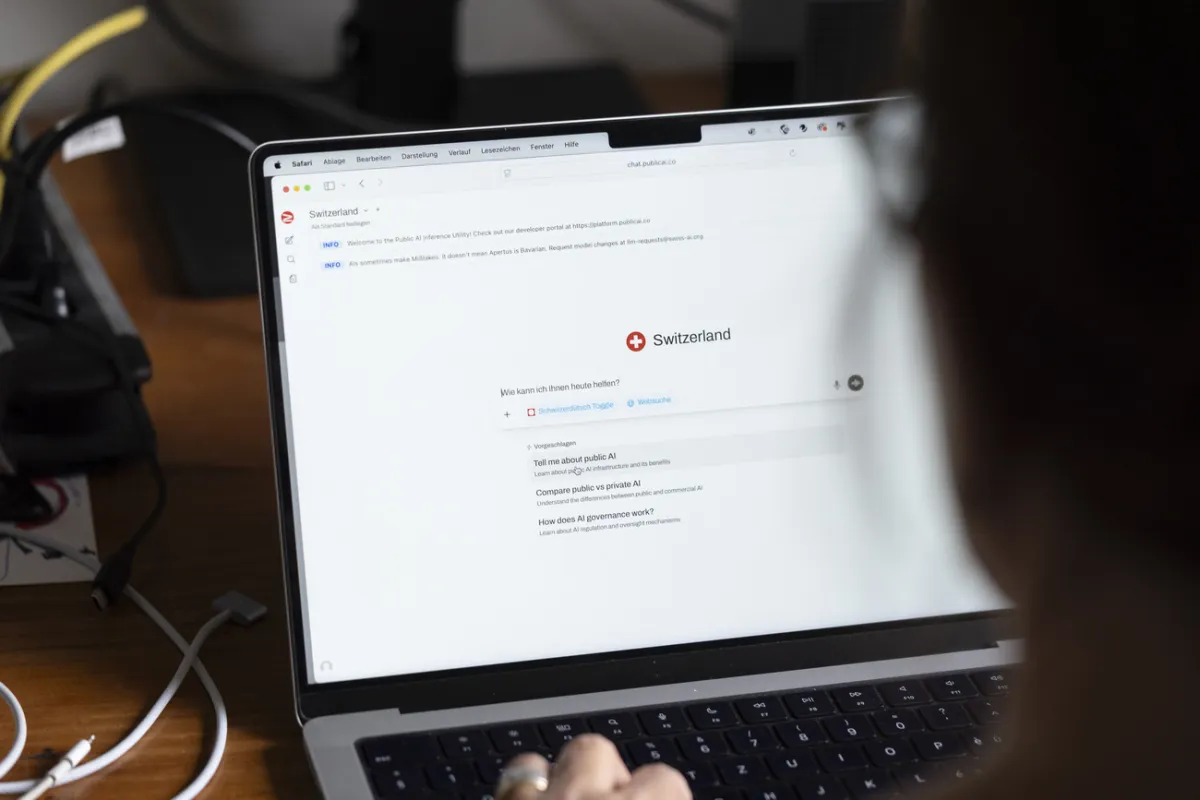
The Startup Launchpad AI Track powered by UBS, is the first Swiss grant program dedicated to AI. Following the selection of six inaugural grantees in 2025, this second call supports four new EPFL projects, which will share CHF 160,000 in funding to accelerate their journey from lab to real-world impact.From securing AI agents and ensuring the compliance of physical AI systems to identifying high-impact AI opportunities within organisations and making carbon assessments more accessible, the four selected projects address a wide range of real-world challenges.SentiSecAs AI capabilities grow, more and more businesses are relying on LLM-based agents and agentic workflows to send messages, update records, and trigger actions independently. However, security teams have no way of auditing decisions made and ensuring the process remains compliant. Logs will show what happened, but won’t expand on why an action was taken, what data influenced the decision, and whether it should have been reviewed by a human. With the EU AI Act pushing traceability, oversight, and risk evidence, companies will need to adjust their AI governance processes.SentiSec sits between AI agents, model providers, and tools to observe decisions and actions. It scores the action, blocks or escalates anything it deems risky, and keeps a forensic log of what happened and why. A working prototype already exists, but over the next six months the team will create a reliable beta and run pilots using real agent traffic.Team:Amine RusiHamza MarhounRamzi DakhmouchePlyPhysical AI – systems that don’t just process information but act in the real world – is increasingly used across different sectors. From robotic arms in assembly lines to self-driving cars, the wrong decision runs the risk of having a very serious and physical consequence. The software governing physical AI is continuously evolving. There are updates, new capabilities, and changing operating environments. Every change has an impact on safety, regulatory compliance, and whether the system can be deployed. With regulation shifting from one-time certification to lifecycle governance, manufacturers of physical AI need to have the evidence that their systems are safe and compliant. Maintaining this by hand doesn't scale, and generative AI alone isn’t reliable enough for safety-critical decisions.Ply uses strict rule-based logic combined with AI that reasons over real regulatory documents, continually assess changes and explain their impact with full traceability and human oversight. The team will use their funding to convert its design partnerships into a first validated paid pilot and build an expert-labelled benchmark with independent safety experts.Team:Carina KaeserConsularisCompanies with 50 or more employees know that they should be adopting AI, but many of them don't know where to start. This is partly because leaders lack the technical knowledge to see where and how AI could support their business, and partly because official processes rarely match how work is really done. Closing that gap is possible, but it usually costs more time and money than a company of that size can justify.Consularis interviews large numbers of employees in parallel and reconciles their answers into a validated map of the people, processes and tools, and how work passes between them. Specific questions are then put to that map, such as where AI would realistically pay off, and each answer feeds back in, so the picture sharpens the more it is used. The system is running end to end across seven pilots, including Bhutan's sovereign holding company. The team will use the results of those pilots to refine and evolve their offering, ready for launch.Team:Alessio Zazo Jin KilidjianCarbon AwayLife cycle assessments (LCAs) work out a product's environmental impact across its lifespan: from raw material sourcing through manufacturing, transport, use, and disposal. They're normally slow, expensive, and run only once a design is finalized. As the EU turns LCAs into a legal requirement, companies need to understand their carbon footprint much earlier.Carbon Away automates full life-cycle carbon assessments using over 20 AI agents across the seven LCA stages, offering practical eco-design changes from day one. Its proof of concept delivers results in under 20 minutes for under $3, and the team is releasing a free MVP to build its user base.Carbon Away’s real edge is accessibility: no LCA expertise is required to use the platform or understand the results. The tool explains why a product scores the way it does and this matters because roughly 80% of a product's environmental impact is locked in at the design stage, before manufacturing starts.Team:Remi Desire Gaetane VanderbruggenReferencesThe Startup Launchpad AI Track powered by UBS aims to make EPFL the first-choice incubator for building cutting-edge AI startups. It provides early-stage teams with the funding, expertise, and infrastructure they need to accelerate from prototype to application. Each team will use the funding to test their technology, validate their approach, and move closer to commercialisation over the next six months.The four selected projects also reflect the breadth of AI research and innovation supported across EPFL, with links to the activities and expertise of the EPFL AI Center.
Four startup projects selected for the 2026 AI Track powered by UBS
The Startup Launchpad AI Track powered by UBS, is the first Swiss grant program dedicated to AI. Following the selection of six inaugural grantees in 2025, this second call supports four new EPFL projects, which will share CHF 160,000 in funding to accelerate their journey from lab to real-world impact.
816 words~4 min read