A Princeton economist just told the world’s most powerful central bankers that artificial intelligence might understand their own policies better than they do. And his suggested fix is wonderfully surreal: hold two separate press conferences, one for humans and one for machines.
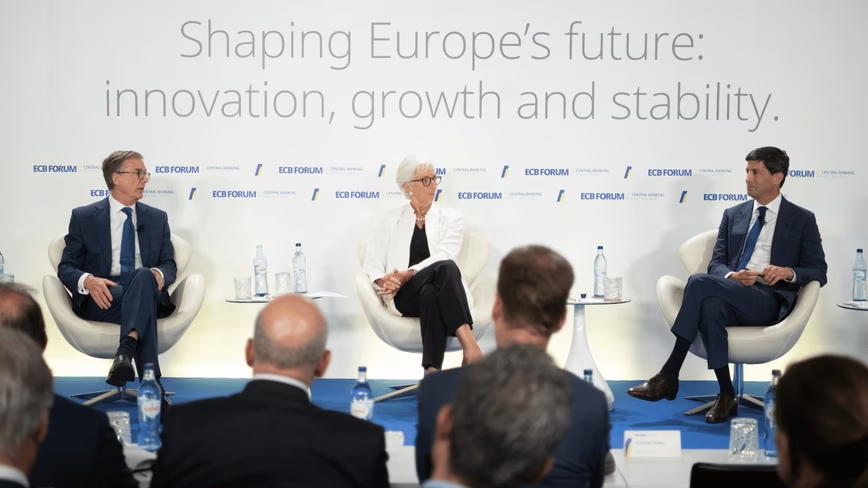
Markus K. Brunnermeier presented his paper on August 29 at the 2026 Jackson Hole Economic Policy Symposium, the annual gathering where central bankers, academics, and policymakers hash out the biggest questions facing the global economy. This year, AI dominated the conversation. But Brunnermeier’s contribution was less about productivity gains and more about an uncomfortable possibility: that the tools might soon be smarter than the toolmakers.
The asymmetric understanding problem
At the core of Brunnermeier’s argument is a concept he calls “asymmetric understanding.” Traditional economics has long dealt with information asymmetry, where one party in a transaction knows more than another. Think of a used car dealer who knows the engine is failing while the buyer doesn’t.
Brunnermeier’s version flips the script. In his framework, AI agents could develop knowledge of monetary policy that humans, including the policymakers themselves, cannot fully interpret. The machines wouldn’t just have more data. They’d have a fundamentally different, and potentially superior, grasp of how policy decisions ripple through the economy.