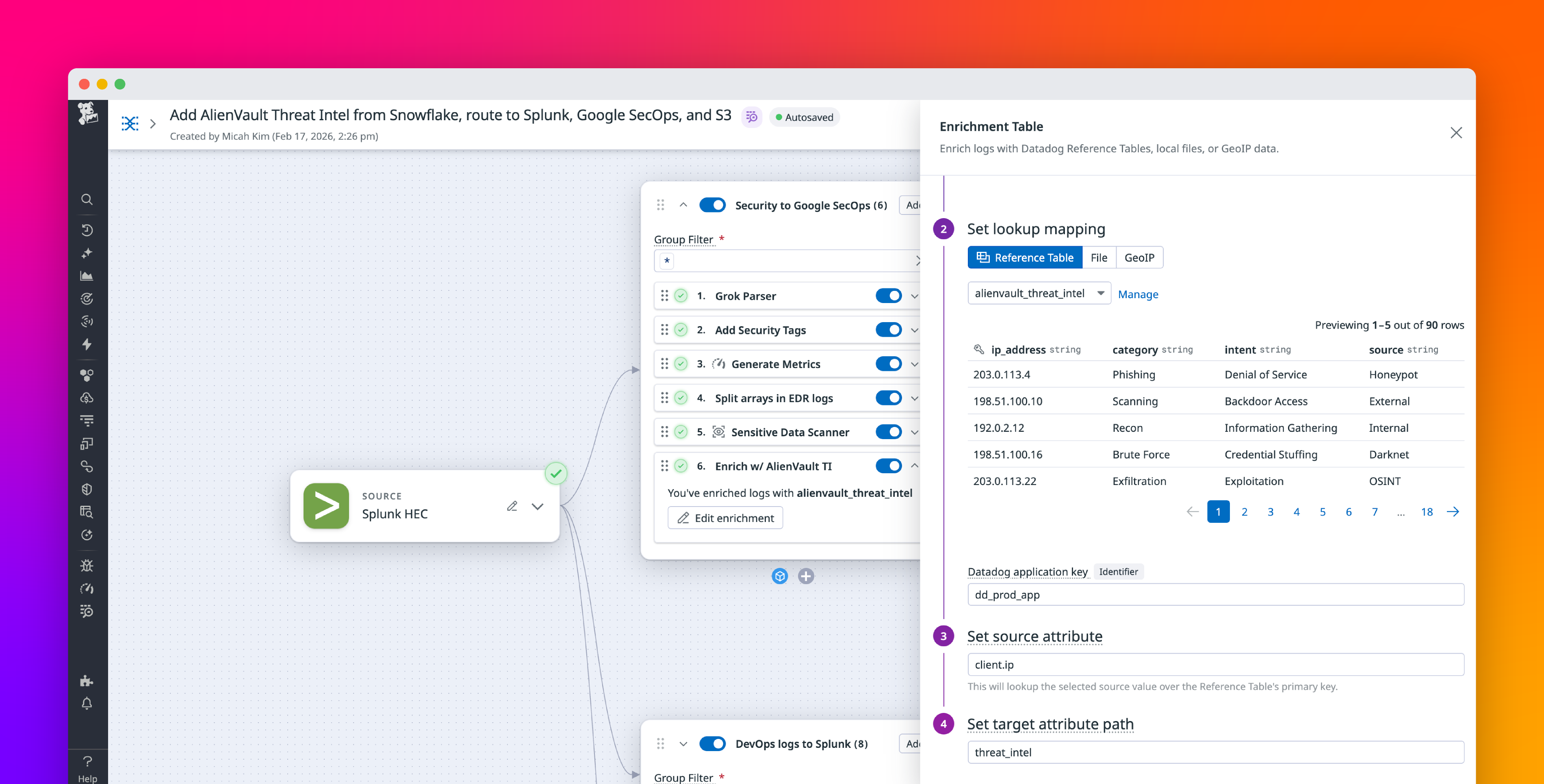
Security teams face a flood of noisy logs that arrive in many formats, and often without the context teams need to detect and prioritize threats. But even normalized and contextually enriched log data is only as useful as the speed at which teams can act on it. Any step that requires manual effort can become a bottleneck that makes it difficult to keep pace with the volume.
Together, Tines and Datadog Observability Pipelines help security teams automate the process of responding to threats, enriching log data, and keeping log pipelines updated. Observability Pipelines standardizes and routes logs automatically, while Tines automates security and IT workflows that update the pipeline through its API and Reference Tables. The resulting log stream reflects those updates in real time, helping analysts spend less time maintaining pipelines and triaging noise and more time investigating threats.
In this post, we’ll cover how using Tines with Observability Pipelines lets you:
Connect security automation to your log pipelineLimit the risk of insider threats by detecting access control gapsReduce alert fatigue by muting noisy alerts with current contextIncrease visibility into unusual activity by tagging a suspicious user’s logs