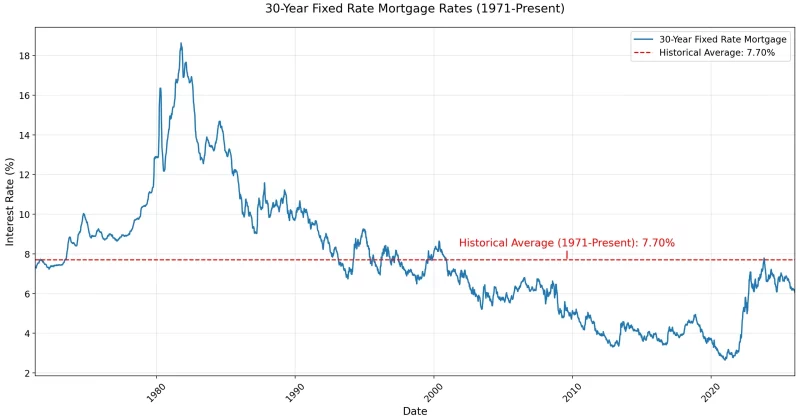
If you've been waiting for the housing market to get more affordable before buying a home, 2027 may not bring much relief.The latest forecasts suggest 30-year fixed mortgage rates could remain closer to 7% next year, keeping borrowing costs high for prospective buyers. The average 30-year fixed rate is currently 6.81%, according to Mortgage News Daily. Fannie Mae now expects rates to average 6.7% in 2027, a notable jump from the 6.3% it forecast just a month ago. The Mortgage Bankers Association's August forecast also expects rates to average 6.7% next year, up from 6.5% in its June forecast.In other words, forecasters who had expected mortgage rates to ease now expect them to remain roughly where they are today."Most of the recent affordability challenges have come from increased mortgage rates. Home prices have actually been falling on a year-over-year basis throughout 2026 at the national level," says Joel Berner, senior economist at Realtor.com. "Behind the scenes though, inflation is the real culprit." When inflation remains high, investors typically demand higher yields on Treasury bonds, which can keep mortgage rates higher, too. High inflation can also leave buyers with less spending power and make homes more expensive to build.Realtor.com's own forecast expected mortgage rates around 6.3% for the rest of 2026, an outlook the company has since said "may prove too optimistic" as inflation and the war in Iran put renewed upward pressure on rates.For would-be buyers, that means waiting until 2027 may not make buying a home much cheaper.Why homebuying affordability may remain strained in 2027Mortgage rates tend to track the yield on the 10-year Treasury note, which is influenced by expectations for inflation and economic growth. When inflation is expected to remain high, Treasury yields and mortgage rates can rise with it."Economic reality has forced even the most optimistic interest rate forecasters to project a higher rate environment than anticipated earlier this year," says Marty Green, a residential mortgage lending attorney at Polunsky Beitel Green.The Fed's preferred measure of inflation rose 3.7% in July from a year earlier, according to the Bureau of Economic Analysis, well above the central bank's 2% annual target. Green points to renewed tariffs and the war in Iran as factors that could keep inflation high and make lower mortgage rates harder to forecast.Inflation is also eating into homebuyers' purchasing power. Average hourly earnings declined at a 1.66% annualized rate after adjusting for inflation during the first half of 2026, according to an analysis of federal data by the Hamilton Project at the Brookings Institution.At the same time, buyers are still facing home prices roughly 59% higher than in 2020, and they're expected to keep climbing. Fannie Mae's latest survey of more than 100 housing experts projects national home prices will increase 2.2% in 2027. In markets where home prices are rising alongside mortgage rates, Berner calls it an affordability "double-whammy."Building more homes could help ease pressure on prices, but it's becoming more expensive to build them, too.Tariffs are raising the price of materials used throughout a home, including lumber, plywood, steel, aluminum, copper and cement, according to the National Association of Home Builders. Builders are also dealing with persistent shortages of skilled workers.The war in Iran is adding to the expense, too. Higher oil prices have pushed up gas and diesel prices, making building materials more expensive to produce and transport, according to the NAHB."What this leads to is less (in quantity) and less affordable inventory being delivered to the housing market," Berner says.
Waiting for homebuying to get more affordable? Here's what to expect in 2027
Mortgage rates aren't expected to get much cheaper for homebuyers in 2027, especially if inflation stays high.
580 words~3 min read