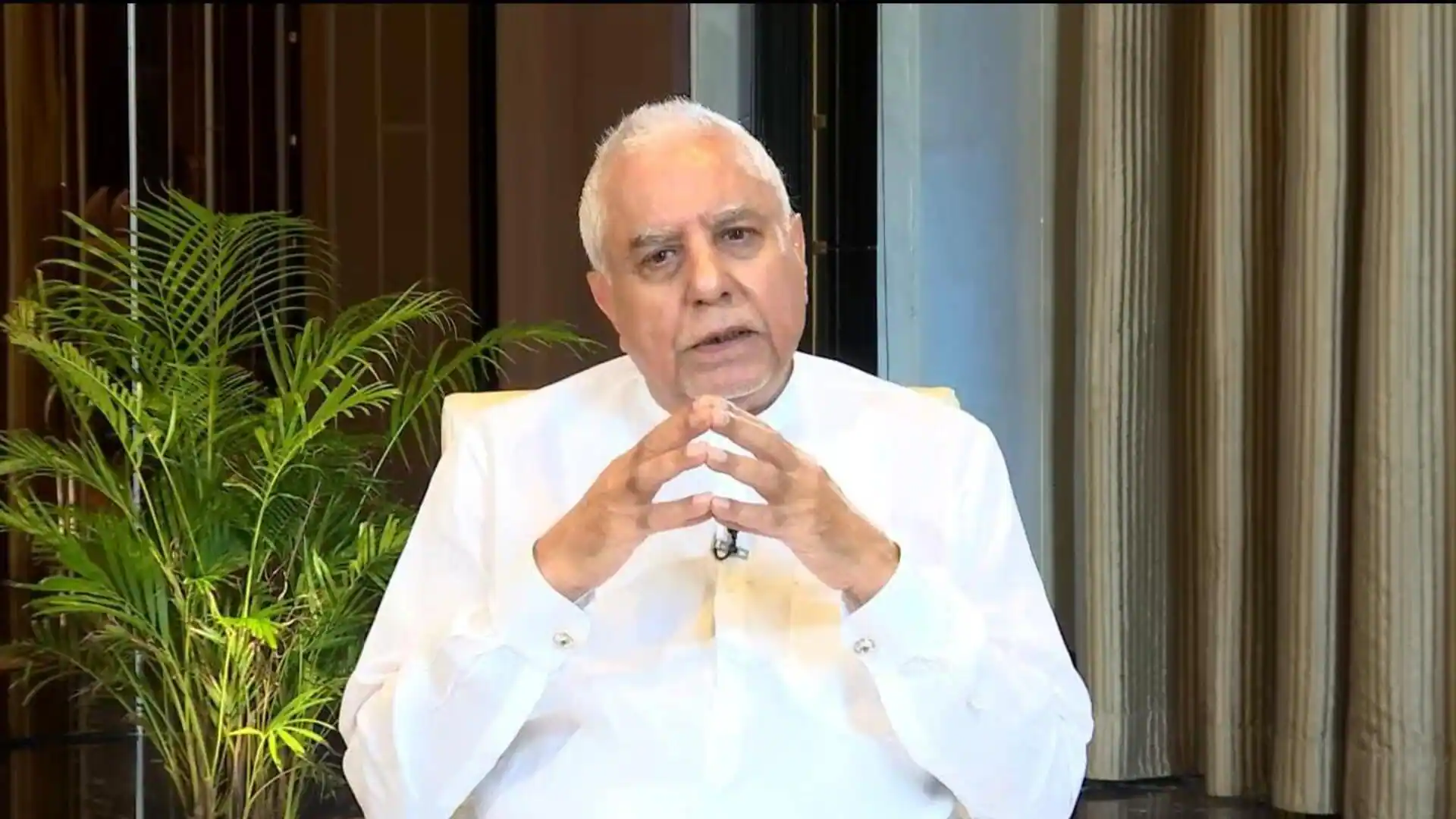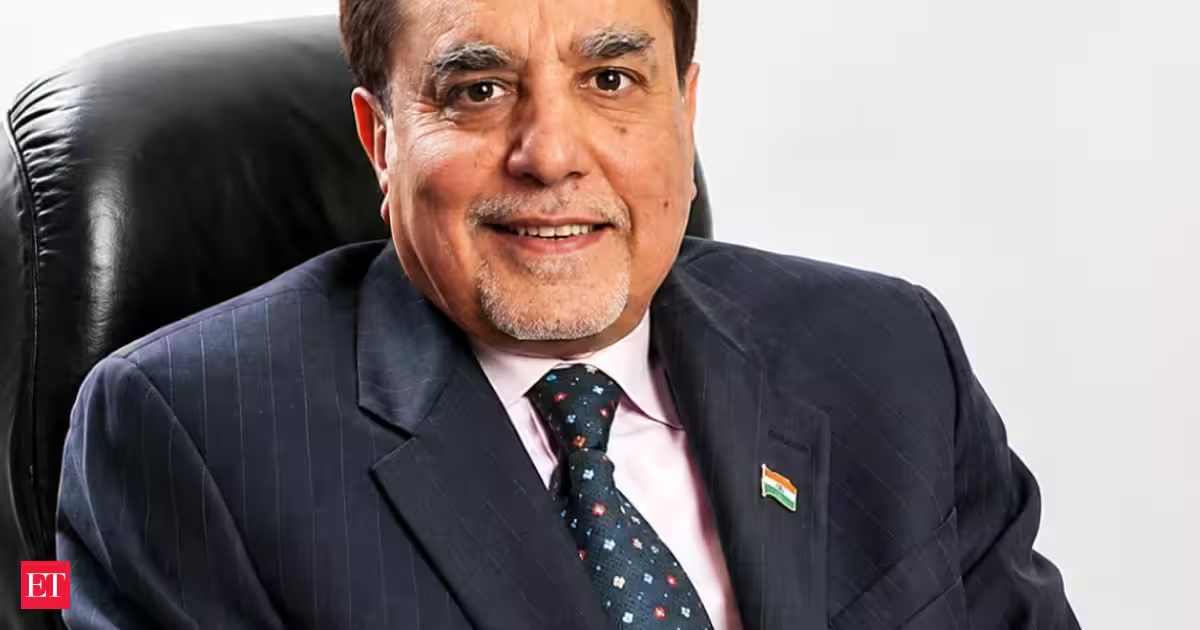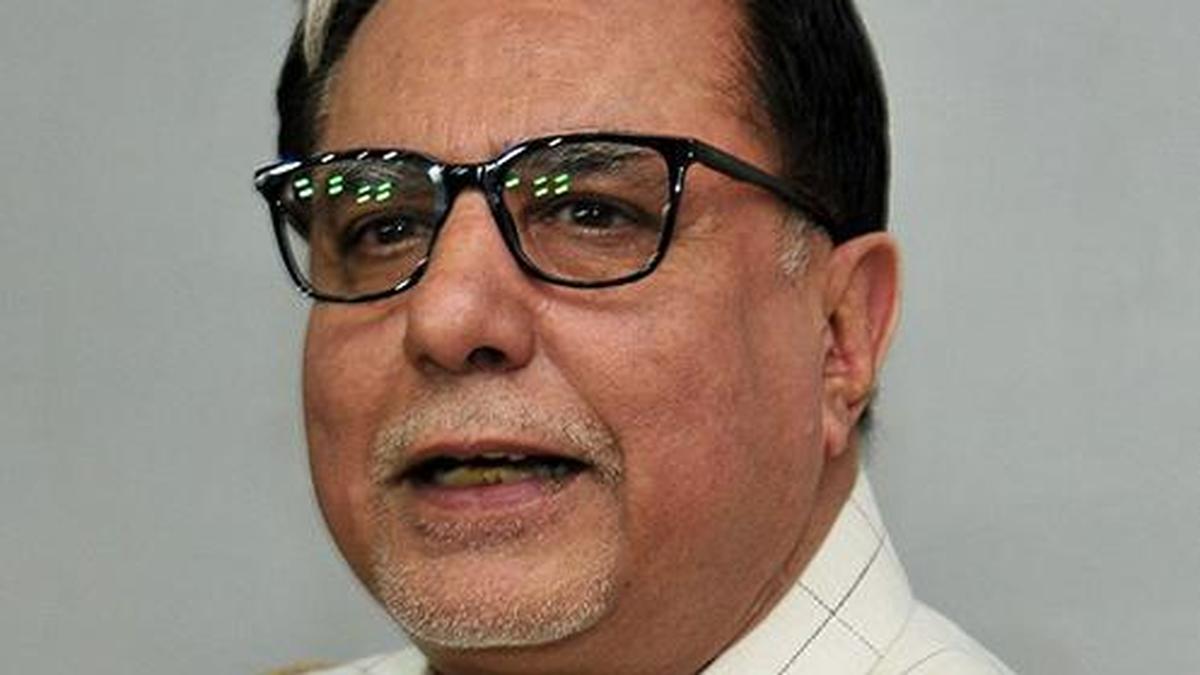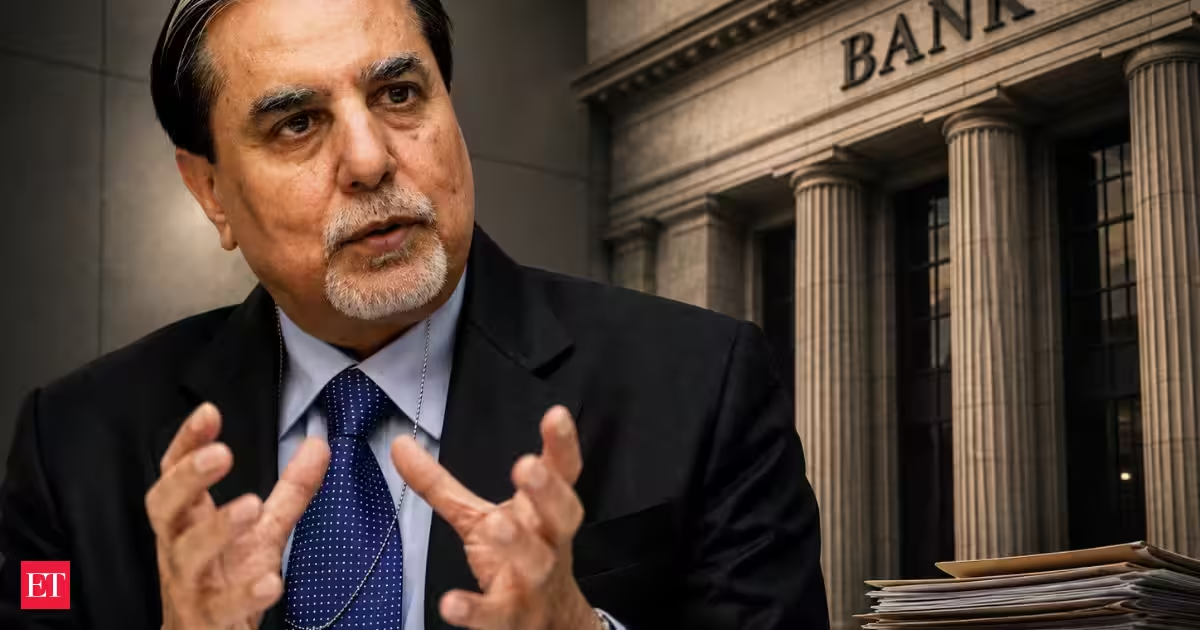
New Delhi: Dissenting lenders of Subhash Chandra on Monday moved before the insolvency appellate tribunal NCLAT, challenging the NCLT order that approved a Rs 6.5 crore payment by the Essel Group chairman over creditor claims of about Rs 22,006.57 crore in his personal insolvency resolution process.Solicitor General Tushar Mehta, appearing for LIC Housing Finance, mentioned it in the morning before an NCLAT bench, comprising Officiating Chairperson Justice Yogesh Khanna, and sought an urgent hearing in the second half of the day.Read more: Sintex Industries: NCLAT upholds clean slate principle, rejects shareholder's plea for compensationMehta, who also represented Canara Bank and Union Bank, said that if the order is allowed to continue, it will "defeat the very purpose of the Insolvency & Bankruptcy Code" and requested that the bench hear it at 2 PM.However, the National Company Law Appellate Tribunal (NCLAT) agreed to list the matter for hearing on Tuesday.Earlier in the day, a special bench of the National Company Law Tribunal (NCLT) passed the formal order, taking into account the third member, Nilesh Sharma, who ruled in favour of the repayment plan after a split verdict between Judicial Member Ashok Kumar Bhardwaj and Technical Member Reena Sinha Puri.Read more: Subhash Chandra drops mention of Mukesh Ambani allegations, shifts focus to settling Essel debtThe final NCLT order, which, according to counsel, was pronounced orally in the courtroom, has yet to be uploaded to the insolvency tribunal's portal.Sharma, a Member (Judicial), ruling as a third member, on last Tuesday approved the plan under Section 114 of the Insolvency and Bankruptcy Code (IBC), rejecting objections by lenders that the recovery was too meagre to merit approval.Sharma rejected the claims of the dissenting creditors led by LIC Housing Finance, which had argued that the payout was "unviable and unlawful".It had contended that against admitted claims of approximately Rs 22,006.57 crore, the repayment plan proposed the payment of only Rs 6.25 crore to creditors and Rs 25 lakhs towards process costs."In the case of LICHFL, whose admitted claim stood at Rs 1,322.39 crore, the proposed repayment was merely Rs 38,09,294, amounting to approximately 0.028 per cent of its admitted dues. It was contended that such a negligible repayment could not receive the approval of this tribunal," said the NCLT order recording its submission.Moreover, dissenting lenders have alleged that five entities linked to Essel Group Chairman Subhash Chandra's family together controlled 61.78 per cent of the voting share and were instrumental in pushing through his personal insolvency resolution plan, which proposes to pay just Rs 6.5 crore.The lenders contended that the five entities were associates or related parties of Chandra and should have been barred from voting on the repayment plan. Their votes helped secure an overall 80.814 per cent approval for the plan in the committee of creditors (CoC), according to a 144-page order of the National Company Law Tribunal (NCLT).The five entities are Veena Investments Pvt Ltd, Direct Media Distribution Ventures Pvt Ltd, World Crest Advisors LLP, Lemonade Capital Advisors LLP and Corpcall Capital Advisors LLP.Dissenting lenders led by HDFC Bank and IDBI Trusteeship Services, represented by Edelweiss and Franklin Templeton funds, argued that the five entities fell within the definition of "associates" under the Insolvency and Bankruptcy Code (IBC) and their votes should not have been counted. In fact, Canara Bank demanded a forensic audit, but the same could not be allowed in view of its minority voting share.However, these submissions were rejected by Sharma, by observing that an entity is an "associate" only if the debtor personally holds 51 per cent or more of its share capital, or directly controls its board."Since Chandra held no direct shares in any of the five entities, the test wasn't met - even though a family member (his sister-in-law) allegedly controlled the parent company. A company remains a separate legal person from its shareholders, and the law doesn't extend "associate" status to a firm controlled by an associate of the debtor, only to one controlled by the debtor himself," said Sharma.Sharma, in its 144-page-long order, said the resolution professional's valuation showed Chandra's personal estate was worth significantly less than the amount offered under the plan, and that dissenting creditors were unlikely to recover more by rejecting it, since he would then face bankruptcy rather than being able to pay from a position of financial recovery."If the plan is approved and the debtor's insolvency is resolved, putting him back on his feet, the objectors would ultimately stand a better chance of recovering their debts directly from the Principal Debtors," the NCLT observed.The tribunal held that its role was not to substitute its own commercial wisdom for that of the creditors or to assess whether the settlement amount was adequate..It also noted that "the commercial decision of the creditors operates within, and not outside, the statutory framework".It further said once approved, the plan is binding on all creditors under Section 115 of the IBC, whether they voted for or against it, and cannot be selectively enforced only against those who consented.
Subhash Chandra's dissenting lenders Canara Bank, Union Bank move NCLAT against NCLT order
Dissenting lenders have challenged the NCLT order approving Subhash Chandra's personal insolvency plan. The Essel Group chairman's plan proposes a Rs 6.5 crore payment against creditor claims. Lenders argued that five entities linked to Chandra's family improperly influenced the voting process. The NCLT approved the plan after a third member ruled in its favor. The appellate tribunal will now hear the lenders' challenge on Tuesday.
833 words~4 min read