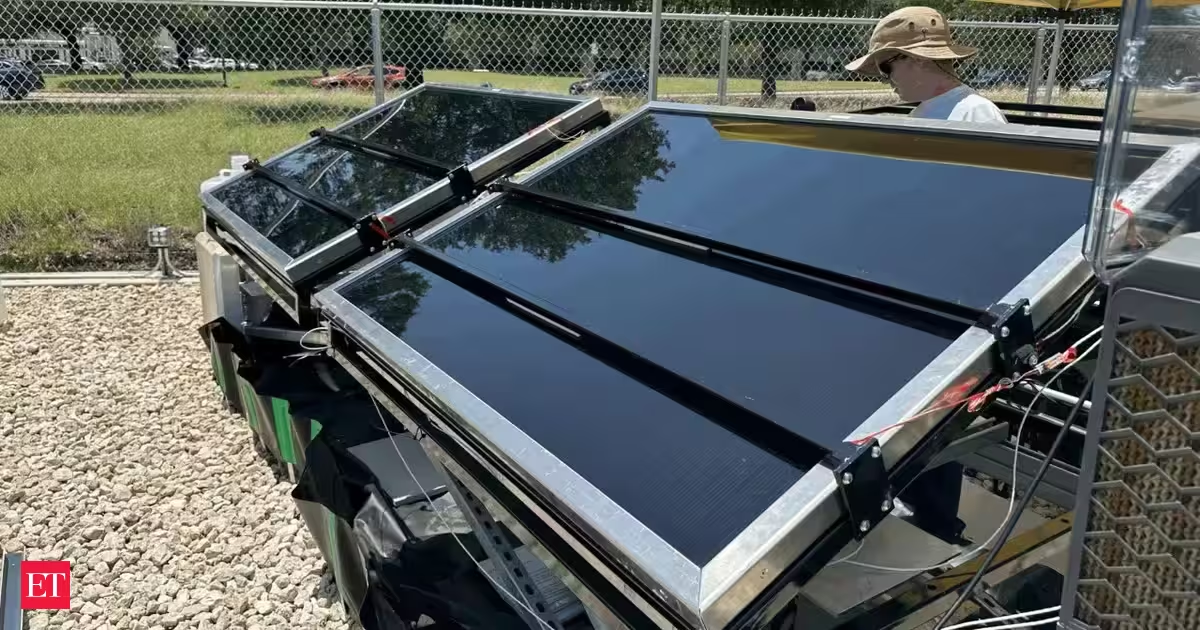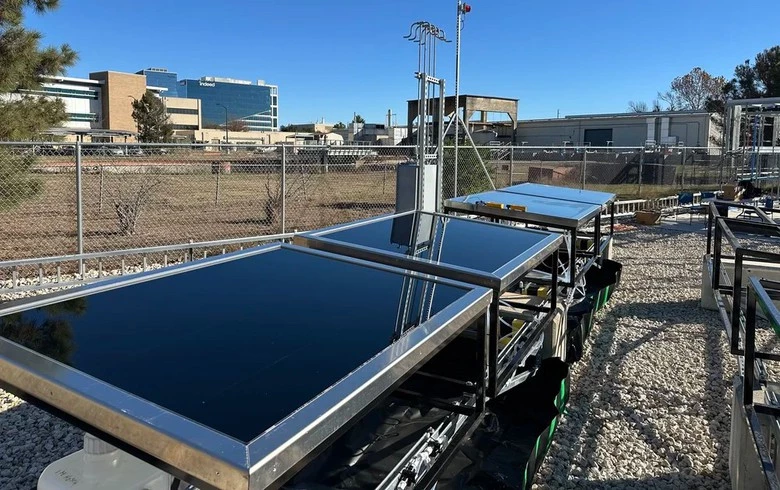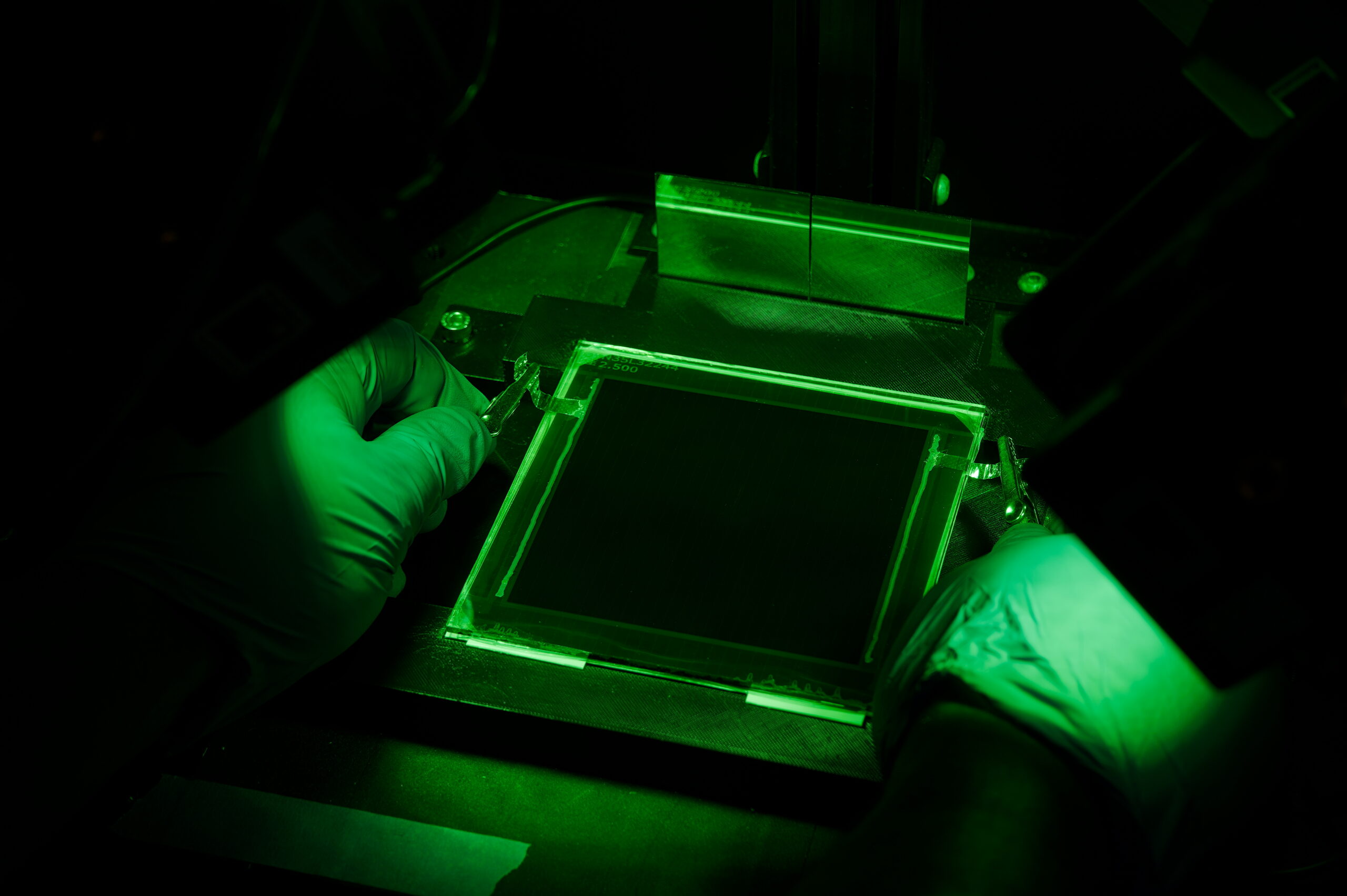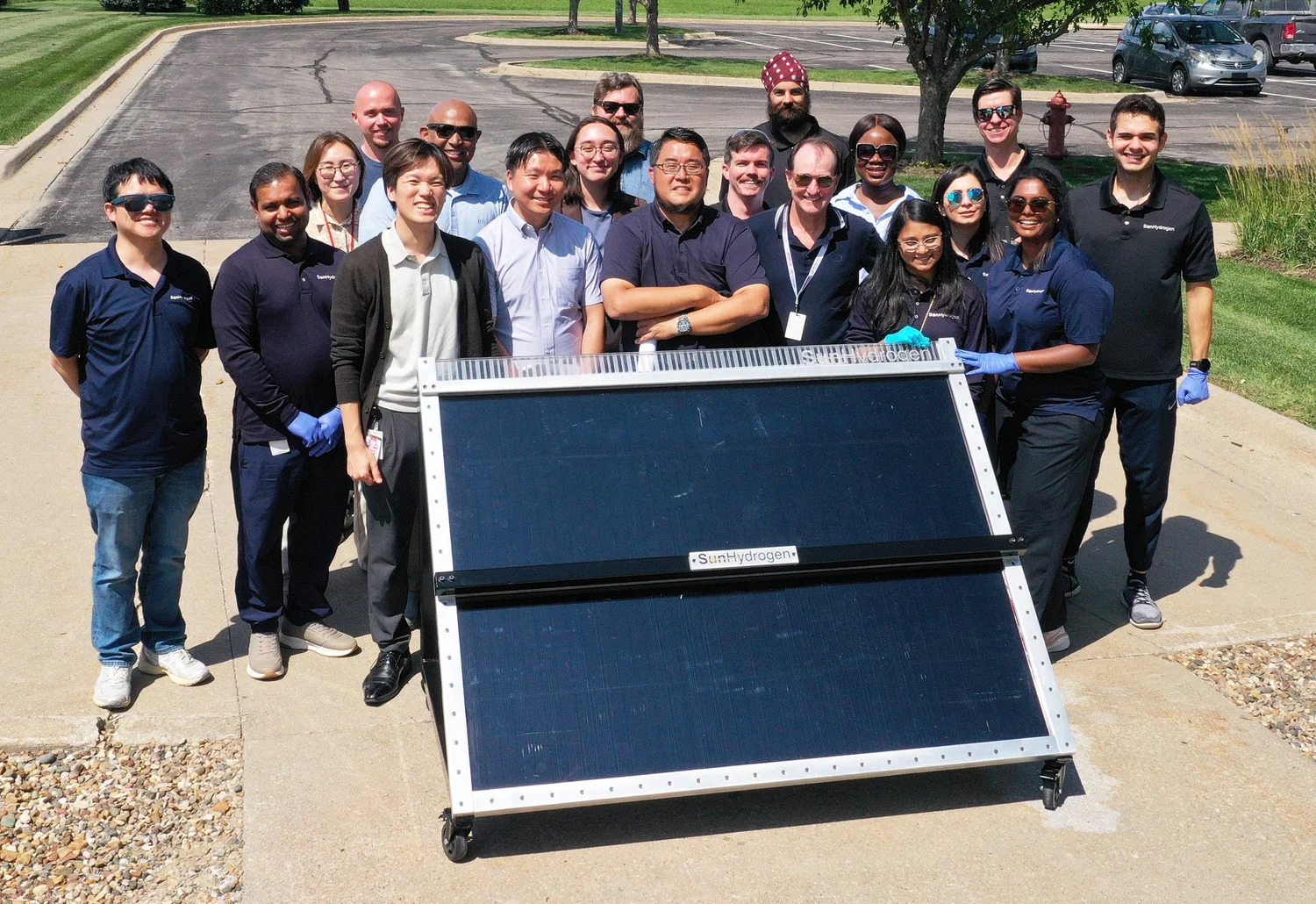
SunHydrogen has achieved solar-to-hydrogen conversion efficiencies above 10% with its 100 cm² modules in tests at Sparc Hydrogen’s laboratories. The U.S. company is now targeting efficiencies approaching 15% while working to scale the technology to larger, manufacturable modules.
Iowa-headquartered photoelectrochemical technology company SunHydrogen has achieved solar-to-hydrogen (STH) conversion efficiencies of more than 10% with its 100 cm² hydrogen modules during preliminary testing at Sparc Hydrogen’s laboratories, according to a company statement.
The latest performance follows earlier testing of SunHydrogen’s 100 cm² modules at the R&D facilities of Japanese automaker Honda, where the devices achieved an active-area STH efficiency of 10.8%. Honda and SunHydrogen have been working under a joint development agreement aimed at advancing the technology toward an installation-ready hydrogen panel and cost-effective commercial production.
“SunHydrogen’s system is an integrated semiconductor-electrocatalyst architecture in which the light-absorbing semiconductor, purpose-designed contacts and water-splitting catalysts are engineered to operate together as a single hydrogen-generating module,” SunHydrogen Business Director Tor Erik Hoftun told pv magazine. “When sunlight is absorbed, the semiconductor generates electrons and holes. Purpose-designed contacts route these photogenerated charge carriers to integrated hydrogen- and oxygen-evolution catalysts. The electrons drive the production of hydrogen, while the holes drive the production of oxygen.”