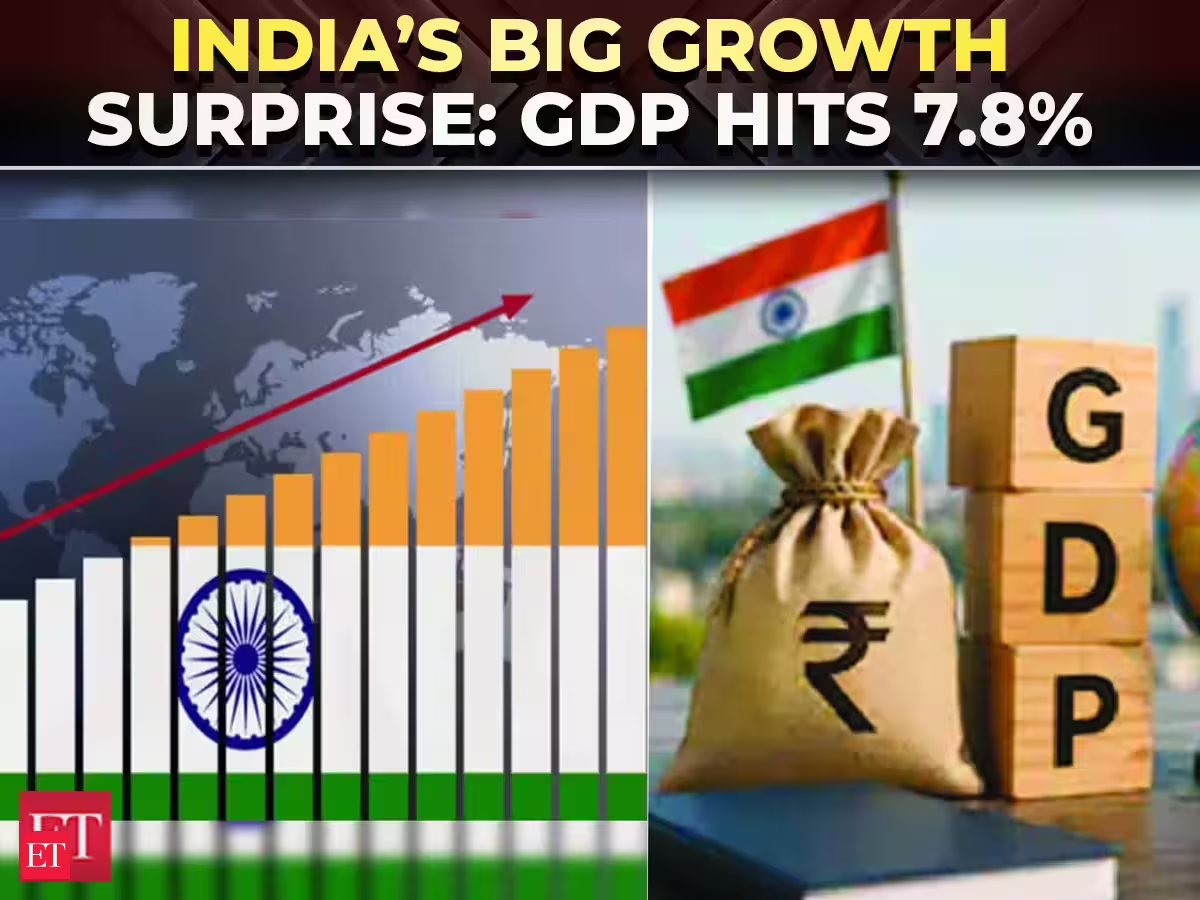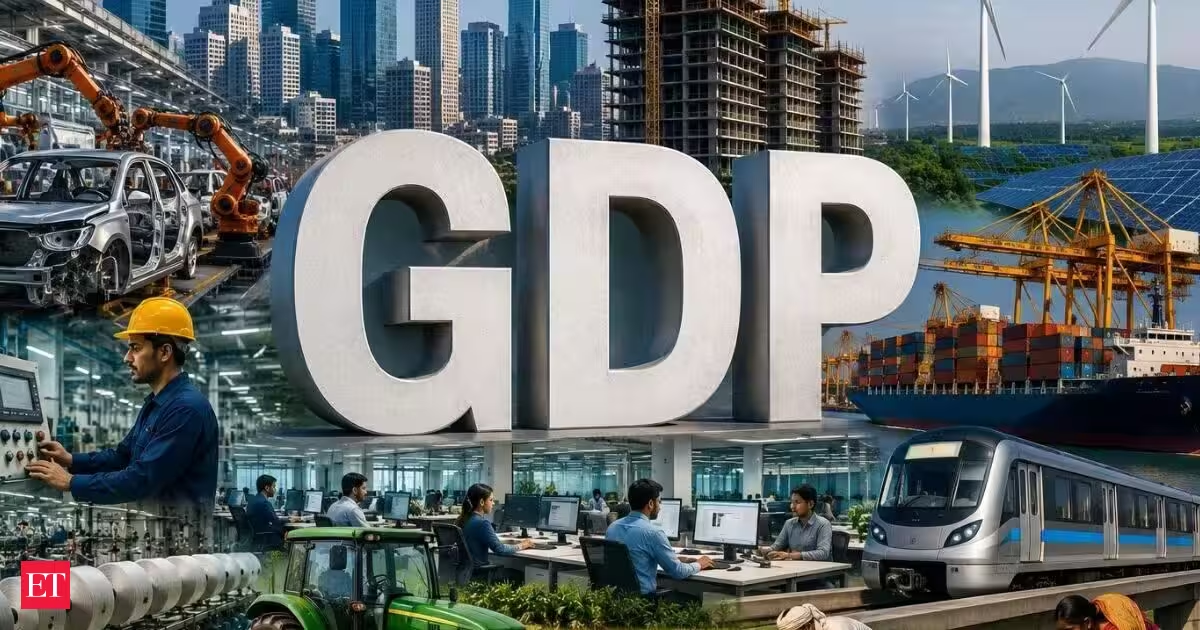
India’s GDP grew 7.8% in Q1 FY27, driven by 9.2% manufacturing growth and 11.9% investment demand, while real GVA expanded 8.2%.
| Photo Credit:
iStockphoto
India’s gross domestic product growth accelerated to 7.8 per cent in the first quarter of FY27, at Rs 81.36 lakh crore, compared to a revised 6.9 per cent in the comparable period of the previous fiscal, despite disruptions in West Asia, elevated energy prices, and global trade uncertainties.Manufacturing and investment drive growthPerformance during the quarter was driven by robust manufacturing growth of 9.2 per cent and surging investment demand (Gross Fixed Capital Formation) of 11.9 per cent, per the latest GDP data shared by the Ministry of Statistics and Programme Implementation (MoSPI) on Monday.This economic momentum was further supported by a steady 3.6 per cent expansion in agriculture and allied sectors, a sharp 8.9 per cent rebound in electricity and utility services, and a 7.7 per cent rise in the construction sector. This offset a 2.4 per cent contraction in mining.Sitharaman credits reforms, economic managementFinance Minister Nirmala Sitharaman said credit for the strong performance went to the people of India and their hard work. “Reforms undertaken by the NDA Government, together with an agile management of the economy, are bearing results.The NDA Government, led by PM Shri Narendra Modi, remains committed to further expanding economic opportunities for all our citizens,” Sitharaman said in a post on `X’.While the GDP figures for the first quarter of the ongoing fiscal were higher than various growth estimates, including the RBI’s 7 per cent projection, they were lower than the revised Q4 GDP growth rate of 8.6 per cent.Real GVA grows 8.2 per centOverall, the comprehensive sector performance pushed growth in real Gross Value Added (GVA), a supply-side indicator of production and sectoral performance, to 8.2 per cent, at ₹73.82 lakh crore.Nominal GDP expanded in Q1 of FY27 by 10.3 per cent to hit ₹88.27 lakh crore. Nominal GDP measures a country’s economic output using current market prices, while real GDP adjusts that output for inflation or deflation using constant prices from a base year.Updated national accounts estimates releasedThe National Accounts Statistics (NAS) publication released on Monday publishes the updated Annual Revised Estimates for FY 2022-23, 2023-24 and 2024-25 using the New Series of Output Producer Price Index (PPI), Banking Services Price Index (BkSPI) with the base year 2022-23 and updated data from various administrative sources, according to the government statement.“Similarly, the quarterly estimates of GDP from Q1 of 2022-23 to Q4 of 2025-26, along with provisional estimates of GDP for the FY 2025-26 has been updated and released in the NAS publication. These quarterly and provisional estimates of GDP and other aggregates have now incorporated the New series of Output PPI, Index of Industrial Production (IIP) with base year 2022-23 and updated administrative data from different sources,” the statement added.New methodology for manufacturing estimatesFor manufacturing, the new national accounts series has adopted a double-deflation approach, under which output and intermediate consumption are separately deflated using relevant producer price indices. MoSPI said this provides a more robust measure of real manufacturing value added by capturing changes in the prices of both output and inputs.The ministry cautioned that the latest estimates are subject to revision as improved data coverage and revisions to input data from source agencies become available. The next quarterly GDP estimates, for July-September 2026, are scheduled to be released on November 30, 2026.Published on August 31, 2026