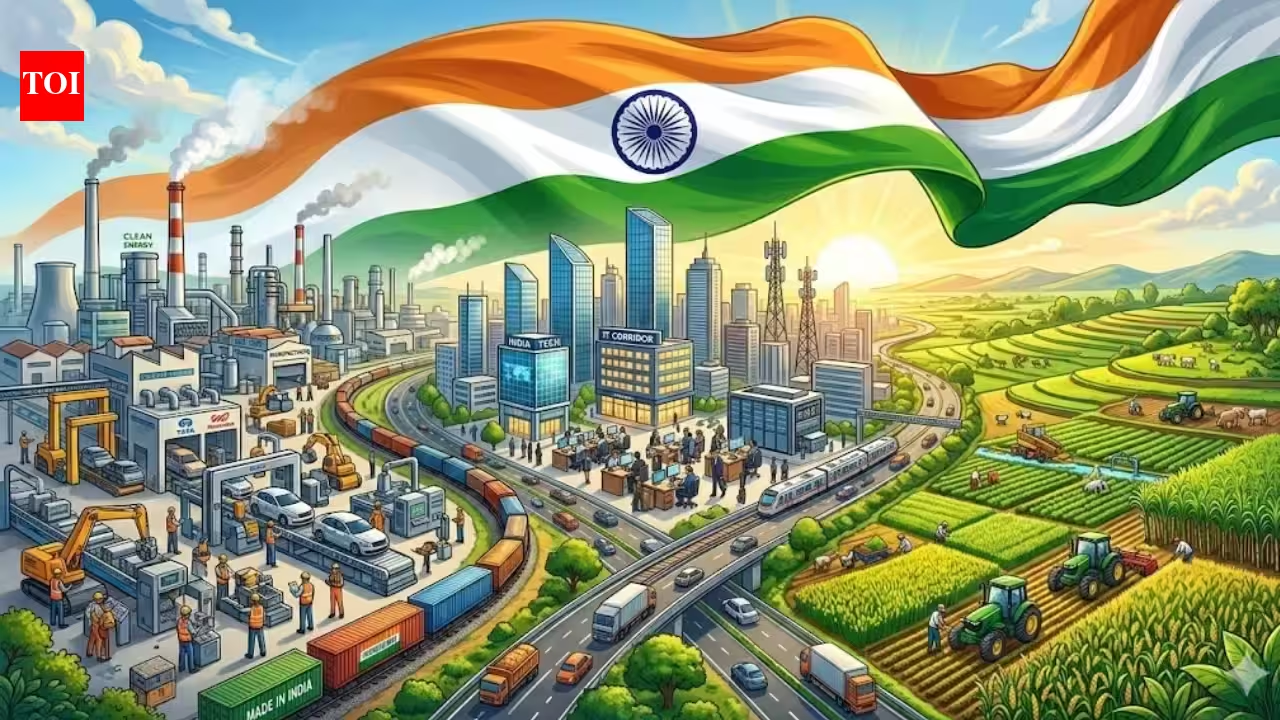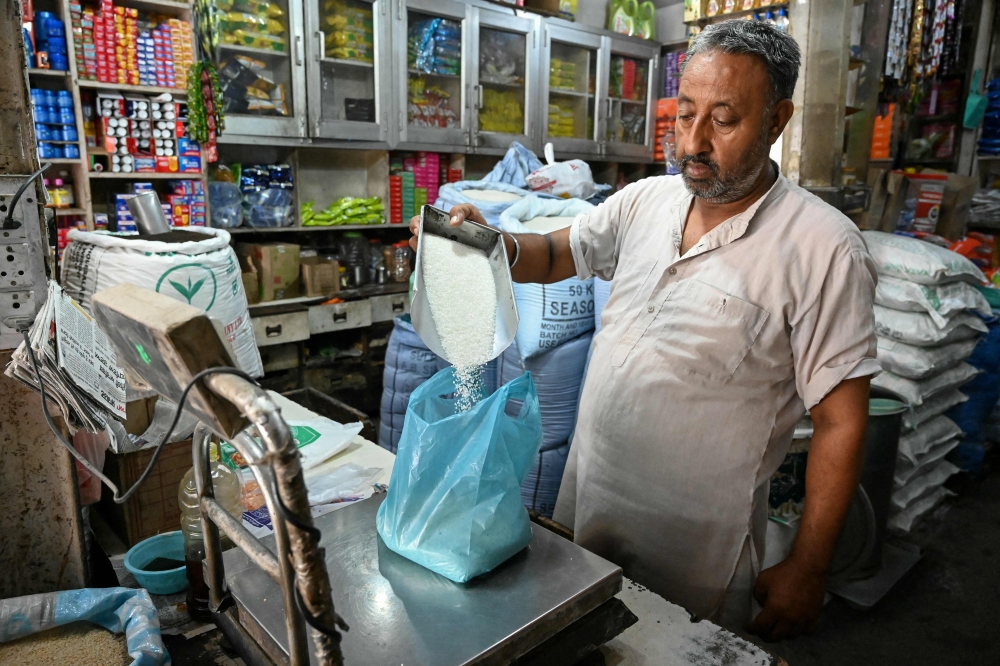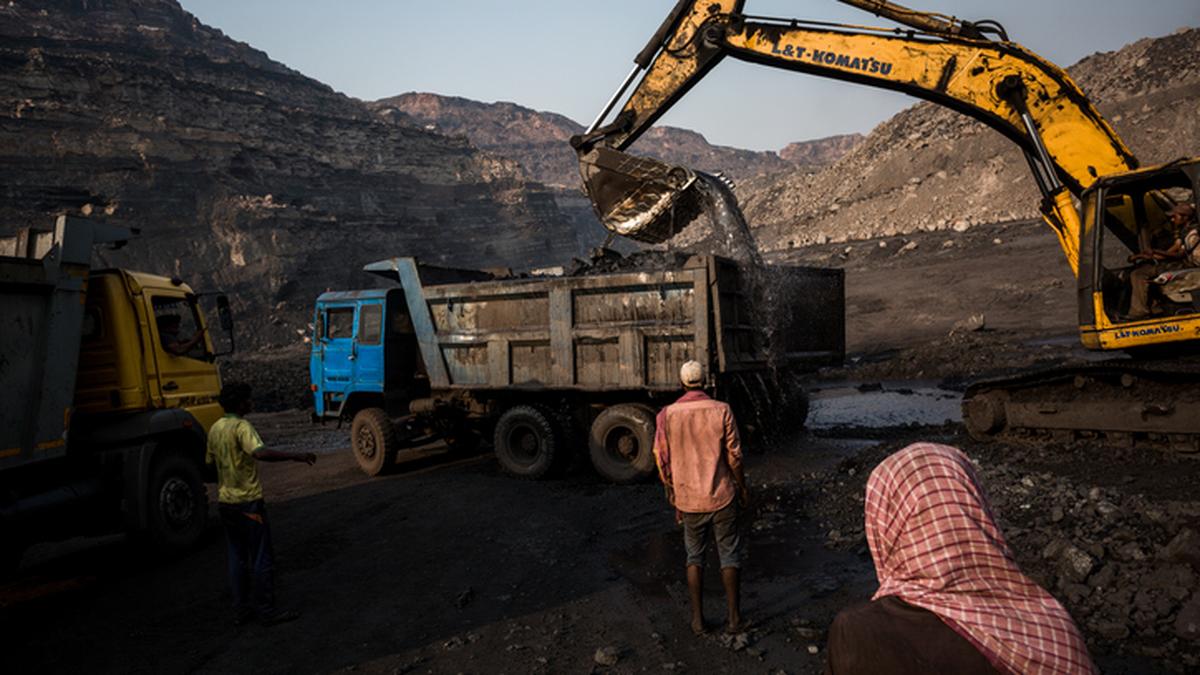
India's gross domestic product (GDP) quickened to 7.8% in the first quarter of FY27, up from revised 6.9% in the same quarter last year, as resilient consumption and exports coupled with robust government capex defied supply chain disruptions and inflated commodity prices triggered by the US-Iran war.India’s April-June quarter growth remained on par with the previous quarter’s 7.8% expansion.Gross value added, a measure of economic activity that excludes taxes and subsidies, grew at 8.2% in real terms, up from 7.1% in the corresponding period last fiscal. Meanwhile, Nominal GVA growth stood at 11.5% for Q1 in real terms.An Economic Times poll had forecast a 7.3% growth rate in the first quarter, higher than the Reserve Bank of India’s projection of 7%.ALSO READ | India needs investment rate of 34-35% of GDP to hit 8% growth: Surjit BhallaNominal GDP grew 10.3% in Q1, compared with 8.1% a year earlier.Key primary sectors witnessed moderation during the first quarter. Agricultural growth slowed to 3.6% YoY in Q1 FY27 from 4.4% a year earlier, while the mining sector registered a sharp drag, shrinking 2.4% compared to a stellar 12.4% growth in the corresponding period last fiscal.On the industrial front, manufacturing kept up its solid run, growing 9.2% in Q1 compared to 8.3% a year ago. The electricity sector saw a dramatic turnaround, jumping to 8.9% growth after shrinking 1.8% in the same period last year. Construction also picked up healthy steam, expanding 7.7% against 5.2% last fiscal, giving a solid boost to overall economic activity.Last year's Goods and Services Tax (GST) rate cut and income tax reductions likely continued to support household disposable income and demand, helping cushion the impact of rising inflation. But economists expect the recent pickup in private investment to be temporary.Risks to the outlook for Asia's third-largest economy, which imports more than 85% of its oil, have increased as crude prices are above $90 a barrel and may climb higher.ALSO READ | IMF sees India among fastest-growing major economies despite trimming FY27 GDP growth projection to 6.4%Economists expect the strong performance in the fiscal first quarter to be followed by some moderation in the second and third quarters of FY27, as the fallout of the Iran war feeds through, and high raw material and energy prices dampen activity.Key drivers behind India’s GDP growth rate"Q1 growth came in at 7.8% versus our estimate of 7.5%, led by upbeat domestic consumption, continued support from government spending, investments and healthy export performance,” said Sakshi Gupta, Principal Economist, HDFC Bank.Input cost pressures due to the West Asia conflict were offset by higher volume growth with sectors like manufacturing and electricity, gas growing by close to 9%. The stand-out sector remained services, with financial, real estate and professional services growing by a high of 12% in the quarter, she said."Going forward, we revise our GDP growth estimate for the full year to 7% from 6.8% taking into account the strong Q1 print and with monsoon performance broadly holding up during the Kharif season, limiting the risk for rural demand."India's strong growth “surprised” on the upside for the 12th straight quarter, said Dhiraj Nim, Economist/FX Strategist, ANZ Research.“Prima facie, growth is led by investments and exports reflecting a balance of domestic and external demand.” This raises upside to FY27 GDP growth forecast of 6.7% and should ease the way for monetary policy normalisation, he stated.“While encouraging, it remains to be seen if strong growth and a turnaround in the earnings cycle sustains to attract greater portfolio inflows into equities."Industrial production grew by an average of 5.7% in Q1FY27, up from 3.8% in the previous quarter. Consumption also remained strong, with domestic passenger vehicle sales growing 25.6% on average in Q1FY27, nearly doubling from a 13.1% rise in Q4FY26. Electricity demand growth improved to 8.4% from 1.9% over the same period.Investment activity strengthened, with the Centre’s capital expenditure rising 18.6% in Q1FY27, compared with 9.1% in the previous quarter.“Manufacturing activity remained buoyant, supported by strong volume growth,” said Sakshi Gupta, principal economist at HDFC Bank. “The squeeze on profit margins has been offset by the increase in volume sales.”Nayar however said elevated input costs likely weighed on profitability across some sectors, and consequently value-added growth in the quarter, compressing GDP expansion.Services activity remained buoyant, with the services purchasing managers’ index rising to 58.6 on average in Q1FY27 from 58 in the previous quarter. Services exports also accelerated to 13.1% from 8.9% over the same period.India’s ambition to become developed nationEven with growth topping 7% last quarter, a pace Bloomberg notes most major economies would “envy”, it may still not be fast enough to realize Prime Minister Narendra Modi’s vision of a developed nation.PM Modi aims to make India a developed nation by 2047, when the country marks 100 years of independence from British rule. Getting there would require the world’s sixth-largest economy to grow at 9.25% annually for 21 years, according to Ashok Lahiri, a senior official at the country’s apex government-run think-tank.The ambition of “Viksit Bharat” has become a centerpiece of PM Modi’s third term. However, assuming the current rate of growth, India’s economy would fall short of his vision, according to several economists.Growth averaged 6.3% between 2000 and 2024, well below the current potential rate of 7.5%-8%. The economy has grown at or above 9.25% just three times over the past 50 years — 1975, 1988 and 2021.Achieving the target “would require an exceptionally strong and sustained acceleration in growth,” which will “become increasingly difficult as the economy expands and the base becomes larger,” said Alexandra Hermann Prasad, a London-based economist with Oxford Economics.
India’s Q1 GDP growth quickens to 7.8% as consumption, capex offset US-Iran war shock
Indias GDP grew 7.8% in Q1 FY27, unchanged from the previous quarter and up from a revised 6.9% in the year-earlier quarter. The growth beat the 7.3% forecast in an Economic Times poll and the RBIs 7% estimate.
929 words~4 min read