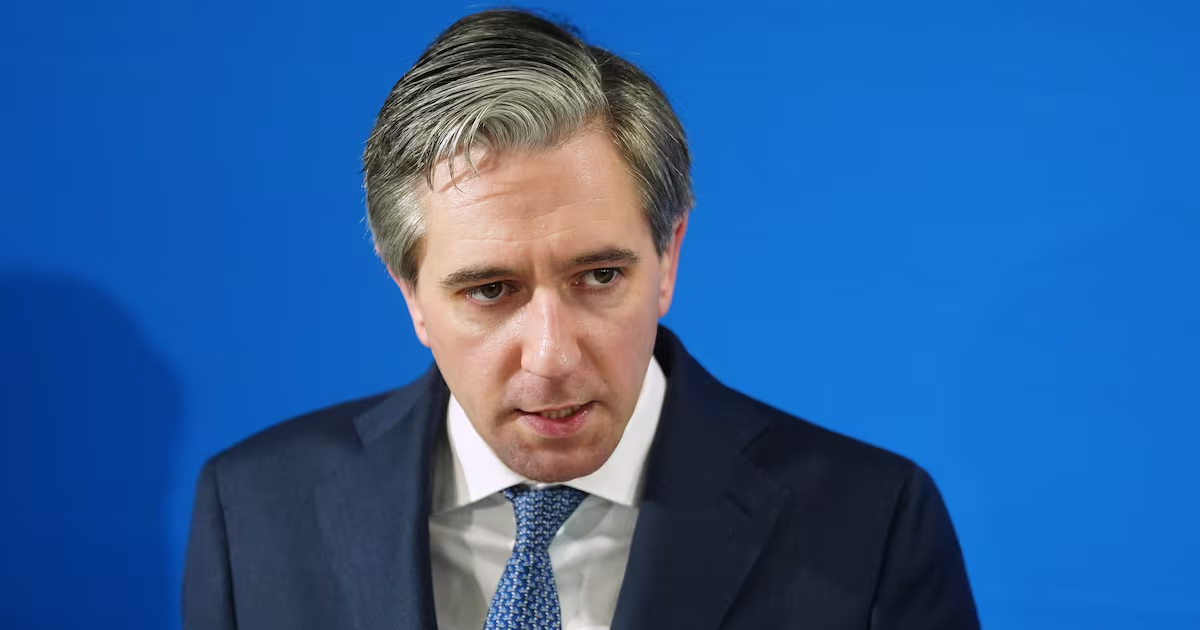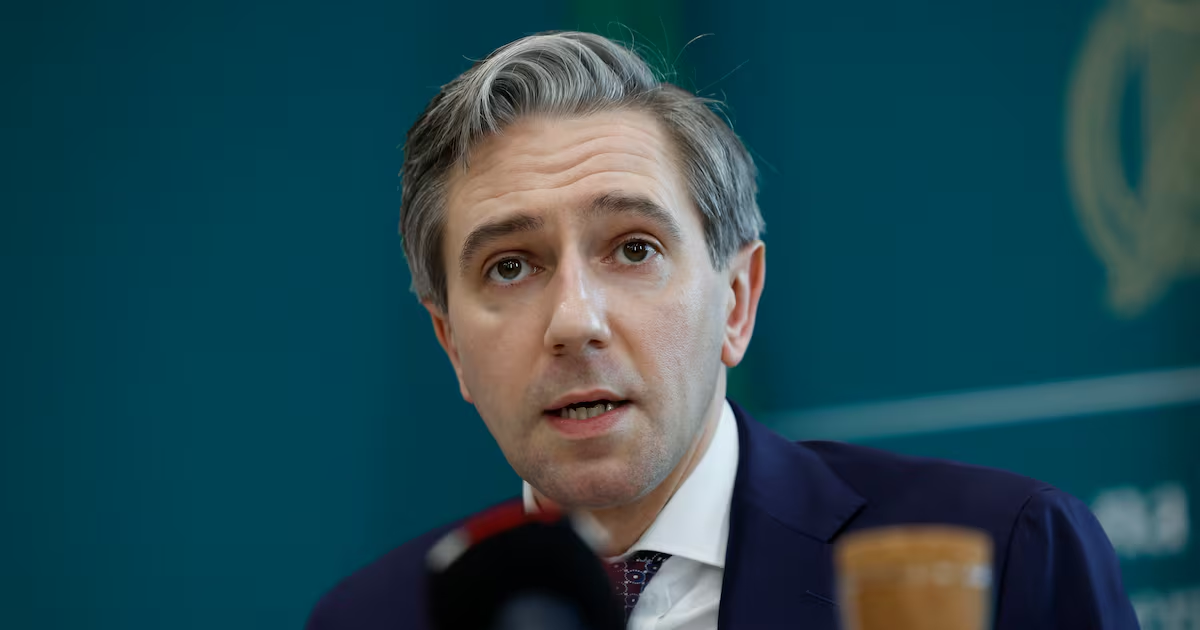
Minister for Finance, Simon Harris, has announced some more details of the planned new savings accounts to be available to Irish residents. However, a number of pieces of vital information are still not known. And, after months of trailing the scheme, it is not clear if there is no decision yet on some of the key details of the scheme, or if they are being held back for the budget day announcement.Investors will need to see these details before deciding whether it is worth participating and providers will require them before they develop their offers. What is the basic outline of what will be on offer? The latest announcement confirms that full details of a new savings scheme for Irish people will be announced on budget day. It says that the new investment account will be available to Irish tax-resident individuals aged 18 and over who hold a PPSN, with one account permitted per person. As the saying goes, terms and conditions will apply. The scheme will be legislated for in a 2026 finance bill. The accounts are likely to be available in mid-2027.What new information do we now have? Only so much. Some key details are now confirmed – and the scheme will borrow parts of the Swedish and UK schemes. First, the scheme will allow investors to save a certain – as yet unspecified – maximum amount each year, with no minimum figure. This much was always likely, but it would useful to have indications on the size of savings allowed each year.Second, the returns will be free of tax up to a certain limit – or threshold – for the overall size of the fund. There will be no capital gains charged on investment gains and no income tax on dividends on any funds invested under the new scheme. However, there will be a new flat annual charge made on the size of the fund above the threshold. This “Swedish model” approach on taxation was flagged by Harris as his preferred approach early on, but there was then uncertainty as consultations with the industry went on. The vital details on the level of threshold and the tax rate are still awaited.I’m confused, there will be two limits? Yes. There is a limit on the total amount which people can invest each year – something borrowed from the UK. And there will be a separate limit – or tax threshold as it is called – on the total amount that can be held in the funds before the tax charge kicks in.We don’t know what either of these are. And they will be fundamental to the attraction and operation of the scheme.It looks like a Swedish type scheme where a small percentage figure is applied to the total size of pots above a certain limit – this can still be significant in weighing up the returns from the scheme.It also means that investors will in some circumstances have to pay a tax charge even in years when they are losing money.Why are the limits being put on the scheme? The Government wants to avoid the risk of those with significant current investments switching most of their existing holdings into the scheme. It also wants to avoid potentially disruptive transfers out of existing bank accounts. Give me an example of how it works? Okay. If the annual investment limit is, say, €20,000, contributions up to this level will be allowed each year into the accounts. The normal taxes charged on investments – capital gains tax and income tax on dividends – will not apply. There will be no “lock-in” period – so investors can get immediate access to their funds. When the total size of a fund reaches a certain threshold, amounts above this would be subject to what is called a “small annual charge” based on the total size of the fund. The fund provider would look after the reporting and payment of this charge – the investor would not need to make a separate tax return. The money can be put into listed shares, listed bonds, financial instruments traded on a regulated market and a range of investment funds suitable for retail investors, including ETFs. They cannot be kept in a cash deposit account. Derivative and crypto investments will not qualify.Will this be a good deal for investors? Getting a break from normal taxes should increase the attractiveness of investing, rather than saving in the bank. However, in assessing the likely attraction of the scheme, there are still vital details we don’t know on the investment limit, the tax-free threshold and, critically, the rate of tax above the threshold. Investment in the market involves risks – and investors need to be prepared to put their money away for a period of years. This is a long-term scheme, not a guaranteed five-year option like the SSIA scheme. The other crucial piece of information we need is the charges which the providers will levy. Anything else? Yes. Harris has signalled a study of the general tax regime applying to investments with a view to lowering and simplifying taxation. This will include examination of the deemed disposal rule, where investors in certain funds including exchange traded funds must pay tax on gains every eight years even if they don’t sell their holdings. It is not clear if the study will consider the wider exit tax regime which applies to these funds with a charge of 38 per cent on disposal. However, these issues will not be dealt with in Budget 2027. A lot remains to be decided here.
Q&A: What we know – and don’t know – about the new investment accounts
Investors need to see more details before deciding whether it is worth participating in new scheme
928 words~4 min read