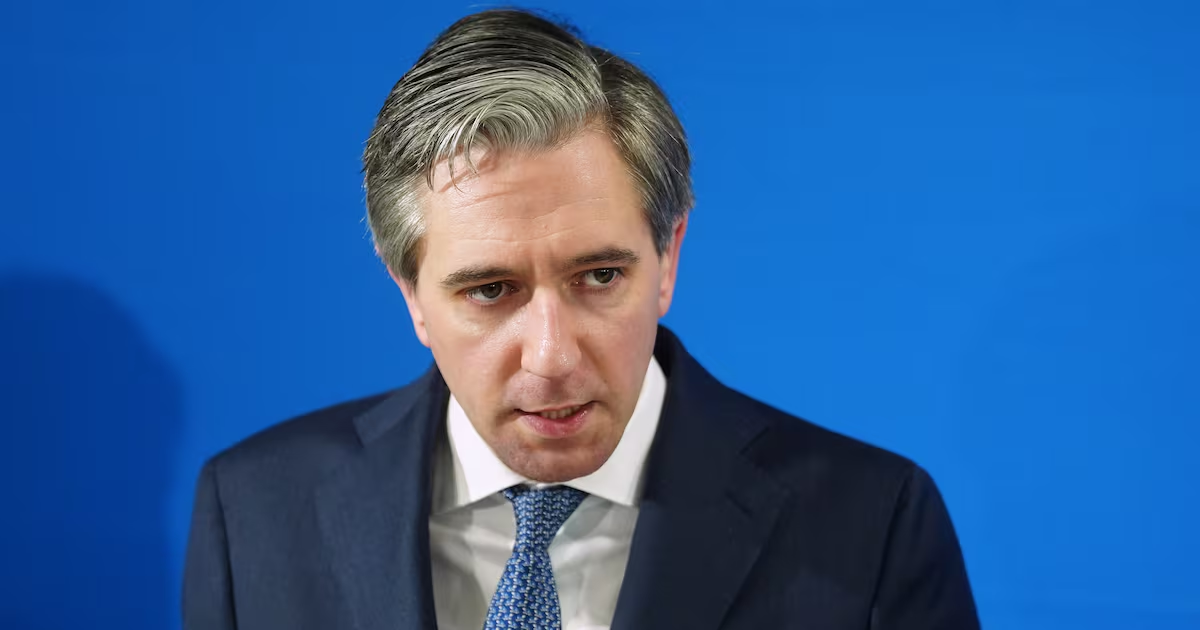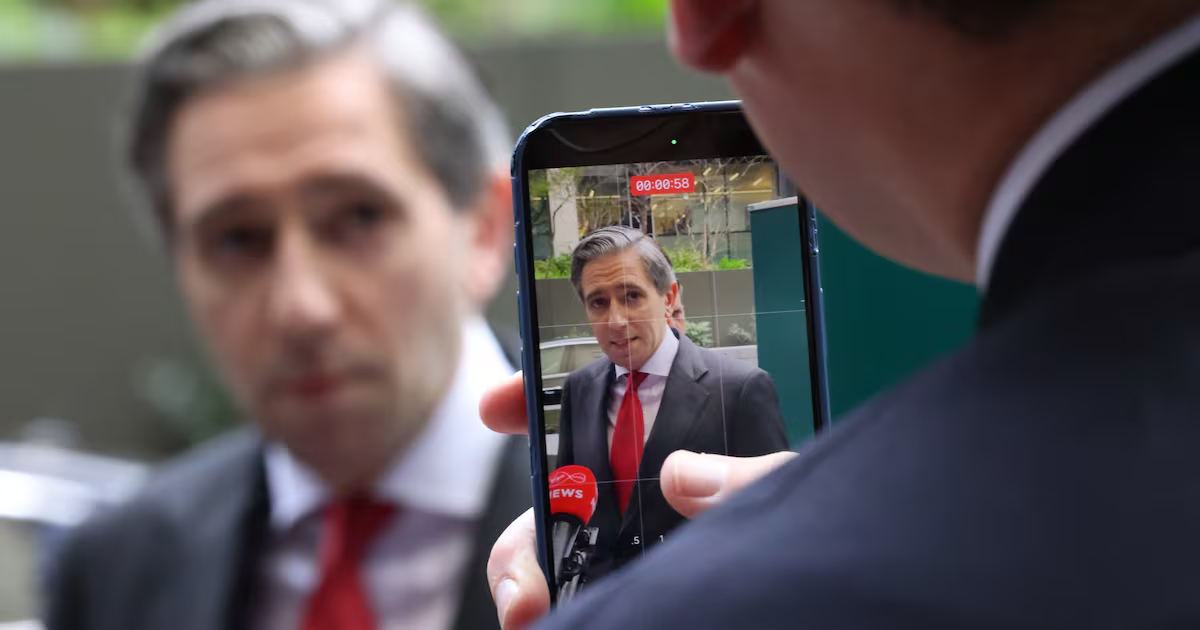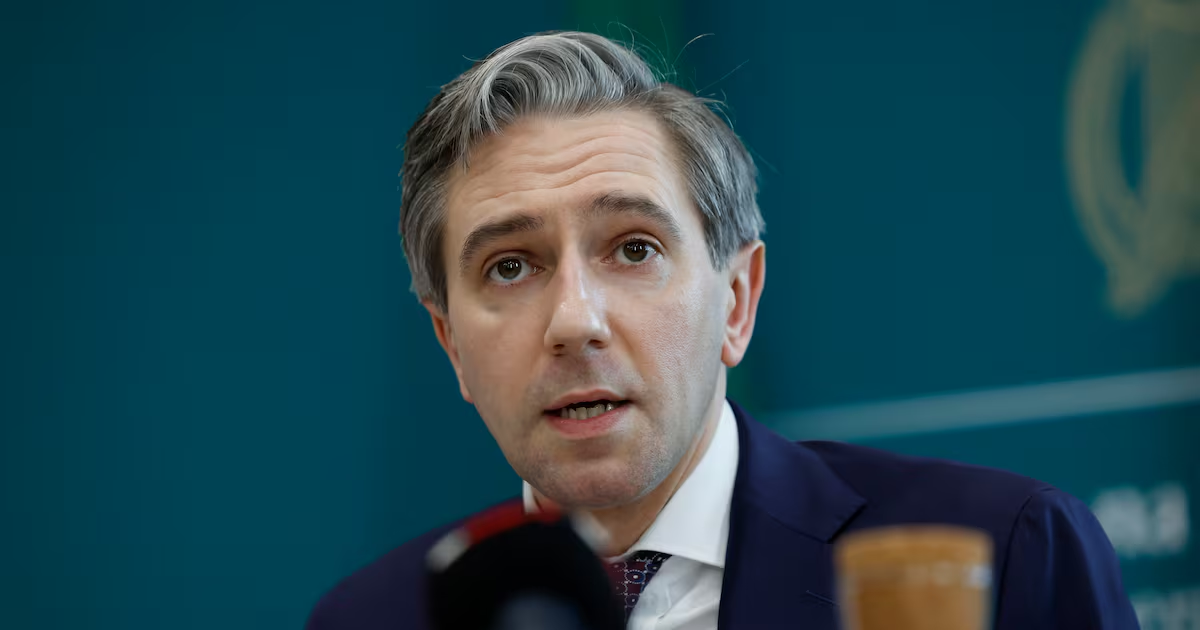
Almost five months ago, then Tánaiste and Minister for Finance Simon Harris announced a proposal to introduce a Personal Investment Account (PIA) on the lines of the UK’s ISA (Individual Savings Account) and other similar schemes across Europe. Harris pointed out that some €170 billion of Irish people’s money was sitting in deposit accounts earning little or no interest and that the new scheme would incentivise people to put their money into higher yielding investments. The following month he convened the first Annual Savings and Investment Forum, which brought together key stakeholders from across the financial services sector, consumer representatives and policymakers. The key focus of the forum was the proposed PIA. Addressing the forum, he said: “We already know that Irish people are among the best savers in Europe, however the numbers who are engaging in retail investing are among the lowest in Europe. We have a real opportunity to empower individuals to make better use of their hard-earned savings, to support long-term financial wellbeing and to channel capital into productive investment. “The development of a Personal Investment Account framework, in line with the European Commission recommendation, has the potential to be transformative by making investing more accessible, more transparent and more rewarding for people right across this country.” In an answer to a parliamentary question on May 26th, Harris added: “We want to make investing simpler, clearer and more accessible for ordinary people, and help their hard-earned money work harder for them over time. The aim is to legislate for the framework in 2026 and to allow accounts to be offered from 2027. The account will be designed as a simple, one-stop option for individuals. It will also be a key part of a broader rethink of the taxation of retail investment. The Government’s view that the account should be simple, accessible, tax efficient, easy to administer, low cost and transparent on fees and portable across borders where possible. “In terms of designing the model that best fits the Irish economy and the needs of Irish households, the views of relevant experts are being considered as well as learning from best international practices. Officials in my Department are currently developing policy options regarding the investment account framework, which will form part of the deliberations for Budget 2027 over the coming months.” The favoured model for an Irish scheme appears to be Sweden’s ISK (Investeringssparkonto), a tax-advantaged investment account that allows individuals to hold stocks, exchange traded funds (ETFs) and mutual funds without paying 30 per cent capital gains taxes or dividend taxes. Instead they pay a standardised, quite low annual tax based on the total account value. Brian Hayes “Sweden’s ISK is a widely used investment account ‘wrapper’ offered by mainstream providers like banks and brokers,” says Banking and Payments Federation of Ireland (BPFI) chief executive Brian Hayes. “It allows people hold a broad range of everyday retail investments – for example funds, listed shares and ETFs – without having to calculate tax on every individual trade.” The big design feature is tax simplicity, he adds. “Instead of taxing each gain or transaction, Sweden applies a standardised annual tax based broadly on the value of the account. Gains and dividends aren’t taxed as separate events inside the account, and withdrawals aren’t taxed either. More specifically, the first SEK 300,000 (€27,510) held in the account is tax free. However, a flat annual tax based on Swedish government borrowing rate applies to holdings above that, which in 2025 was 0.888 per cent. Fees from providers would also be added.” There are valuable lessons in the Swedish approach, he adds, particularly simplicity, easy switching between providers and wide product choice. However, he also says that Ireland shouldn’t replicate any model mechanically, noting that Sweden’s experience reflects the country’s own particular circumstances. “The right approach for Ireland is to borrow the best design elements and tailor them to Irish households and Irish tax structures,” he advises. AIB head of consumer Adrian Moynihan agrees. “Rather than focusing just on the Swedish model, it is best to examine the key principles and features of different models across different countries that have proved successful in creating a stronger investment culture amongst consumers,” he says. He points out that countries such as Sweden, the UK and Canada all offer different schemes with different features. “However, common principles include being easy to understand, easy to administer, enabling accessibility for all consumers and a simplified tax structure have been hallmarks of successful PIA offerings in other countries. “Ireland should look to incorporate these features also. It is encouraging to hear that recent commentary indicates the Government also wants a system that is accessible to all, easy to understand, easy to administer, and capable of moving savers into long-term investing.” Adrian Moynihan, AIB. Photograph: Shane O'Neill/Coalesce The importance of simplicity and accessibility is also emphasised by Dublin Chamber public affairs director Aebhric McGibney. “Dublin Chamber welcomes the Government’s intention to introduce a new savings and investment scheme,” he says. “If designed effectively, it has the potential to mobilise greater levels of domestic capital into productive investment across the Irish economy. However, simplicity and accessibility will be critical to the scheme’s success. It must be easy for ordinary savers to understand and participate in, while also providing meaningful incentives for long-term investment.” Among the key questions being asked is what tax, if any, should apply to an Irish scheme. While the ISK applies a low annual tax on assets, this can act as a disincentive during periods of low returns. The UK on the other hand applies no tax at all. The decision is a matter for Government, but it should be mindful of potential impacts, according to Hayes. “If the objective is to create a long-term investment culture in Ireland, then we do see merit in an Irish SIA having a simple to understand tax incentive,” he says. “Whether this is tax-free or set at a very competitive rate is for government to decide. However, what policymakers may need to consider is that if a flat tax or relatively high capital gains tax applies, this will ultimately act as a barrier for consumers and the long-term success of the scheme if it negatively impacts compounding.” The scheme should provide a clear tax incentive within the account up to a certain limit to be defined by Government, AIB’s Moynihan concurs. He also suggests a number of ways to ensure the success of the scheme. “It should be easy to open, easy to understand, and easy to use, including the ability to contribute automatically on a continuous basis,” he says. “It should be transparent, accessible across common distribution channels, and designed around the reality that most people begin investing with modest amounts and build confidence over time.” To reinforce simplicity, eligible assets should be retail appropriate and readily understood, aligned with what is already permitted by retail investors, he continues. “In practice, this means the account should comfortably accommodate core mainstream building blocks such as UCITS funds (Undertakings for Collective Investment in Transferable Securities), listed securities (equities), cash, bonds, unit-linked insurance funds and ETFs. It should offer a clear and attractive tax outcome. If the policy objective is to build trust and participation, then the incentive must be easy for consumers to grasp and strong enough to change behaviour.” Tax incentives and ease of use will not be sufficient to guarantee success without a co-ordinated financial education campaign, Moynihan adds. “Many retail investors will be unfamiliar with capital markets, investment products, or the benefits and risks associated with long-term investing. Therefore, it is recommended that advice led or guided customer offerings may be most appropriate for certain customers, while self-directed pathways are suitable for others.” As the accounts will be risk-based investment offerings, they must meet all existing and relevant regulatory requirements regarding customer interests, suitability and disclosure rules to ensure customer understanding. “This should be complemented with accessible, tailored resources,” he says. “All of this combined would help ensure that consumers understand both the benefits and risks of investing and are supported with regulated advice and information. Improving financial education will empower consumers to make informed decisions, build confidence and foster a culture of responsible investment.” Of course, we are still very much within the realms of speculation when it comes to the final shape and form of the scheme and any supporting initiatives. “While the initial direction of travel is positive, businesses and investors will need greater clarity on the scheme’s design, scope and implementation timeline as part of Budget 2027,” says Dublin Chamber’s McGibney.
How to make sense of the new Government-backed investment scheme
The aim of the Personal Investment Account is to make investing a simpler prospect for ordinary people
1,426 words~6 min read