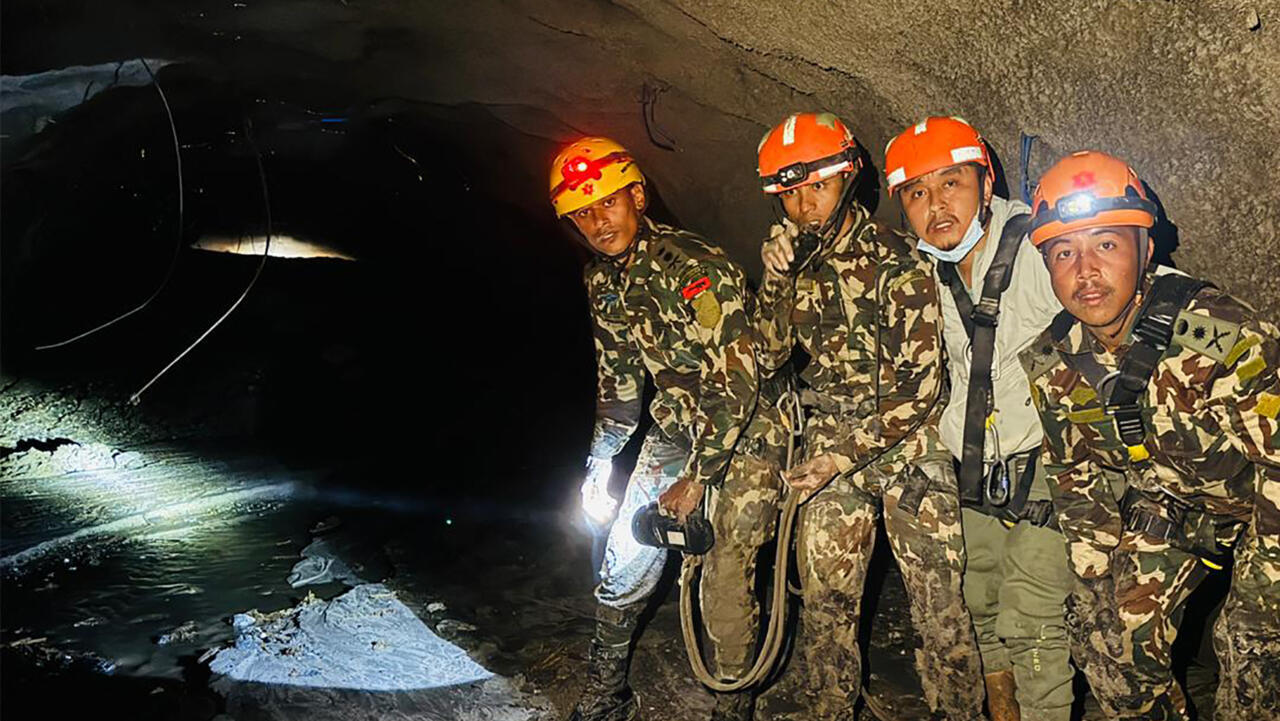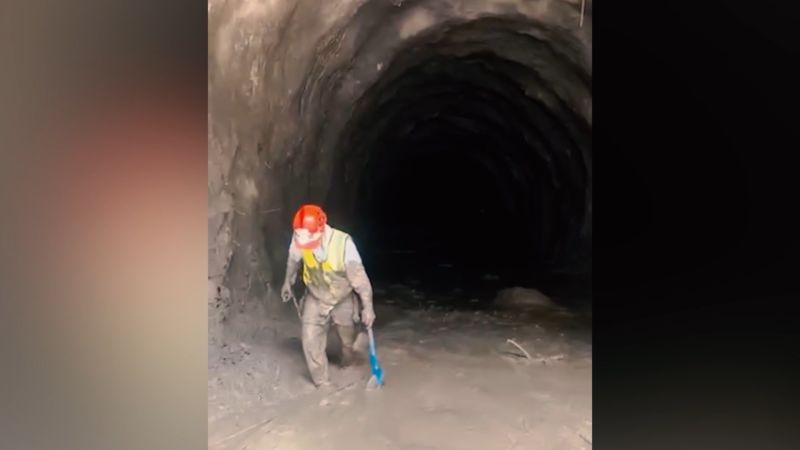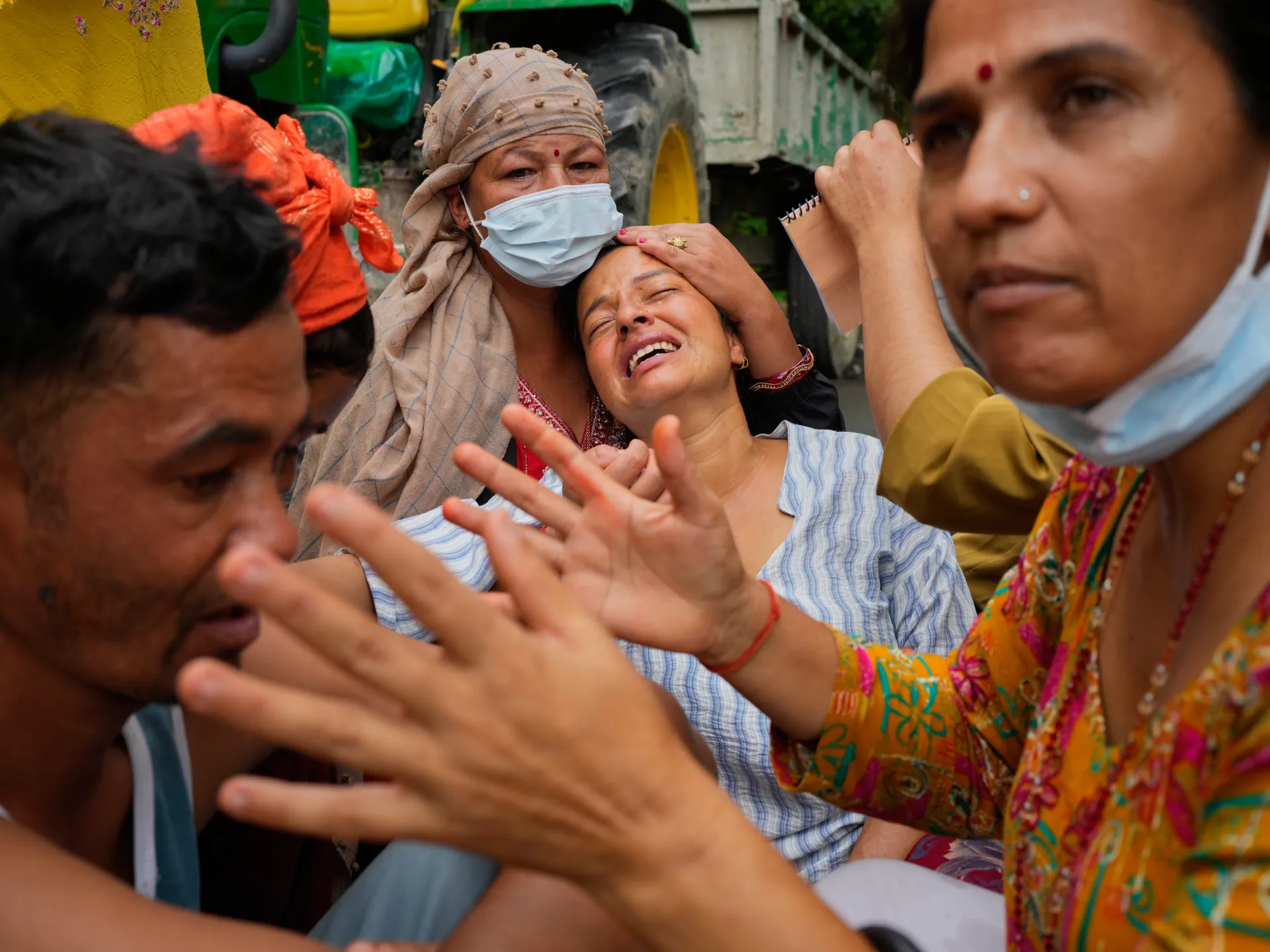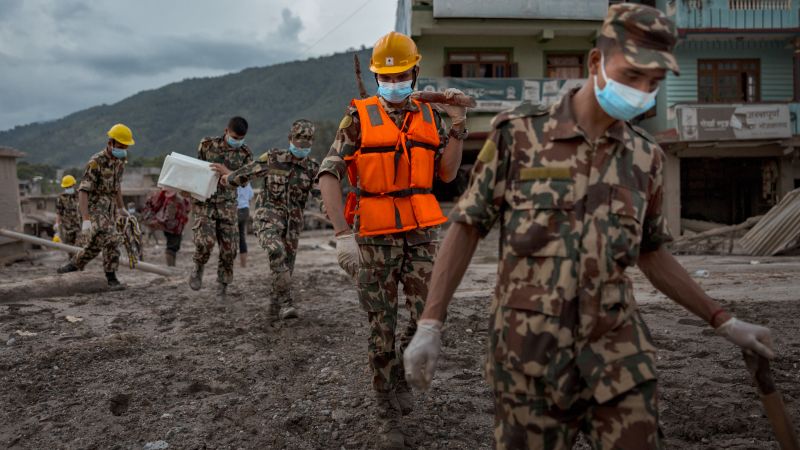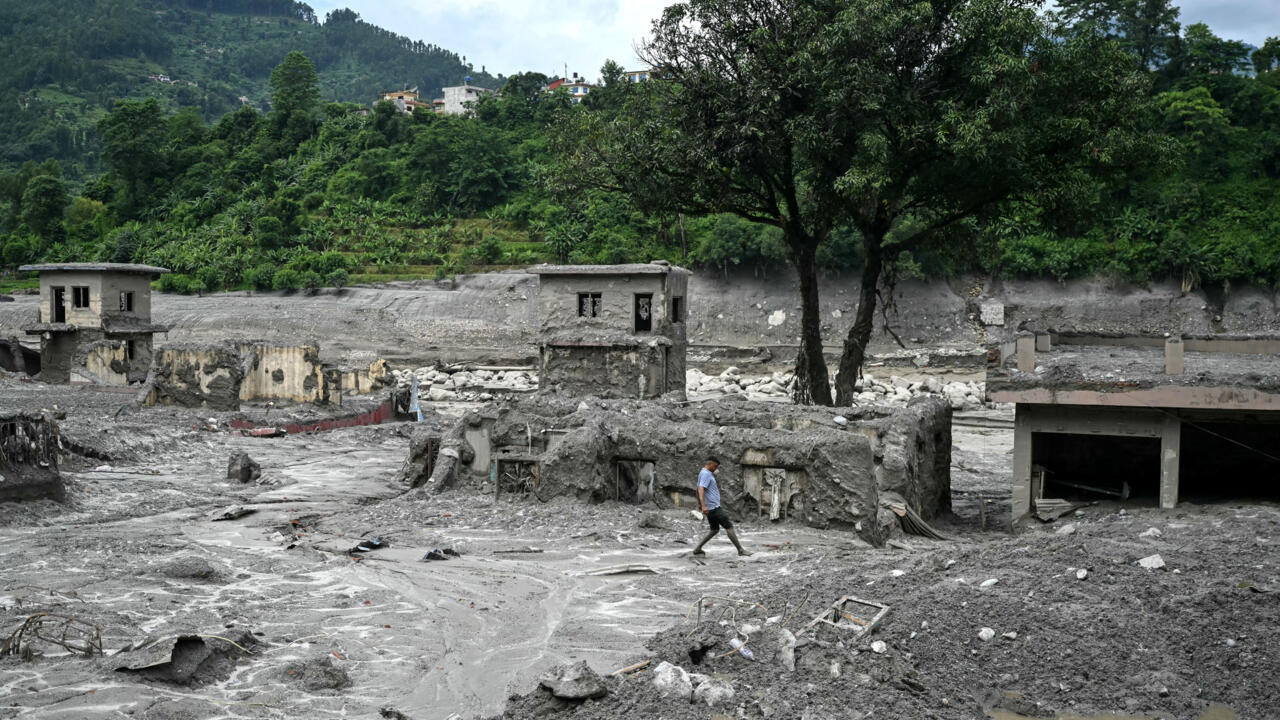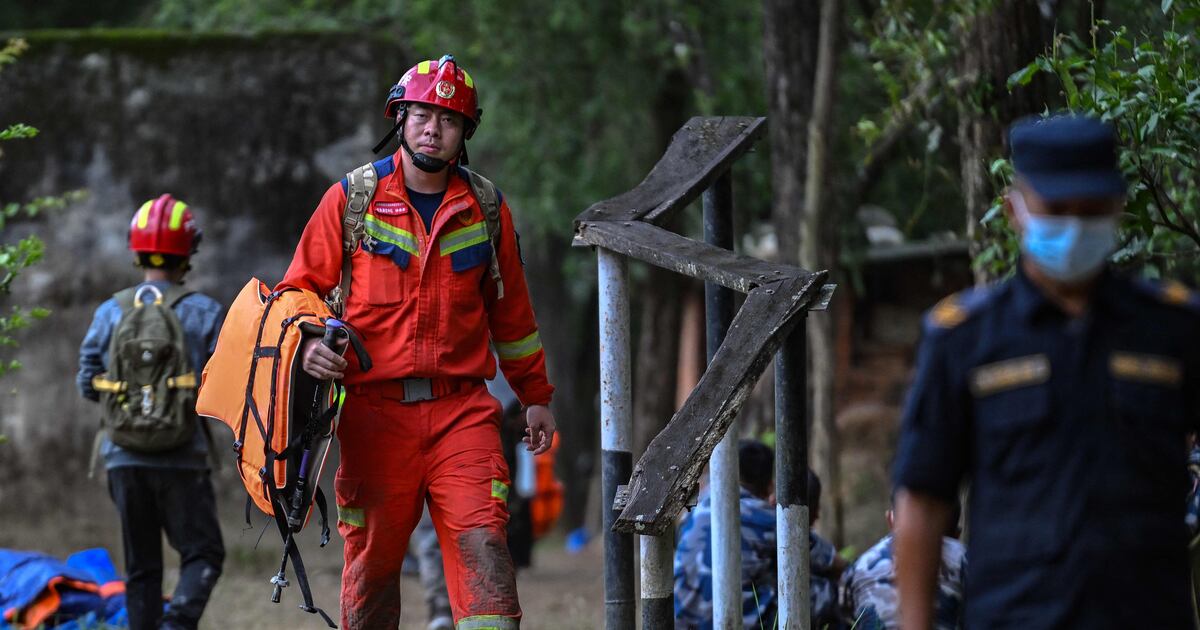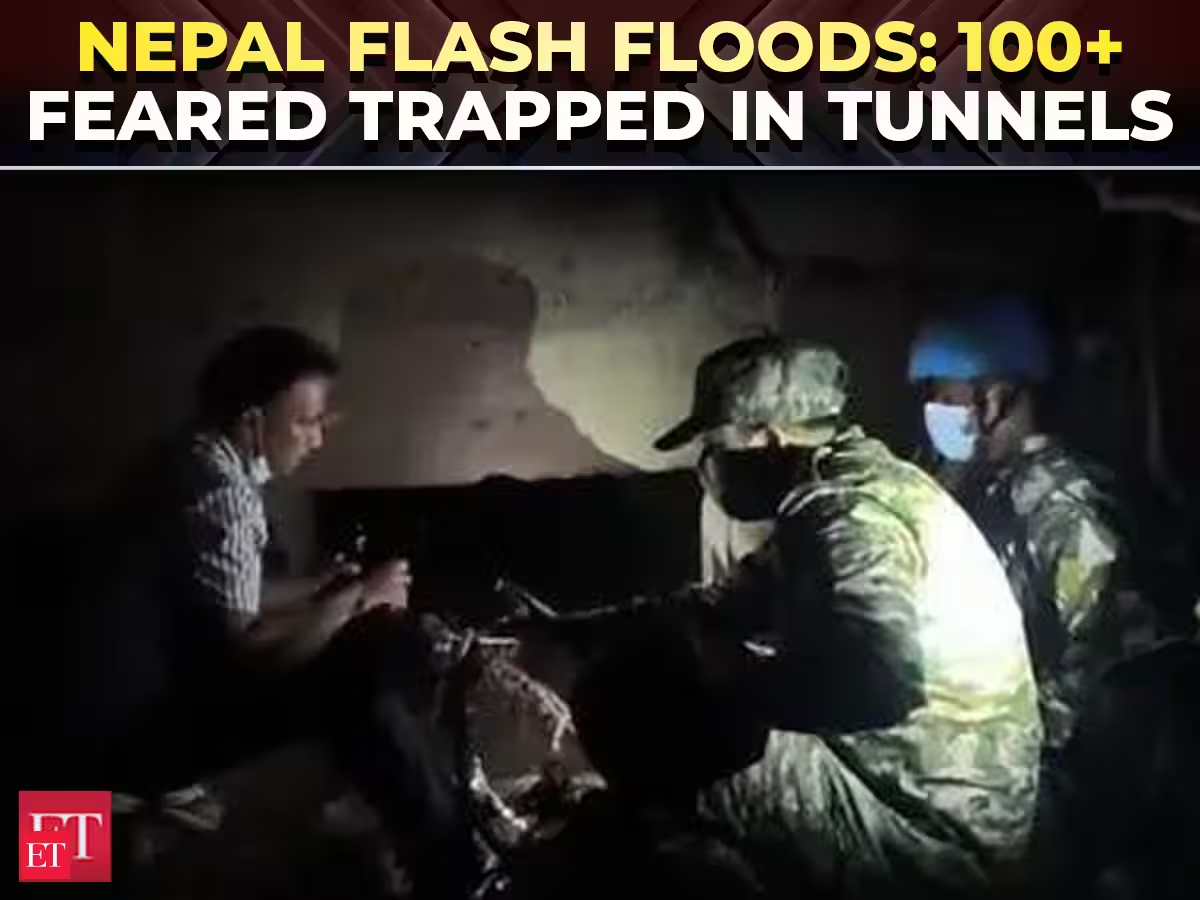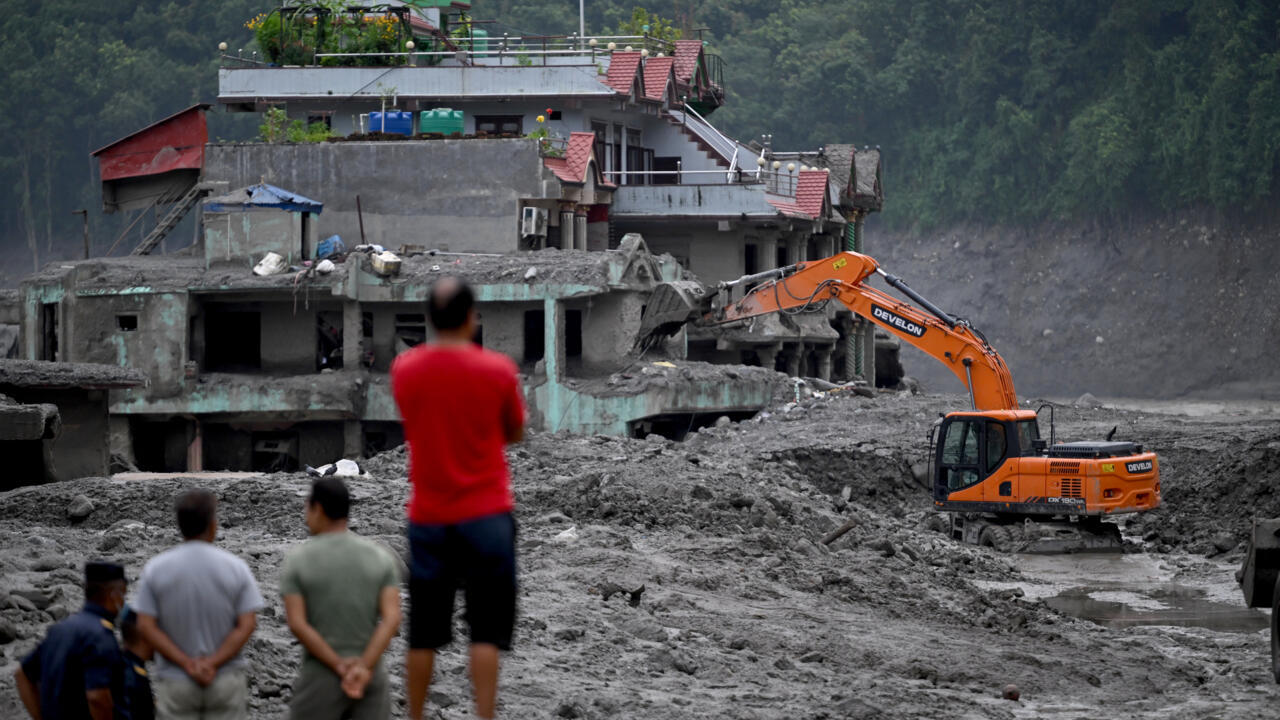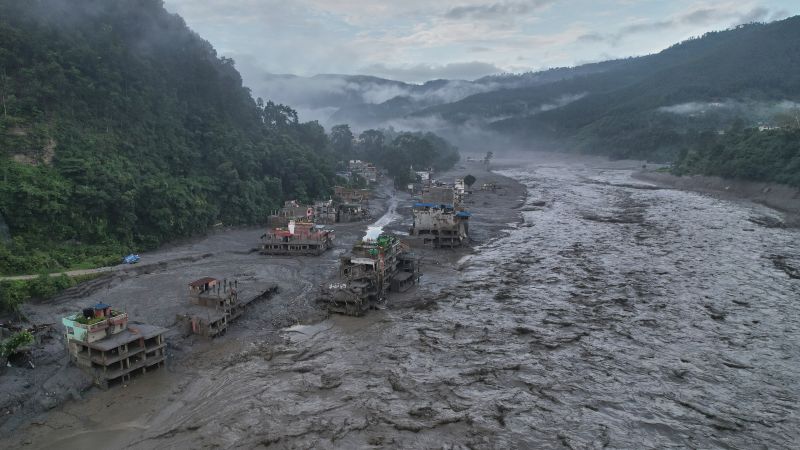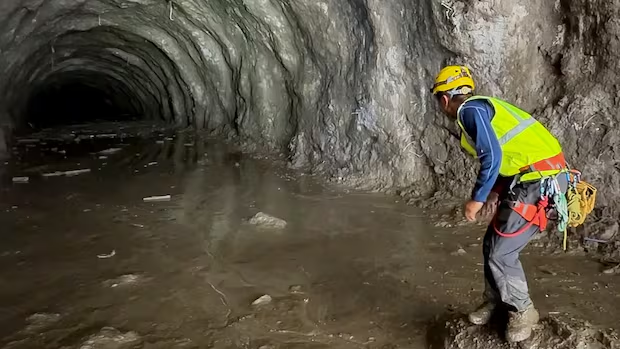
World·NewRescuers rushed Monday to reach workers believed to be trapped in tunnels at hydropower sites buried in mud after catastrophic flooding in Nepal and China, as the death toll continued to rise and increasingly desperate families search for their loved ones.Multiple foreign teams assisting local rescuers as deaths climb past 900The Associated Press · Posted: Aug 31, 2026 6:16 AM EDT | Last Updated: 31 minutes agoListen to this articleEstimated 6 minutesThe audio version of this article is generated by AI-based technology. Mispronunciations can occur. We are working with our partners to continually review and improve the results.Hundreds feared trapped in tunnels after Nepal flash floods9 hours ago|Duration 2:50Thousands of people are still missing after devastating flooding in Nepal and searchers are turning to tunnels at some hydropower sites, where hundreds are feared trapped. The number of confirmed dead has risen to about 800.Rescuers rushed Monday to reach workers believed to be trapped in tunnels at hydropower sites buried in mud after catastrophic flooding in Nepal and China, as the death toll continued to rise and increasingly desperate families search for their loved ones. The combined deaths in Nepal and China surpassed 900, with more than 4,700 people missing, and a private-sector association representing power companies said at least 900 workers have been unaccounted for from 12 hydropower projects damaged by the floods in Nepal's Rasuwa and Nuwakot districts.Mohan Kumar Dangi, president of the Independent Power Producers' Association, Nepal, or IPPAN, said there's an estimation of at least 500 of the 900 missing workers trapped in the tunnels, although authorities have provided varying numbers and said several foreign teams were assisting Nepali rescuers.At least one expert said the tunnels offered enough space for people to take refuge and that some workers could have access to oxygen. But others warned that the chances of finding survivors were diminishing. Dangi said some workers had managed to make contact and call for help when the disaster struck last Wednesday, and some others who managed to flee reported to authorities and relatives that many of their colleagues were still in the tunnels. But he said that, six days after the disaster, fears grew that some might have suffocated."We are working in search and rescue of the stranded people from hills, settlements and river areas," said Brig. Gen. Raja Ram Basnet, Nepal's army spokesman.Nepal's disaster agency said Monday that 903 deaths had been counted in that country, with 4,247 people, including 592 foreigners, missing. As of Sunday, Chinese authorities reported 16 deaths and 546 missing, and Chinese state media said 261 of the missing were foreigners, including over a hundred Nepalis.Trapped in tunnelsWorkers shovelling mud from a flood-ravaged power station in Dhading, Nepal, told The Associated Press that the station is a key node for providing power to over 20,000 people in the region. The workers cleaning the power station said they hope that it is not rebuilt near the river. Rescue efforts are focused on people trapped in the gigantic tunnels built for controlling the waterflow to produce hydropower. "The tunnels are built to access hydropower infrastructure and to divert water — an essential step to generate energy. These tunnels are big enough to drive trucks through," said Jakob Steiner, a geoscientist at the University of Graz in Austria who is currently based in Dhaka, Bangladesh. "There is enough place for people to take refuge safely inside and from what we understand they have managed to get oxygen to some of those stuck inside and are trying to rescue them now. It's a race for time though as people need food and water."In the Upper Trishuli-1 Hydropower Project, in the hard-hit Rasuwa district, at least 576 were missing, Dangi said, adding that around 300 of them were believed to be trapped inside the project's tunnel. Rescuers have been trying to find survivors for days, working through the rain. A rescuer works at the entrance of a tunnel at Chilime Hydropower Plant as rescue operations continue for people trapped inside following deadly flash floods and a mudslide, in Rasuwa, Nepal. (Ashish Gurung/Reuters)On the Chinese side, rescue and recovery efforts included rebuilding the road leading to Gyirong Port at the border between China and Nepal. Trucks carried giant rocks as workers worked on repaving a portion of the road, state broadcaster CCTV showed Monday, next to rapidly rushing waters, which have been made more powerful by rains in the past couple of days. The road is now under some two to three metres of water, hampering rescuers' ability to reach the border. The repaving effort was just a little over a kilometre from the border, CCTV said. Although some rescue teams have managed to reach the border, that represented only a portion of the force. Rescuers search for thousands following deadly Nepal-China floodScientists fear Nepal's disaster is just a glimpse of the carnage climate change could causeTwo days after the disaster, Maraval Nagappan travelled to Nepal to search for his son, who was among the missing. He visited rescue centres and morgues and went as far as 40 kilometres from where his son was believed to have been, but found no sign of him.His son, Sathya Narayan had been leading a group of 49 Indian devotees who were returning from Mount Kailash — a sacred site in southwestern Tibet. The group has been missing since floodwaters swept through a Chinese immigration complex where they were waiting to cross into Nepal.Nagappan, who owns the Chennai-based travel company that organized their pilgrimage, and said the group had been expected to complete immigration formalities and leave for Nepal within about two hours. Instead of making the crossing, they were caught in the flood, Nagappan said.The pilgrimage had begun Aug. 14. "I haven't heard from my son since then. I don't know whether he is alive or dead," he told The Associated Press, but he said he hadn't given up on hearing from his son.Relatives mourn as they repay their respects to Sundari Shrestha, 41, a victim of the flash floods, during her final rites at a crematorium in Kathmandu on Monday. (Monika Malla/Reuters)Surveillance footage showed water surging through the immigration complex at the border as people scrambled to escape. Nagappan said some of those seen fleeing were members of his son's group and were identified by the clothes they were wearing.Wednesday's flash floods started after a glacial collapse high in the Himalayan region. Scientists who studied satellite images said bedrock underneath a glacier high in the Himalayan region had collapsed, taking part of the glacier with it. The rockfall was so extreme that it registered as a magnitude 5.2 seismic event. The rocks and melted water then swelled the rivers in the valleys below, causing a torrent of water that swept buildings, bridges and earth downstream in Tibet and Nepal.WATCH | How it started with a glacier collapse:The science behind Nepal's violent flash floodAugust 27|Duration 2:39An entire river valley along the Nepal border was wiped out in seconds... but local radar showed no rain, and it wasn't an earthquake. CBC Meteorologist Johanna Wagstaffe breaks down how a massive glacier collapse triggered a violent inland tsunami—and why geologists warn this unfolding climate disaster isn't over yet.
Rescuers race to find trapped workers in hydropower plant tunnels after Nepal flooding | CBC News
Rescuers rushed Monday to reach workers believed to be trapped in tunnels at hydropower sites buried in mud after catastrophic flooding in Nepal and China, as the death toll continued to rise and increasingly desperate families search for their loved ones.
1,196 words~5 min read