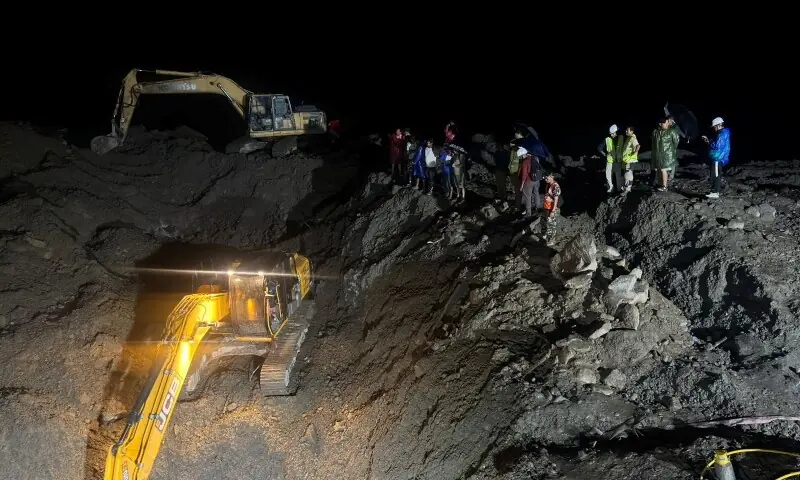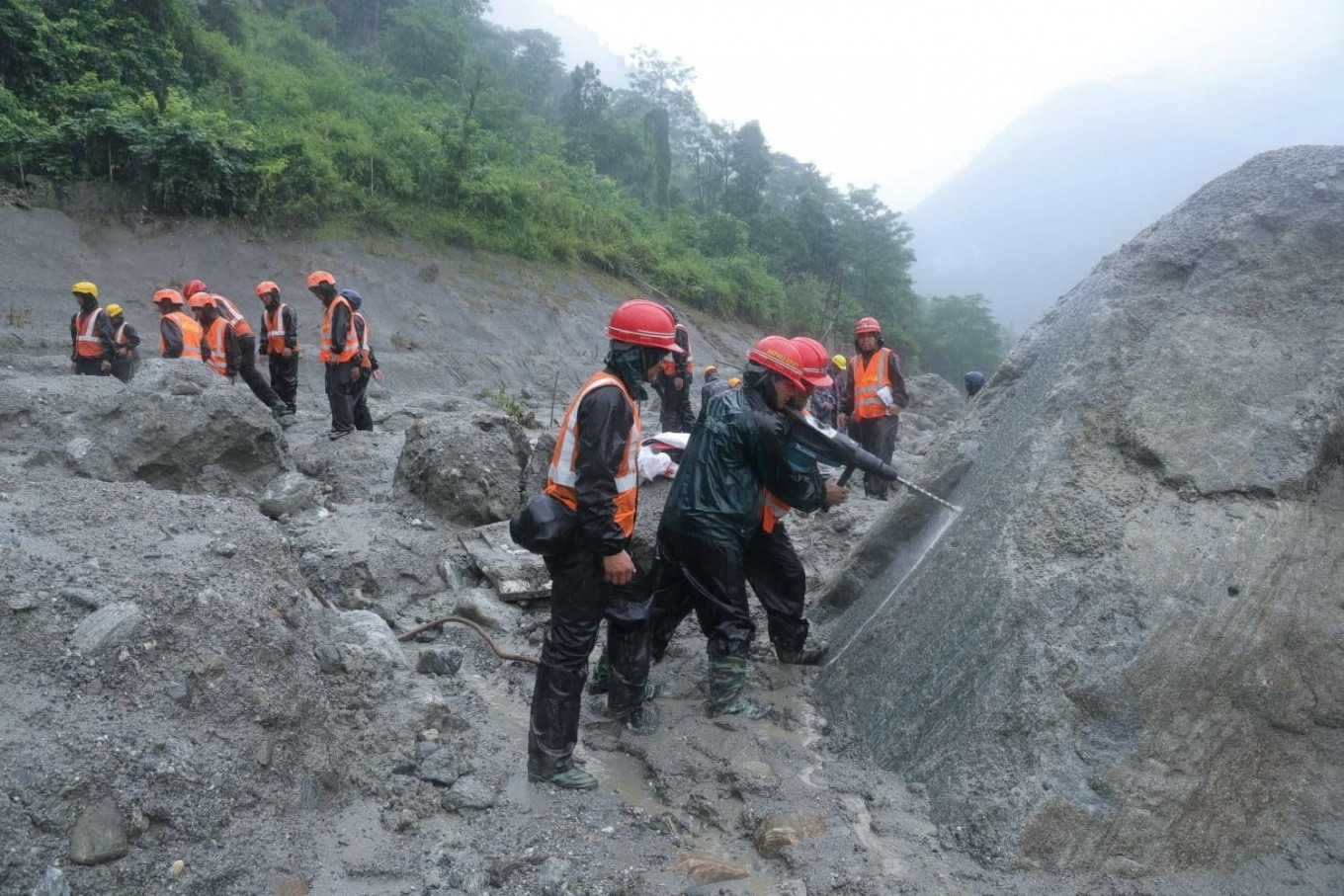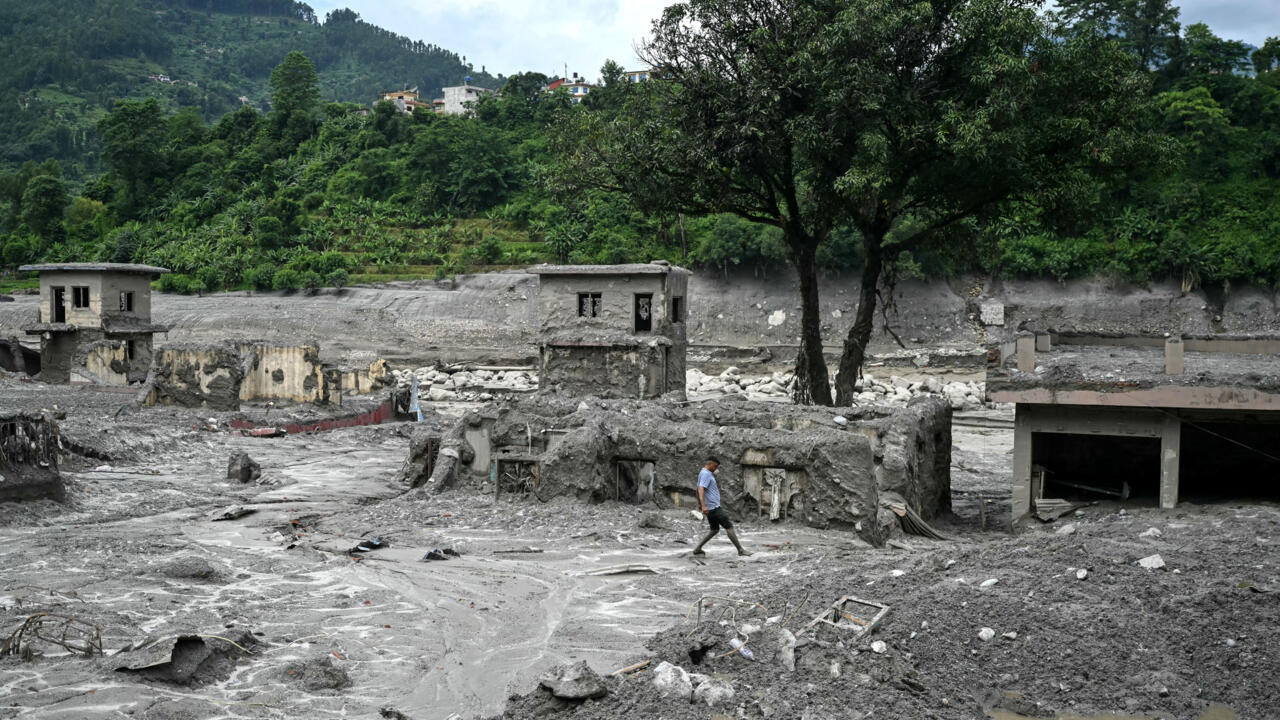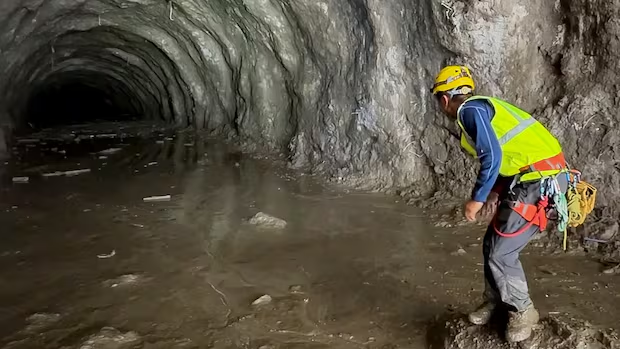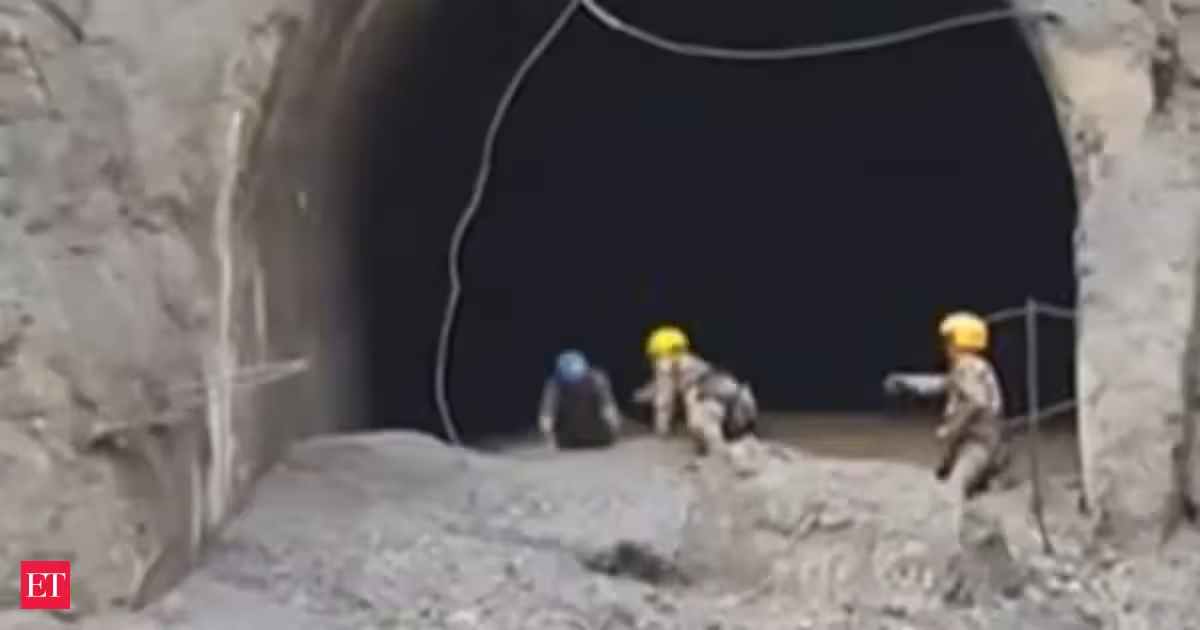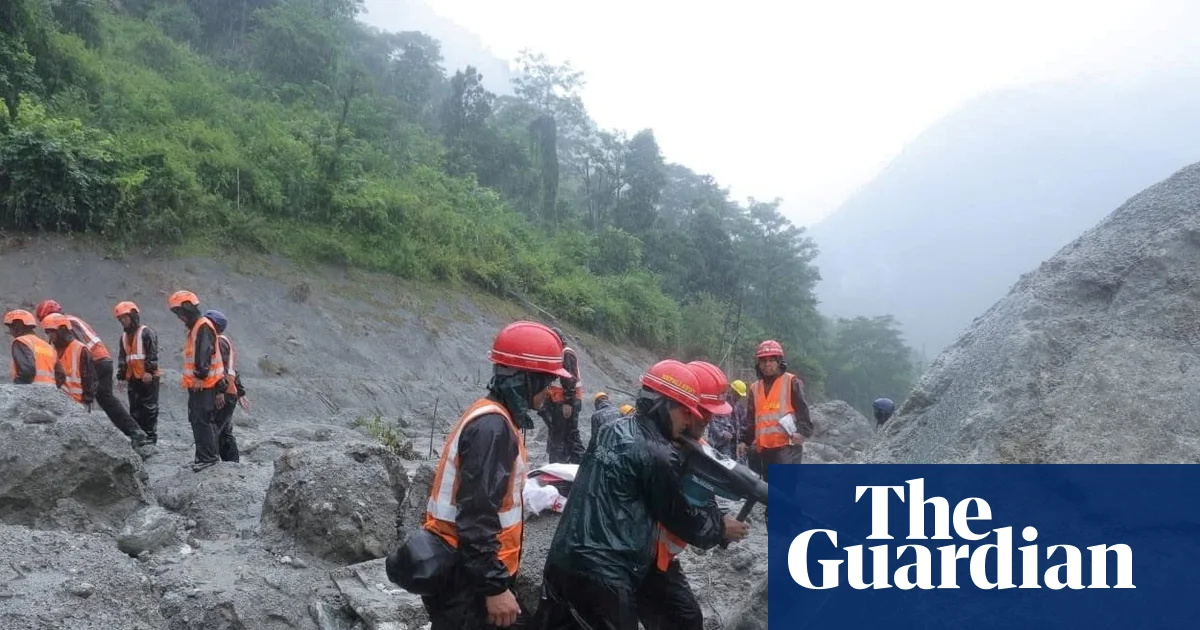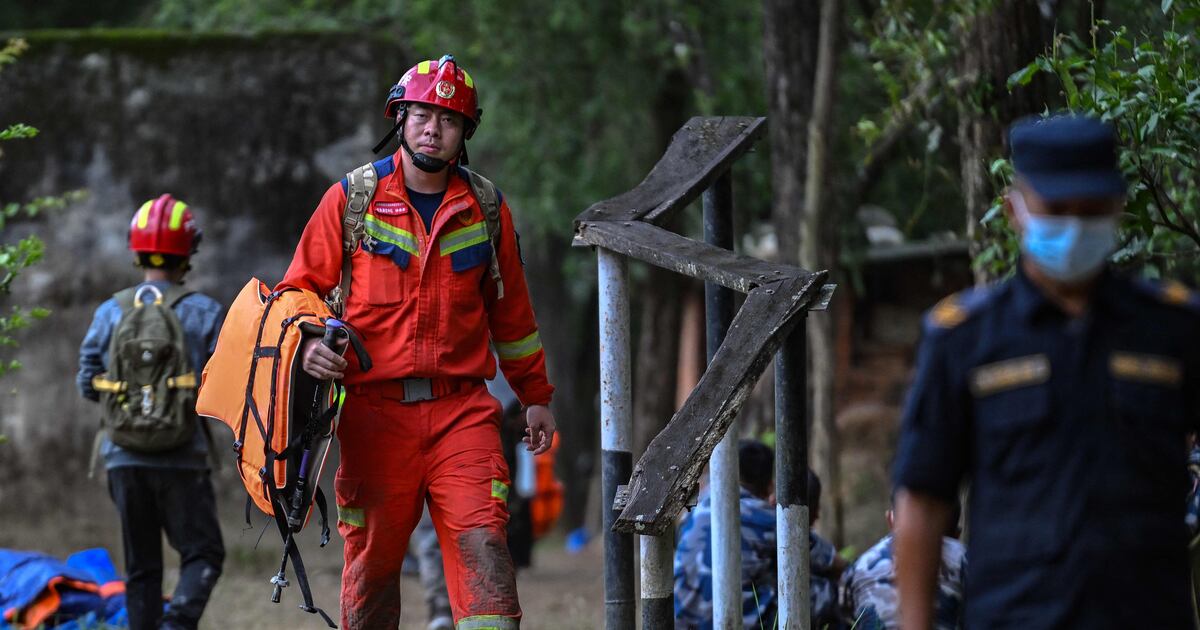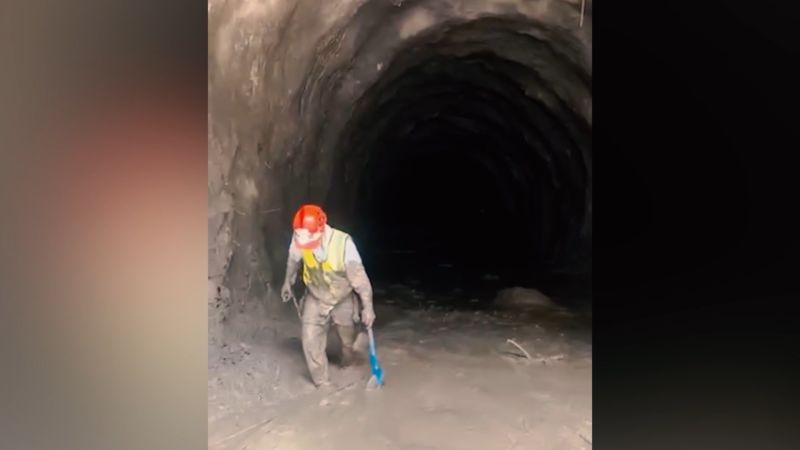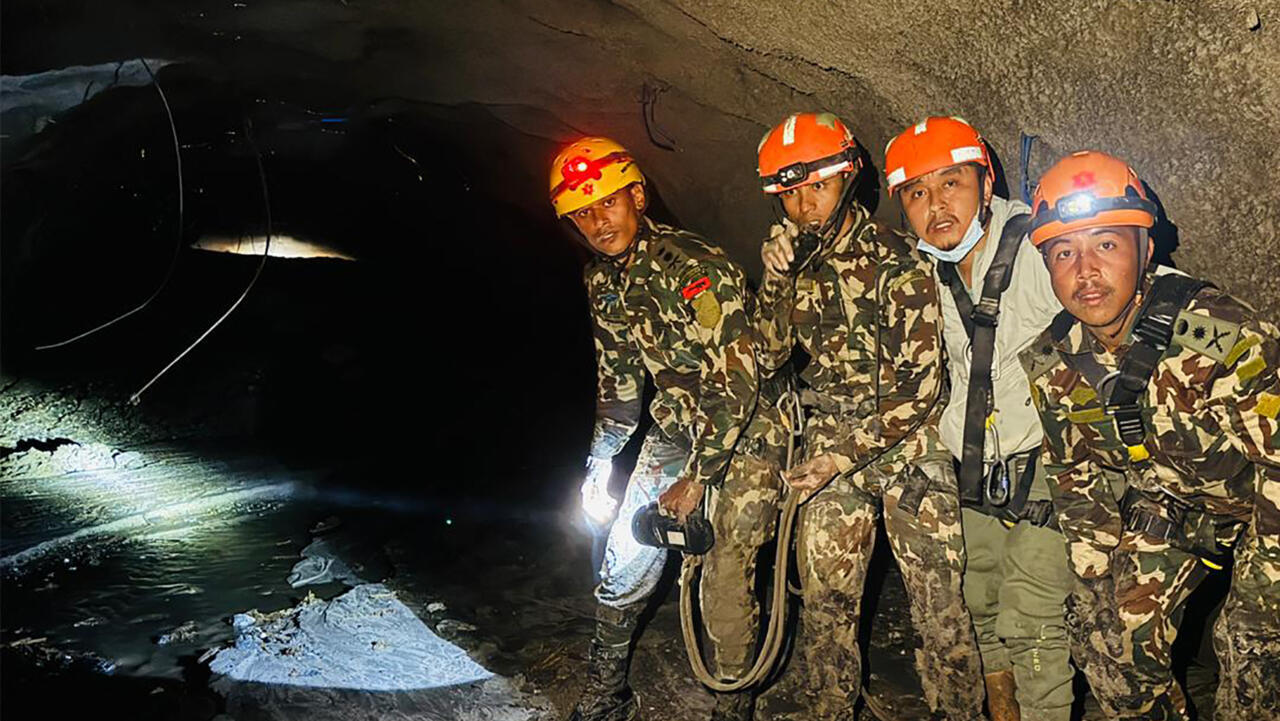
Nepal's rescue teams, helped by Chinese and Indian experts, stepped up efforts on Monday to reach hundreds of workers believed to be stuck inside blocked hydropower project tunnels in the aftermath of last week's Himalayan flood that carved a trail of destruction in the country's valley towns and villages, as well as across the border in China. The unprecedented deluge of ice, rock, mud and debris along the Nepal-Tibet border on Wednesday – blamed on a glacier collapse – killed more than 900 people while nearly 5,000 are still missing. Hundreds of bodies, many unidentified, have been buried in shallow graves in the plains of the Himalayan country after having been swept down the mountains by the torrent and decomposing amid the humid conditions. Nepali officials said that the focus was on reaching the 933 workers believed to be trapped at 11 hydropower projects, including many in tunnels, in the two hard-hit districts of Rasuwa and Nuwakot. Read moreRescuers grapple with a mountain of challenges after the Nepal-Tibet floods Pictures and videos shared by rescue teams showed earth-moving equipment digging and shovelling mud and rocks under lights in the dark of the night as workers watched. Soldiers used torchlight in a big pit they had created to look for space to get into one tunnel. The Nepali army said search-and-rescue teams were using controlled blasts, excavators and search lights to clear water and mud to reach trapped people. Teams recovered three bodies after entering two tunnels, while other sections remained buried in mud and were still being searched, it said. “A large amount of debris has been deposited and that is posing us a big challenge to open the tunnels,” Nepal army spokesperson Raja Ram Basnet told Reuters. “Our main focus is on opening the tunnels.” 'Unprecedented disaster' On Monday, Nepali authorities said 903 people had died, with 4,247 missing, including the 933 at hydropower plants. On the Chinese side, authorities said 16 people were killed in Gyirong County and 546 were missing. The Red Cross has estimated that more than 90,000 people are likely to have been affected by the disaster, which China has linked to the effects of climate change. Prime Minister Balendra Shah said the flood was an “unprecedented and devastating natural disaster” and it remained challenging to compile a complete assessment of the damage. “Despite the adverse weather, difficult terrain and continuing risks, we are moving forward with determination to save the lives of our citizens,” he said in a Facebook post late on Sunday, adding that nearly 21,000 security personnel were involved in the rescue operations, besides civilian workers and volunteers.
Nepal rescue teams seek hundreds of workers trapped in hydropower tunnels by deadly floods
Supported by experts from China and India, Nepal's rescue teams on Monday endeavoured to reach hundreds of workers believed to be trapped in hydropower tunnels blocked by the devastating flood of mud,…
866 words~4 min read