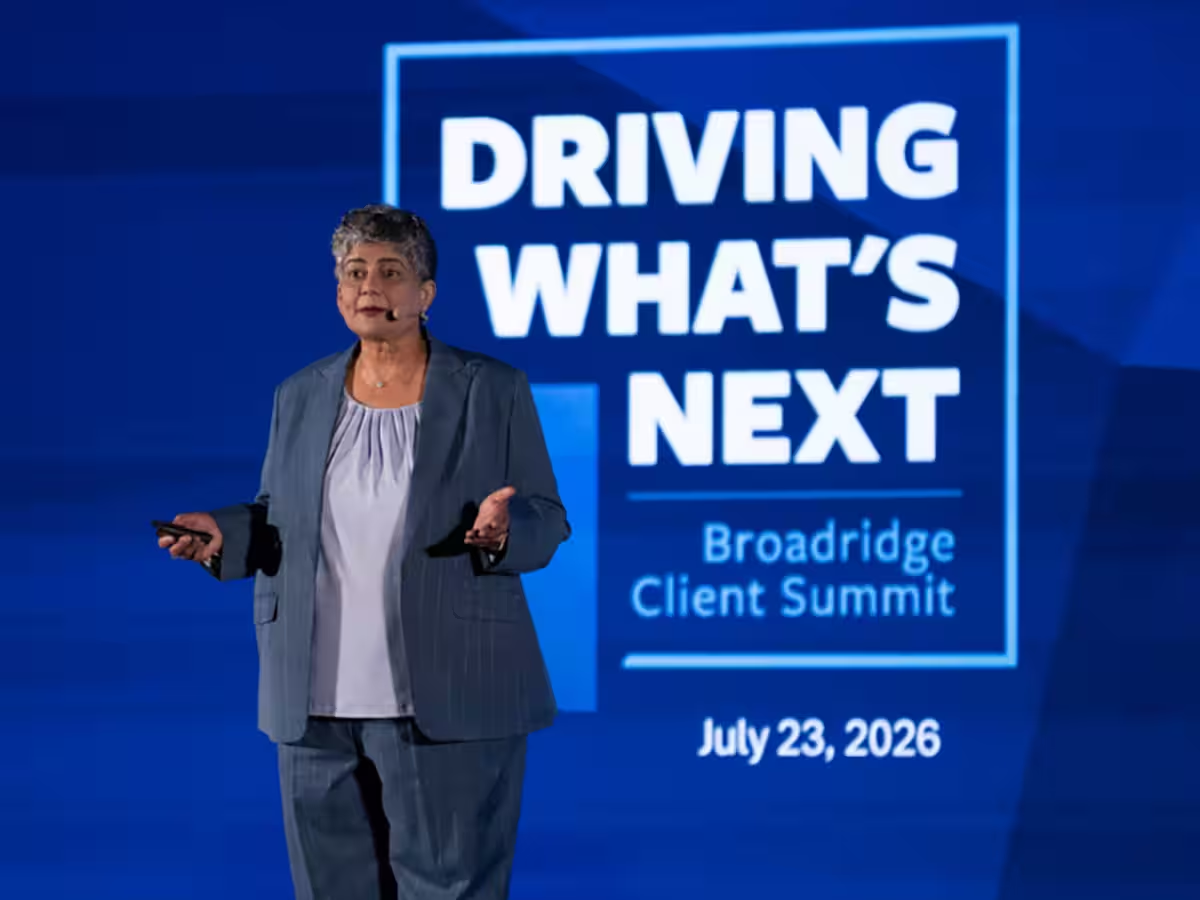
As financial markets become more digital, connected and continuous, institutions are being pushed to rethink not just technology stacks, but the operating models beneath them as well.That was the broad message from the third edition of the Broadridge Client Summit, which brought together more than 170 leaders from over 45 financial institutions. Discussions at the event pointed to an industry grappling with several changes at once: AI moving into live business processes, tokenisation shifting toward practical use cases, and market structures stretching beyond traditional operating windows.The common thread across these conversations was clear: the next phase of transformation will depend less on isolated innovation and more on whether firms can build systems that are connected, governed and resilient enough to keep pace with constant change.Integrated platforms regain urgencyOne of the strongest themes to emerge from the Summit was the renewed importance of integrated platforms. For years, many firms have modernised layers; adding new applications around legacy systems, automating selected tasks and relying on tactical fixes to ease operational bottlenecks. While that has improved individual functions, it has often left firms with fragmented workflows and deeper structural complexity.That model is coming under strain as markets move towards longer and, in some cases, near-continuous operating cycles. End-of-day processes, disconnected systems and point-to-point integrations are increasingly out of sync with real-time capital flows and rising client expectations.Participants said the focus is now shifting to platforms that connect front, middle and back-office functions more seamlessly, reduce integration complexity and support real-time workflows across the transaction lifecycle. The case for such platforms is about making change more manageable and reducing the risk of large-scale rebuilds.ET Spotlight
Financial institutions confront a new operating reality as markets become more continuous - The Economic Times
The evolution of financial markets is shifting towards a digital and continuous landscape, compelling institutions to recalibrate their strategies. The integration of platforms is now critical as firms streamline their front, middle, and back-office operations. Artificial intelligence is transitioning from experimental phases to being embedded in daily functions for many entities. Tokenization is advancing to address actual market challenges.
854 words~4 min read