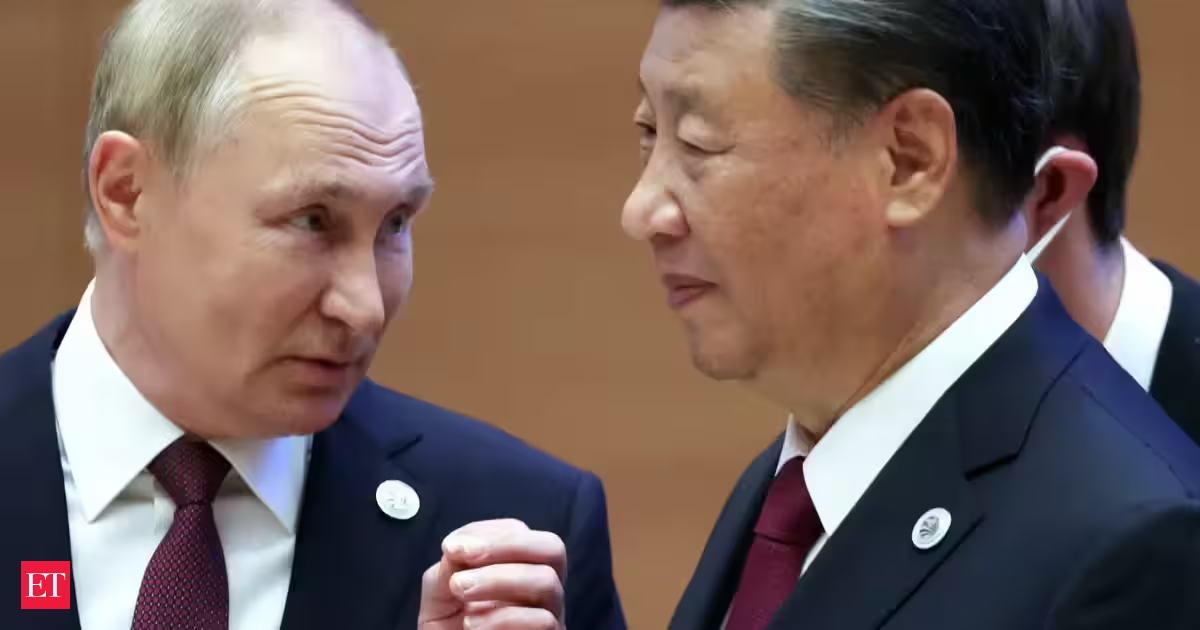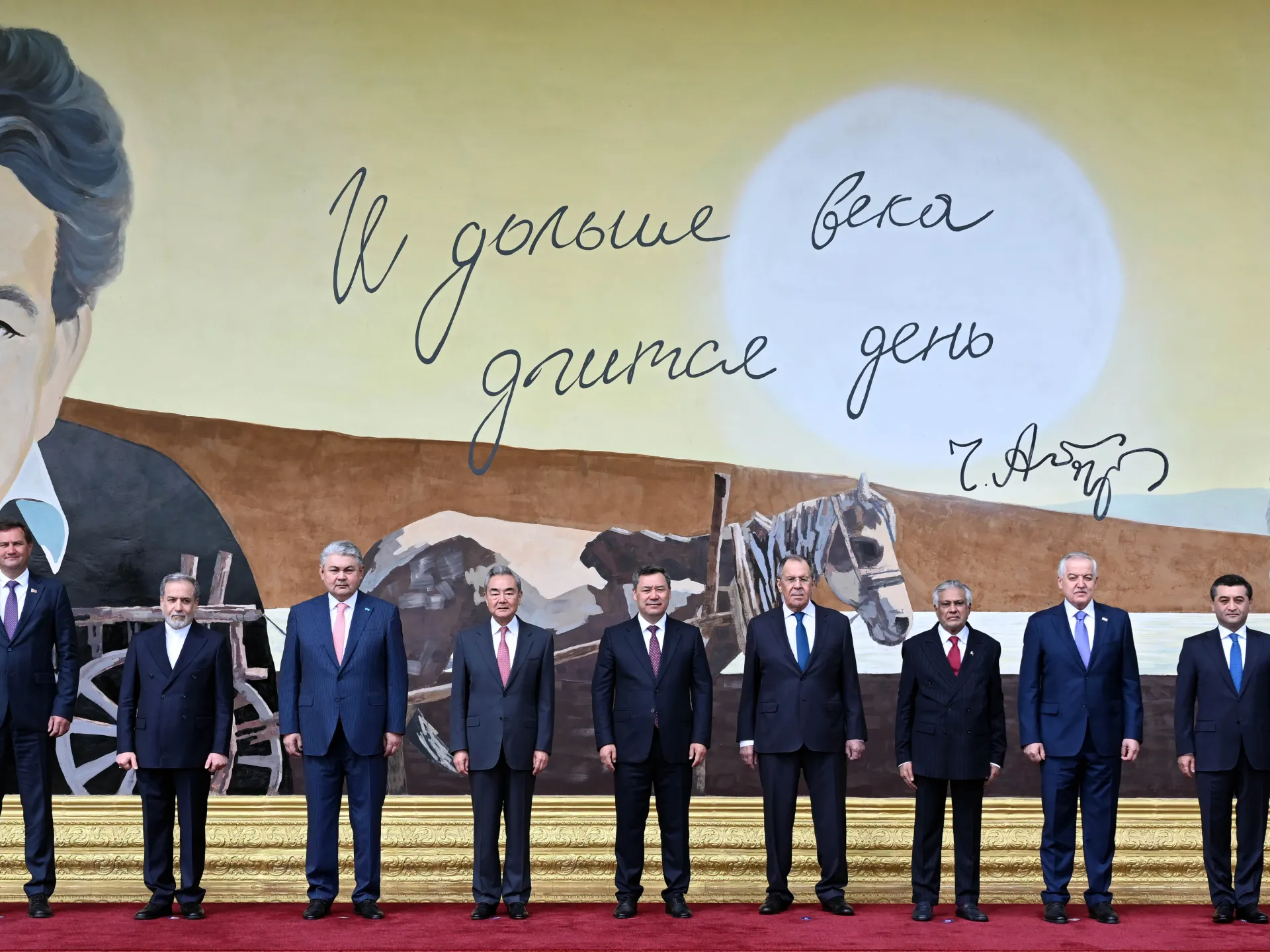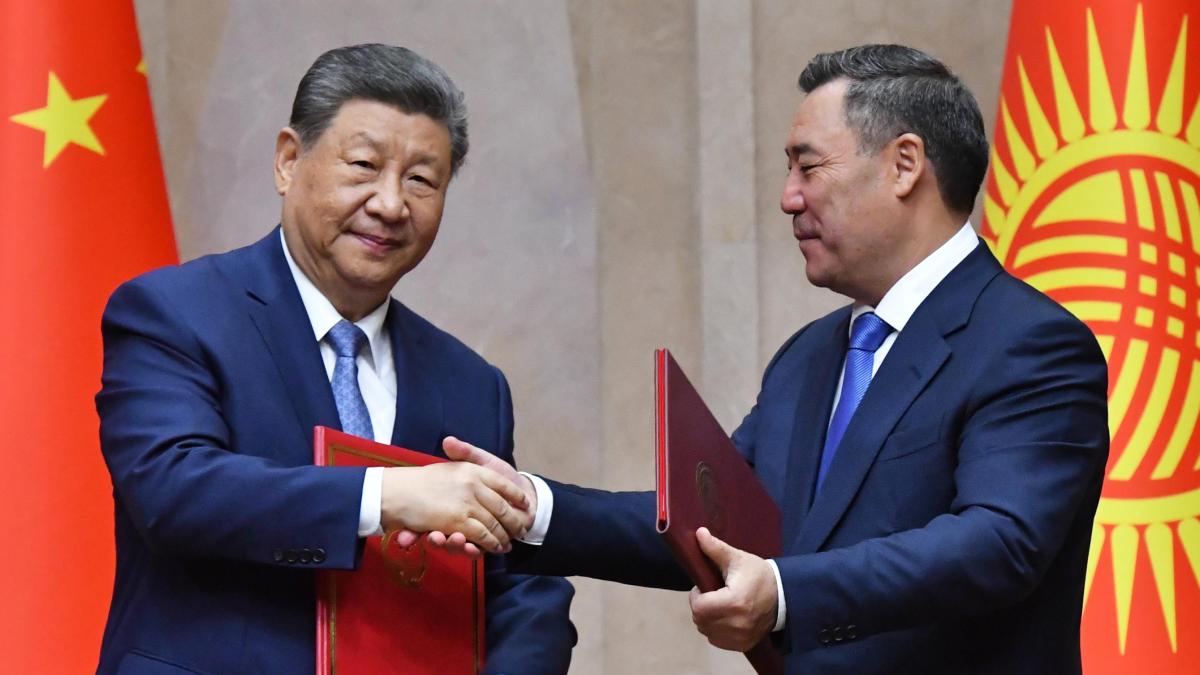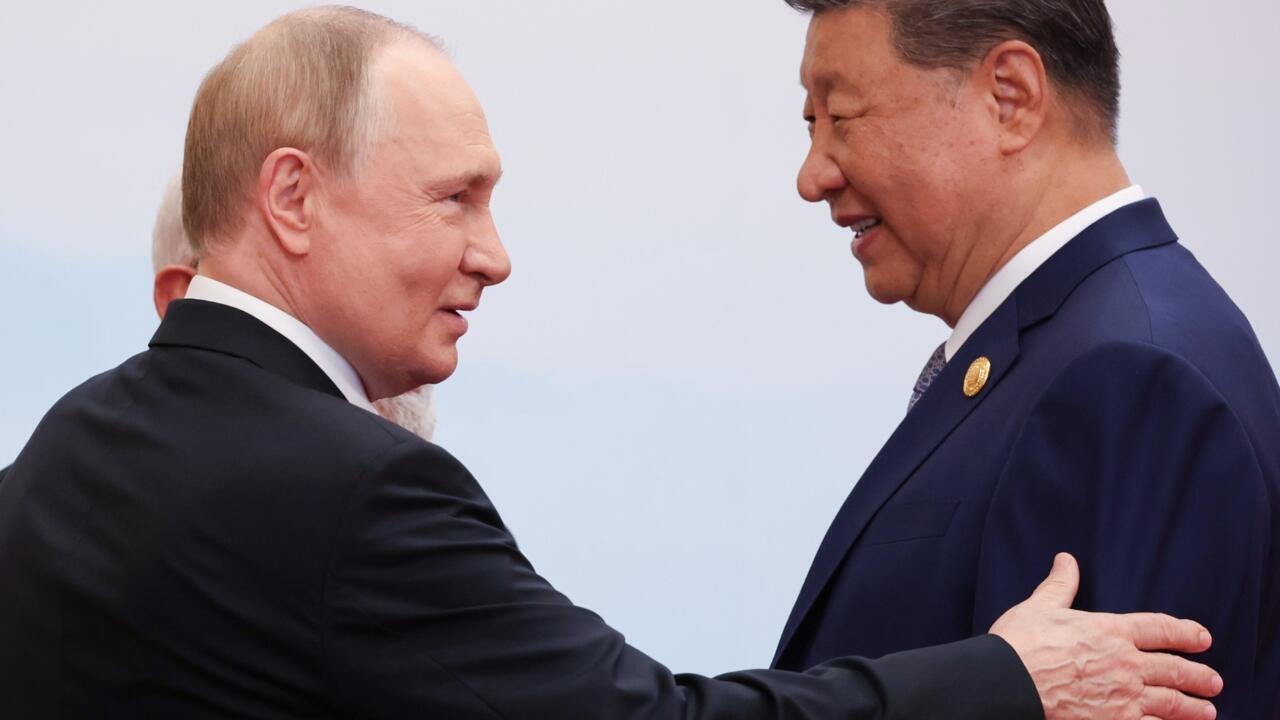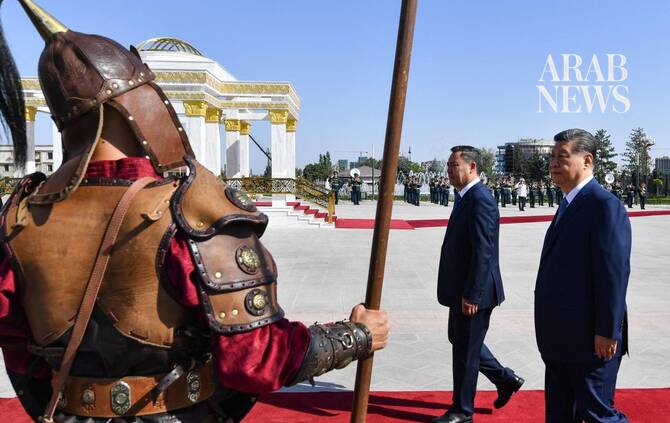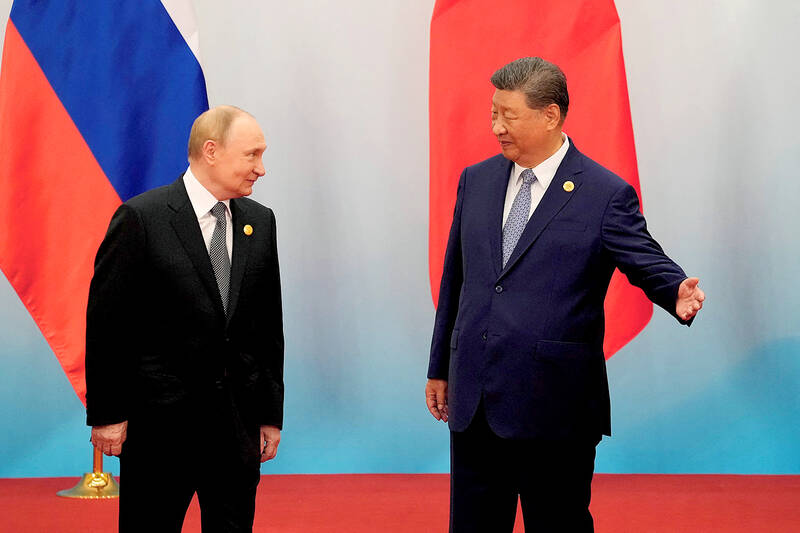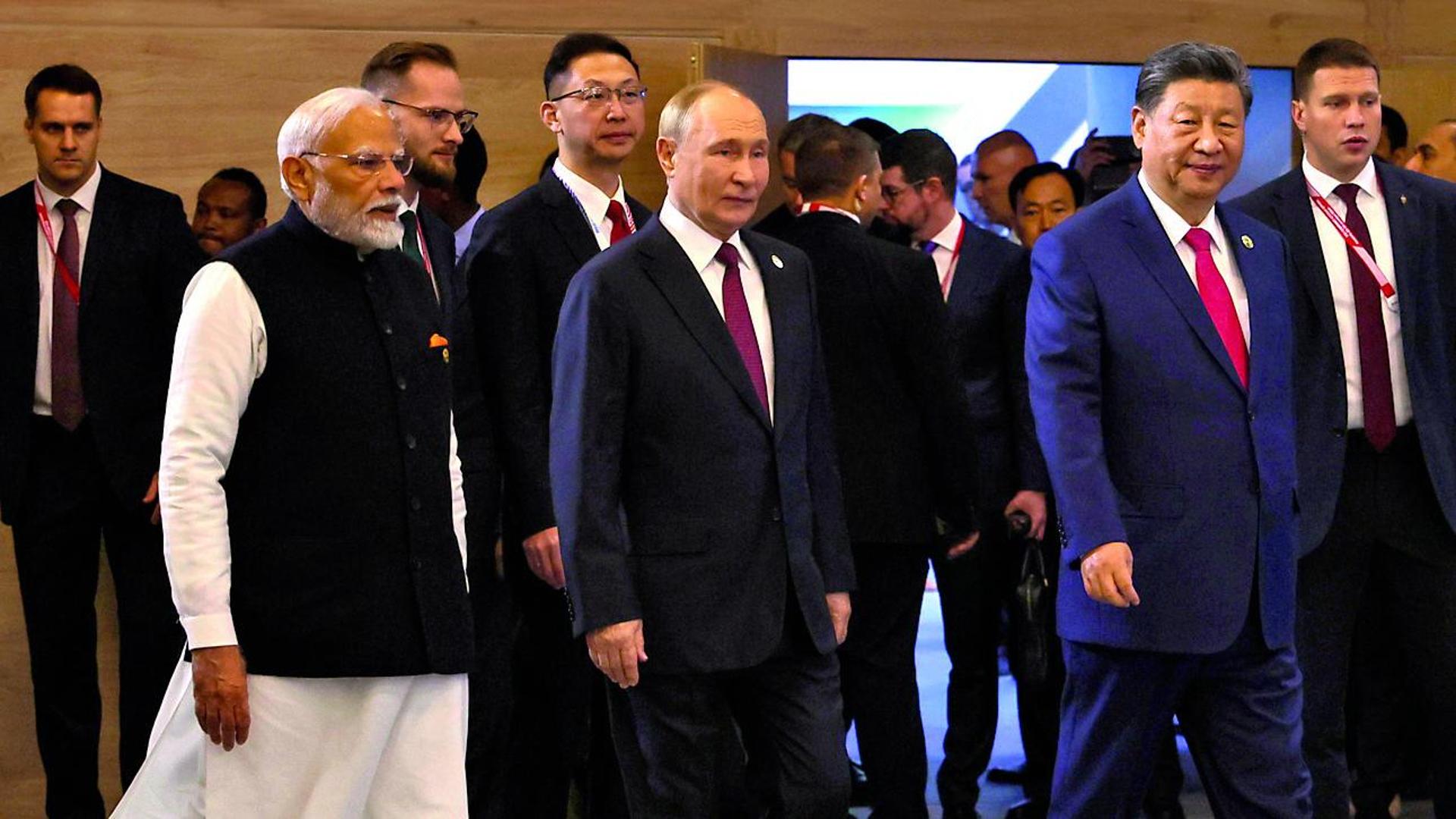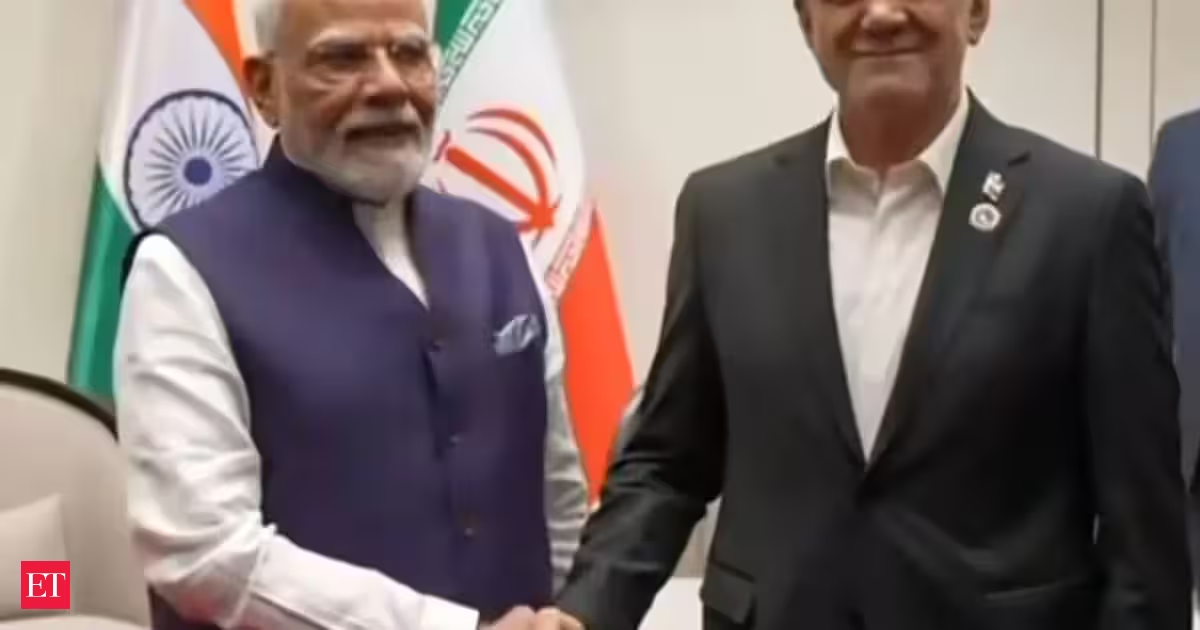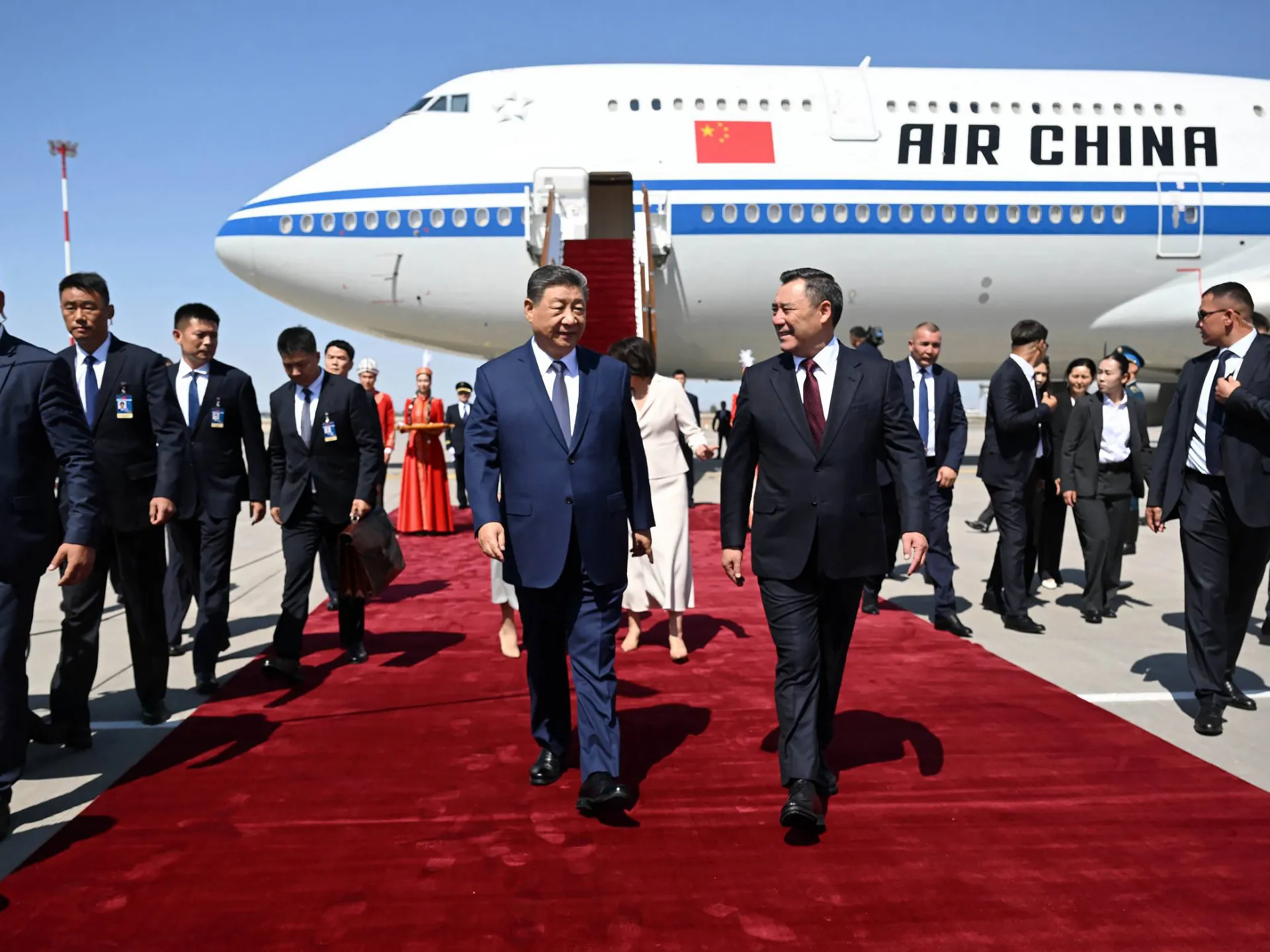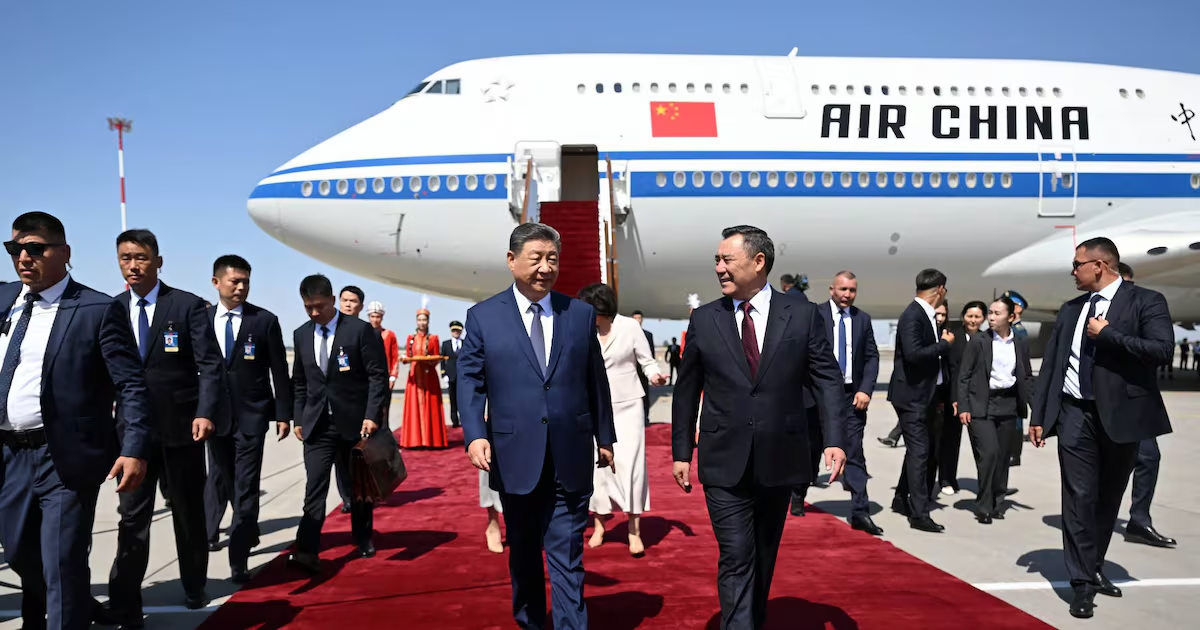
US President Donald Trump’s intensifying economic campaign against Iran is testing the limits of the security group Xi Jinping and Vladimir Putin have spent years expanding as a counterweight to American power.The Chinese and Russian presidents will gather with their Iranian counterpart Masoud Pezeshkian for the first time since the start of the US-Israeli war against Iran at the Shanghai Co-operation Organisation (SCO) summit that starts on Monday in Kyrgyzstan. Indian Prime Minister Narendra Modi will also attend, along with leaders from Central Asian states, Pakistan and Belarus.“The message is getting clearer and louder each year, that there is emerging a new security bloc,” said Henry Wang Huiyao, founder of the Centre for China and Globalisation research group in Beijing. The unipolar world dominated by the US “is gone”, he said.Yet with US Treasury Secretary Scott Bessent threatening an “economic D-Day” of measures to punish Iran and its backers, Tehran’s showdown with Mr Trump risks exposing the SCO’s inability to act coherently as it marks 25 years since its formation. While the bloc has grown substantially in recent years, rivalry among member states means it has largely failed to translate that geopolitical ambition into concrete mechanisms for action on the global stage.Play00:44Putin throws support behind 'courageous' IranThat is expected to leave its leaders offering only symbolic solidarity with Tehran at the summit in Bishkek. Neither Mr Xi nor Mr Putin has shown any readiness to back Iran militarily and economic support has been limited. The prospect of further US sanctions is raising the stakes for a group that has sought to challenge the western-dominated world order.“We can expect rhetorical condemnation of the US in line with normal Chinese propaganda,” said Jeremy Chan, a senior analyst for China and North-east Asia at the Eurasia Group. “But Beijing might also be hesitant to shine a spotlight on how ineffective the SCO has been in protecting the security of one of its member countries.”Founded in 2001 by China and Russia, together with the Central Asian states of Kazakhstan, Uzbekistan, Tajikistan and Kyrgyzstan, the SCO has since expanded to include India, Pakistan, Iran and Belarus as members, while Afghanistan and Mongolia have observer status and another 15 countries, such as the UAE, Saudi Arabia, Turkey and Egypt are “dialogue partners”.The members account for more than 40 per cent of the world’s population and about a quarter of global gross domestic product, according to World Bank data.For Mr Xi, the SCO summit marks the beginning of a busy few weeks that will include a state visit in Kyrgyzstan before heading on to Egypt. He is expected to take part in the Brics summit hosted by Mr Modi in New Delhi in mid-September, which Mr Putin also plans to attend, before the Chinese leader makes a state visit to Washington for a planned meeting with Mr Trump.Chinese Foreign Ministry spokesman Lin Jian told a press conference in Beijing on Wednesday that Mr Xi would hold “in-depth exchanges” with leaders on deepening SCO co-operation under the “new circumstances” facing the world. Beijing stands ready to “build up consensus and write a new chapter of co-operation in Bishkek”, he said.QuoteShanghai Co-operation Organisation members account for more than 40 per cent of the world’s population and about a quarter of global gross domestic productMr Xi and Mr Putin are expected to hold talks on the sidelines of the summit, having met around 10 times since the Russian President sent troops into Ukraine four and a half years ago. Moscow’s economic dependence on Beijing has grown substantially since Europe imposed sanctions, helping Mr Putin to sustain the war effort.The Kremlin’s main expectation from the SCO summit is “to show that Russians and Putin personally are not isolated geopolitically”, said Vita Spivak, an expert on China-Russia ties at Gatehouse, a UK-based geostrategy advisory firm. “For Putin-Xi relations, the most interesting issues are military and technological exchanges, as well as energy ties.”India's 'neutral stance'Mr Modi and Mr Putin will also meet, senior Indian diplomat Sibi George said. “Both sides are expected to review the entire gamut of their bilateral relationship during the meeting between the leaders,” he added.India was initially keen on a state visit for Mr Modi. However, those plans were dropped after it became known that Kyrgyzstan is likely to extend state visit invitations to China and Pakistan’s Prime Minister Shehbaz Sharif around the time of the SCO summit. Mr Modi’s trip is now categorised as an “official visit”.He will discuss trade and tariff issues with his Central Asian counterparts on the sidelines of the summit, Mr George said. US sanctions on Iran have closed India’s option of using the port of Chabahar on the Gulf of Oman to reach Central Asia.India’s Ministry of External Affairs did not immediately respond to an email sent after office hours.While New Delhi has maintained a neutral stance over the war in Ukraine, Russia has become India’s top supplier of crude oil, as shipments surged following disruption to Middle East exports over the conflict with Iran. Mr Putin said last week that Russia would boost fertiliser sales to India.It is possible, too, that Mr Modi will meet Mr Xi, at least informally, though nothing has been confirmed so far. China and India agreed to pursue settlement of their border dispute in the latest round of high-level talks last week, underscoring a gradual improvement in relations since deadly clashes in 2020.Mr Modi will hold a bilateral meeting with Armenian Prime Minister Nikol Pashinyan in Bishkek, which is expected to cover issues such as defence sales. The Caucasus country is a major buyer of Indian military equipment and talks are under way for the sale of an Indian-made medium-range ground-to-air mobile-missile defence system.Initially viewed in the West as an eastern rival to the North Atlantic Treaty Organisation (Nato), SCO members, including Russia, China and Iran, have conducted an increasing number of joint military exercises in recent years. But the organisation has also struggled to establish a development bank, common payment mechanisms and basic economic integration.“SCO leaders will try to make this summit look like a big deal, so that Donald Trump understands that there is power on the other side of this global order,” said Temur Umarov, a fellow at the Carnegie Russia Eurasia Centre. Mr Trump has upended so many international institutions that the entire approach to global government is changing, according to Vasily Kashin, an expert on China at the Higher School of Economics in Moscow.“It is impossible to fight for a new order because there is no order – there is complete chaos,” he said. “Everyone has an interest in ensuring that the SCO and Brics survive and continue developing, but now they have to choose which path to take under these new conditions,” Mr Kashin added.
'Symbolic solidarity': Xi, Putin and Modi set to meet Iran's Pezeshkian | The National
Leaders gathering for Shanghai Co-operation Organisation summit in Kyrgyzstan
1,124 words~5 min read