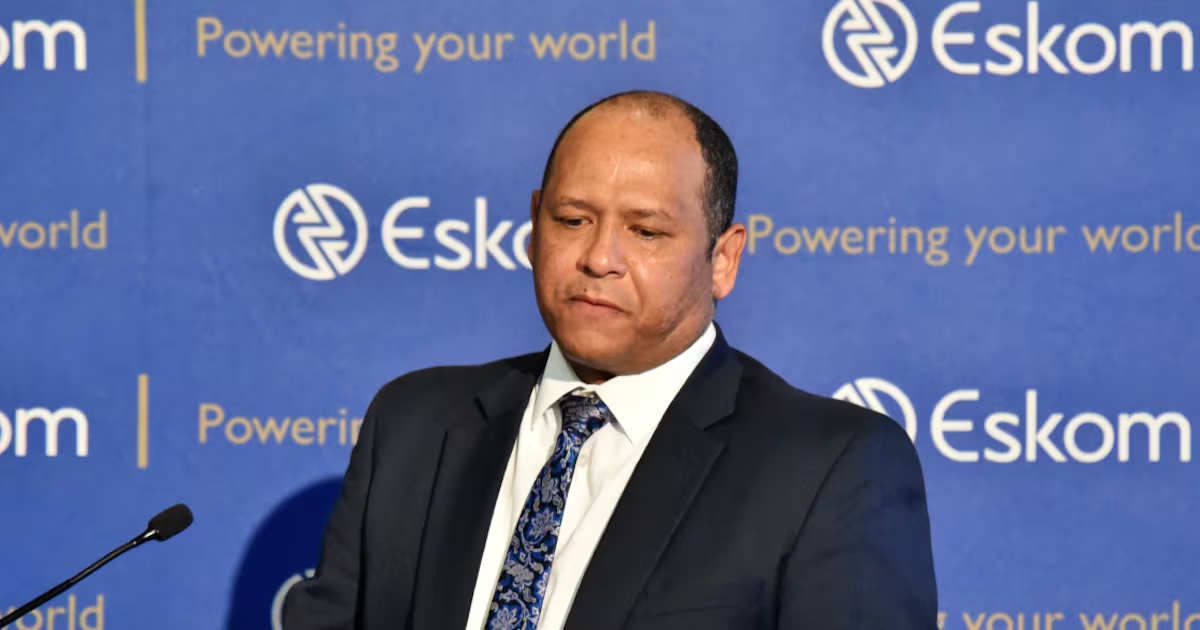
Eskom has more than doubled its annual profit despite selling less electricity, as higher tariffs and lower energy costs helped the utility deliver a second consecutive year of profitability.On Monday the power utility reported profit after tax of R30.3bn for the year to end-March, compared with a restated R14bn in the previous year.Electricity sales volumes fell 6.2% during the year, with industrial demand falling 22.5%.CFO Calib Cassim told Business Day that Eskom expects profitability to continue, though he cautioned that the level of profit could slip slightly. Cassim, who has been with Eskom for 24 years, will retire as group CFO during the 2027 financial year, with the board aiming to appoint his successor before the end of 2026.A key reason for the latest improvement was a reduction in a non-cash accounting charge related to fair-value and foreign-exchange movements, which are changes in the reported value of Eskom’s financial obligations and the effects of currency movements. The charge fell from R10.5bn last year to about R1bn in the 2026 financial year, improving the year-on-year profit comparison by about R10bn.Cassim said Eskom was unlikely to see a similar benefit again at the same scale.The improvement in generation performance has also created a new challenge for Eskom. The utility estimates that it could have between 2GW and 3GW of surplus generation capacity over the next few yearsRevenue increased 4.1%, helped by a 12.74% tariff increase, while primary energy costs rose 1% to about R152bn. Excluding the effect of a large diesel rebate received in the previous financial year, Cassim said primary energy costs were R11.5bn lower.The biggest saving came from open-cycle gas turbines (OCGT), with expenditure falling from about R18bn to R7bn as Eskom relied less on the expensive plants. Cassim expects OCGT expenditure to fall below R3bn in the current financial year.The improvement in generation performance has also created a new challenge for Eskom. The utility estimates that it could have between 2GW and 3GW of surplus generation capacity over the next few years.That comes as electricity demand remains under pressure, particularly from industrial customers. Eskom said the fall in sales was driven by:weak industrial demand;embedded self-generation; and energy-efficiency gains.Cassim said Eskom needs to convert its spare generation capacity into sales because it has take-or-pay arrangements with some coal suppliers, meaning it has to take the contracted coal and use it to generate electricity.Eskom has been negotiating discounted tariffs with some large industrial customers, including smelters, to retain baseload demand. Cassim said the discounted arrangements would be available for about three to five years.Eskom is looking to increase electricity sales by attracting new sources of demand, including data centres and electric-vehicle charging, while expanding wheeling and other products and services.Municipal debt remained a major pressure on the utility’s finances.Municipal arrears increased 17.9% to R111.6bn at the end of March and reached about R119bn by June. Eskom estimates that the debt could reach R358bn by 2031 if it is not addressed.Resolving municipal debt is important to Eskom’s restructuring plans, as the utility needs to meet solvency and liquidity requirements to unbundle its distribution business— Calib Cassim, Eskom CFOCassim said municipal debt had more than doubled from about R55bn when the government’s debt-relief mechanism was introduced three years ago. Only R4.2bn of that historical debt has been written off so far.The government’s municipal debt-relief programme was intended to encourage municipalities to pay their current accounts for 12 consecutive months in exchange for Eskom writing off a third of their historical debt each year.Cassim said the government’s municipal debt-relief programme had not delivered the intended result, prompting Eskom to work with the Treasury to withhold equitable-share allocations from municipalities that were in default. The approach helped secure a R5.2bn payment from the City of Johannesburg.“Resolving municipal debt is also important to Eskom’s restructuring plans, as the utility needs to meet solvency and liquidity requirements to unbundle its distribution business,” Cassim said.Eskom did not recognise R15.8bn of revenue during 2026 financial year because of concerns about the collectability of municipal, metropolitan and residential accounts.The utility ended March with R124.9bn in cash and cash equivalents, while debt securities and borrowings stood at R356bn. After settling a R38bn bond in April, debt had fallen to about R320bn by June.Cassim said Eskom does not intend to borrow during the 2027 financial year and will use cash generated from operations and existing development-finance facilities to fund its capital expenditure programme.The utility plans R343bn in capital investment over the next five years, with 46% allocated to transmission and 36% to generation.Eskom reported four days of load-shedding totalling 26 hours during the 2026 financial year, compared with the prolonged power cuts experienced in previous years.Business Day
Eskom profit more than doubles, but weaker sales pose new problem
CFO Calib Cassim sees profits remaining positive but rising municipal debt remains a key risk
775 words~4 min read