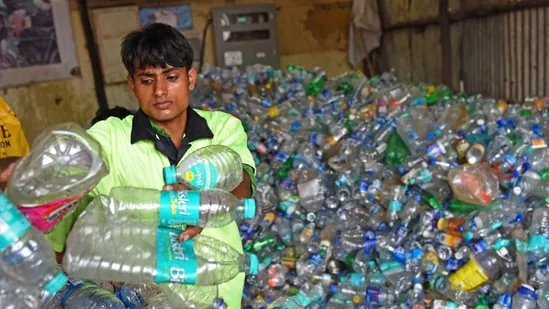
For years, sustainable packaging in India has had a familiar problem: plenty of interest, but limited willingness to pay.A new generation of startups is attempting to take a crack at it. Some are replacing conventional plastics with compostable materials. Others are putting recycled plastic back into everything from shampoo bottles to automobile components. Yet others are betting on biodegradable films for specialised applications.There are currently 174 sustainable packaging startups in the country, according to market intelligence platform Tracxn. From 14 in 2020, the number of packaging startup launches plunged to two in 2025 and one in 2026 so far.“This suggests the market is moving from an early experimentation phase toward consolidation and commercialisation,” says Neha Singh, co-founder of Tracxn.She says the next phase would depend less on the number of new entrants and more on whether companies can build cost-effective, regulation-ready and commercially viable solutions.Capital invested in sustainable packaging startups rose from $151,000 in 2020 to $67 million in 2023, as the pandemic-driven e-commerce and D2C boom created demand for alternatives to conventional plastic.However, it fell to $14 million in 2024, $12 million in 2025 and $2 million in 2026 year-to-date, even as deal activity remained active. “It indicates maturing investor conviction rather than declining interest,” Singh says. “Investors are placing smaller early-stage bets than committing large growth cheques.”Material science companies require longer development cycles and significant manufacturing investment, making unit economics and scalability increasingly important before the larger cheques arrive.For Lucro, the answer is not to eliminate plastic but keep it circulating. The company uses 30-100 per cent recycled household waste in its products, turning discarded plastic into recycled granules and then packaging material.“We have 100 per cent traceability. It is an internally built software— in fact, by the CFO — that tracks the material from the point of collection to the final despatch of goods,” says Pratibha, Chief Sustainability Officer at Lucro.The startup has moved beyond secondary packaging into primary packaging, supplying recycled content for small-format Surf Excel packs and rigid packaging for companies such as Castrol and Pidilite. It is also supplying recycled plastic for automotive component manufacturing.“In terms of cost, it is at par with virgin plastic,” Pratibha says, adding that pricing varies according to requirements such as colour and consistency.While Lucro’s business has grown 50-100 per cent annually, scaling up entails not just additional capacity but also a steady supply of waste.The replacement gamePeelon approaches the problem from the other end — rather than recycling plastic, the startup is trying to replace it.Founded in 2020, Peelon makes compostable biopolymer films from plant-based feedstock such as sugarcane and corn derivatives. Its films are designed to replace LDPE, BOPP and polypropylene in packaging for fresh produce, dairy, floriculture and FMCG.The company says its packaging also extends produce shelf-life. As a raw material, Peelon’s resin carries an 85-130 per cent premium over conventional LDPE. But founder and CEO Taraka Ramji argues that the comparison misses the wider economics.“When you account for the total cost of ownership... Peelon delivers 35–40 per cent lower cost to the supply chain, versus conventional LDPE,” he says. The company is currently clocking about $1.4 million in annual recurring revenue (ARR) and growing 60-80 per cent year-on-year. Its manufacturing facility in Visakhapatnam has capacity of about 1,000 tonnes a year and targets 15,000-18,000 tonnes a year by 2028. The firm has raised $2.5 million so far and plans a Series A to fund capacity expansion and anchor supply contracts.Peelon’s biggest challenge, however, is “the gap between commitment and procurement”, Ramji says. Large organisations may have sustainability targets, but procurement teams continue to be measured on cost per unit, while supply-chain teams remain reluctant to switch materials.Boston Polymers offers a third model: develop specialised films for sustainability with a functional benefit. Managing Director Garvit Garg developed a film to protect animal fodder from spoilage and extend the shelf life from five or six days to a year.The company’s 2,000 tonnes annual capacity is split between agriculture and industrial applications; capacity expansion to 4,500 tonnes is planned. A new machine, Garg say, has reduced energy consumption by about 40 per cent.Cooperative dairies and government-linked customers are among its buyers. But cost is a major hindrance to wider adoption.“We recently developed a material that completely degrades into the soil after six months or one year,” Garg says. “People are not adopting it because it is costly — nearly double that of the current material.”For Garg, one solution is to reduce the quantity of packaging required rather than simply lowering its price. “Once the consumption is reduced, automatically cost will reduce,” he says.For investors, meanwhile, the question is whether these companies can move from pilots and niche applications to large-scale procurement. Singh argues that the market will increasingly favour businesses that can demonstrate that. Stronger enforcement of extended producer responsibility (EPR) could support demand, but cost competitiveness, product performance, manufacturing capacity, recycling infrastructure and adoption by large FMCG, food and beverage, and e-commerce firms will determine how far the category can go.Published on August 31, 2026
Sustainability in a smart packaging
Explore India's sustainable packaging startups innovating cost-effective, regulation-ready solutions, transforming waste into viable alternatives to conventional plastics.
838 words~4 min read