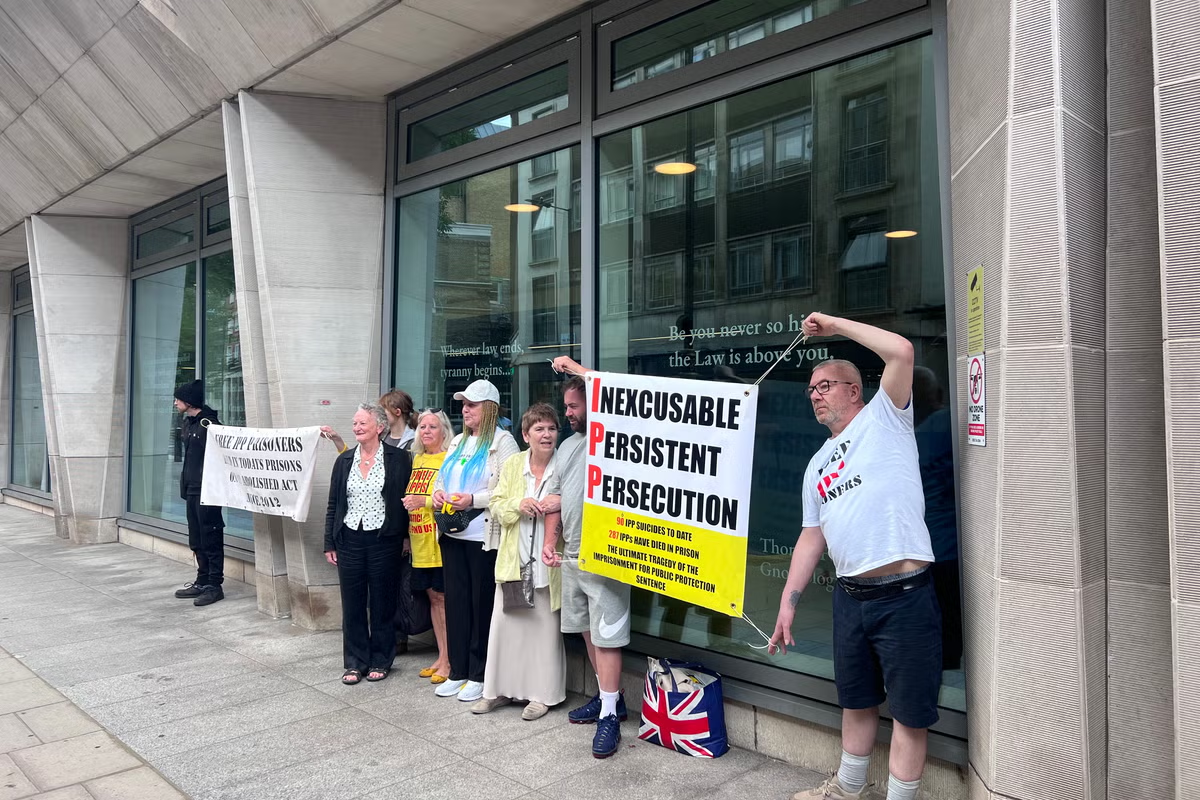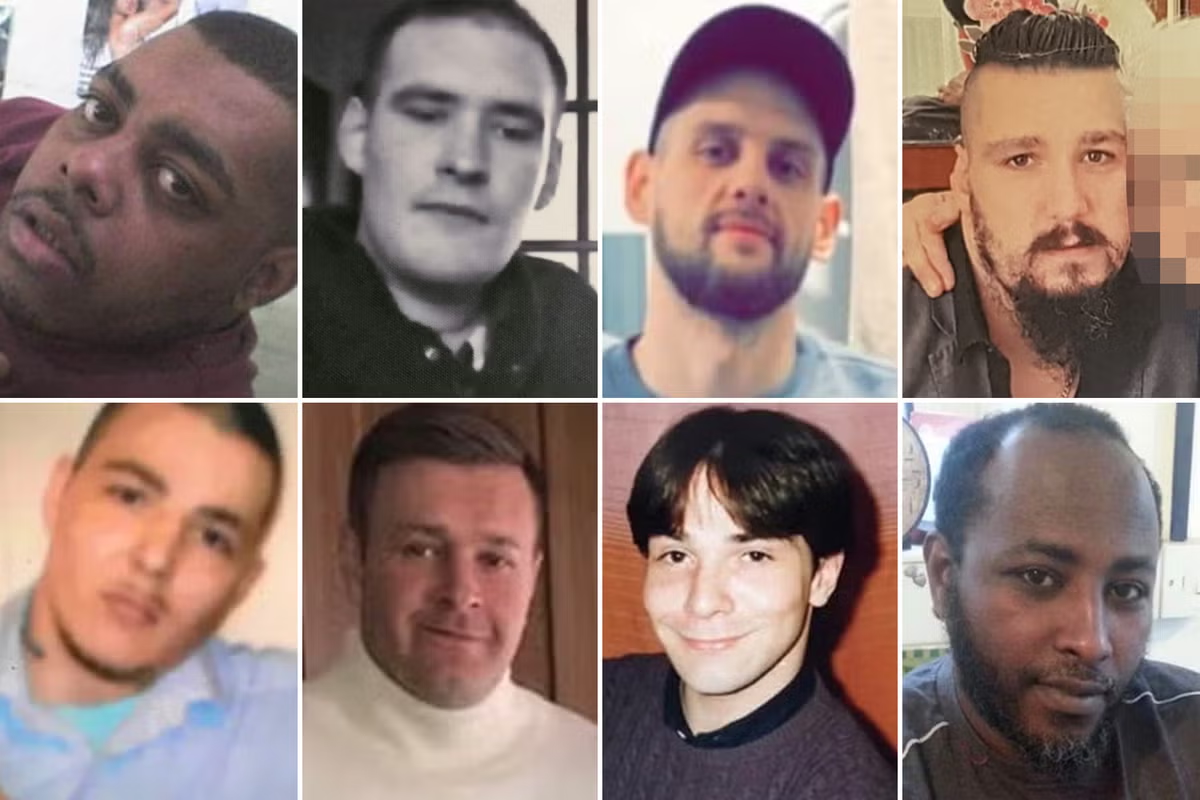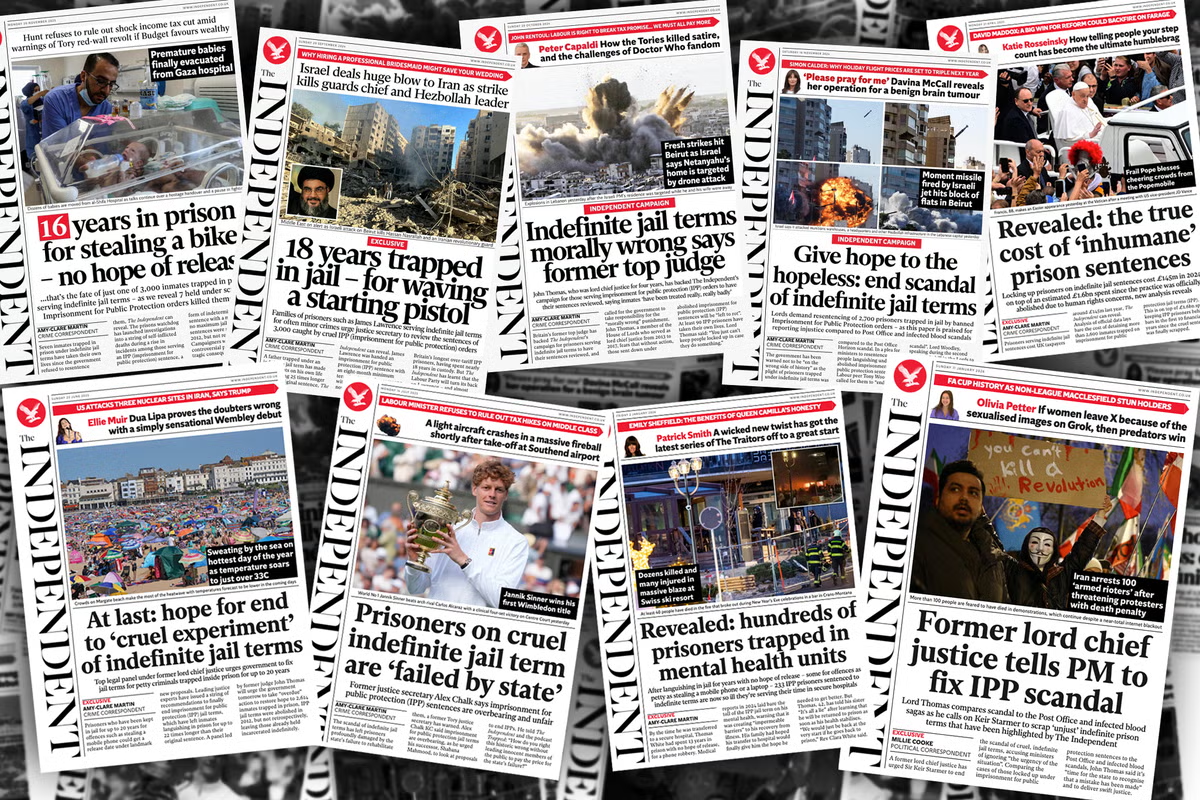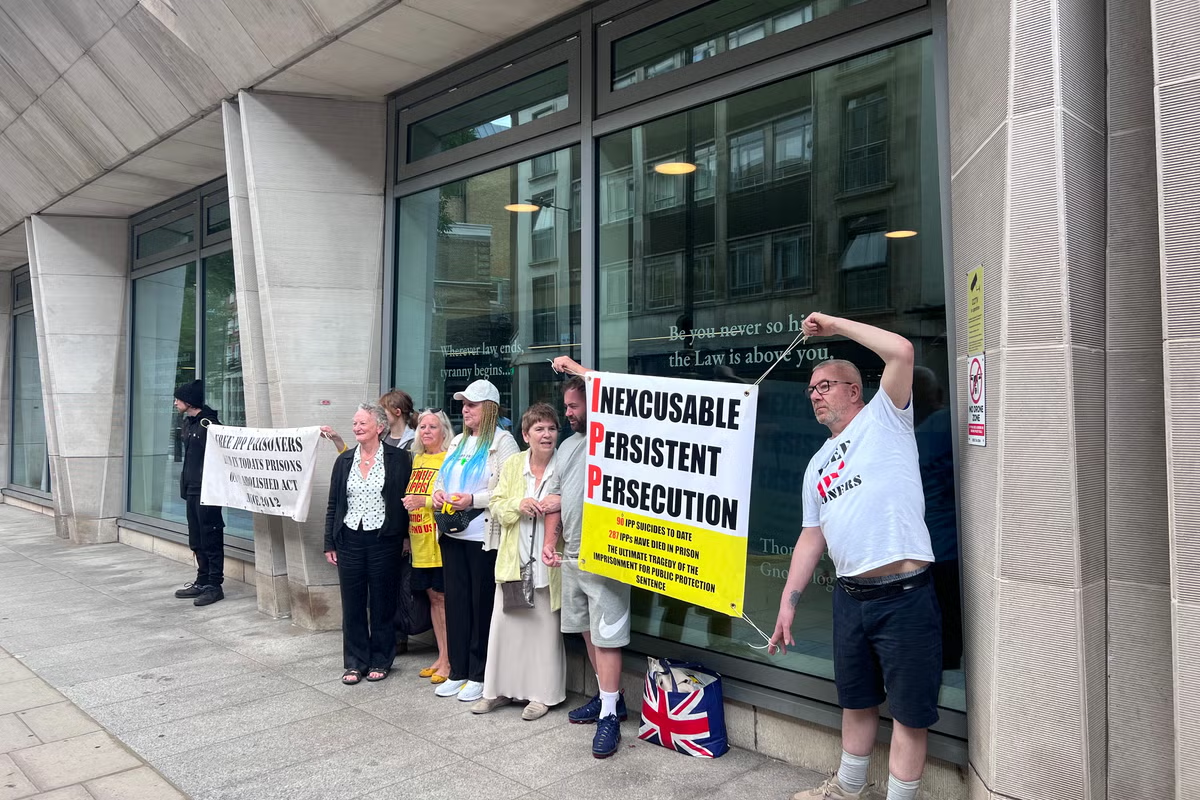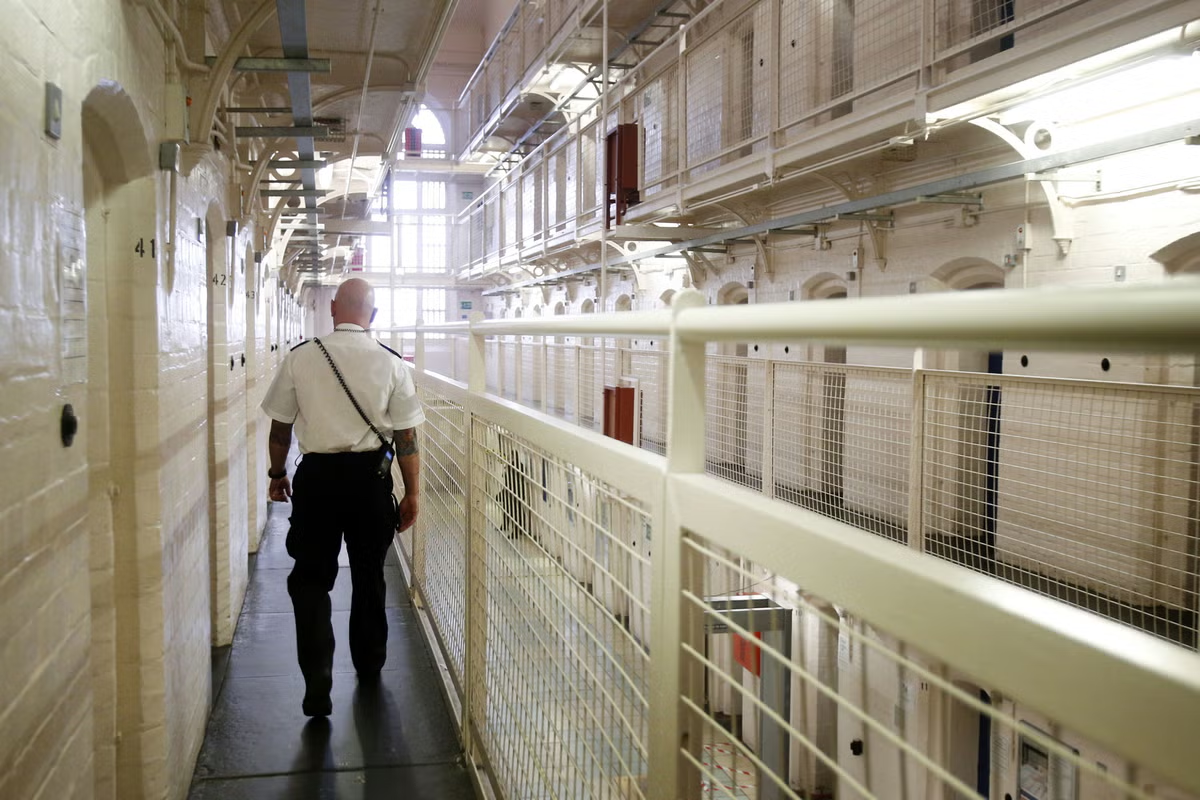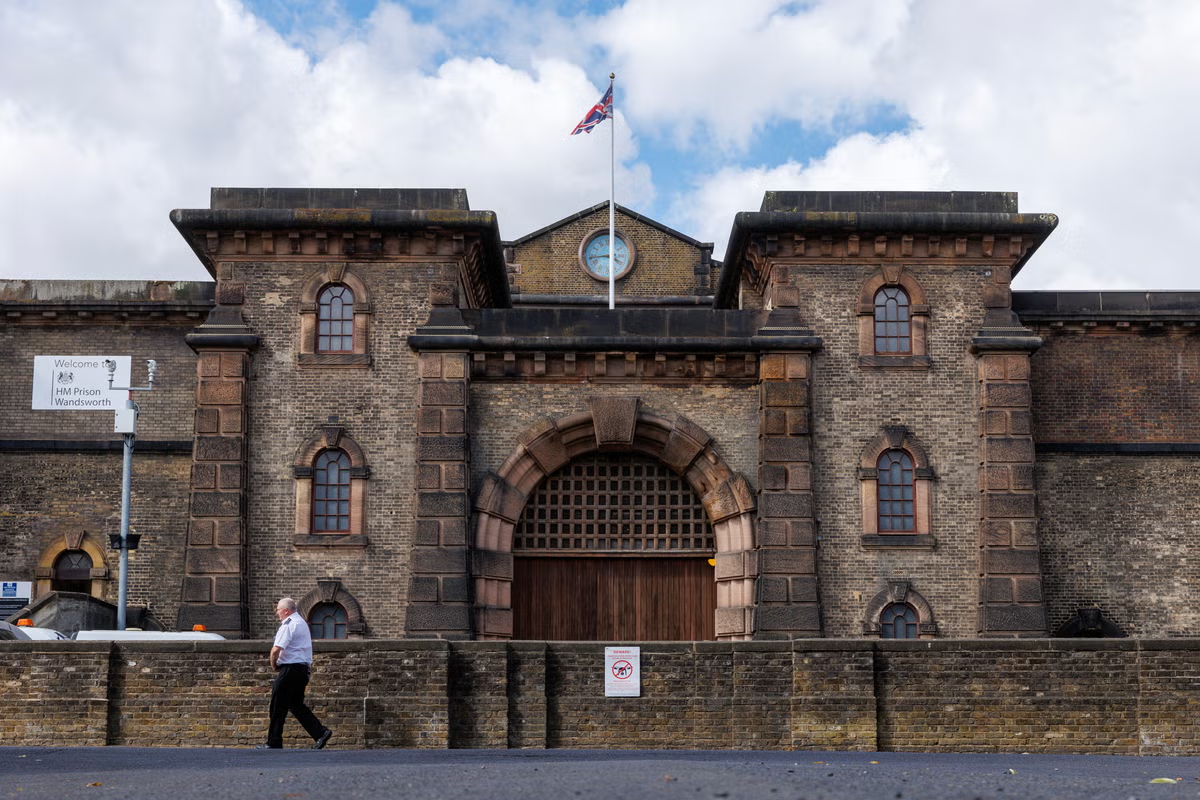
Some U-turns are so damaging that they haunt a prime minister for the rest of their careers. Others are forgotten almost soon as they are made. A few are welcomed unreservedly; such is the case with the news that those involved in the killing of Pc Andrew Harper are to remain behind bars after all – and that the longstanding injustice of prisoners held indefinitely on “throw away the key” sentences is to end.These two developments are related because space needs to be found in our creaking jails and low-risk “indefinite public protection” (IPP) prisoners are an obvious answer. Nonetheless, Andy Burnham is to be congratulated on the way he used the power of his office to insist ministers and officials were “turning over every stone” in the search for a publicly acceptable resolution to the prison overcrowding crisis. After months of hard work, it seems they have succeeded. More places on the prison estate are being found, and the processing of foreign prisoners due for deportation is being expedited. But one particularly large and egregious stone left undisturbed until now has been the thousands of prisoners given indefinite sentences for relatively minor offences, often committed decades ago. The Independent is proud to have campaigned for many years to end this scandal. That it has taken an overcrowding crisis of unprecedented severity to force the issue shows how determined the families who have had their lives destroyed by these injustices have had to be in seeking some redress.It takes a perverse kind of administrative genius to create a system where those convicted of the manslaughter of a police officer are set free years before those who stole a smartphone or a laptop in the 2000s. But that is precisely – and unbelievably – the kind of thing that has been tolerated by successive governments and the legal establishment for far too long. It is astonishing that Britain operates a system of criminal justice where dangerous criminals are released because there is no room for them while others in nearby cells posing no such danger to the public have zero chance of freedom. It is said the law is an ass; the IPP scandal created previously unimagined asinine outcomes. IPP sentences were typically handed down for crimes such as theft and robbery – though some offences were certainly more grave – but spending 20 years or more incarcerated for them was grotesque beyond belief. Those languishing under the IPP regime were in practice required to prove the unprovable to a parole board – that they would never offend again. The bar was set so high it was impossible to reach, but nobody much seemed to mind about that. Assuming there’s no inquiry into how this regime was allowed to continue despite known flaws, there needs now to be at least some accountability on the part of those concerned: the ministers, civil servants, lawyers. Why did they tolerate this for so long? How The Independent has campaigned on behalf of IPP prisoners (The Independent)And it was a long time. The IPP system, introduced by New Labour in 2005 during its “tough on crime, tough on the causes of crime” phase, became so discredited that even the subsequent Tory government found it unsustainable and IPP sentences were finally abolished in 2012. Lord Blunkett, the minister responsible for bringing in IPP, has since denounced it. However, the legislation that ended this inhumane approach to tariffs could not act retrospectively, as is the constitutional norm, so those already sentenced were simply left in jail. They have been treated beyond disgracefully.Some are still there. Leroy Douglas, was sent down for the non-violent theft of a phone when he was 24 and had an unenviable record of stealing to fund his drug addiction. He should have been in for two years and six months for his offence, instead, under IPP, he has been transferred 36 times and suffered years of psychological distress. Now, at 44, he is to be returned to his family, but he highlights a painful irony about the IPP victims: “Most of us haven’t committed crimes for over 10 years, yet still the government tries to portray us as some danger to the public. Most have been so traumatised that they now have psychological or psychiatric problems and need more help than when they first went away.” Mr Douglas lost his grandparents and his daughter during his time in jail. Even the United Nations has felt impelled to condemn the IPP system on human rights grounds; and an application for a writ of habeas corpus for some of the IPP prisoners has now been served in the High Court by senior lawyers on behalf of some of the victims. The action obviously has potentially wider repercussions. It requires the secretary of state for justice, Alex Norris, prison governors and a hospital director to give an account of themselves and justify the detention of people who should have been properly considered for release. It will be interesting to see what they say. Public attention in recent weeks has been understandably focused on the killers of Pc Harper, but many more serious injustices have been brought into the open as a consequence of the overcrowding crisis. Some, at least, are now being rectified, but the damage to family life and mental health inflicted on the victims can never be repaired.
Why did ministers and lawyers tolerate this inhumanity for so long?
Editorial: Prisoners trapped on indefinite sentences have been treated beyond disgracefully. There must now be some accountability from those who allowed the injustice of IPP jail terms
894 words~4 min read