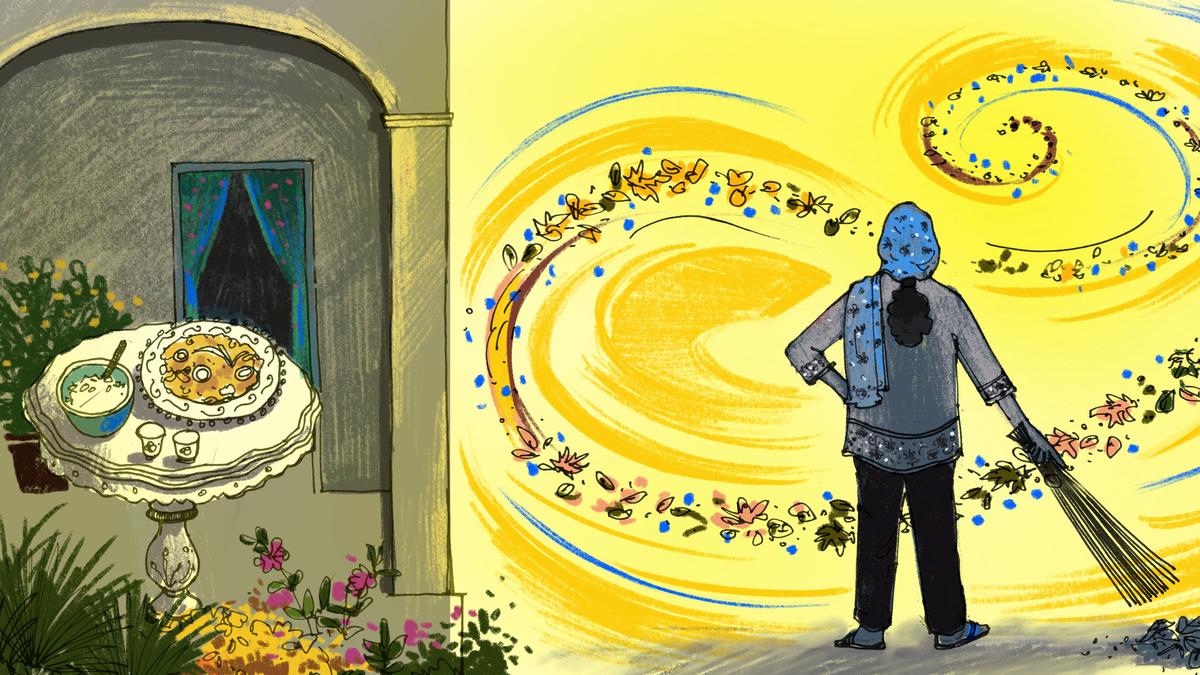
A friend once described watching an Odissi dance troupe perform the same piece in multiple locations over the course of a few weeks as an experience that provided diminishing returns. The initial appreciation turned sour by the third viewing – he summed it up as a lot of yearning for a distant lover with the dancers dashing from one corner of the stage to the other. The only thing that briefly perked him up was the lead dancer spraining her foot and bravely limping through the the final performance. She kept up the yearning though, he said.Odissi and two of its great contemporary practitioners, Surupa Sen and Bijoyini Satpathy, are the muses of “You Were My Death”, a story in Pratyaksha’s new collection of short fiction, The Mistress of Phoolpur. The author is inspired to write rhapsodic, sensual prose (interspersed with verses by Paul Celan and Anne Sexton) after witnessing a performance: “We lose our bodies; we flow into you…When you raise your arms heavenwards, we soar. You fling us, throw us, and we follow every step of the way.”Unlike the rest of the stories included in this book, “You Were My Death” is not strictly fiction — it reads as an appreciation of the artists by an ardent fan. “You Were My Death” also encapsulates the strengths and weaknesses of The Mistress of Phoolpur as a book – there is a kernel of an intriguing concept that deserves our attention here, but the execution fails more often than it succeeds.The storiesThe jacket blurb describes The Mistress of Phoolpur as mapping “the fault lines between restraint and transgression, solitude and belonging”. Of the dozen stories here, two – “The Hunt” and “Ma, Let’s Fly” – get closest to fulfilling authorial intent. In “The Hunt”, narrated in the first person as many of the stories in the book, a young accountant is entranced by Mahrukh, his friend Rafiq’s wife, when he goes to their house to check the family accounts. The narrator is overwhelmed with desire for not just Mahrukh but also the food she cooks: “Her hands nestled in her lap, quiet and still. Pink, cuddly palms. Lotus palms. Those hands had cooked the mutton. I was full now, satiated. She pushed the bowl of kheer towards me silently.”Driven mad with desire, the narrator starts projecting into Mahrukh’s every tremble and bead of sweat, reciprocal ardour. He eventually goes too far, attempting a grab during a power cut on one of his visits to the house and is rewarded with a slap (not the first time in this book that a character is slapped for misbehaving in the dark). It’s a clarifying slap and he leaves. When he returns to Rafiq’s house after his own marriage, his desire sated by conjugal bliss, he’s convinced he’s over his feelings for Mahrukh. But things take a different turn and the old desires surge again. The coda to the story sees the narrator in his dotage: “My body has lost its music, its rhythm. My heart has grown dry and dull. Nothing stirs it. Colour has leached from my life. My mind does not go mad anymore, not after any damn thing.” Despite a tendency on the part of the author to repeat metaphors (the book as a whole needed better editing), “The Hunt” works because of this coda, showing time’s slow withering of the mind and body. Pratyaksha’s ability to channel masculine vanity and pop the narrator’s ballooning self-regard easily makes this one of the best stories in the book.In “Ma, Let’s Fly”, the other standout story in The Mistress of Phoolpur, a daughter addresses her mother in fury and sadness, lamenting the faults in her upbringing that have led her to being marooned in a romantic relationship that’s going nowhere. What could have been a whine about mommy issues is instead transformed into an affecting attempt to understand and connect with a mother who has effectively neutered herself to live a quiet and conventional life. Shades of Thelma and Louise surface in the daughter’s dream towards the end of the story, where the mother is driving an old vintage car: “Ma is driving so recklessly. My heart is hammering with fear, with excitement, with amazement. Ma was never so daring. And in one sharp curve, the car breaks the barrier and flies off the road in a tangent.”The faultlinesThe remaining stories in The Mistress of Phoolpur dip significantly in quality, with the weakest bookending the collection. The first, “Bibi”, tells the story of the desperation of a young man in a mountain village eager to have his first sexual encounter. This isn’t new territory for literature or film – the horniness of young men has long provided creative fodder for everyone from Boccaccio to Philip Roth to the makers of the American Pie movies. But unfortunately, in “Bibi”, Pratyaksha cannot rise above clichés – there’s a widow everyone in the village believes is a prostitute and the lusty young man in question, Mustafa, confesses to carnal relations with a goat. While the compulsion to grab the reader’s attention within the first couple of pages is understandable, I wish that the author had exercised better creative judgment. Sure, bestiality happens but it serves no specific purpose in the story beyond an attempt to shock. And given all that the jaded reader is exposed to today, it would fail to do that as well.The final story, “Honeymoon”, is on the other end of the spectrum – while “Bibi” could be considered a challenge to the reader’s sensibilities, Honeymoon is an insipid account of a woman and a man who decide to go to a resort by the sea at the start of their relationship. They stay in separate rooms and the woman, the narrator, inevitably yearns for physical connection and her body tingles with anticipation. However, they continue in their platonic way and return to the city. The author herself preempts any criticism, with the narrator addressing the reader:“You will also say – what sort of story is this? Nothing happened; there was no accident, no event, no dramatic romance either.But wait. Listen. Have a little more patience.”I read the final lines expecting a startling reveal, instead the big twist was so unremarkable I had to read the story again to see if I’d missed some crucial information – I had not.Reading The Mistress of Phoolpur, it was impossible not to count the missed opportunities that, had the author taken a greater leap of faith, which would have given us stories that would actually further our understanding of, as the blurb puts it, “…what it means to desire, to remember, and to live with the consequences of both.” Instead, with this highly uneven collection, what we have are a few sparks of creative inspiration along with several forgettable tales where characters yearn and yearn to no great effect.The Mistress of Phoolpur: Stories, Pratyaksha, Speaking Tiger Books.
‘The Mistress of Phoolpur’: These short stories promise interesting ideas but fall short on delivery
A greater leap of faith by author Pratyaksha would have encouraged an empathetic understanding of desire and its consequences.
1,163 words~5 min read