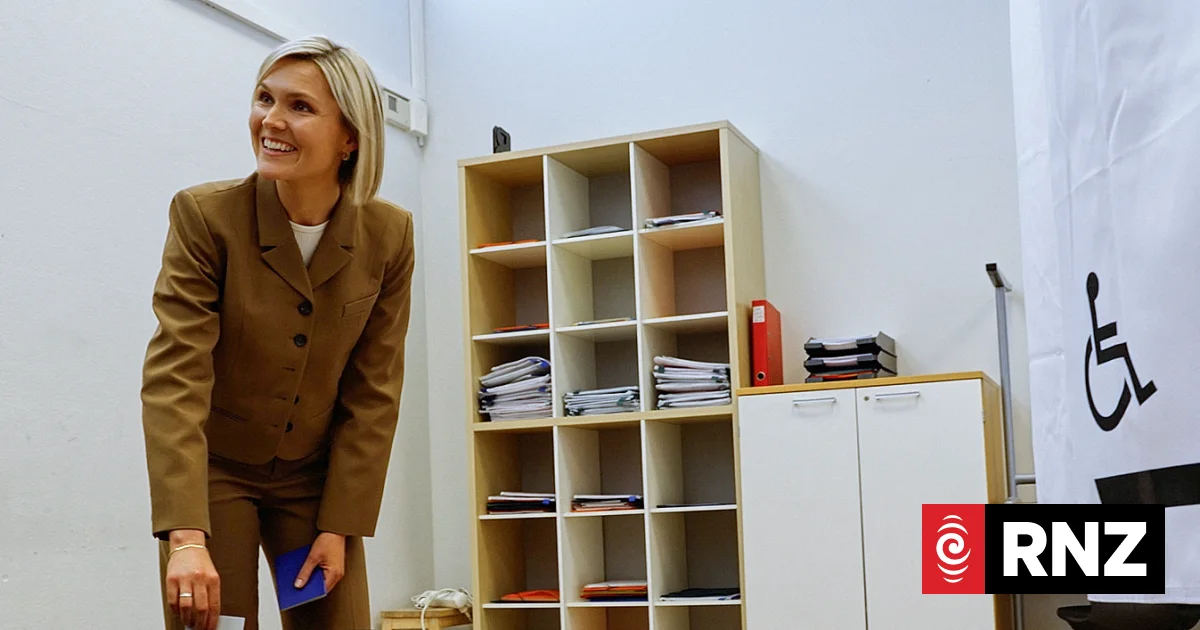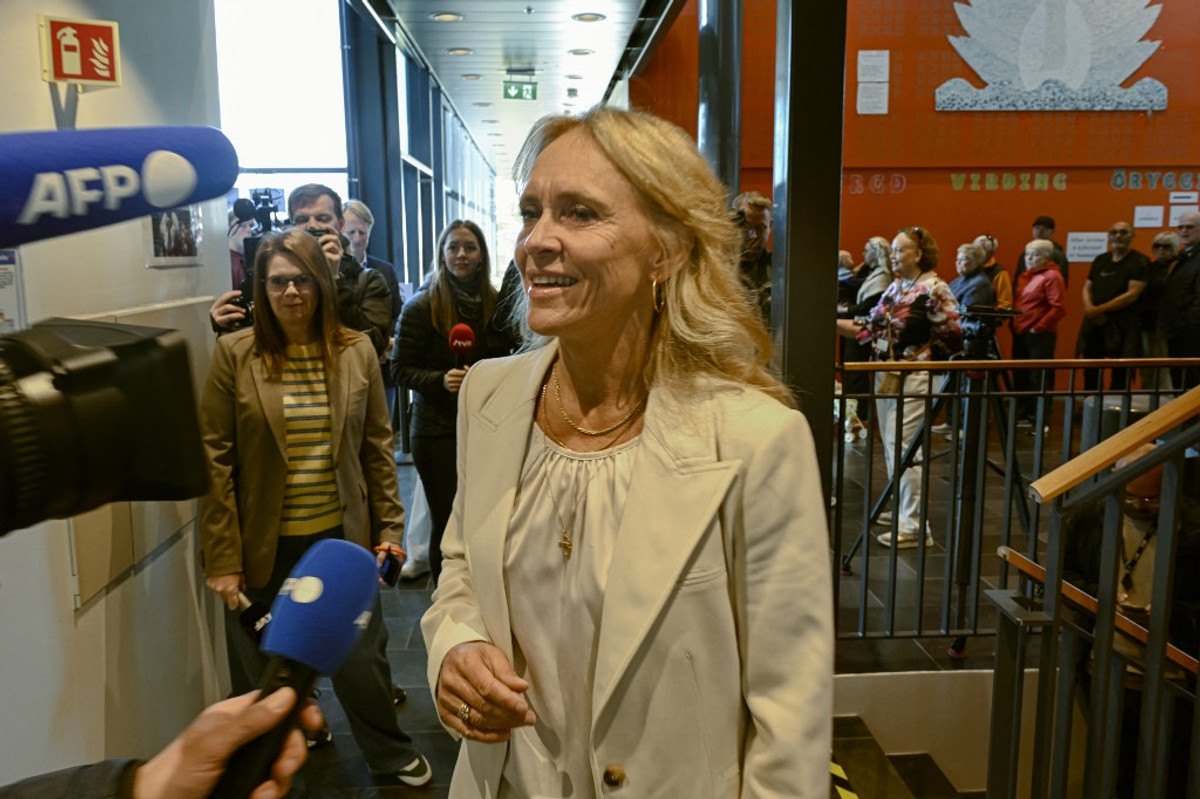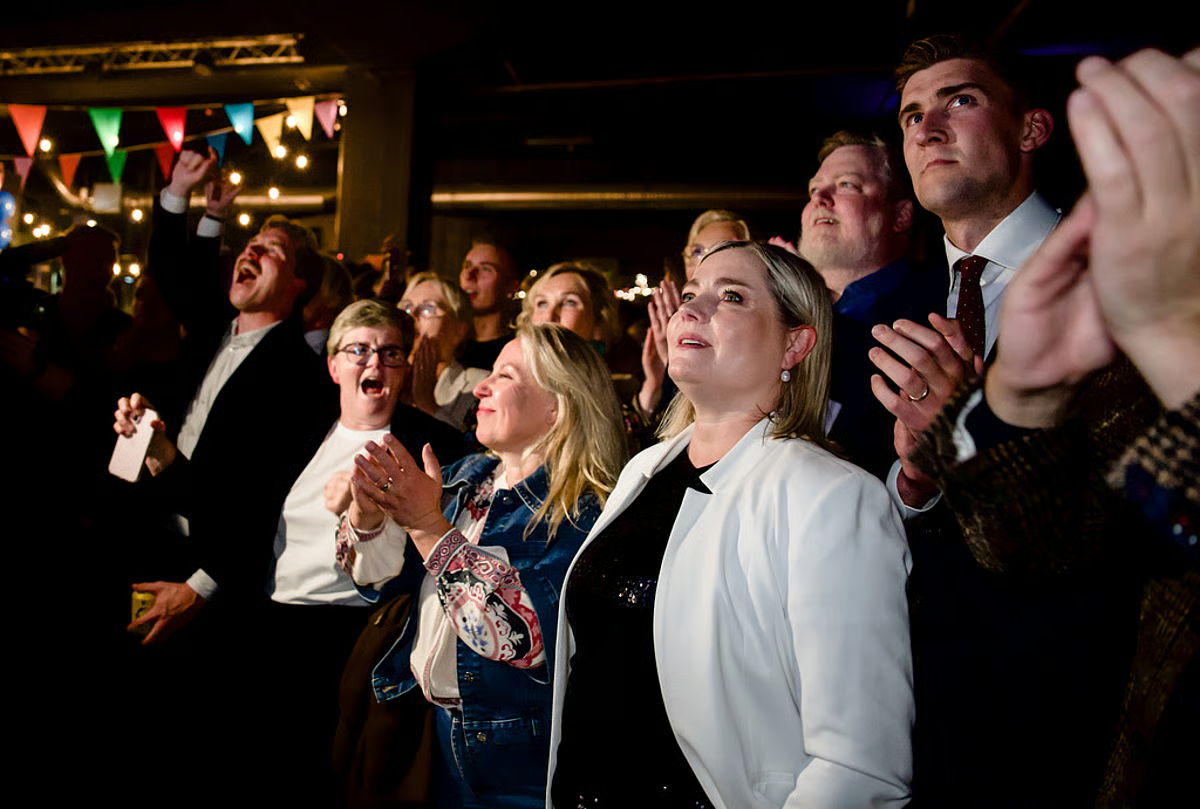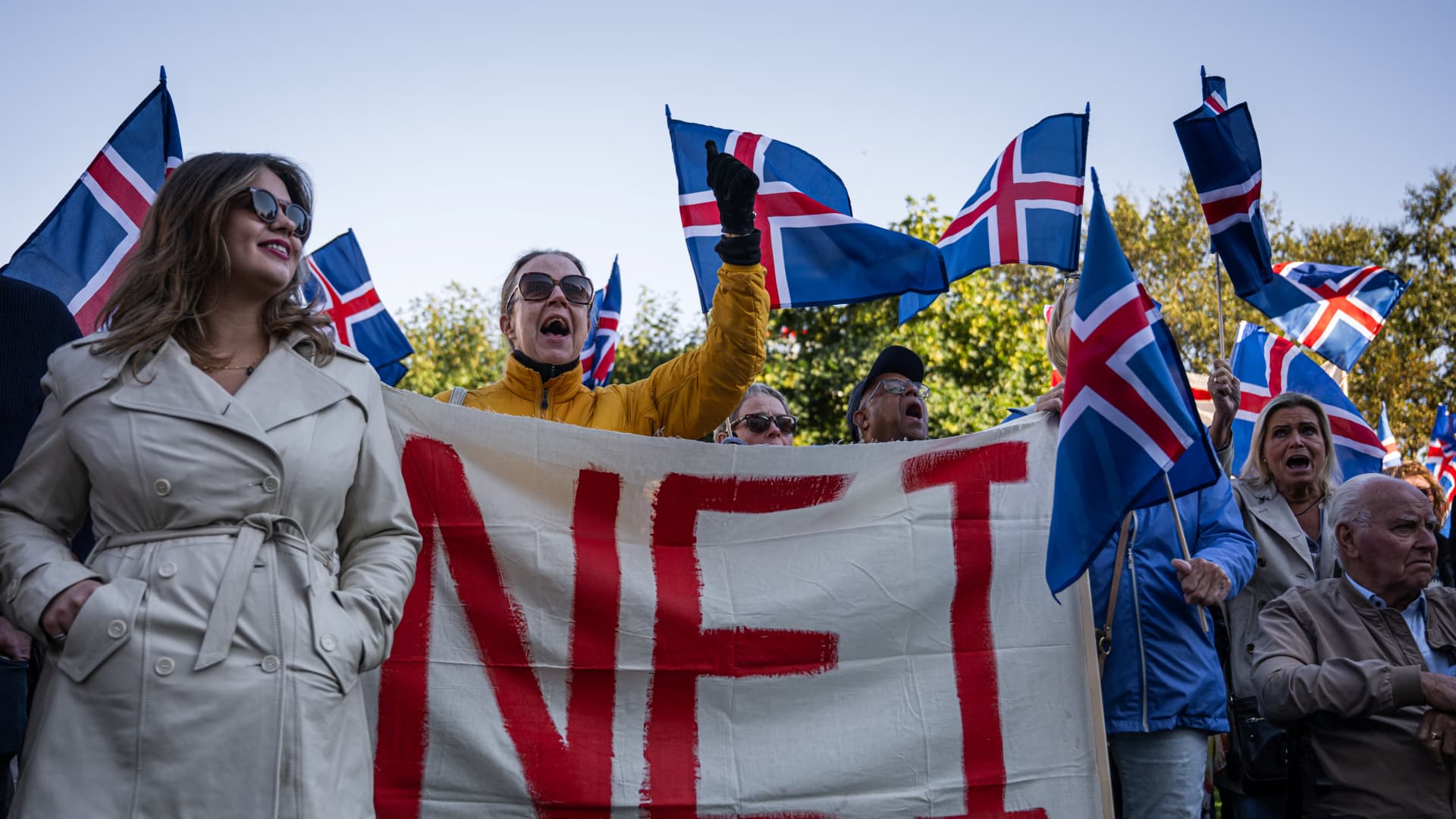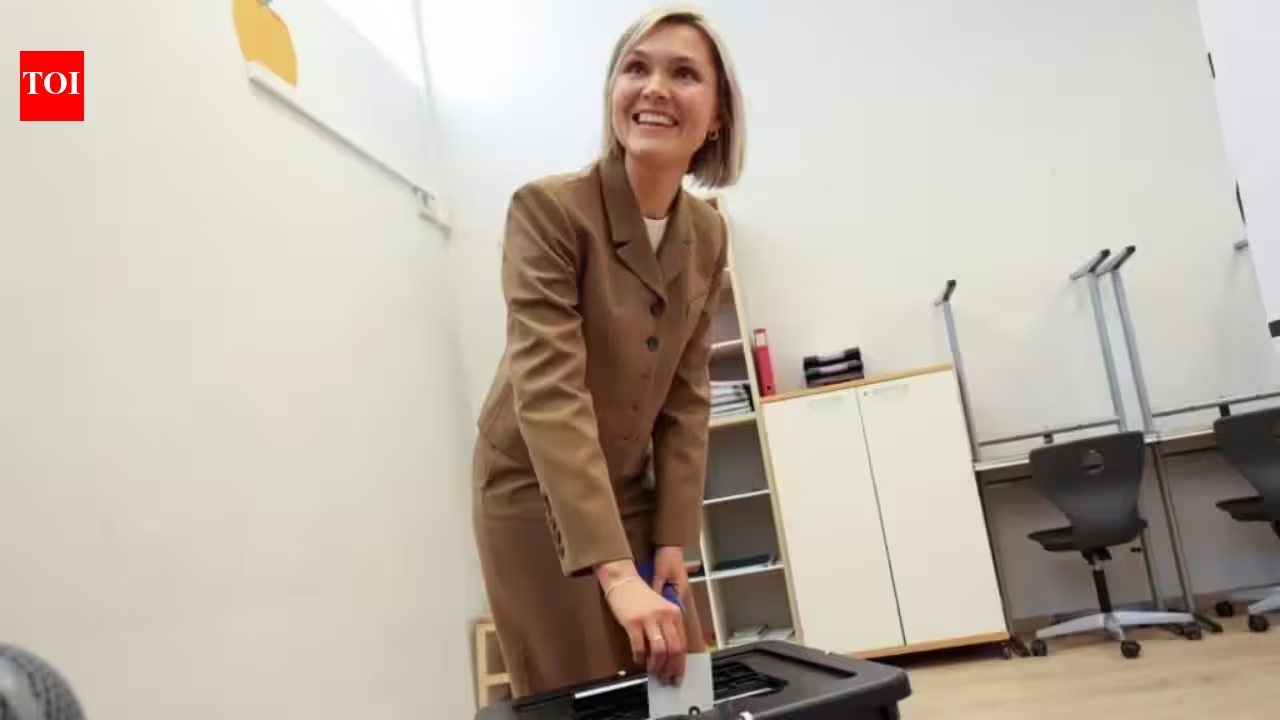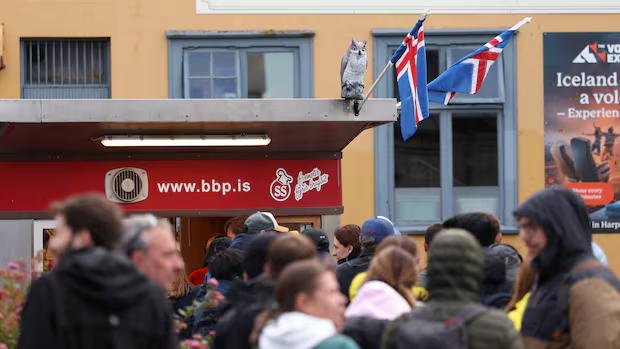
WorldIcelanders voted to stay out of the European Union, referendum results showed on Sunday, as they rejected a government push to reopen membership talks and sided with those who said Iceland's fishing waters were too important to risk.Prime minister said a 'no' would end the debate for as long as her centre-left coalition is in powerThomson Reuters · Posted: Aug 30, 2026 9:05 AM EDT | Last Updated: 1 hour agoListen to this articleEstimated 4 minutesThe audio version of this article is generated by AI-based technology. Mispronunciations can occur. We are working with our partners to continually review and improve the results.Tourists queue for a hot dog from Baejarins Beztu Pylsur stand in Reykjavik on Saturday ahead of a referendum on whether Iceland should resume accession negotiations. The 'no' side prevailed. (Leonhard Foeger/Reuters)Icelanders voted to stay out of the European Union, referendum results showed on Sunday, as they rejected a government push to reopen membership talks and sided with those who said Iceland's fishing waters were too important to risk.The Arctic island of 400,000 people has debated whether to join the EU for well over a decade and had initially been expected to narrowly back holding membership talks, but opinion polls this month showed views had changed.In Saturday's referendum, 52.8 per cent of ballots cast were against the government's proposal to hold negotiations with Brussels, 47.2 per cent were in favour, and 82.5 per cent of eligible voters took part, public broadcaster RUV and other Icelandic media reported.Out of six constituencies, only the two in central Reykjavik had a majority that voted in favour, while the rural areas and the Reykjavik suburbs voted against.Iceland votes on whether to start EU membership talks in shadow of Trump's Greenland threatsThe government framed membership as a shield against trade wars and Arctic rivalry and presented the referendum as a "now or never" moment. Prime Minister Kristrun Frostadottir said a "no" would end the debate for as long as her centre-left coalition was in power.Decades of membership debateIn Brussels, some officials had voiced hope that a vote to join from Iceland could ease skepticism toward EU enlargement and strategically strengthen the bloc when Arctic security is in focus.Iceland, a NATO member state but with no standing army of its own, also debated whether EU membership could boost the country's security when U.S. President Donald Trump has cast doubt on the U.S. commitment to the military alliance.Iceland Prime Minister Kristrun Frostadottir votes in the national referendum on resuming EU membership talks, at a polling station in Reykjavik on Saturday. (Leonhard Foeger/Reuters)Trump has also repeatedly said he wants to acquire Greenland, another Arctic island.But for some Icelanders, fishing was a sharper focus than security.The industry is one of Iceland's biggest, making up 15 per cent of gross domestic product in direct and indirect contributions, and some 40 per cent of export revenue, data shows.Interest rates and the cost of livingThe island nation first applied to join the EU in 2009 when a financial crisis hit the country's small, exposed economy. The government ended talks in 2013.Ahead of Saturday's referendum, finances were again a central issue as Iceland has grappled with high inflation and interest rates.Supporters of a "yes" vote said EU membership, and possibly adopting the euro, could bring relief. Iceland's central bank interest rate is eight per cent, compared with 2.25 per cent at the European Central Bank."It would not solve Iceland's structural faults, but it could become a catalyst to a more healthy economy," said chief economist Vilhjalmur Hilmarsson at Viska, one of Iceland's largest labour unions.WATCH | Trump's interests in the Arctic:Why Trump wants GreenlandJanuary 7|Duration 4:22The Trump administration has made it clear it wants to take control of Greenland and it isn’t ruling out using military force. For The National, CBC’s Eli Glasner breaks down why the U.S. has labelled annexing the sparsely-populated island a ‘national security priority.’ Opposition leader Gudrun Hafsteinsdottir, who led the "no" campaign, said the economic case is overstated. "These are not problems that Brussels will solve for us. These are problems that Icelandic politicians must solve," she said.Voter Ragnhildur Skarphedinsdottir, 70, said Iceland was managing well on its own and that she was voting "no.""By staying independent as we are, we look brightly to the future," she said before casting her ballot in Reykjavik.Under EU rules, fishing quotas are based on historical fishing patterns, among other factors. Some Icelandic officials have said Iceland would therefore retain control of its waters, since no EU country has fished there for decades.Hafsteinsdottir disputed that. "I know that the European Union will come up with some promises of some flexibility, especially in the beginning, but we know that it will not be for good," she said.
Icelanders vote to stay out of EU in close-fought referendum | CBC News
Icelanders voted to stay out of the European Union, referendum results showed on Sunday, as they rejected a government push to reopen membership talks and sided with those who said Iceland's fishing waters were too important to risk.
785 words~4 min read