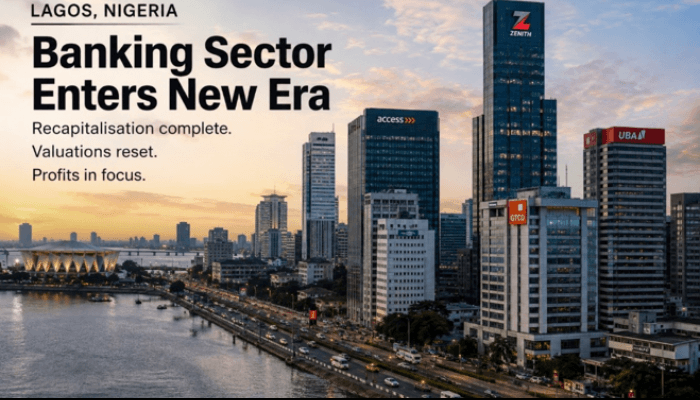
Five months after the Central Bank of Nigeria’s banking recapitalisation window closed, Nigerians are justified in asking an uncomfortable question, which is, what exactly did the N4.65 trillion raised by the banks buy for the Nigerian economy?
The banks have become bigger, better capitalised and are making extraordinary profits. But is the Nigerian economy receiving the credit it was promised? That is the question the banking industry can no longer dodge.
The CBN gave banks 24 months to meet new minimum capital requirements, in one of the most consequential banking reforms in recent years. The exercise ultimately mobilised about N4.65 trillion in fresh capital, with 33 banks reportedly cleared to meet the new requirements.
The objective was never simply to make Nigerian banks richer. It was to create stronger institutions capable of absorbing shocks, financing larger transactions and supporting the country’s ambition for a bigger, more productive economy.
Five months on, the banks have certainly demonstrated the ability to make money. Let us take a look at First HoldCo, which reported a sharp drop in full-year financials for 2025 compared to the previous year, and a comeback showed that it made a profit before tax of N653.54 billion in H1 2026, up 83.5 per cent from N356.15 billion in H1 2025. Even its profit after tax rose 81.6 per cent to N526.13 billion, while gross earnings climbed 16.7 per cent to N1.93 trillion.