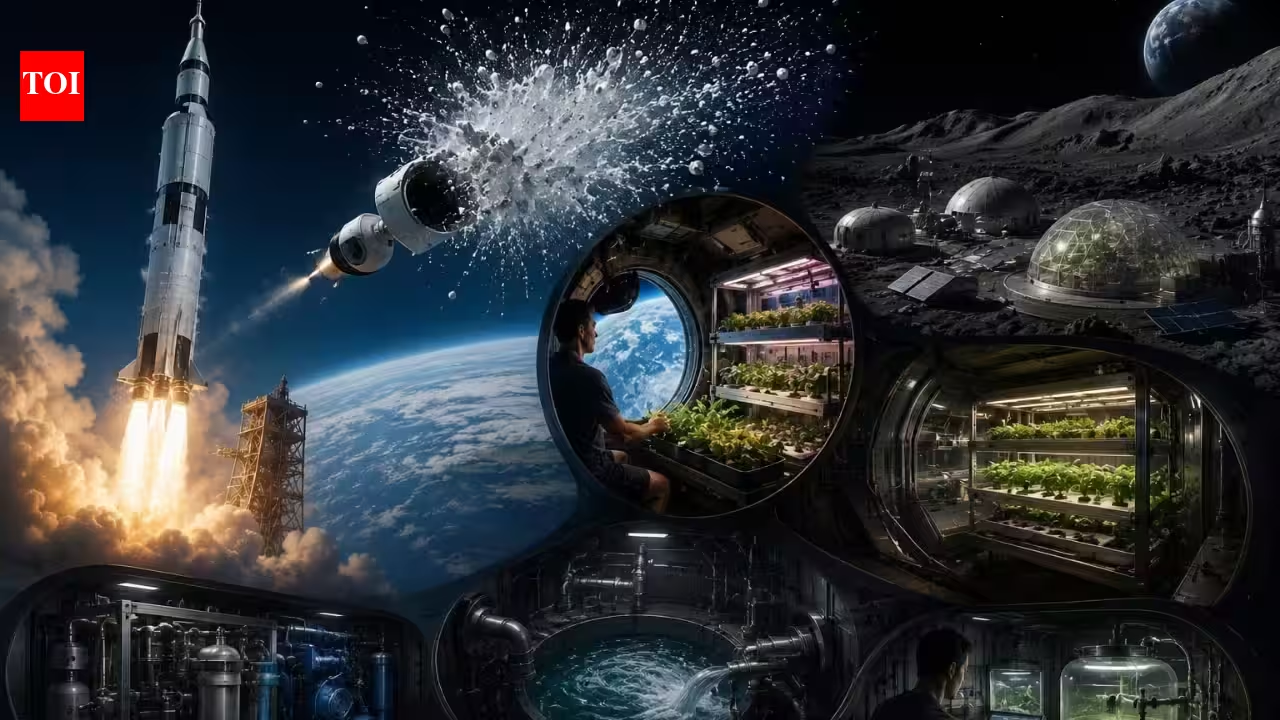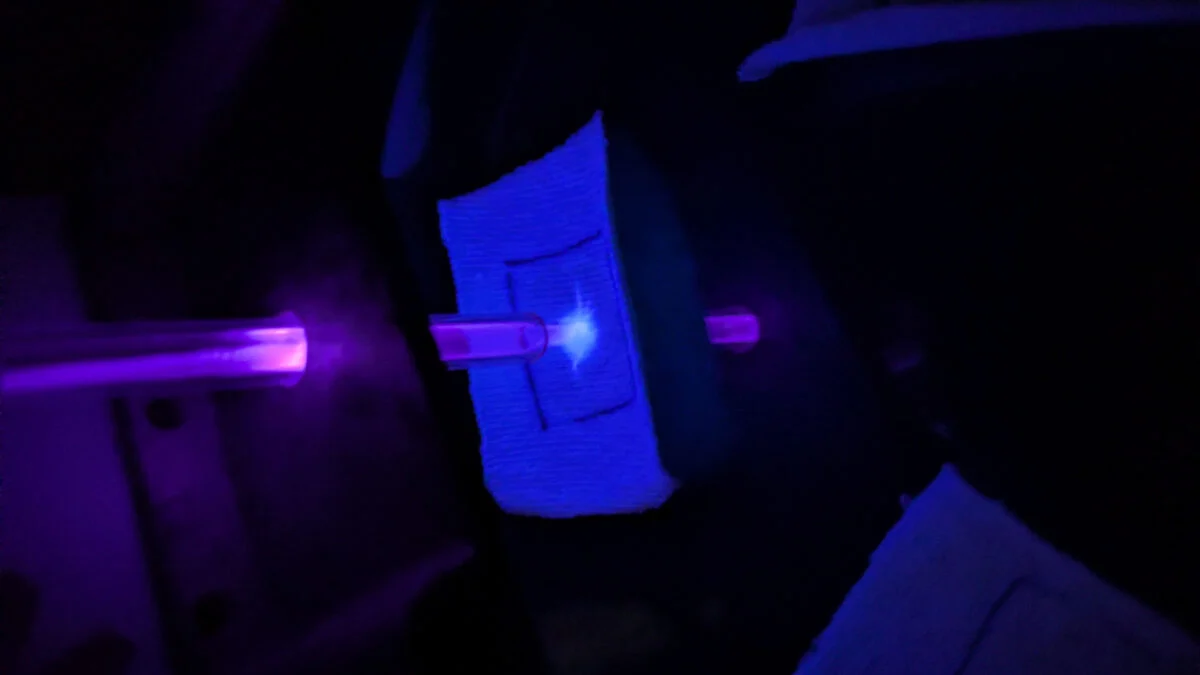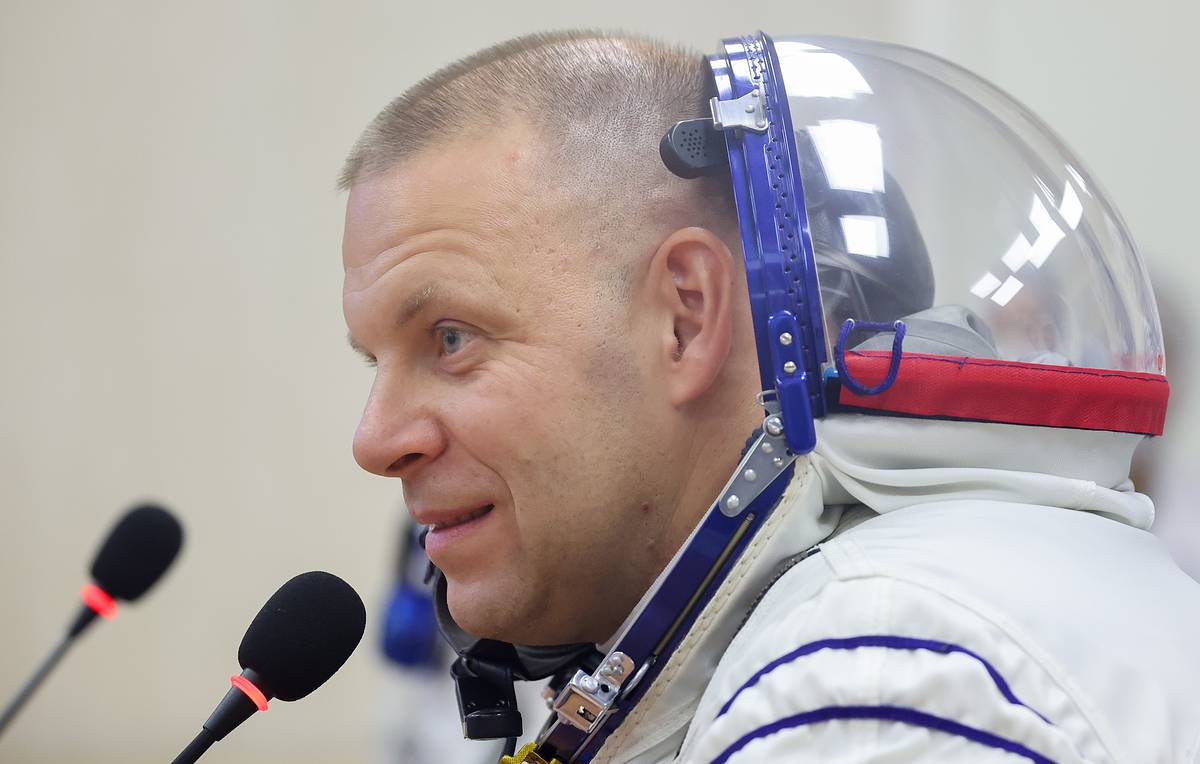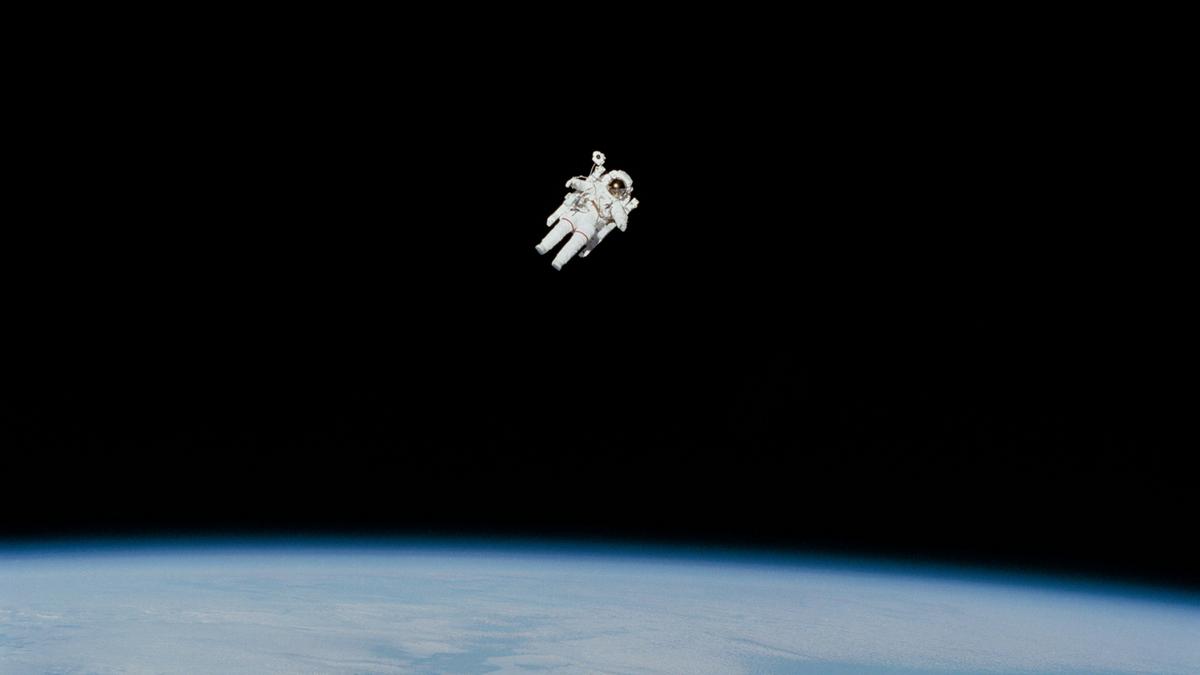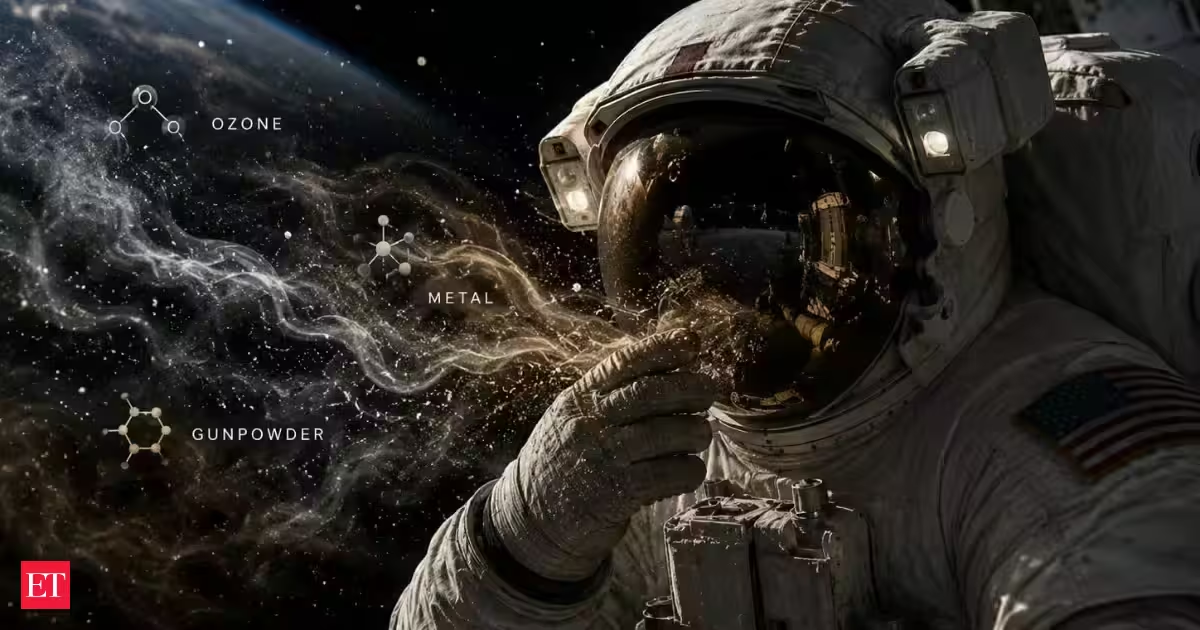
Here’s the thing: imagine an astronaut stepping back into the airlock after spending hours out in space, removing his helmet, expecting the scentless vacuum of outer space, and instead being greeted with a smell and no, not a pleasant one. The smell resembled a mix of burnt gunpowder, scorched meat, and a blowtorch. While it may seem as something straight out of a feverish reverie, a NASA report states that this is an actual occurrence, and so unusual that the agency hired a chemist to reproduce this odor in a laboratory setting.A representative image of after hours in the vacuum of space, when an astronaut begins the process of removing their spacesuit inside the station's airlock. Image credits: ChatGPTFor a generation of people that grew up with the highly sanitized depiction of space through the CGI lenses in sci-fi movies, where space is always visually stunning, this comes off as rather humanizing. It turns out that space not only looks marvellous, but apparently it also stinks. The scientific community still hasn't figured out exactly why this happens, and it remains a genuinely open question even now, in 2026, one that a century of spaceflight and decades of astronaut testimony still haven't fully settled.Astronauts keep describing the same weird smell, decades apartIt is not surprising that space has a smell, but what is truly astonishing is the consistency in the way different astronauts, working with different agencies decades apart, describe it. In 1972, Apollo 17 astronaut Harrison "Jack" Schmitt was among the first to note it, describing his crew's reaction to the burnt-gunpowder smell of the lunar dust clinging to their boots after their moonwalks, as recounted in a 2024 Space.com retrospective.Apollo 17 lunar module pilot and geologist Harrison Schmitt uses an adjustable sampling scoop to collect lunar material during the mission’s second moonwalk at Station 5 in the Taurus-Littrow Valley. The fine, clingy lunar soil is visible on his dust-covered spacesuit. Image credits: Wikimedia CommonsThree decades later, in 2003, NASA astronaut Don Pettit described the smell in a NASA blog post from his first stay aboard the International Space Station as a "rather pleasant sweet metallic sensation," reminiscent of the arc welding he did during his college summers. In 2009, veteran shuttle spacewalker Thomas Jones, reflecting on the three spacewalks he'd flown before retiring from NASA in 2001, told Space.com the smell was that of ozone, a "faint acrid smell," also close to burnt gunpowder. And in August 2014, midway through his first ISS mission, ESA astronaut Alexander Gerst posted a description on Twitter comparing it to a mix of walnuts and motorbike brake pads.So why does a vacuum smell like anything?The most convincing theory incorporates a little orbital chemistry. The atoms of oxygen left as a residue of oxygen molecules that have been broken down by the ultraviolet light from the sun bind themselves to the spacesuit. When the astronaut climbs back into the airlock, the chamber is repressurized: oxygen-rich air is pumped back in to bring the airlock up to breathable pressure, and that fresh oxygen reacts with the atomic oxygen already clinging to the suit to form ozone, which carries a sharp, metallic smell. According to a 2023 Live Science report, another theory on the smell suggests polycyclic aromatic hydrocarbons, or PAHs, which are soot-like chemicals produced during the process of combustion, for example in burnt meat or dying stars.These PAHs can get attached to the material of the space suit and cause the smell upon re-entry into a breathable environment. The scientific basis for this second theory comes from a 2008 peer-reviewed article titled “Interstellar Polycyclic Aromatic Hydrocarbon Molecules,” published in Annual Review of Astronomy and Astrophysics, by A.G.G.M. Tielens, wjich talks about the abundance and true prevalence of these large molecules made up of carbon through the interstellar medium. PAHs are a reasonable fit for the smoky, seared-meat, gunpowder side of the descriptions, but they don't obviously explain a sweeter, nuttier note like Gerst's "walnuts." That comparison remains one of the more puzzling, unresolved parts of the astronaut testimony, not something the PAH theory accounts for.The part that deserves more attention Although the bold headlines in the magazines might suggest otherwise, this is still just a theory, not a scientific fact. Even NASA, which can land rovers on Mars, has built its understanding of this phenomenon largely on astronaut testimony and an artificially reconstructed scent, rather than on direct chemical sampling of a spacesuit fresh from a spacewalk, as its own Ames Research Center "fact of the month" write-up acknowledges.To young people, who were raised watching Elon Musk's live streams about Mars colonies and landing rockets on Mars, this fact will serve as a reminder that space travel, while becoming increasingly familiar, is still vastly underresearched from the most fundamental of perspectives, that of our senses. We know how to create reusable rockets but are yet to understand why spacesuits might smell of bad barbecue.
Astronauts returning from spacewalks say space leaves a smell on their suits; NASA crews have compared it with metal, gunpowder, and ozone
Astronauts returning from spacewalks report a surprising smell on their suits, reminiscent of burnt gunpowder and ozone. A NASA report delves into scientific theories behind this phenomenon, comparing it to various scents while emphasizing the need for research into this sensory aspect of space travel.
820 words~4 min read