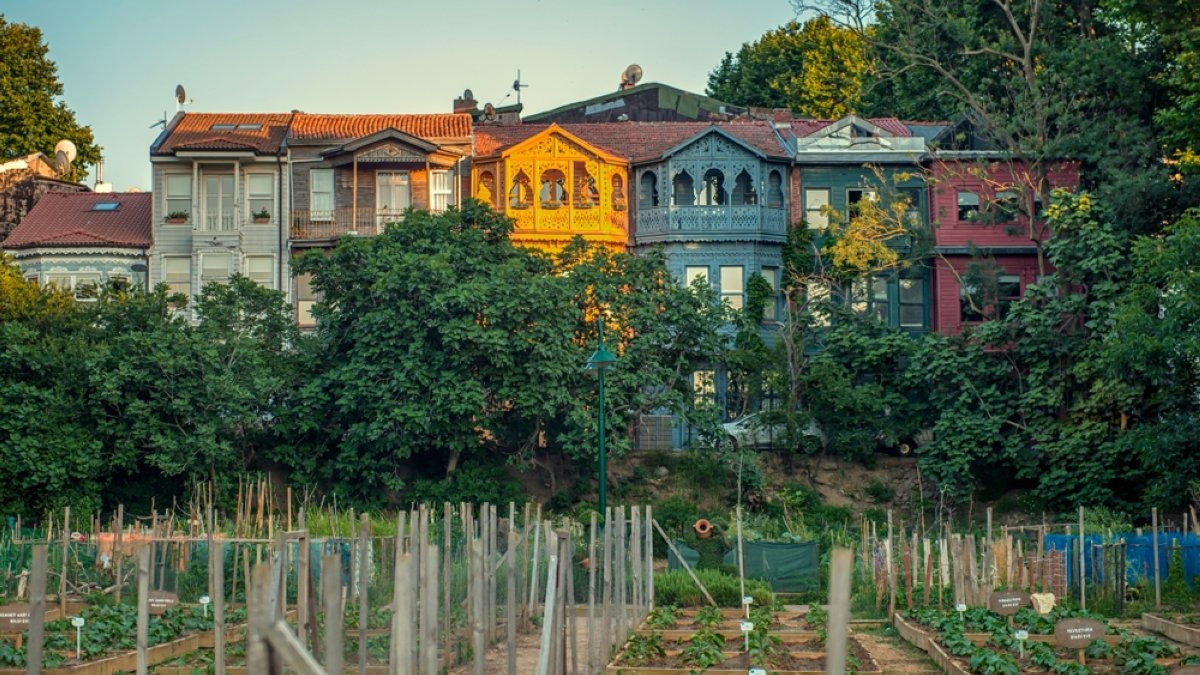
In my childhood in Fatih, Istanbul, nearly every empty lot between the old houses held a "bostan," a small garden that supplied the neighborhood with fresh vegetables and fruit long before supermarkets did, and that everyone nearby took part in tending. I remember parents growing fruit there among hackberry trees, which were common in Istanbul’s old gardens.
As mischievous kids, whenever we snuck into the bostans to eat hackberries, the neighbors were not busy chasing us off. They were busy protecting the plants: “Do not step on the flowers. Do not pick the fruit before it is ripe,” they would say. I can still hear those warnings today.
Later we moved to Üsküdar, another neighborhood in Istanbul, right next to the bostan of Imrahor, and I can say without exaggeration that I grew up inside bostans. I still remember the smell of the soil, the sound of the gardener watering the plants at dawn, the humid summer air thick with the scent of lettuce and parsley. At the time, I had no idea how valuable this was. To me, the bostan was just an empty lot next to our house.
In truth, it was one of the last remnants of a centuries-old urban tradition. Istanbul’s bostans within the old city walls, especially those of Yedikule, had served as true production centers from the Byzantine era through the Ottoman period, feeding the city from within the shadow of its own walls.