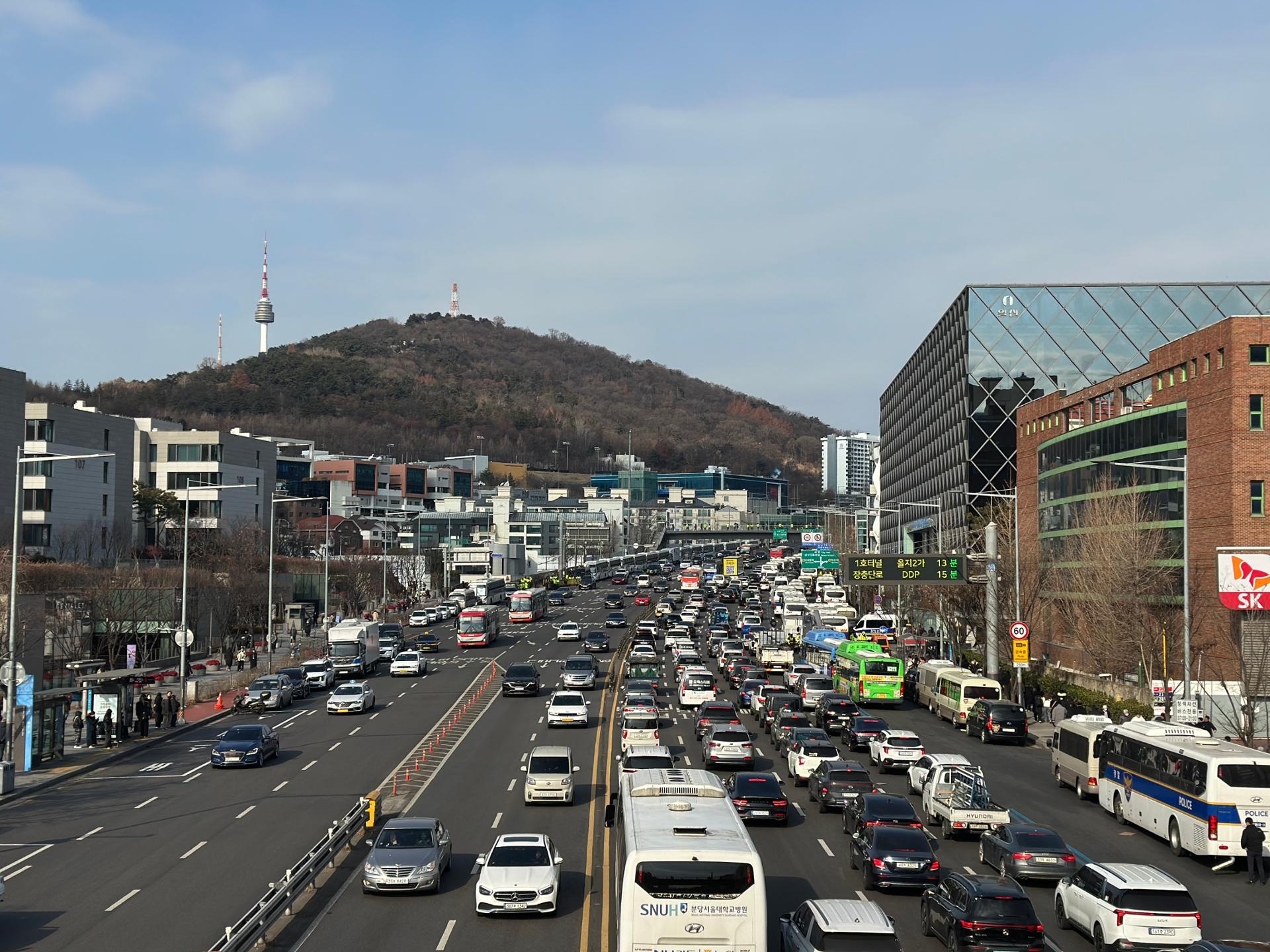
Younger residents prioritize public transit, middle-aged Seoulites parking and older people pedestrian safety A nighttime view of central Seoul, with Namsan Seoul Tower in the background. (123rf) Seoul residents put traffic congestion, late-night crime and fine dust at the top of the city problems they want technology to solve.The findings come from a survey of 8,531 people living in Seoul. Conducted online and offline in February 2025, it was released Sunday as the city lays out its plans for tech-forward upgrades through 2030.Transportation was the biggest concern overall, cited by 37.5 percent of respondents, followed by environmental issues at 21.2 percent and safety at 16.2 percent.Transportation also ranked first when residents were asked where smart technology was most needed, ahead of safety and the environment. Road congestion topped the list of transportation problems, cited by 34.2 percent of respondents. Transportation infrastructure and parking followed.Priorities varied by age: People in their 20s and 30s showed greater interest in improving public transportation, while those in their 40s and 50s were more focused on parking. Residents aged 60 and older placed relatively greater emphasis on pedestrian conditions and transportation services for vulnerable groups.Crime late at night was the top safety concern, cited by 22.5 percent of respondents, followed by sexual crimes and safety for children traveling to and from school.Air quality dominated environmental concerns, with fine dust cited by 29.2 percent of respondents, followed by other forms of air pollution including vehicle exhaust.The city plans to use technologies including AI-powered surveillance cameras, autonomous-driving infrastructure, air-purifying drones and robotic systems for cleaning the Han River.It also plans to use digital twins for urban planning and natural-language processing systems to analyze public feedback.Seoul has grouped the initiatives under four broad goals covering transportation, social inclusion, climate resilience and economic growth.The survey also showed sharp differences by area. Residents in southern and western Seoul overwhelmingly selected road congestion as their top transportation concern, while those in northeastern Seoul gave greater priority to transportation infrastructure, reflecting relatively weaker rail and transit connections in parts of the area.
What Seoul wants its smart-city initiative to fix first
Seoul residents put traffic congestion, late-night crime and fine dust at the top of the city problems they want technology to solve. The findings come from a s
341 words~2 min read