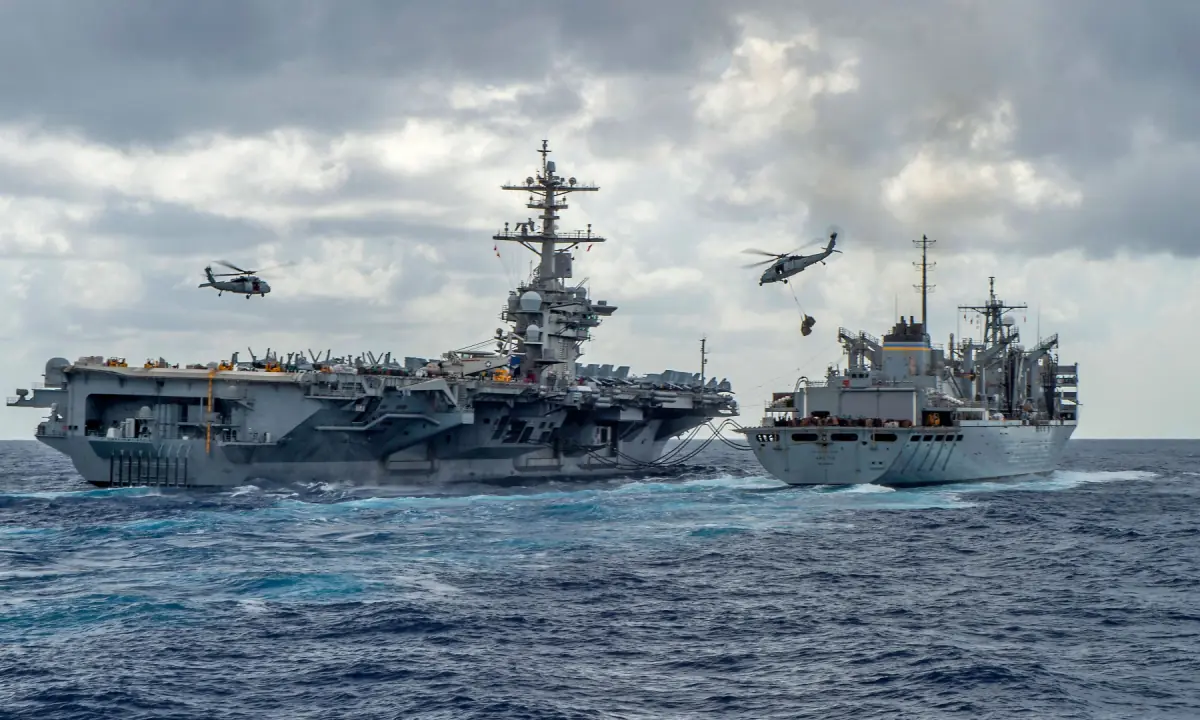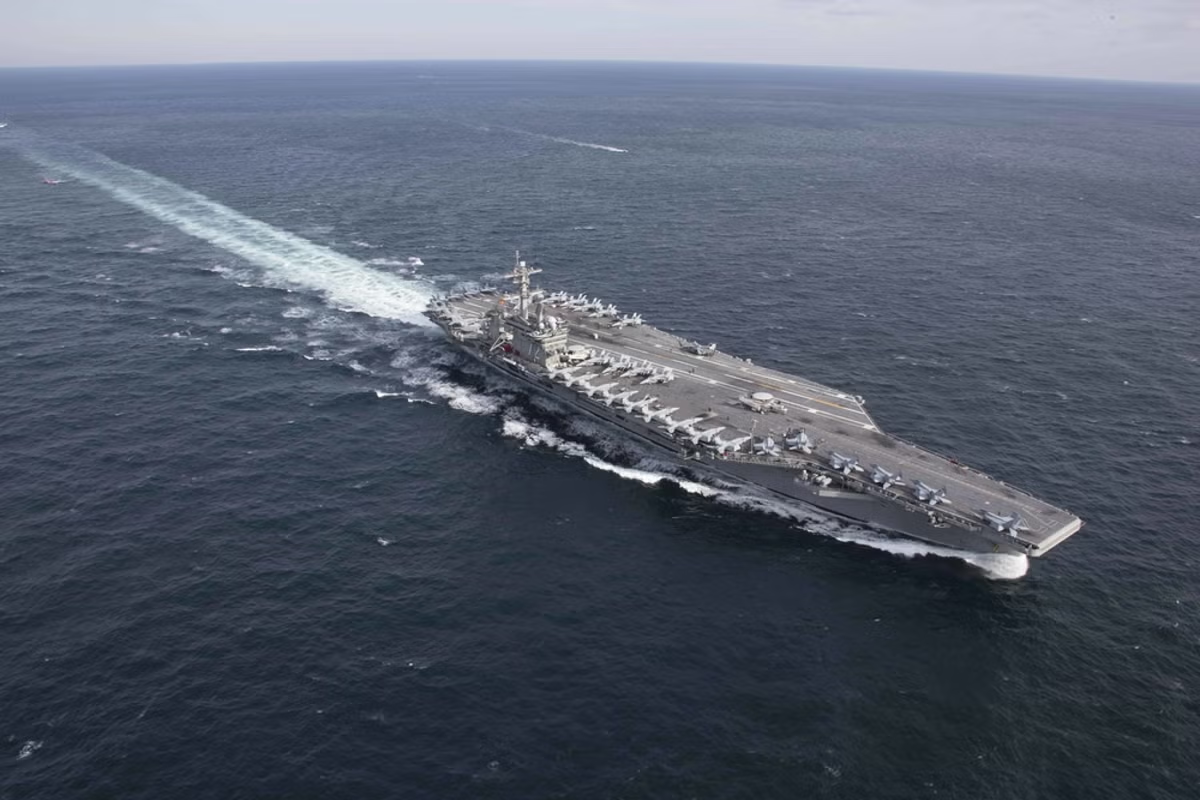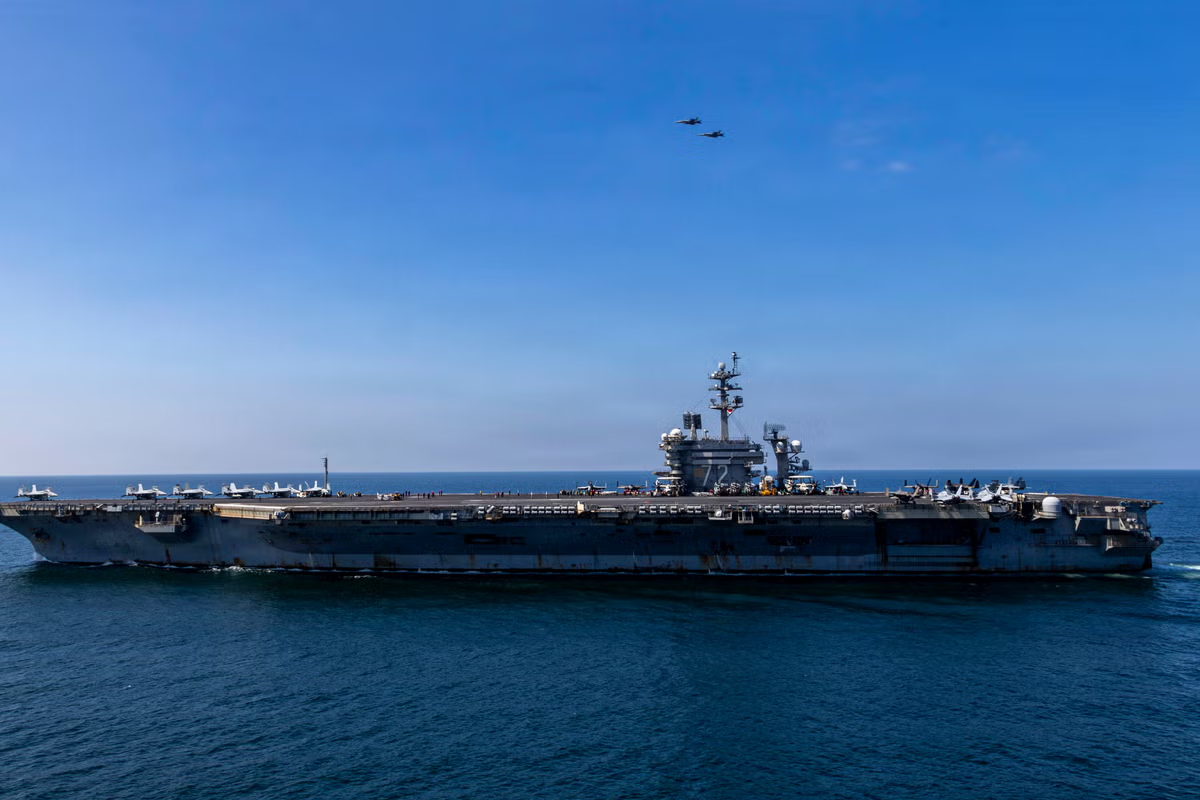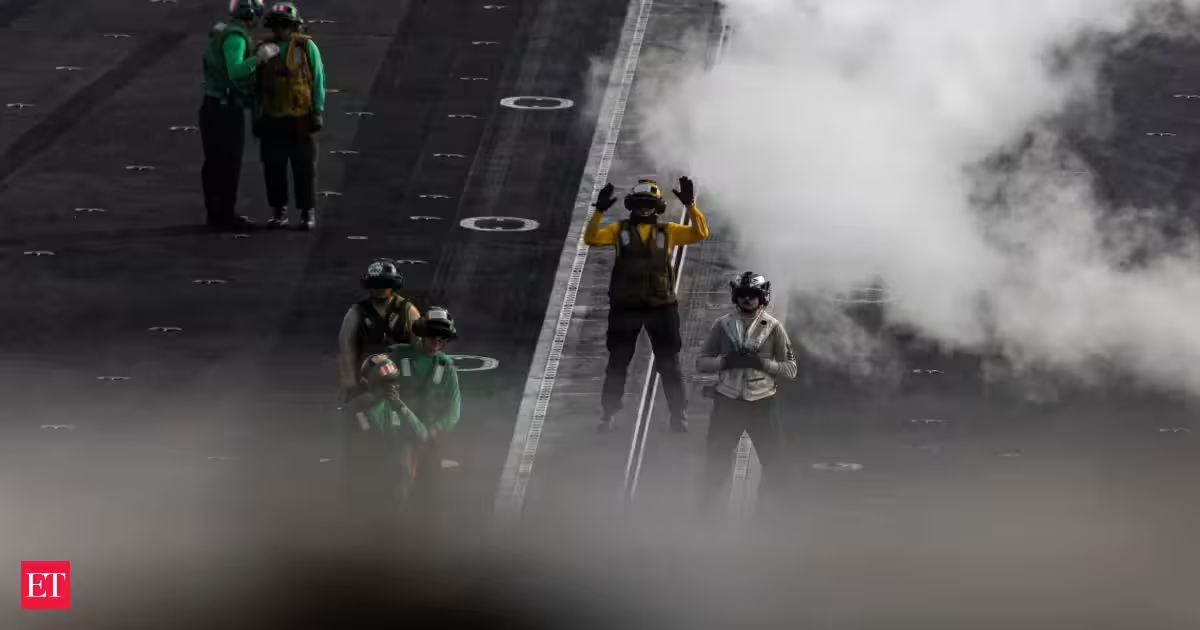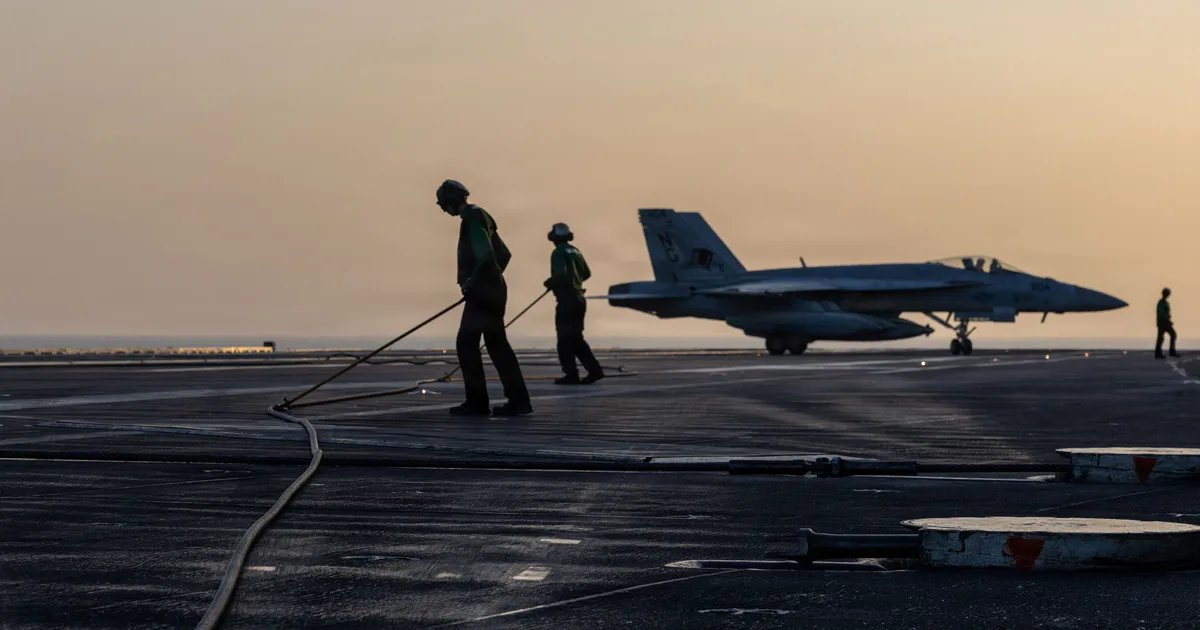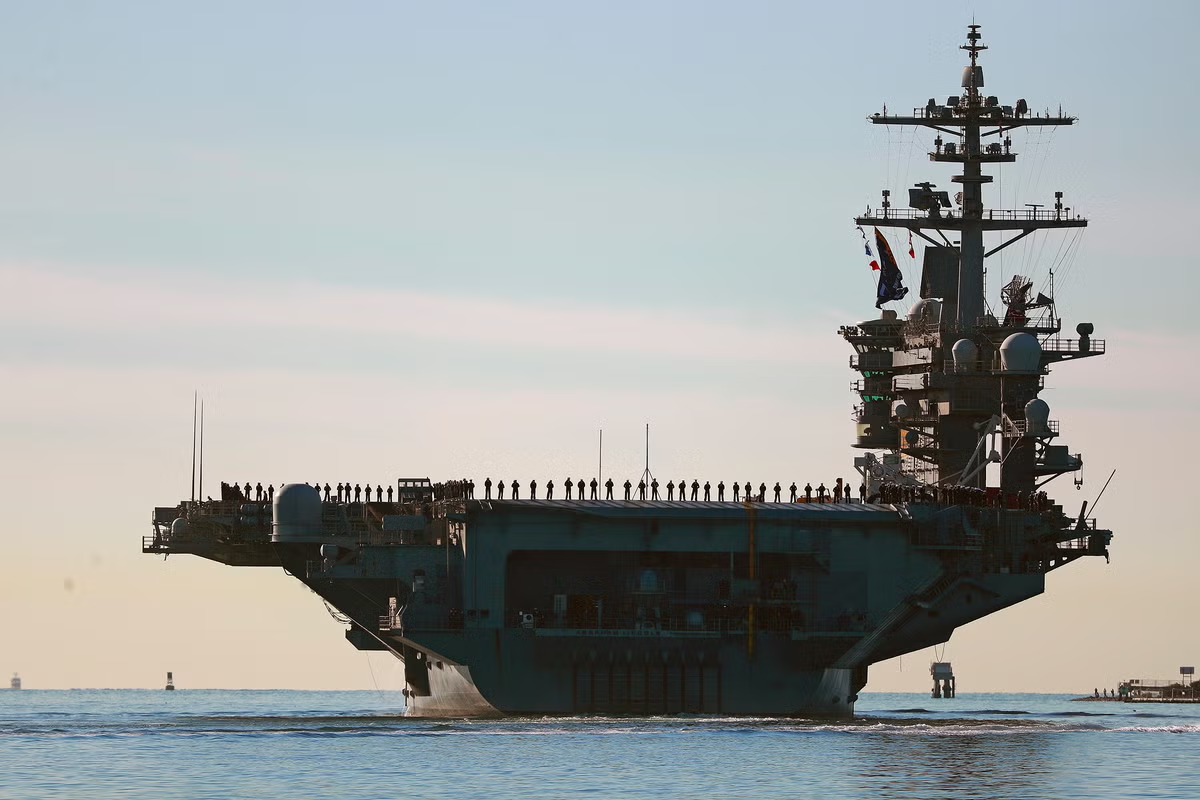
While President Trump and his self-styled Secretary of State for ‘War’, Pete Hegseth, dismissed it as ‘fake news’, by all accounts, life for the 5,000 men and women on board the USS Abraham Lincoln had become a living nightmare after more than 260 days at sea without respite.The nuclear powered warship left San Diego in November and has, until recently, been stationed in the Middle East to support the U.S. war against Iran. While the Lincoln left the Middle East on August 22 on its way home, with a planned Thailand stop, she has spent a record amount of time at sea without a port visit. Stories abound about poor food, bad hygiene, blocked toilets, intermittent showers, plummeting morale and shredded mental health. Reports in the Military Times and the Stars and Stripes claimed that sailors even tried to jump overboard as the deployment kept going.Despite the official denials, including Trump’s tetchy assertion to White House reporters that the deployment ‘should have been longer!’, the number of accounts from families of those on board are persuasive. An emergency town hall meeting in San Diego, earlier this month, attended by roughly 200 families, saw many desperate relatives confronting Navy leadership over the prolonged deployment and worsening conditions. During the meeting, the wife of one sailor aired her tearful grievance: “They’re trapped in a metal prison in the middle of the ocean. They eat prison-like food and sleep in tiny, cramped beds just like prisoners.”The USS Abraham Lincoln has had over 10,000 sorties and dropping 1.5 million lbs. of bombs and explosives on Iranian military positions. (K.C. Alfred/The San Diego Union-)In an official statement, Acting Navy Secretary Hung Cao confirmed the ship had completed 266 days deployed, 200 days in a combat zone and more than 10,000 sorties, and acknowledged that the sailors had been pushed very hard. “There is no question our young men and women have been pushed to their limits – but they have never been broken,” said Cao. “However, it is clear, knowing the whole story, our force and their families are not victims. They are the epitome of American strength and resilience.” Stranded at SeaAs of August 27, 2026, reports indicate that more than 1,500 commercial vessels have been stranded in or around the Persian Gulf since the Strait of Hormuz was effectively closed on February 28. That means some ships and the crews on board have now been effectively stuck for almost six months and one can only wonder about their physical and mental health.There’s no doubt that the USS Abraham Lincoln had a challenging time of it, flying over 10,000 sorties and dropping 1.5 million lbs. of bombs and explosives on Iranian military positions. Having been embedded on similar warships, I know from experience that strike operations launched round the clock would have rendered the upper deck a no-go area.Apart from flight crews and aircraft handlers, most on board would have been holed up below deck, many living a troglodyte existence beneath the waterline. This is par for the course on all aircraft carriers, so it’s for good reason they’re often called the biggest ‘submarines’ of any navy.As an anthropologist and documentary maker, I’ve spent three years of my life at sea on both Royal Navy and US warships. In 2021, I deployed with Britain's biggest warship, the aircraft carrier HMS Queen Elizabeth, for a seven-month operational deployment to the South China Sea. The 1,600 crew on board didn’t quite do 260 days without landfall, but came pretty damn close even though that wasn’t the original plan.An early outbreak of Covid on board rendered us a Pariah ship unwelcome in most countries. The dozens of planned port visits dwindled to one short stop in Cyprus, and then, much later, two short stops in Guam in the eastern Pacific. We did tie up briefly in Japan, but nobody could get off the ship other than to ditch gash (rubbish).Morale took a serious beating, but somehow the ship remained fully operational throughout. In the eastern Mediterranean, she deployed waves of F35B stealth fighters to attack ISIS positions in Syria whilst fending off aggressive probes by Russian fighter bombers and warships who resented our presence in what they considered their own backyard. Later, in the South China Sea, the QE had to run the gauntlet of Chinese submarines attempting to shadow us.Chris Terrill who embedded with the Royal Navy for sevnt months (Uppercut Films)The sheer pace and relentlessness of operations was expected, but not the mental health burden exacerbated by an inability to come ashore. In my opinion, the ship’s company rose to these challenges through a combination of a rather British sense of stubborn, can-do determination and, perhaps above all, bullet-proof comradeship. Looking back now, I find myself wondering if there’s something about the way the Royal Navy does business that lends it a resilience to privation different to that of its close American ally. A Different ApproachThe US Navy, undoubtedly the most powerful in the world, is roughly 250 years old, whereas the Royal Navy has been perfecting the art of sending people to sea for nearly 500 years. That is a considerable amount of massed institutional experience and consolidated tradition. A 17th or 18th Century British sailor, for example (quite possibly press-ganged into service), faced backbreaking labour, harsh discipline, brutal corporal punishment, poor food, primitive conditions, and months, if not years, away from home. Scurvy was an occupational hazard, as was nostalgia, a term recorded by the naturalist Joseph Banks during Captain Cook's three year voyage (1768-71) that led to the discovery of Australia. This was in recognition of the morose, sometimes suicidal moods that descended on sailors separated from loved ones for too long (in those days deployments were measured not in weeks or months but in years).It was an unforgiving life on often savage and unyielding seas. Counterintuitively, many sailors chose not to learn to swim. If they were to end up in the merciless ocean, they would rather it took them quickly. Perhaps the only fringe benefit was alcohol: a gallon of beer per man per day in Captain Cook’s navy in the late 18th Century and half a pint of undiluted rum per man in Nelson’s navy a hundred years later.The underlying realities of modern deployment remain recognisable across the centuries: hard work, a surrendering of personal freedoms, separation from family, strict discipline, danger, discomfort, and the need to live alongside the same people for long periods. By the same token, I would argue that enough of the Royal Navy’s heritage persists and continues to shape life and living on its warships in ways that I don’t believe always occur on US warships.Firstly, US carriers carry much bigger ship’s companies, up to 5,000 personnel including the air wing. If a US carrier is a ‘floating’ city where many sailors remain strangers, a Royal Navy carrier is more like a floating village; far more intimate, tightly knit and homely.In the Royal Navy, rank is not a rigid bar to friendship or social interaction (Uppercut Films)Royal Navy warships are traditionally more socially integrated and practice what former Fleet Commander Admiral Sir Jerry Kyd calls ‘relaxed professionalism’. This, he says, results from ‘many centuries of naval heritage that underpins any ship’s company’.He points also to ‘egalitarian camaraderie’ that helps combine a Royal Navy ship’s company compared to the highly stratified, process-driven crews of the US Navy. This stems from foundational differences in how the two services view authority, rank, and responsibility.On a US warship, especially an aircraft carrier, there’s a strict adherence to rank and rigid protocol. The chain of command is wielded as a management tool to maintain order among thousands of sailors. USN officers are trained primarily as systems managers deeply involved in the minutiae of daily maintenance, paperwork, and compliance. Not given to delegation, they’re forever checking up on junior sailors' tasks. In this way, a rather unforgiving power dynamic is constantly reinforced.On Royal Navy ships with much smaller crews, officers and enlisted sailors interact constantly. This requires a command style based on mutual respect and leading by consent. A Royal Navy officer who relies solely on their rank to get things done is often seen as an ineffective leader.Micky Goble: “You get every type on board that you do at home: brainy types, brawny types, nice ones, horrid ones” (Uppercut Films)In the US Navy, everyday life is far more proscribed and there are strict anti-fraternisation rules. In the Royal Navy, rank is not a rigid bar to friendship or social interaction. In fact, there are areas on a Royal Navy warship where rank all but disappears, such as in the gym or fitness classes and in some social areas. On the QE, we had an all-ranks café named The Haven where you left ‘your boots, overalls, rank and seniority at the door’.Another fundamental difference is that on US carriers sailors pretty much live where they work. On Royal Navy carriers (and warships generally), sailors live and relax in mess squares according to their branch. These are personal spaces and oases of calm, an escape from the grey, utilitarian ship itself. Mess squares are comfortable, customised, furnished and decorated by the sailors themselves, reflecting the fact that a ship is a home, and sailors form temporary but incredibly tight seagoing families.Food, of course, is also a vital component of a ship’s morale. USN ships run massive, round-the-clock industrial galleys with 24-hour options like "midrats" (midnight rations) tailored to heavy American comfort food served on tin trays like in prisons. The Royal Navy focuses on traditional home-style British meals at set times and always served on china plates. During the 2021 mission, over seven months the crew consumed an impressive 25.5 tonnes of sausages, 2.1 million eggs, 190,000 potatoes (equivalent weight of 15 London buses), 22,700kg of Angel Delight, 1.2 million rashers of bacons and 355,200 pints of milkNone of this makes a Royal Navy warship ‘soft’, but it does make it less rigid socially and this helps people deal with the inevitable deprivations of life on the high seas even under combat conditions.US Defence Secretary Pete Hegseth has said US strikes against Iran are possible after Washington unveiled an 'economic D-Day' against Tehran (AFP/Getty)While the Royal Navy maintains distinct messes, the social walls are more permeable. For example, the USN is unforgivingly ‘dry’ with a strict zero-tolerance no-alcohol policy. A Royal Navy warship has always been ‘wet’, meaning officers and ratings can unwind in designated social spaces and share an alcoholic drink; indeed, every mess has its own bar. British sailors are no longer given a gallon of beer a day or half a pint of rum, but they are allowed a daily ration of two tins of beer per man or woman unless they’re called to action stations when ‘the fridges are locked’.In 1994, I deployed to the Adriatic during the Yugoslavia War on board the frigate HMS Brilliant. Her mission was to patrol within the Serbian missile envelope to intercept gun-runners as part of the NATO Operation Sharp Guard. Much of the time was spent at defence stations or action stations in preparation for possible missile attack, and my job was to capture all eventualities on camera for the BBC.One of the sailors I filmed was a portly but wisecracking and worldly-wise Leading Seaman called Micky Goble who had a knack of hitting nails squarely on the head: “Sometimes I think this ship’s like a little Britain floating around the oceans of the world. You get every type on board that you do at home: brainy types, brawny types, nice ones, horrid ones… You get doctors, cooks, mechanics, sparks, chippies. You get mad scientists, village idiots, high-class toffs and then a few bog-common dregs to make up the numbers… but you’re all shipmates so you just get on with it.”Homeward BoundThe Abraham Lincoln, now relieved by USS George Washington, is heading home, but the furore is far from over as there is no end to the war in Iran in sight. A Senior US Navy official told CNN that another carrier, the USS Theodore Roosevelt, would soon be deployed for at least seven months and expected to relieve George Washington.On the eve of the six-month anniversary of the conflict, the US president told Al Jazeera that he “was not in a hurry” to get back to peace talks with Tehran and has “no time line” to work to.This may be so, but time matters when you are spending huge chunks of it at sea. In 1759, Samuel Johnson wrote: “No man will be a sailor who has contrivance enough to get himself into a jail; for being in a ship is being in a jail, with the chance of being drowned. A man in a jail has more room, better food, and commonly better company than a sailor.” Now in 2026, Democratic senators are demanding “an immediate independent strategic review into quality-of-life issues aboard all US Navy ships engaged in the standoff with Iran”.Maybe they should speak to Micky Goble.
Exhausted and suicidal? How US sailors are really coping after six months at sea
As Trump reveals that another warship is soon to be deployed to the conflict with Iran, reports have emerged of exhausted crews, deteriorating conditions and plummeting morale aboard the USS Abraham Lincoln. Chris Terrill, who has spent months embedded on missions, explains what it takes to sustain the human spirit at sea – and how the Royal Navy does it differently
2,171 words~10 min read