Starting school is a big milestone – for everyone involved – children, parents and their teachers. And while the idea of gaining independence, making friends and learning new skills might be daunting for youngsters, helping them to achieve these goals can also be challenging for teachers, particularly if children are unprepared for the journey ahead. So, long before they don their first uniform, parents will have been preparing them for the big event of beginning primary school, both emotionally and practically, to help make the transition easier for the young students and their educators. However, according to a recent study in the United Kingdom, many children are shockingly ill-prepared for school, with one in four who started last year not even toilet-trained. The annual survey of primary school staff by early years UK charity Kindred Squared, earlier this year, claimed that 26 per cent (36 per cent in the northeast of England) of children in reception class (junior infants) were having “frequent toilet mishaps”. The report also showed that 28 per cent of school starters were unable to eat and drink independently, while 25 per cent struggled with basic life skills, such as being able to dress themselves, sit, play and listen – and 28 per cent were unable to use books correctly, with many trying to swipe or tap them rather than turning over a page. Irish psychologist Peadar Maxwell says that although parents might assume that helping their child to be school-ready involves having them read and write before they start junior infants, this is not the case. It is about arming them with the skills necessary to be a little bit independent for their first foray into the world.“Teaching preparedness is a life skill,” he says. “I would advise parents to think about what their child needs to be able to feel confident, happy and relaxed in school ... This is important as they will be there for many years, so set them up from the beginning to have a positive outlook for the next, at least, 13 years.”Wexford-based Maxwell says that children are more likely to be school-ready when they are toilet-trained and can also attend to basic needs. “This means that taking the time to be patient and teach your child the skill of opening their clothes, using the toilet, cleaning and dressing – with minimal prompting at first and moving day by day to no prompting.“It means being able to dress themselves and fix their clothes and also the basics of washing their hands and keeping their nose clean. Never assume that a child should know these so-called basic skills. Every child needs to learn these tasks one at a time and don’t expect perfection as you teach a skill. “So help your child to express their feelings and opinions. Model positive observations and say please and thanks to people in your child’s company ... But when your child needs to express negative feelings, allow that too.”Once they start school, children will be expected to “go with the flow” of the class and the senior psychologist says that parents can help to prepare for this by having a routine at home, for mealtimes, bedtime and even activities or days out. “A child who has been introduced to education and learning as a joy, rather than a chore, will be more ready for classroom work and more likely to see the point of school,” he says. “This can be encouraged by modelling curiosity about the world, nature, and fun facts. Make learning fun by encouraging drawing, colouring, board games, or puzzles. Also, encourage your child to be physically active to whatever degree they are comfortable with, as this will prepare them for PE [physical education], yard play and activities they may encounter. You might also try using even a few words of Irish, such as madra, rothar or scoil, just to introduce Gaeilge as a new facet of your child’s world.“If your child seems reticent about school, visit the building in advance and try your best to be positive without being suspiciously overly enthusiastic. See if you can introduce them to a prospective classmate to share the walk or commute so they feel they have an ally.”Áine O’Rourke says that she made sure to prepare her children for school as she was “a late starter” herself and knows how being behind can make children feel self-conscious. “I was probably a little bit spoilt when I was young, as I was an only child and my mother did everything for me,” she says.“I really wasn’t able to do much when I started school, aside from going to the bathroom, and even then, I didn’t like to go alone and often had accidents. I was used to being fed, having my coat zipped up and generally getting everything done for me. “So when my own children (now aged 7 and 9) started, I was determined that they would be better prepared, as I remember feeling quite foolish when the other kids would be doing things themselves and I would have to wait for the teacher. Because of that, when my two started school, they were able to put their coats on or take them off, button them up, use the toilet, wash their hands and eat their lunch unaided.“It is so important, not only for the children, but also for the teachers who, let’s face it, are not childminders; their job is to give our kids an education, not spend their days wiping bottoms.” Indeed, according to that Kindred Squared report, school staff in the UK estimated they are spending almost 1½ hours a day changing nappies or helping children who are not toilet-trained, and about 2½ hours of teaching time a day is lost due to pupils lacking basic skills.Thankfully, that situation doesn’t seem to be mirrored in the Republic.Colm Byrne, principal at the Holy Family National School in Rathcoole, Co Dublin, says that this could be attributed to the Early Childhood Care and Education (ECCE) scheme. “Prior to the introduction of the scheme, we could easily identify the children who had been to a private preschool service in comparison to those who had not received a formal preschool programme of learning and development, such as now enjoyed through the ECCE scheme,” he says. “Indeed, it’s a testament to the ECCE and the brilliant underpaid teaching staff and struggling preschool managers who strive to continue to provide this service. We are all conscious of the financial struggles many of these services are experiencing. Our State, however, also deserves commendation for the provision of the scheme.”The school principal says that “with the exception of children with additional needs”, most junior infants are expected to be fully toilet-trained and steps are taken to help them be independent in other ways. “We also require children to wear Velcro shoes/runners until the children are able to tie their own laces,” he says. “I ask mams and dads to imagine a junior infant child requesting teacher to tie their laces of both feet, even once per day, then to multiply that by the number of children in the class and you have the equivalent of 30 minutes of teaching time lost with just one lace tie per child. You can now extend this scenario to imagine a teacher taking a child to the toilet once per day.“So, it is imperative to ensure optimum learning and contact time that the teaching staff is allowed focus on progressing the child through the learning and developmental milestones which are outlined in our crowded curriculum. Teachers are not in a position to provide one-to-one care in a structural sense.“Obviously, they will always provide care in an emergency situation but it’s not appropriate to expect classroom teachers to be responsible for ensuring a child learns how to toilet themselves. I think there is space to discuss additional time in schools to develop skills regarding eating and ... especially in the context of the provision of the much-welcome and beneficial hot meals scheme.”The experienced educator says there is a “range of observations regarding language literacy”, but he does not believe that children will be affected long-term by an early introduction to digital devices. “While the junior infant intakes are increasingly digitally literate, there would be decreasing numbers of children who you would identify as having experienced language from reading time with parents,” he says. “These pupils will display some emergent reading skills, such as reading orientation, but children are experiencing language and the written and spoken word in formats not available when I was a child. “But I am not confident that language literacy is threatened by the fact that a junior infant child is not as familiar with how to orientate through a book as a junior infant child might have done 20 years ago ... So, typically, we find junior infant children primary school-ready. Of course, there is always the exception, and most junior infant intakes take until Christmas to fully assimilate to their new environment, but the ECCE scheme has delivered much success in this regard.”
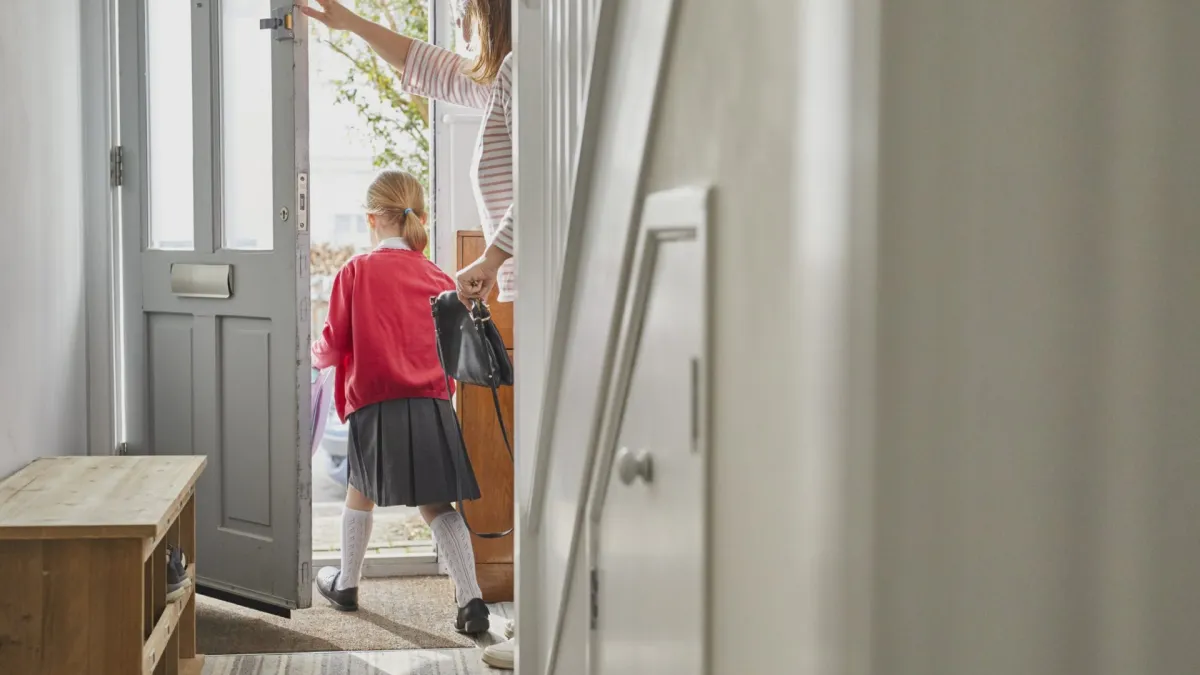
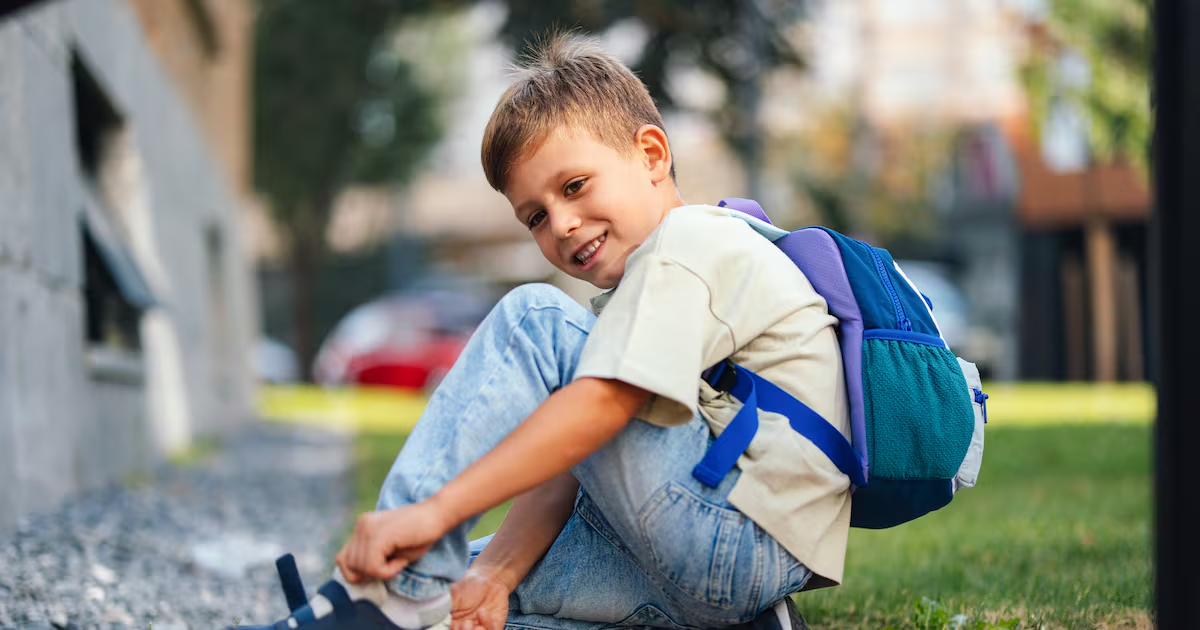
Starting school means parents must ensure children are prepared - that includes being toilet-trained
Beginning formal education is about arming children with the skills to be more independent
1,512 words~7 min read