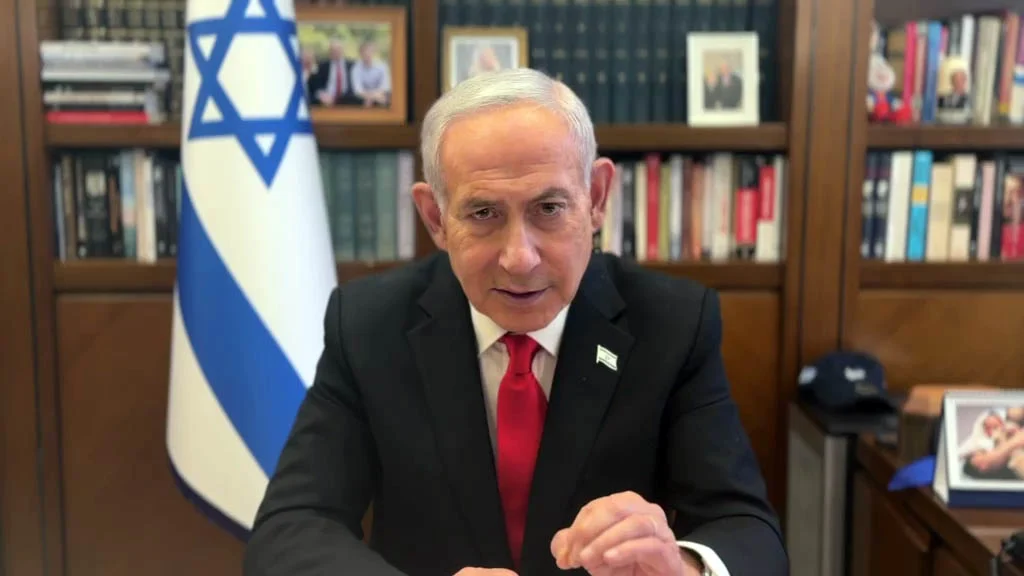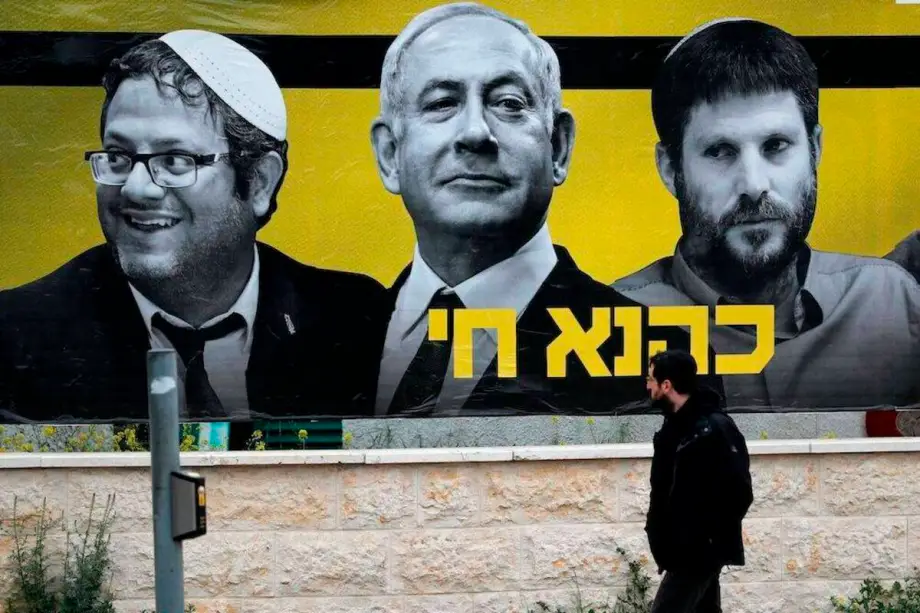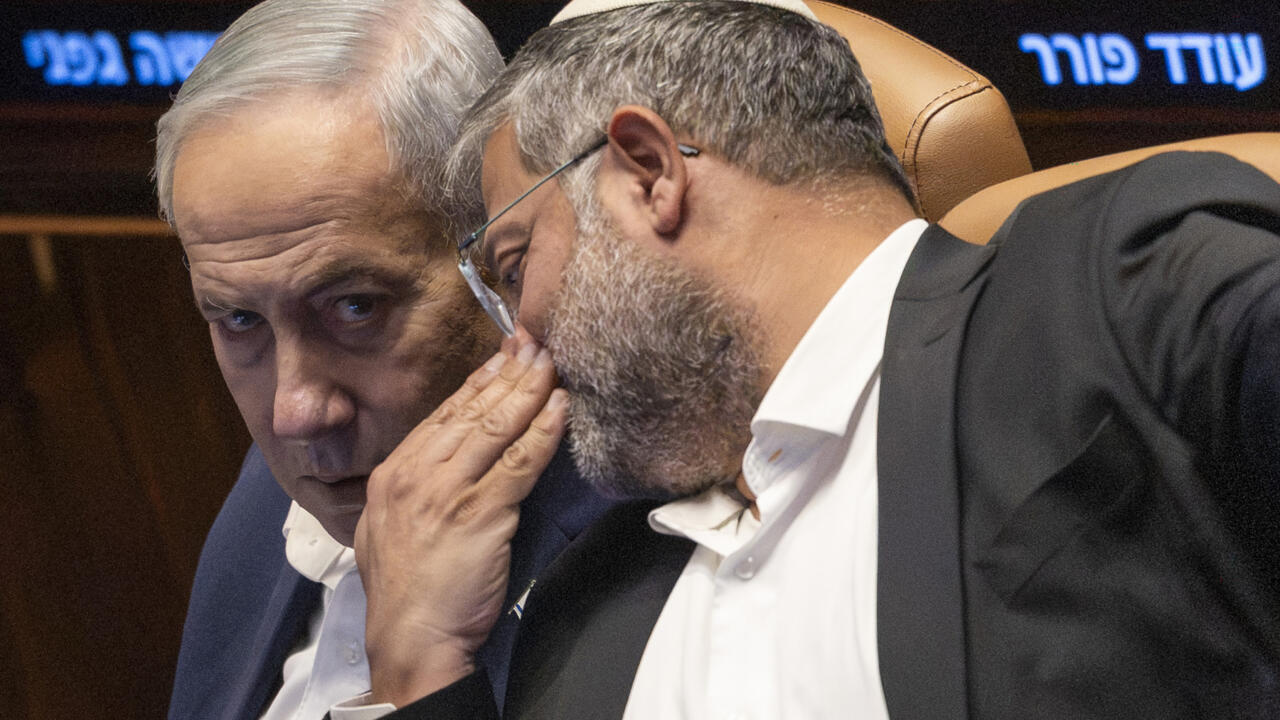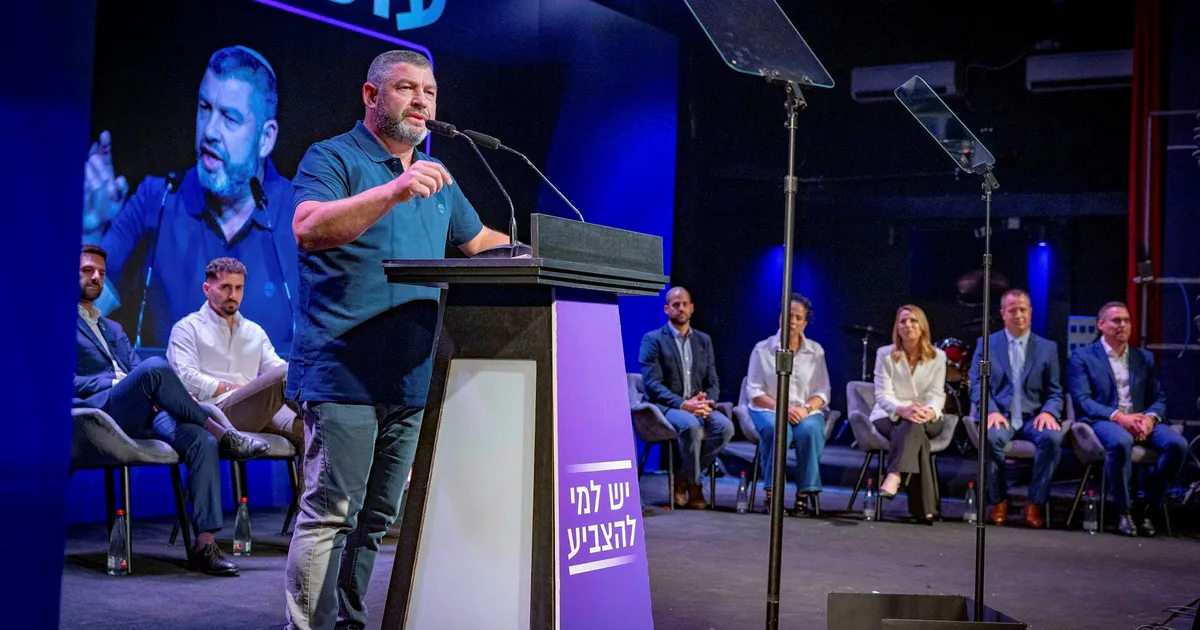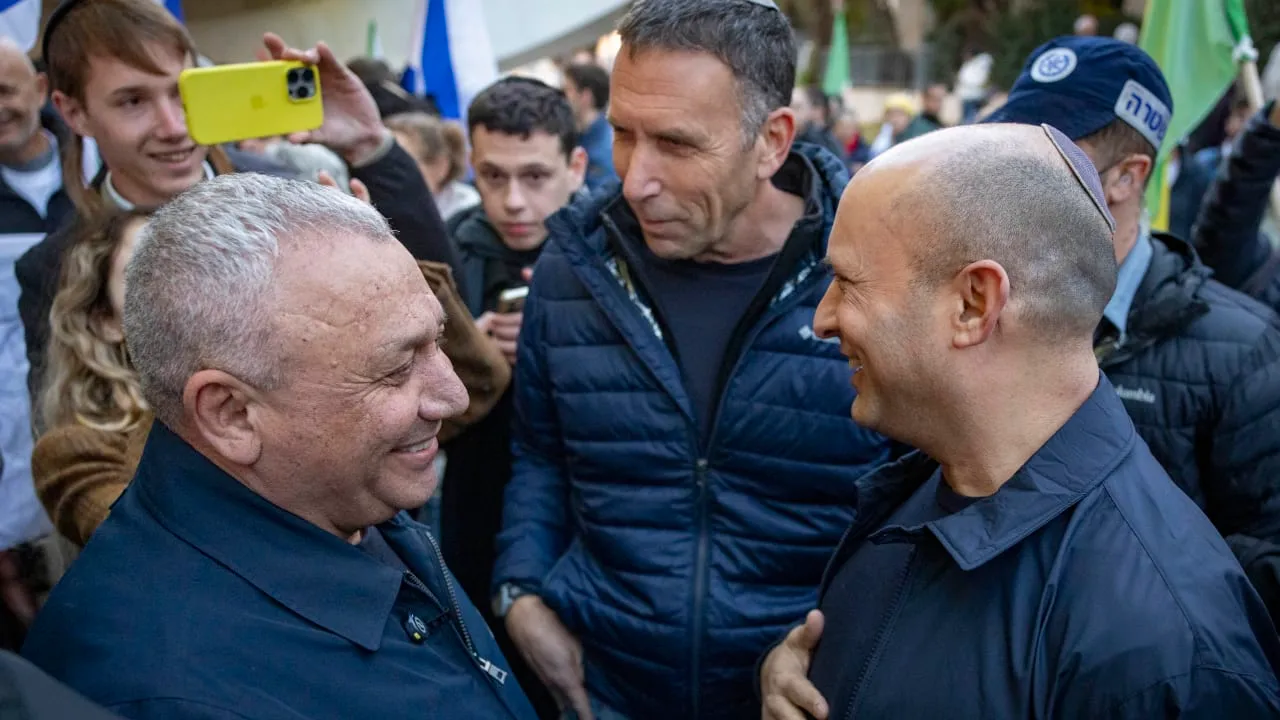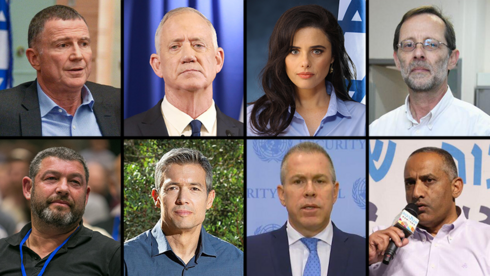
With candidate lists due soon, Netanyahu is trying to prevent right-wing votes from being wasted below Israel’s electoral threshold, but Ben-Gvir and newcomer Ofer Winter insist on running independentlyWith barely a week and a half remaining before parties must finalize their candidate lists for Israel’s 2026 election, Prime Minister Benjamin Netanyahu is facing a problem that has repeatedly haunted Israel’s right: too many parties competing for the same voters, and the risk that some may fail to win enough support to enter parliament.Netanyahu had entered the campaign hoping to organize his political camp into four separate lists. The idea was to keep every party safely above Israel’s 3.25% electoral threshold and allow allied parties to sign surplus-vote agreements, which can help them maximize the number of seats they receive once ballots are counted.GalleryPrime Minister Benjamin Netanyahu that has repeatedly haunted Israel’s right (Photo: ABIR SULTAN / POOL / AFP)Instead, six parties are now competing on the right, and several of their leaders are refusing Netanyahu’s efforts to consolidate them.The two most difficult cases for him are National Security Minister Itamar Ben-Gvir and retired general Ofer Winter, a newcomer to politics whose recently launched Amcha Yisrael party has begun polling above the threshold.Winter has sent Netanyahu a clear message in recent days that he is not interested in a merger. His pitch is built around presenting a completely new political slate whose candidates, unlike members of the outgoing political establishment, bear no responsibility for the failures surrounding the October 7, 2023, Hamas attack.Ben-Gvir has been equally firm.The leader of the far-right Otzma Yehudit party told Netanyahu privately, and later publicly, that his decision to run independently is final and not open to negotiation.Netanyahu last week called on Ben-Gvir and Finance Minister Bezalel Smotrich, leader of the Religious Zionism party, to unite their lists. Ben-Gvir refused.Netanyahu later announced that he was inviting the two men to a joint meeting, but Ben-Gvir again rejected the idea. In practice, however, Netanyahu’s aides never contacted Ben-Gvir to arrange a time or location, apparently assuming he would refuse anyway.The disagreement matters because of how Israel’s electoral system works.Seats in the 120-member Knesset are allocated through nationwide proportional representation, but parties that receive less than 3.25% of the vote win no seats at all. That means even a relatively small party can cost its broader political camp several parliamentary seats if it narrowly misses the threshold.Netanyahu has spent much of the campaign trying to prevent exactly that scenario.In recent days, he has toned down his attacks on former IDF chief of staff Gadi Eisenkot, who leads the Yashar party, and shifted much of his attention toward imposing discipline on his own political bloc, particularly Ben-Gvir.Netanyahu has released several videos and social-media posts aimed at pressuring the national security minister to reconsider.But Ben-Gvir has so far refused even to discuss a merger.Netanyahu’s concern is not limited to losing right-wing votes below the threshold.A stronger Ben-Gvir could also mean a weaker Likud.Senior figures in Netanyahu’s ruling party increasingly see the two parties as competing for overlapping groups of voters. When Ben-Gvir talks about attracting Mizrahi voters from Israel’s peripheral towns and cities, Likud officials understand that many of those voters would otherwise be theirs.“Ben-Gvir will not make the bloc larger,” one senior right-wing figure said. “He may simply rearrange it.”The official said the working assumption remains that there will not be major movement of voters between Israel’s broader political blocs, but that Ben-Gvir’s performance could reshape the balance of power inside the right.“If Otzma Yehudit gets through this election on its own with 10 seats or more, what does that say about the Israeli right?” the official said. “Clearly, that becomes a completely different party. Clearly, it becomes a different political event.”For Netanyahu, the preferred outcome is a bloc of allied parties large enough to survive but not so large that they substantially weaken Likud.He would prefer Ben-Gvir and Smotrich to compete primarily for voters on the more ideological end of the right, leaving Likud dominant among the broader conservative electorate.Netanyahu has also turned to rabbis and political intermediaries close to Ben-Gvir in an attempt to persuade him to change course. So far, those efforts have failed.Winter presents Netanyahu with a different problem.A former senior IDF officer, he is trying to position his new party as a home for right-wing voters who remain conservative but are dissatisfied with the existing political establishment.His argument is that Israel’s outgoing parliament contained a large number of right-wing lawmakers, yet polls now show the right losing ground.Winter believes that is not because voters have abandoned right-wing views, but because some no longer feel they have a political home they want to support.His allies believe that pool of disillusioned voters could amount to a significant number of seats, potentially reaching the low double digits.Winter’s party is also presenting itself as broader than Smotrich’s Religious Zionism party, which draws heavily from Israel’s religious-nationalist community.From the beginning, Winter has insisted on independence.“If I don’t run alone, I won’t run at all,” he was initially quoted as saying. That position has hardened as polling has improved.“The Israeli right needs a lightning rod,” an associate of Winter said, using a Hebrew expression for a political force capable of absorbing frustration and preventing voters from leaving the bloc. “That is exactly what we are trying to be, a new political home offering something different.”Winter’s party argues that it was not built as a vehicle for an eventual merger. Its organizers say dozens of former soldiers who served under him helped establish the party across the country with the intention of creating a lasting political organization.“The candidates did not know about one another until the last moment,” a senior party official said. “The element of surprise, for the candidates, for the media and for the political system, was very strong, and it will continue to be part of our path.”The party has also begun campaigning among Arab Israelis, prominently featuring Winter alongside Arab Israeli activist Yoseph Haddad.Party officials believe Haddad could help attract younger Arab voters, giving Winter access to an electorate that would be far more difficult for Smotrich to reach.Despite insisting on running independently, Winter has said his party would recommend Netanyahu for prime minister after the election.For Netanyahu, the result is an increasingly complicated electoral map.What in previous elections was often a relatively straightforward effort to broker mergers among smaller right-wing parties has become much harder because several of the current players believe they can succeed independently.Both Ben-Gvir and Winter are also seeking voters disappointed with Likud itself, meaning Netanyahu is not merely trying to protect the overall right-wing bloc. He is also trying to prevent his own party from shrinking.If no other arrangement emerges, Netanyahu may ultimately be forced to absorb Smotrich into Likud by reserving several places for his candidates on the Likud slate.That, however, would create another complication.Netanyahu wants his allied parties paired for surplus-vote agreements. Under Israel’s electoral system, two parties can agree before an election to combine their leftover votes after the initial allocation of seats, potentially helping one of them secure an additional Knesset seat.If Netanyahu is left with an odd number of allied lists, arranging those agreements becomes more difficult.In a close election, even a fraction of a seat could matter.Meanwhile, negotiations between Smotrich and Moshe Feiglin’s Zehut party are progressing and could be completed this week.The emerging arrangement would reportedly give Feiglin the No. 2 position on the combined slate, along with candidates in the eighth and 10th slots.The logic is that Feiglin is believed to bring roughly the equivalent of one Knesset seat worth of voters, while Smotrich wants to preserve enough high-ranking positions to give his own faction six realistic seats.Netanyahu has been kept informed about those negotiations.Figures in the governing bloc say Netanyahu is using the opportunity both to pressure Ben-Gvir and to try to reduce his political strength, although Netanyahu would still prefer a direct merger between Ben-Gvir’s Otzma Yehudit and Smotrich’s Religious Zionism.Smotrich, for his part, would reportedly prefer an alliance with Winter.Netanyahu has chosen not to pressure Winter publicly, partly because he does not trust the new party and appears to see Ben-Gvir as the more realistic target.Ben-Gvir responded angrily to reports of Netanyahu’s role in the Smotrich-Feiglin negotiations.“I was stunned by reports that Smotrich and Feiglin conducted advanced negotiations for a merger with your mediation, and that only in order to ‘pressure Feiglin,’ you and Smotrich issued a staged call for unity with me, whose entire purpose was to lower Feiglin’s demands,” Ben-Gvir wrote to Netanyahu.“Fine, you boycott events I attend and are embarrassed to be photographed with me, but now even the emotional call for unity turns out to be a cynical game?!”For Netanyahu, the arithmetic is becoming increasingly unforgiving.His original plan was designed to ensure that every right-wing vote contributed to a viable parliamentary list. Instead, he is now confronting independent rivals, overlapping electorates and a fragmented political camp in which one party narrowly missing the threshold, or one seat shifting between allies, could ultimately determine who can form Israel’s next government.
Netanyahu’s election plan falters as Israel’s right splinters
With candidate lists due soon, Netanyahu is trying to prevent right-wing votes from being wasted below Israel’s electoral threshold, but Ben-Gvir and newcomer Ofer Winter insist on running independently
1,512 words~7 min read