Get your news delivered straight to you by 7am - sign up to our new Morning Mail newsletter for FREESee more Daily Mail on Google - save us as a Preferred SourceBy MEIKE LEONARD, HEALTH REPORTER Published: 00:35 BST, 30 August 2026 | Updated: 01:24 BST, 30 August 2026
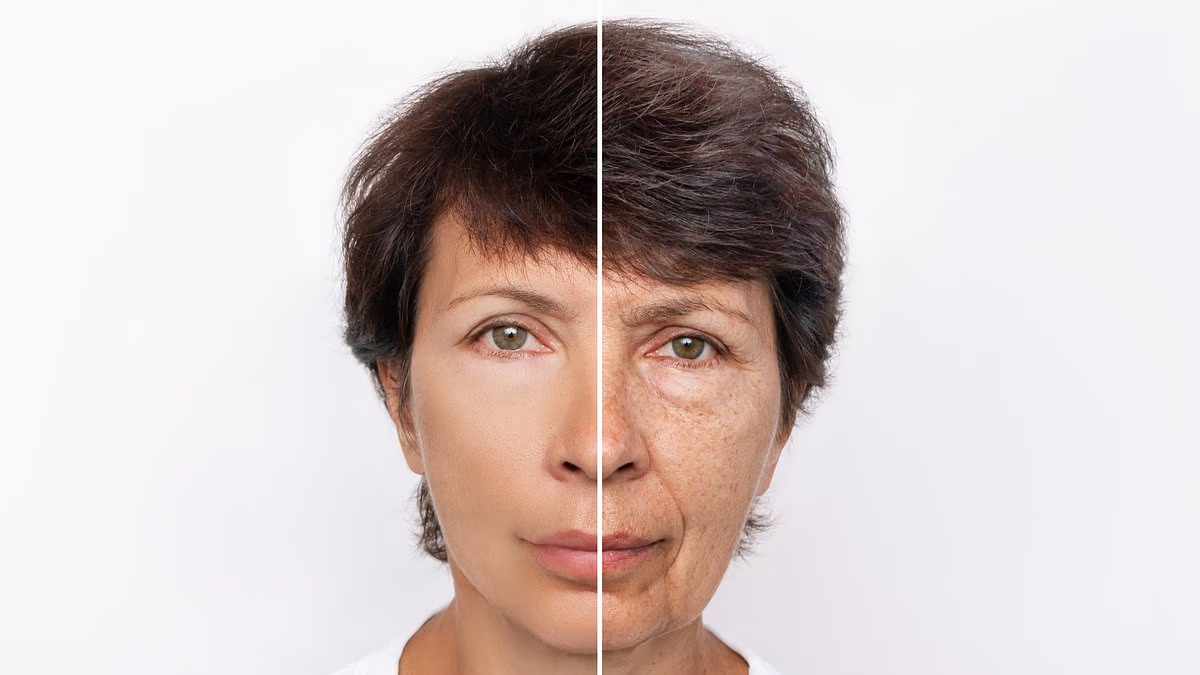
Adults with at least one parent who lived until 100 are more likely to live longer than those whose mother and father had shorter lifespans, a new study has found.Children of centenarians also have substantially lower risks of cardiovascular disease and hypertension, researchers discovered.The findings add to a growing body of evidence that exceptional longevity and healthy ageing may run in families – with inherited traits proving more important than lifestyle.'Centenarians – people who live to age 100 or older – offer crucial insights into what it looks like to age well,' said lead researcher Dr Sofiya Milman, professor of medicine and genetics at Albert Einstein College of Medicine, Boston University.'We wanted to know whether they pass their good health and longevity down to their children and, if so, whether those advantages can be explained by healthy habits or whether something more fundamental, such as genetics, is at work.'The study's researchers – from the Albert Einstein College and Tufts Medical Center in Boston – based their findings on three long-running global studies.More than 2,300 people whose parents were centenarians had their health data compared with that of 2,700 adults whose parents died before the age of 86.The research team found that the children of centenarians experienced health advantages even after accounting for lifestyle factors such as smoking, alcohol use, exercise and diet. Comparison of young and aged woman's face which is split down the middle (stock photo)Compared with children of people with shorter lifespans, centenarians' offspring had a 42 per cent lower risk of death, a 33 per cent lower risk of cardiovascular disease and a 32 per cent lower risk of hypertension.'The overall consistency of these findings reinforces the idea that exceptional longevity runs in families,' said researcher Dr Eric Reed.'This is not to say that lifestyle doesn't count. 'But some people from families with exceptional longevity appear to enjoy biological advantages that help them remain healthy despite the environmental and behavioural factors that affect us all.'