In the age of AI engineering and vibe coding, almost nobody mentions OOP anymore. But what if children were never taught prefixes, roots, and suffixes — the architecture of words — or how a sentence is properly built? Will AI agents really be enough for the specialists of tomorrow, if those specialists never learned the grammar underneath?
Dive into OOP in WordPress development practice → (original source, featuring the four whales example)
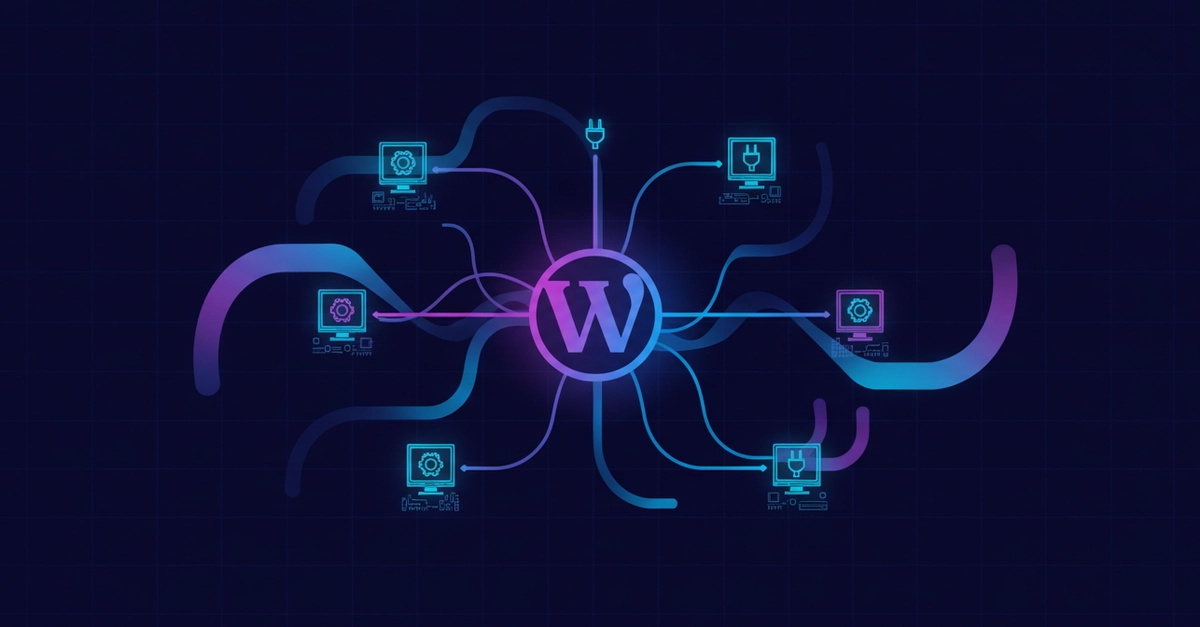
Most WordPress developers learn Object-Oriented Programming the hard way: by staring at WP_Widget, WP_Query, or WP_Post and reverse-engineering why core is built the way it is. Textbooks explain encapsulation, abstraction, inheritance, and polymorphism with abstract diagrams that rarely survive contact with real code.
Here's a different way to think about it — using a whale.
A whale keeps its vital organs protected inside its body, dives into depths where the mechanics of survival are invisible from the surface, passes traits down to its calf, and adapts its behavior differently depending on the environment it's in. Swap "whale" for "class," and you've basically described the four pillars of OOP. Let's walk through each one with WordPress-specific code, then look at how the same principles scale from a five-page brochure site to an enterprise platform.