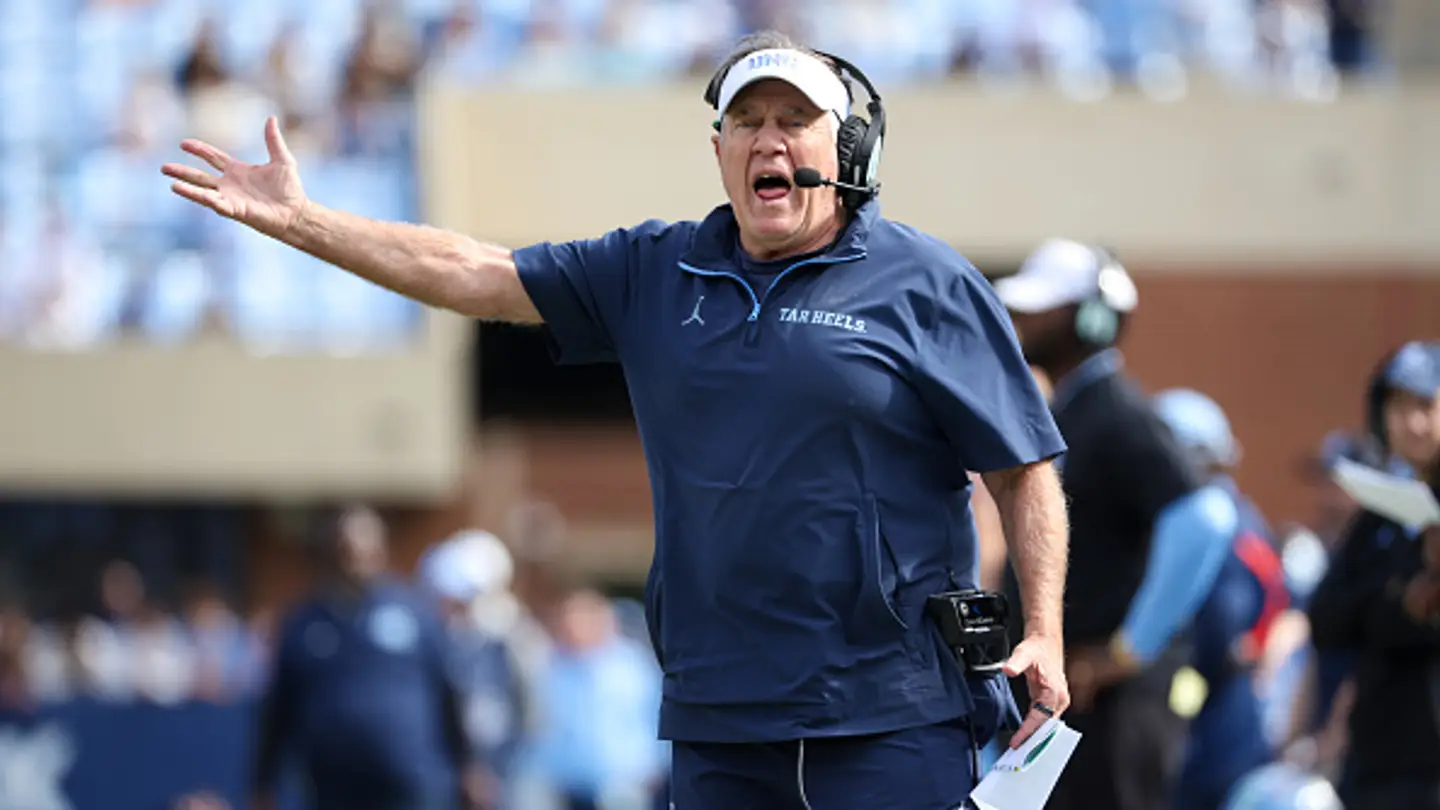
College football is back with Saturday’s eight-game slate kicking off the year’s unofficial “Week Zero,” which precedes the traditional of the CFB season next Thursday. But why these eight games, specifically?Each one of Week Zero’s games were scheduled as a result of three so-called NCAA loopholes that explain why these teams get to play earlier than others, per The Athletic’s Ira Gorawara.The first one is fairly straightforward: If you play a regular-season game overseas, you’re allowed to start the season early. Bill Belichick and UNC are facing off against TCU in Dublin, hence why they get to play now. Dublin in particular has served as a popular destination for college football, hosting games for nearly four decades dating back to a Boston College-Army game in 1988.The second is aptly dubbed the “Hawai’i exception,” which states that if a team is schedule to play a regular-season game in Hawai’i, the NCAA will let them start their season early. Of Week Zero’s eight-game slate, six games fall under this exception: San José State, North Dakota State, Sacramento State, New Mexico State and UNLV will all play a game in Hawai’i at some point this year. Even though Hawai’i may not be as far as, say Dublin, for programs on the West Coast, the rule allows teams making the trip out to the island state to kick off their seasons early.The last loophole applies to the NC State-Virginia matchup. This game was originally scheduled to take place in Brazil, therefore falling under the foreign-competition exception. However, months before the kickoff dates doubts reportedly emerged over whether the South American venue, Estádio Olímpico Nilton Santos in Rio de Janeiro, was capable of hosting the game. What would have been the first-ever FBS game in South America ended up getting scrapped, and the location was moved to Scott Stadium in Charlottesville, Virginia instead.After both schools submitted an appeal to play during Week Zero—since they had already started preparing their seasons for what they thought would be a game on foreign soil—the NCAA’s FBS Oversight Committee granted relief. And so, the eighth Week Zero game was conceived.FBS teams that play at Hawai’i have traditionally been allowed to start their seasons in Week Zero. | IMAGN IMAGES via Reuters ConnectWhy the start of college football season is going to change in 2027 and beyondBack in April, the FBS Oversight Committee formally recommended that the college football season should have one uniform start date in 2027.As a result, 2026 will be the last year that the sport enjoys an appetizer before the regular season truly kicks off in full. The FBS Oversight Committee approved legislation on Friday that will move the calendar up one week so that all teams begin during the week that has served as Week Zero.“Earlier this year, the FBS Calendar Subgroup presented recommendations to the committee to amend the regular season and the off-campus recruiting model,” per the NCAA briefing. “In response to those recommendations, a new FBS first-contest date has been adopted and will take effect in the 2027 season. The season will begin on the Thursday of what is now designated Week 0 and end on the Saturday after Thanksgiving.”Moving forward, all teams will kickoff one week earlier than before, which should provide more uniformity and help iron out some general scheduling and calendar issues. “Week Zero” as we currently know it is going away, though it sounds like the change in tradition could be a good thing for the future of the sport.PODCAST: Listen to SI’s college sports podcast, Others Receiving Votes, hosted by Pat Forde, below or on Apple and Spotify. Watch the show on SI’s college YouTube channel or on SI TV.Add us as a preferred source on GoogleFollow
Three CFB Loopholes That Explain This Year’s Week Zero Slate, and Why It Won’t Ever Happen Again
Here’s a brief explainer on why this year’s Week Zero college football slate will be the last of its kind.
620 words~3 min read