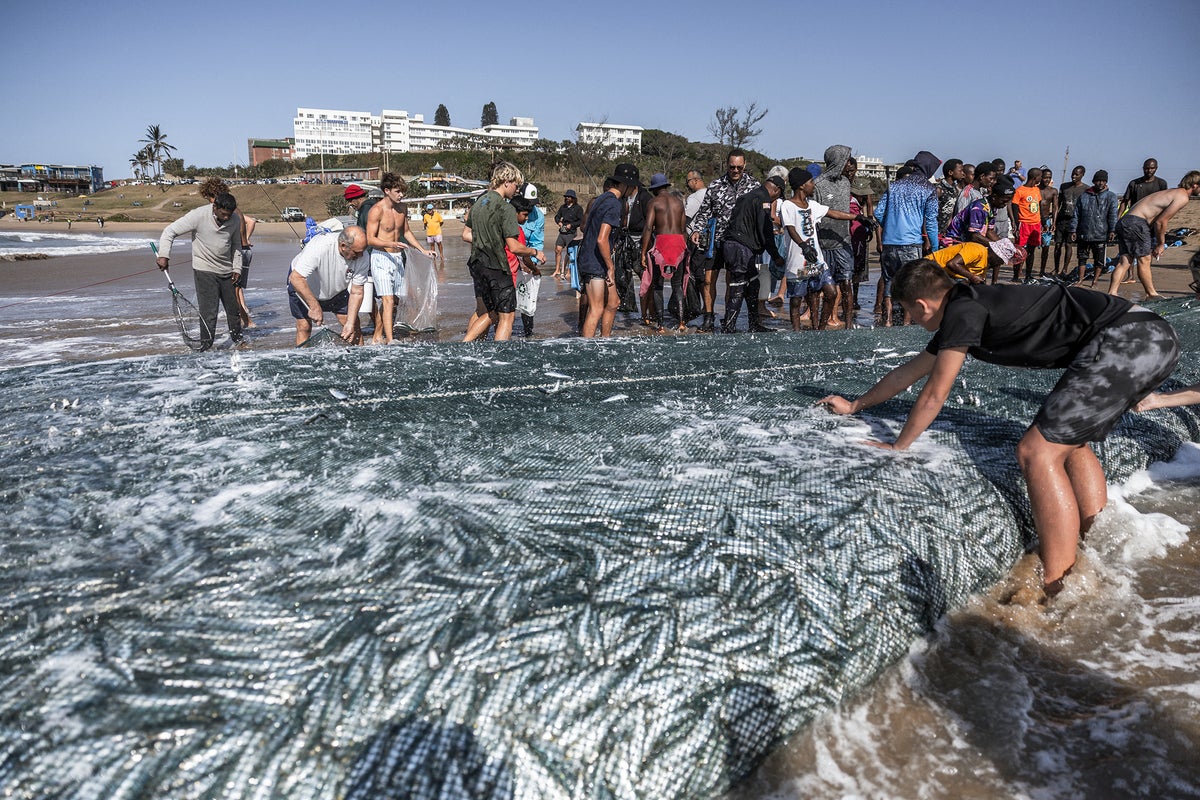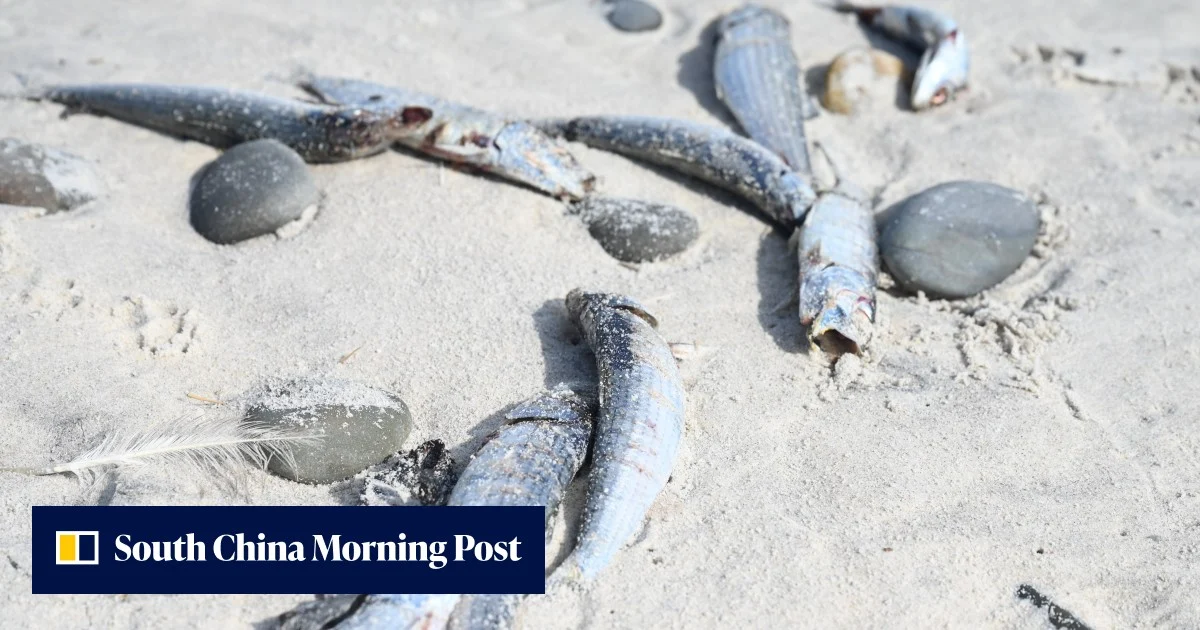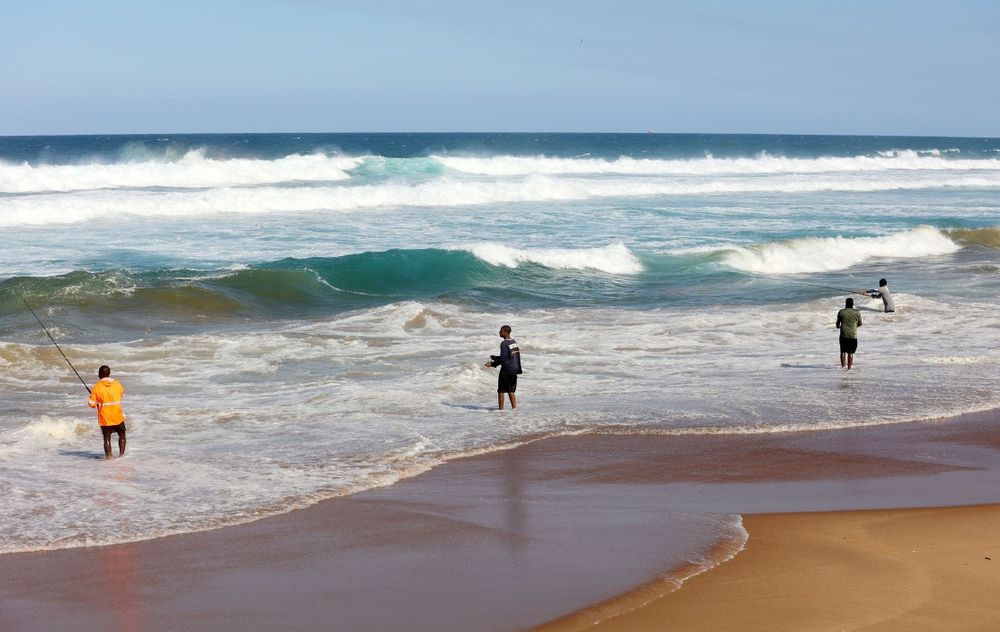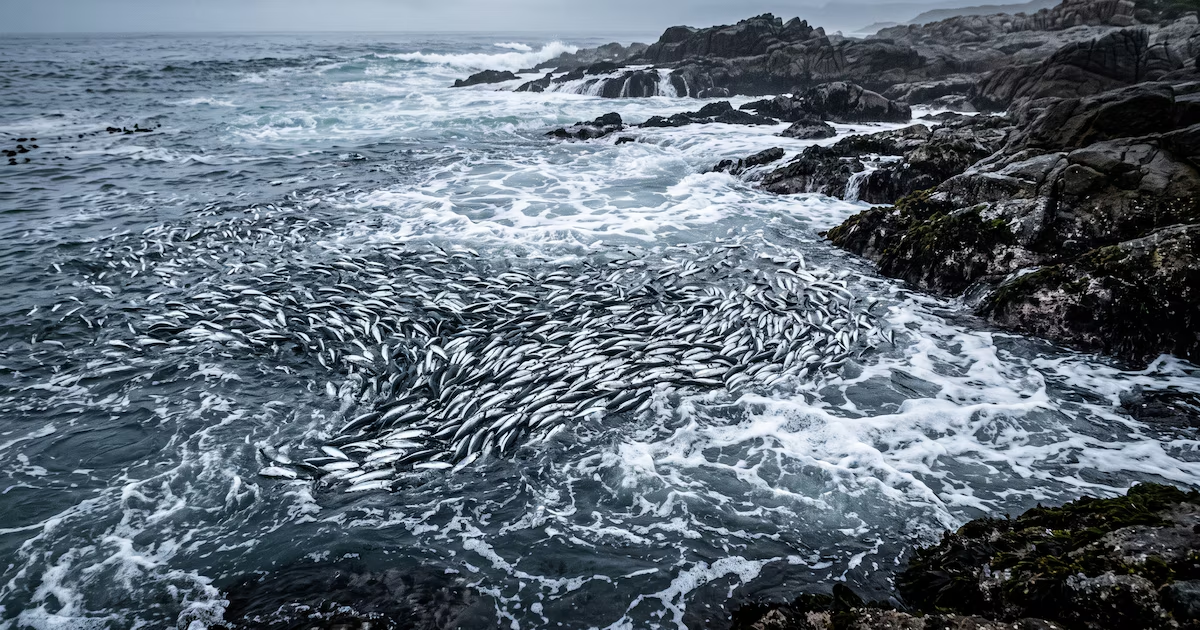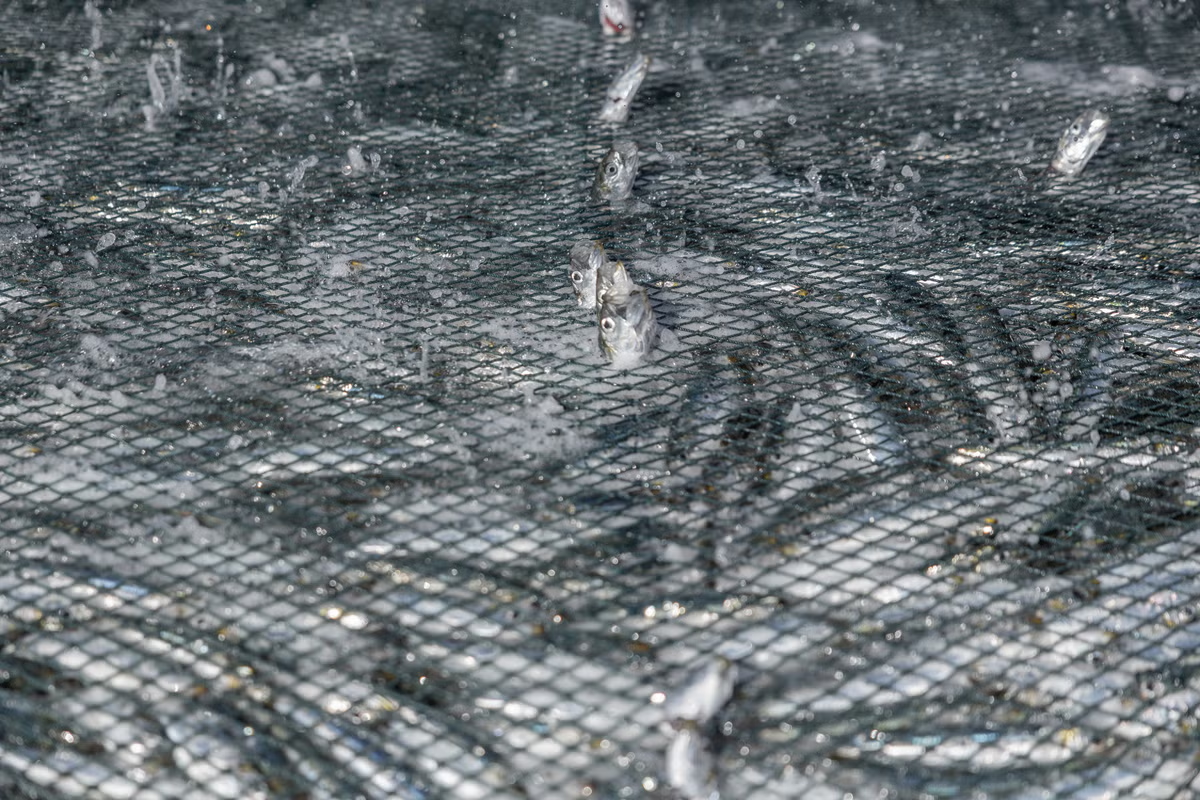
Jump to contentAllNewsSportCultureLifestyleNetters use a huge fishing net as they try to catch thousands of sardines at the Scottburgh beach, south of Durban (AFP/Getty)Scientists in South Africa are investigating mass sardine die-offs along the country's west and south coasts. Pilchard herpesvirus (PHV) has been identified in South African sardines for the first time and is currently the primary suspected cause. The virus affects fish gills and reduces oxygen uptake, but officials confirmed it poses no risk to human health or seafood safety. Experts suggest environmental factors such as changes in water temperature may have also rendered the fish more vulnerable to infection. The mass mortality event caused operational disruptions after dead fish clogged a seawater intake at the Koeberg Nuclear Power Station. In fullScientists stumped as huge amount of dead sardines wash up on South Africa coastMore bulletinsThank you for registeringPlease refresh the page or navigate to another page on the site to be automatically logged inPlease refresh your browser to be logged in
Mystery as tonnes of dead sardines wash up on coast of South Africa
Jump to contentAllNewsSportCultureLifestyleNetters use a huge fishing net as they try to catch thousands of sardines at the Scottburgh beach, south of Durban (AFP/Getty)Scientists in South Africa are investigating mass sardine die-offs along the country's west and south coasts. Pilchard herpesvirus (PHV) has been identified in South African sardines for the first time and is currently the primary suspected cause. The virus affects fish gills and reduces oxygen uptake, but officials confirmed it poses no risk to human health or seafood safety. Experts suggest environmental factors such as changes in water temperature may have also rendered the fish more vulnerable to infection. The mass mortality event caused operational disruptions after dead fish clogged a seawater intake at the Koeberg Nuclear Power Station. In fullScientists stumped as huge amount of dead sardines wash up on South Africa coastMore bulletinsThank you for registeringPlease refresh the page or navigate to another page on the site to be automatically logged inPlease refresh your browser to be logged in