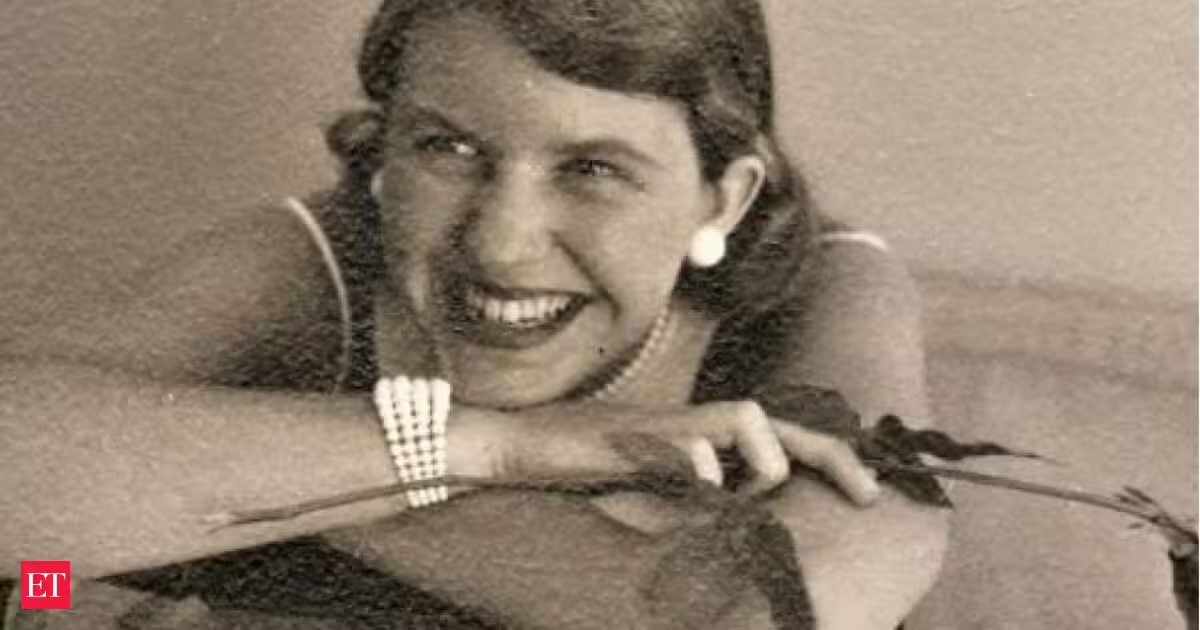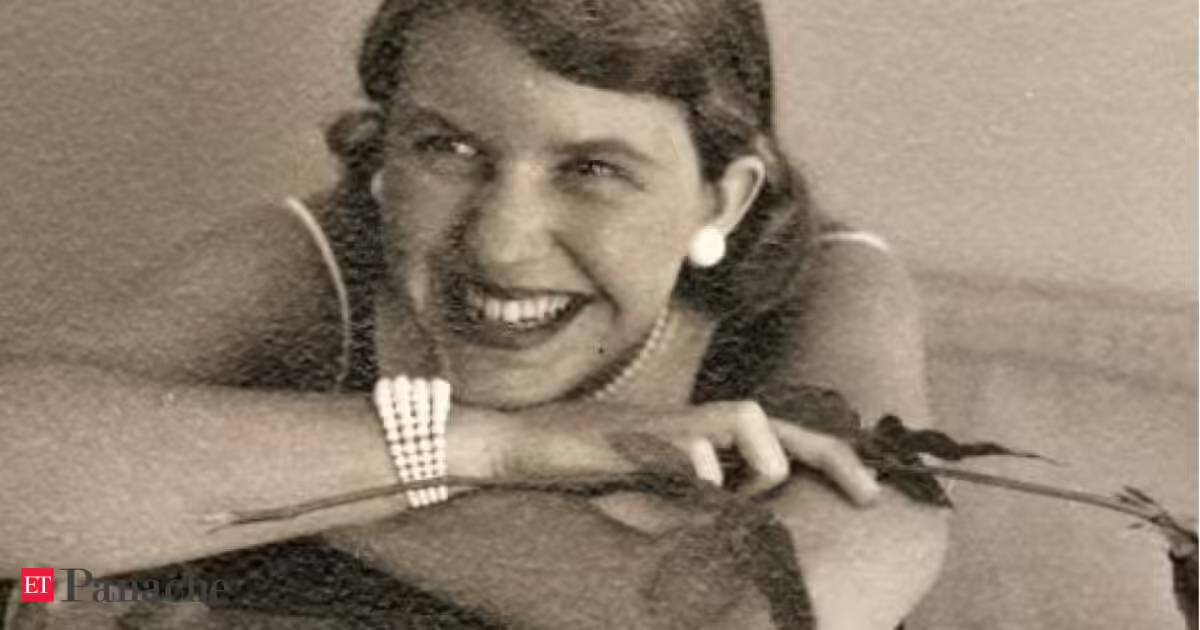
Quote of the day by Sylvia Plath: 'If I have not the power to put myself in the place of other people, but must be...' - inspiring quote by The Bell Jar author and Lady Lazarus poet teaches life lessons on empathy, self-reflection and why looking beyond yourself can change everythingSynopsisQuote of the day by Sylvia Plath: Sylvia Plath explored the balance between introspection and understanding others. She believed empathy was crucial for personal growth and creativity. Plath admitted her fascination with individual minds and self-observation. Her works like "The Bell Jar" remain influential literary pieces.Quote of the day by Sylvia Plath: 'If I have not the power to put myself in the place of other people, but must be...' - inspiring quote by The Bell Jar author and Lady Lazarus poet teaches life lessons on empathy, self-reflection and why looking beyond yourself can change everything (Photo: X/@unabridgedplath)Quote of the day by Sylvia Plath: We all spend time inside our own heads. We think about our experiences, worries, mistakes and feelings, often without realising how much of our attention is focused inward. But understanding ourselves is only one part of life. Learning to see things from another person's perspective can be just as important. That tension between self-reflection and empathy is at the heart of today’s quote from American poet and writer Sylvia Plath. Her words offer an honest reflection on the desire to understand others while being deeply fascinated by the workings of the individual mind.Quote of the Day Today: Sylvia Plath on Understanding Others, Empathy and Self-ReflectionSylvia Plath said, “If I have not the power to put myself in the place of other people, but must be continually burrowing inward, I shall never be the magnanimous creative person I wish to be. Yet I am hypnotized by the workings of the individual, alone, and am continually using myself as a specimen,” as per BrainyQuote.What Does Sylvia Plath’s Quote MeanPlath’s quote explores the struggle between looking inward and looking beyond ourselves. She suggests that empathy, the ability to put ourselves in another person's place, is important if we want to grow into more generous and creative people.At the same time, she admits that she is fascinated by the individual and continually studies her own experiences. Her words show how easy it can be to become absorbed in our own thoughts, even when we want to better understand others.Life Lesson From Sylvia Plath’s QuoteThe lesson is that self-reflection and empathy can both help us grow.You Might Also Like:Understanding our own thoughts and experiences can be valuable, but making an effort to understand what others feel and experience can broaden our perspective. Plath's words remind us that while looking inward may help us understand ourselves, looking outward can help us understand the world and the people around us.Who Was Sylvia PlathSylvia Plath was an American poet and novelist whose deeply personal and honest writing made her a major figure in confessional poetry and an influential voice in literature. Born on October 27, 1932, in Boston, Massachusetts, her best-known works include the poems “Daddy” and “Lady Lazarus” and the novel The Bell Jar.Sylvia Plath’s Early Life and EducationPlath published her first poem at the age of eight and later won several literary contests. She studied at Smith College on a scholarship and graduated with highest honors in 1955 before attending Newnham College in Cambridge, England, on a Fulbright fellowship, as per a Britannica report.In 1956, she met and married English poet Ted Hughes. They had two children, Frieda and Nicholas, before separating in 1962.You Might Also Like:Sylvia Plath’s Major WorksPlath's first poetry collection, The Colossus, was published in 1960. Her novel The Bell Jar followed in London in January 1963 under the pseudonym Victoria Lucas.Her later poetry was collected in Ariel, which was published after her death in 1965 and included “Daddy” and “Lady Lazarus.” The collection helped bring Plath a much broader following.You Might Also Like:Sylvia Plath’s LegacyPlath became one of the leading figures of confessional poetry, known for writing that was deeply personal and self-revealing. Her work explored themes including identity, loneliness, motherhood and the experiences of women. Plath died in London on February 11, 1963.Read More News on(Catch all the US News, UK News, Canada News, International Breaking News Events, and Latest News Updates on The Economic Times.) Download The Economic Times News App to get Daily International News Updates....morelessExplore More Stories
Quote of the day by Sylvia Plath: 'If I have not the power to put myself in the place of other people, but must be...' - inspiring quote by The Bell Jar author and Lady Lazarus poet teaches life lessons on empathy, self-reflection and why looking beyond yourself can change everything
Quote of the day by Sylvia Plath: Explore Sylvia Plath's insightful quote on the struggle between self-reflection and the importance of understanding others. Delve into her legacy as a leading figure in confessional poetry and discover the lessons we can learn from her words.
733 words~3 min read