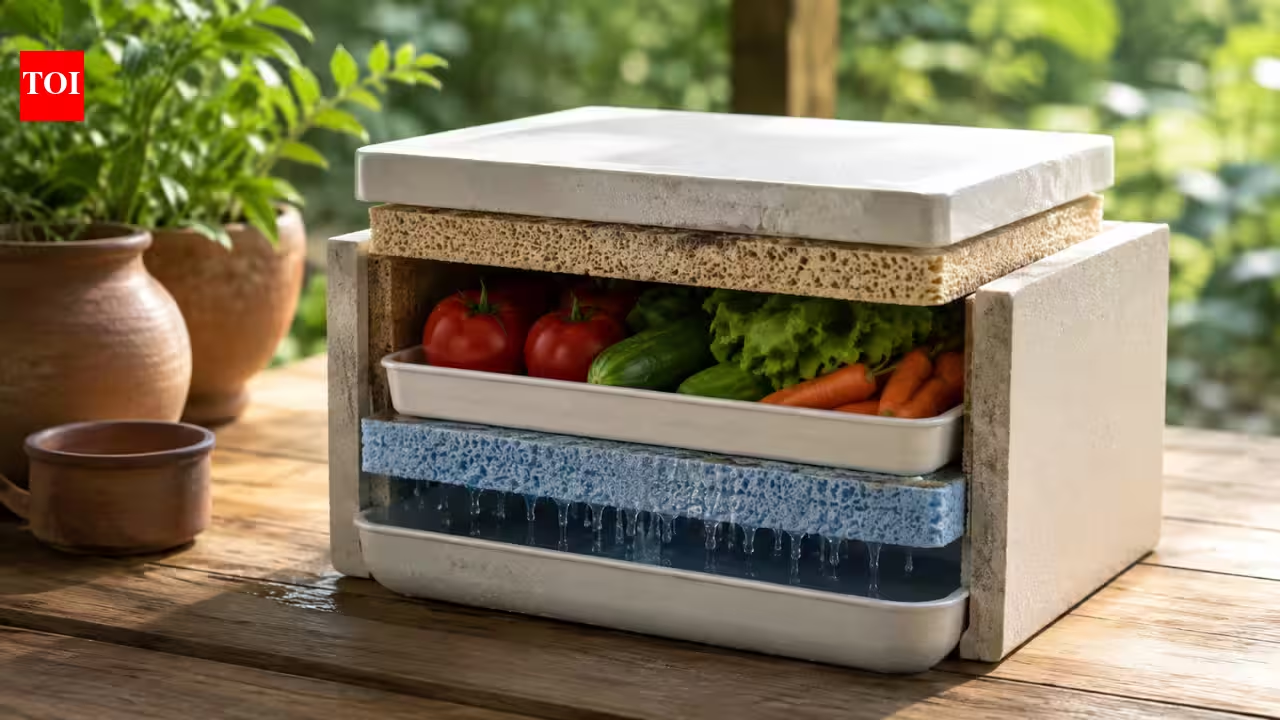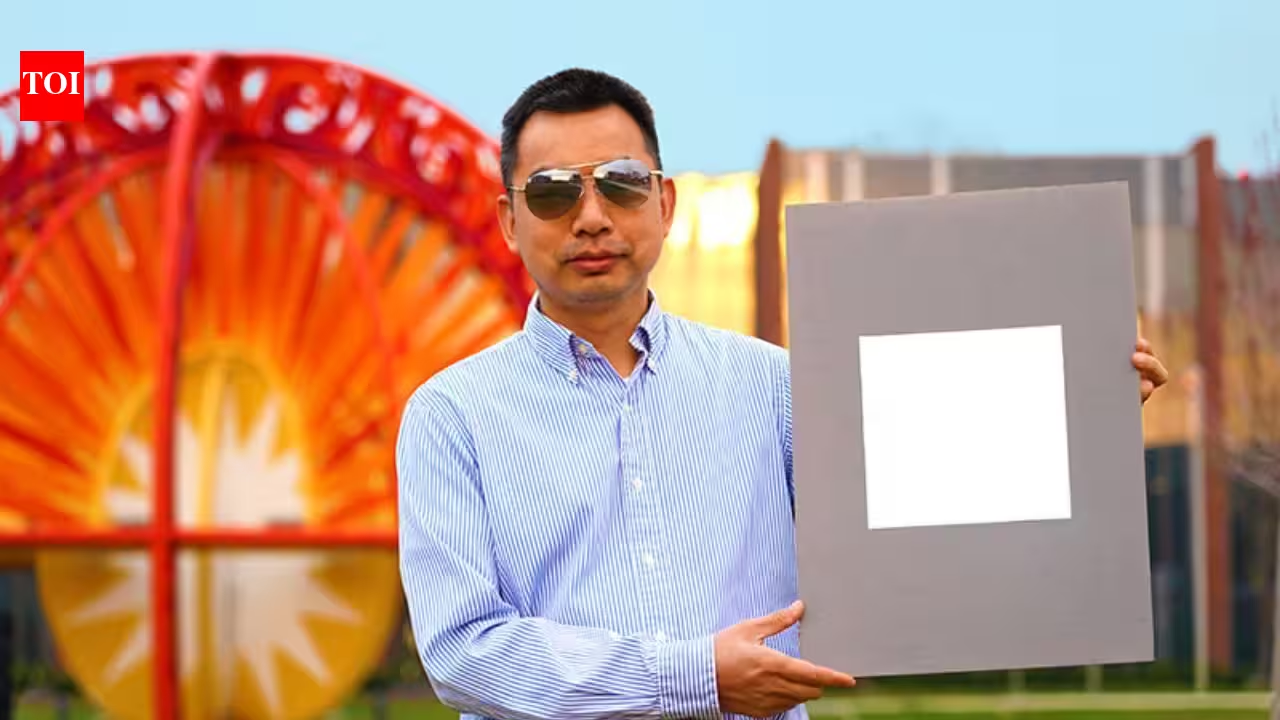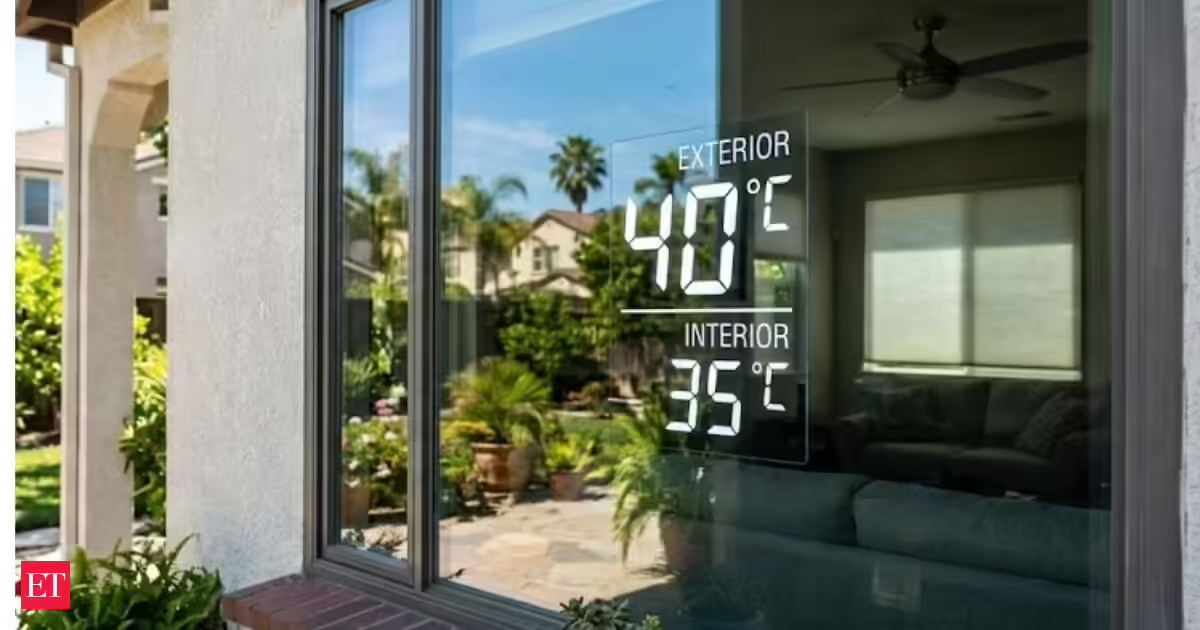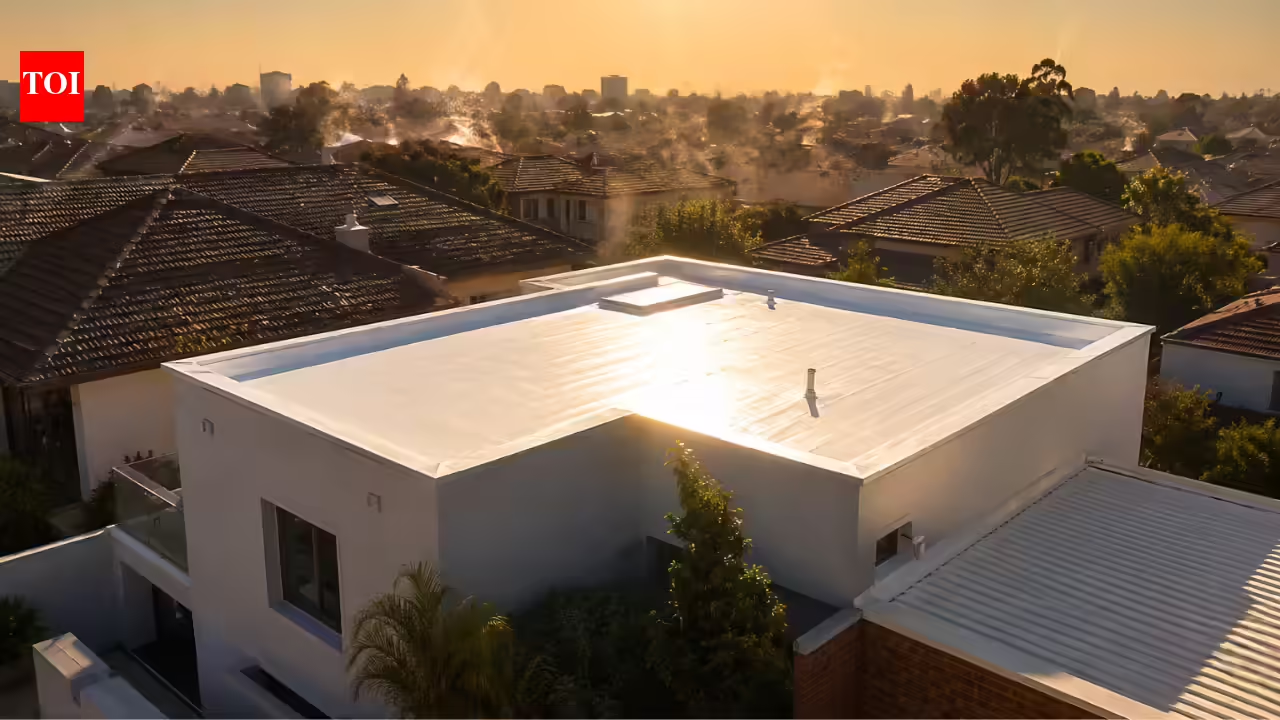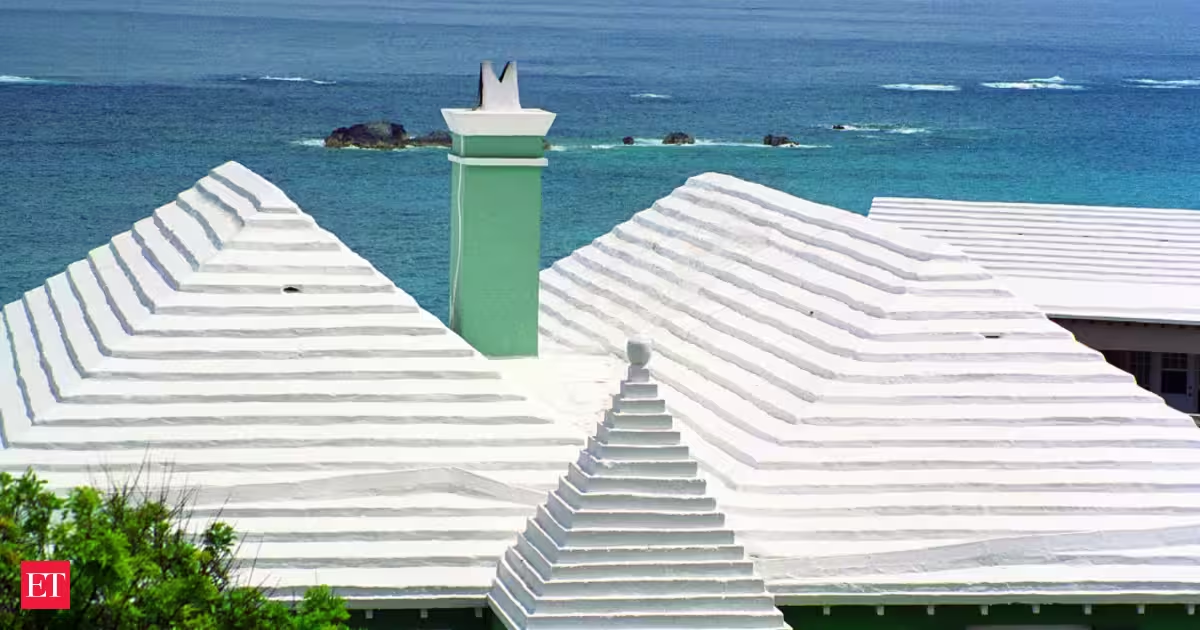
Air conditioning allows for comfortable temperatures within buildings in a hot climate, although it carries costs that go beyond the price tag of electricity. Air-conditioning systems use a lot of power and emit heat and gases that contribute to the greenhouse effect, worsening the heat waves they are meant to mitigate. That is why materials scientists have been moving toward passive approaches that cool spaces without using energy. An experiment carried out in 2025 by researchers from Penn State and Dalian University of Technology of China demonstrates the extent to which this idea has been realized.A box built from sintered PMMA maintained a 15-degree gap from the outdoor airLed by Akhlesh Lakhtakia at Pennsylvania State University and Mingkai Lei at Dalian University of Technology, the researchers developed the cooling material using polymethyl methacrylate (PMMA) plastic, which is often used to make acrylic glass. However, rather than use it as a clear material, they turned it into a porous sheet one-twelfth of an inch thick through a process called sintering. To experiment on their product, they made a small box using the porous sheets, put a thermometer inside it, and exposed it to the sun.The findings, reported in an article titled ‘Powder‑Sintered Hierarchically Porous PMMA with Optimal Pore Parameters for Passive Daytime Radiative Cooling’ in the journal Advanced Materials Technologies, revealed that the sheets reflected roughly 96% of incoming solar radiation in the 0.3–2.5 µm range, encompassing both visible and near‑infrared regions. In an experiment conducted where outdoor air temperature was recorded to be 80°F, the inner chamber temperature of the PMMA box was found to be 65.3°F, which is almost 15 degrees lower without any electrical power, fans, or refrigeration agents. A similarly dimensioned cardboard box under identical solar conditions achieved an inner chamber temperature of just 75.2°F.The cooling comes from how light scatters through microscopic pores The temperature drop comes from the structure of the sheets, not from any active ingredient. As the study explains, the one-step powder-sintering method creates a sheet with air pockets of different sizes, similar to the pores in skin. The sunlight that falls on the sheet is scattered by the internal pores and reflected outward instead of being absorbed and converted into heat. Throughout the day, the scattering of light produces significant cooling. When darkness falls, the same porous structure emits long‑wave infrared radiation in the 8-13 µm atmospheric window upward through the sky and out to space, a mechanism described in a 2023 Nature Communications study on durable radiative‑cooling films.Lakhtakia said current passive reflectors tend to reflect only short-wave infrared radiation, whereas this material reflects both visible and short-wave infrared light across the solar spectrum, improving daytime cooling efficiency compared with earlier models. Lakhtakia added that the sheets could someday become an inexpensive component of house siding and roofs, supplementing conventional air conditioning.A separate study on micropore PMMA films found similar temperature dropsThe Penn State-Dalian team is not alone in reporting these kinds of results with porous PMMA. Another research team, this time from Fudan University and led by Limin Wu, published their work in Nature Communications in a 2021 article titled ‘A Structural Polymer for Highly Efficient All‑Day Passive Radiative Cooling’. In the paper, the authors used a PMMA film with micropore arrays and random nanopores. The experiment reported a reflectivity of 0.95, close to the 96% result from the Penn State-Dalian box test.A clear PMMA sheet with a decorative internal pattern. Image credits: WikipediaIn the Penn State-Dalian experiment, the material was kept in a sealed box; here, it was used as an outdoor roof covering in several Chinese cities under different climatic conditions. The material managed to cool to sub-ambient temperatures by about 8.2° Celsius during nighttime and between 6.0° and 8.9° Celsius during daytime. Because both PMMA materials were made differently but produced similar results, the cooling effect appears to come from the physics of porous PMMA rather than the fabrication method. In both studies, the common theory behind the process involves the increase in surface porosity resulting in increased scattering of light.Durability and manufacturing still remain open questions Despite the laboratory results, the material described in the Penn State Engineering press release still cannot yet be used on rooftops. Lakhtakia acknowledges that continuous exposure to sunlight will deteriorate the PMMA sheets over several years outdoors, meaning large-scale deployment would require maintenance and replacement cycles. He frames this as a potential advantage, since the degraded sheets could theoretically be ground into powder and re-sintered into new sheets rather than manufactured from scratch, though whether photo-degraded PMMA retains enough structural integrity to be re-sintered into equivalent-quality material has not been independently verified.The funding for this research was provided by the National Natural Science Foundation of China and Fundamental Research Funds for the Central Universities. Based on the research, the sheets could lower the temperature of an enclosed space by about 8.3°C (15°F) when applied to a building.Why the box test matters beyond the lab Radiative cooling technologies have been researched for decades, but as recent reviews note, most experiments have remained at the level of reflectivity percentages and small‑scale temperature measurements. The box experiment is useful because it turns abstract numbers into something visible: on a hot summer day, one box stays near outdoor temperature while another stays about 15 degrees cooler without using electricity.
In 2025, researchers built a box from porous PMMA sheets that reflected 96% of sunlight; 80°F outdoor air measured 65.3°F inside without electricity
Penn State researchers innovate with porous PMMA sheets, achieving a 15-degree temperature reduction without electricity. Learn about the potential of passive cooling technologies in combating heat waves and reducing reliance on air conditioning.
884 words~4 min read