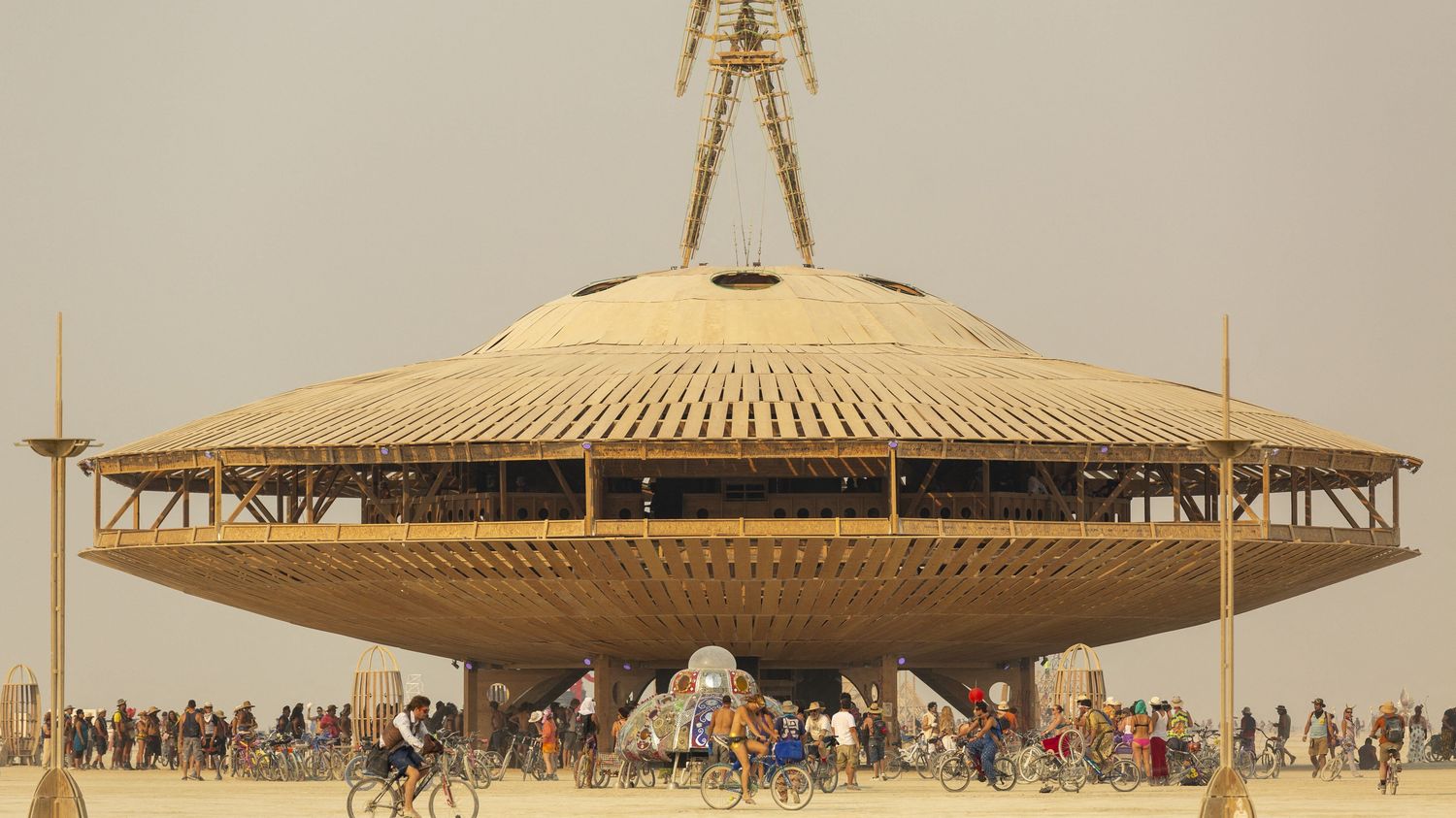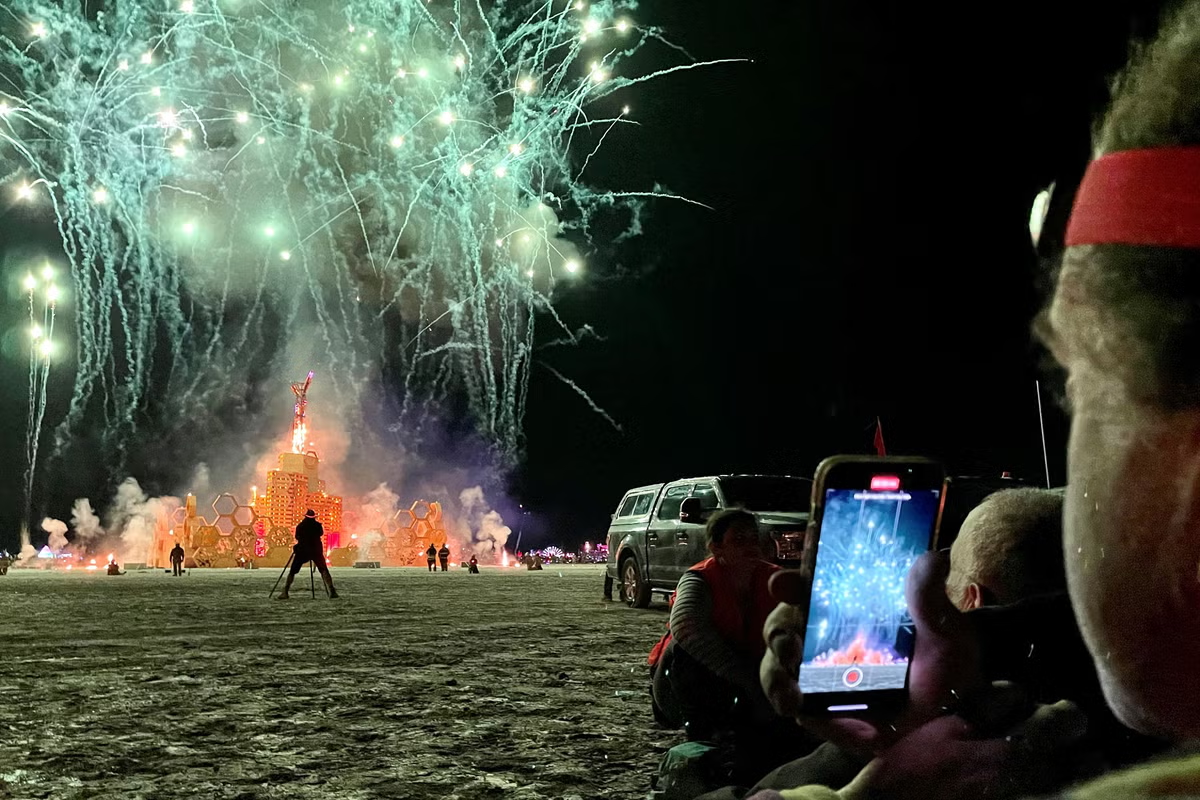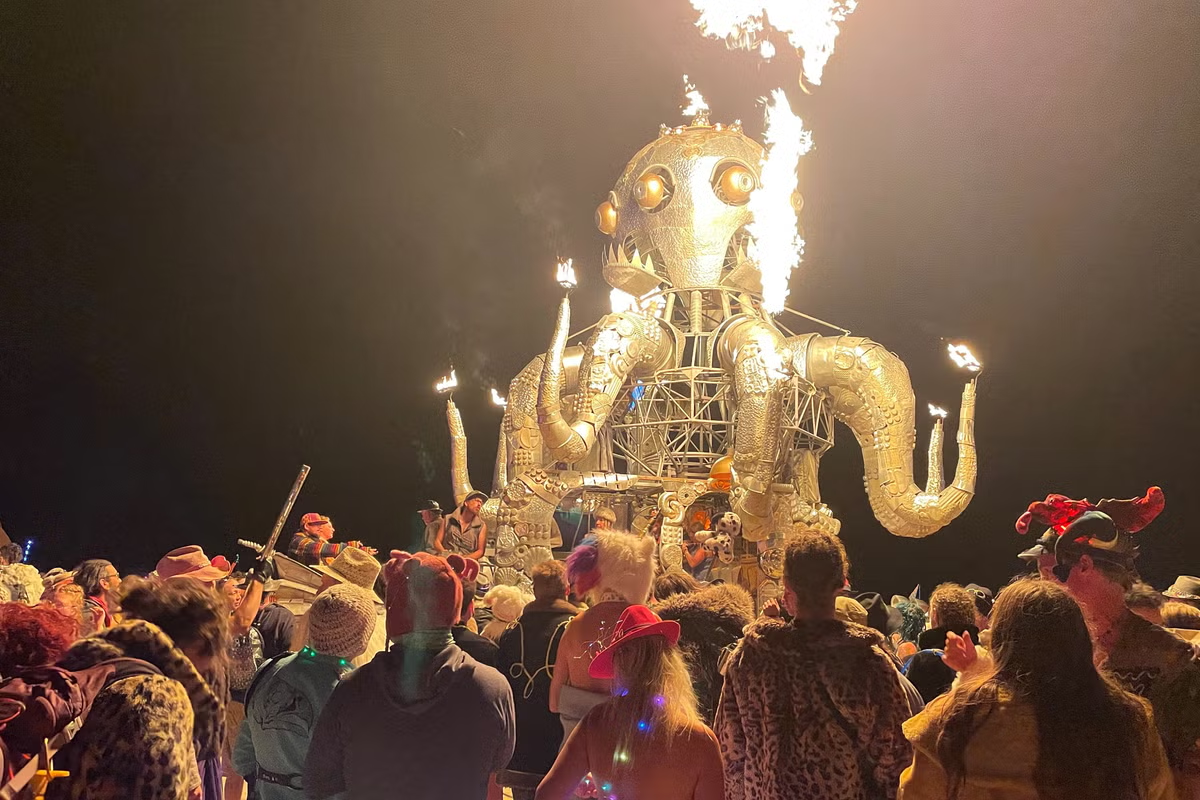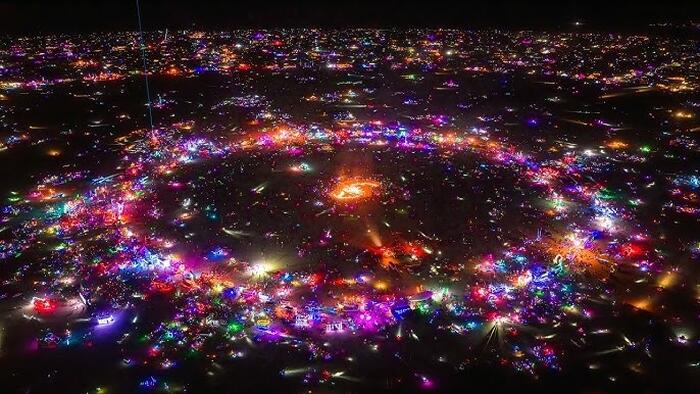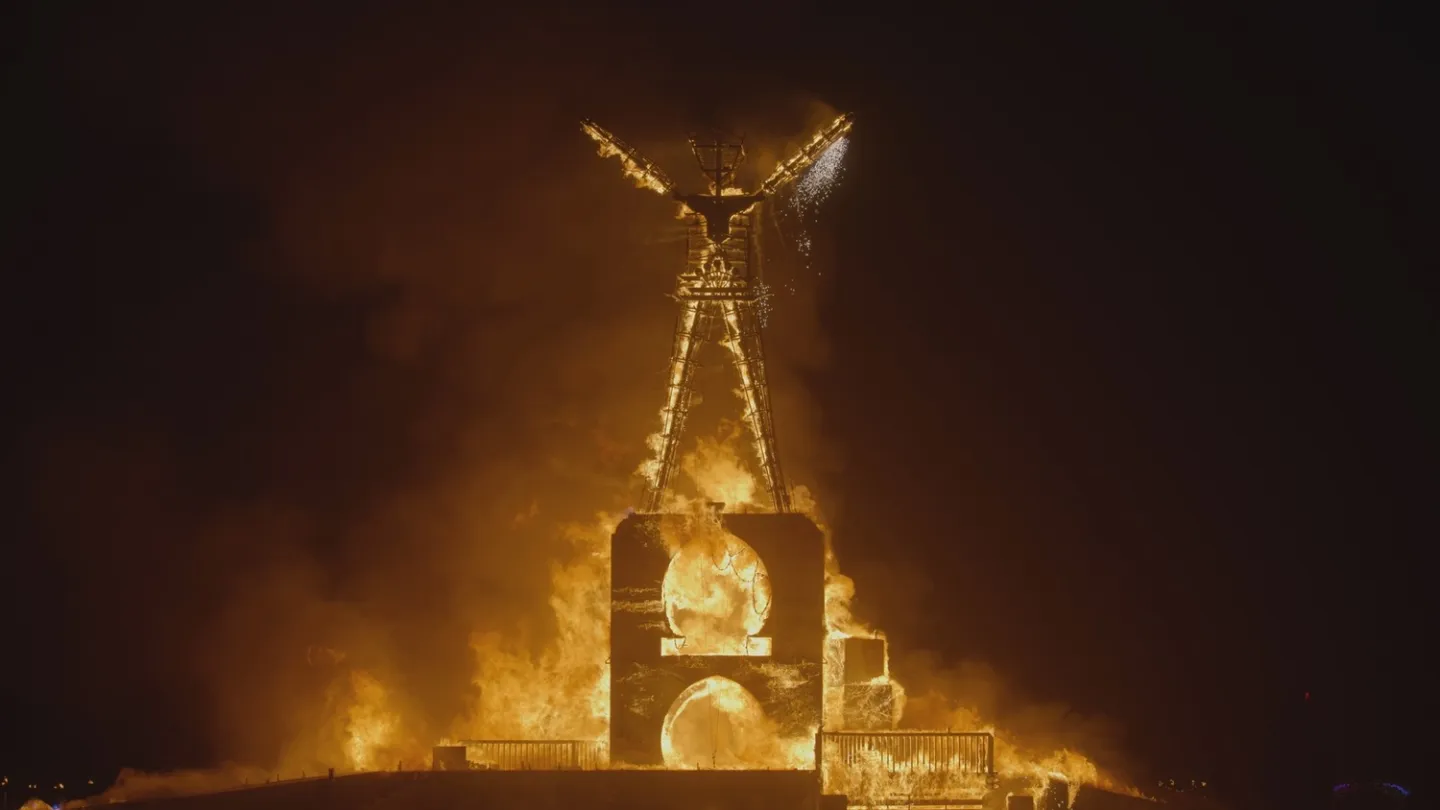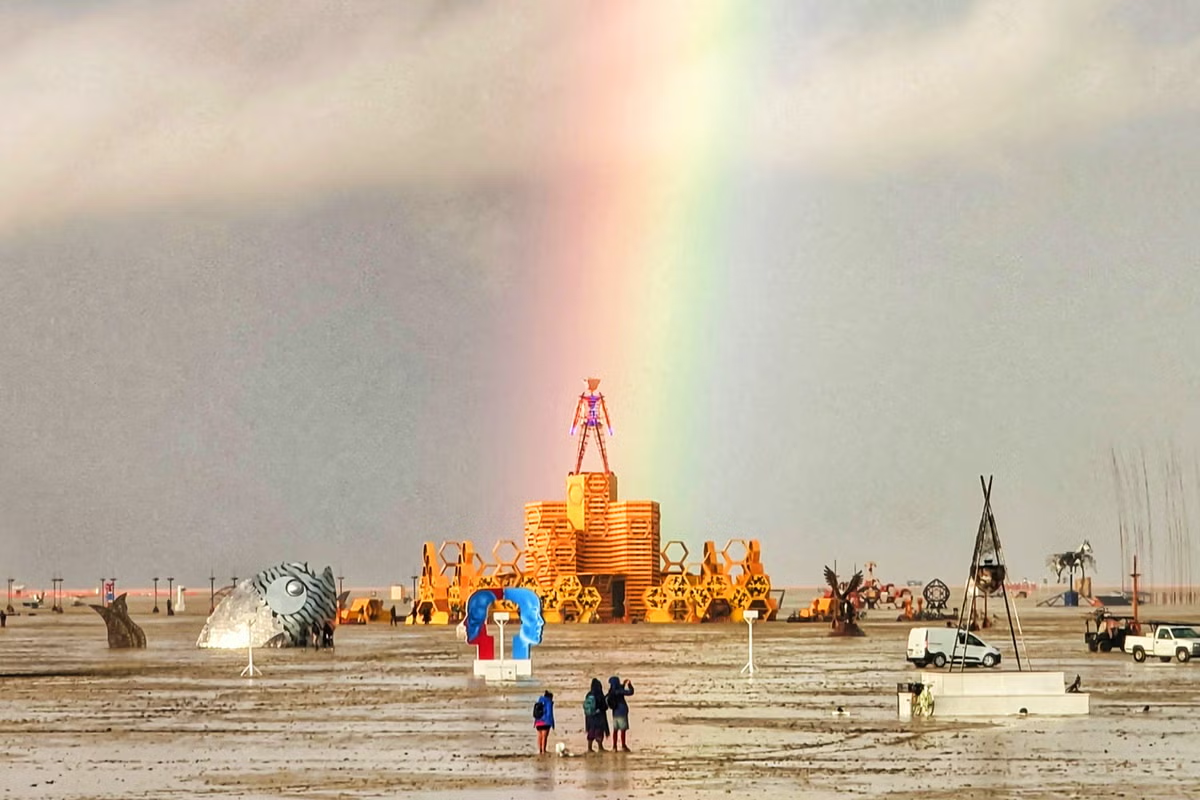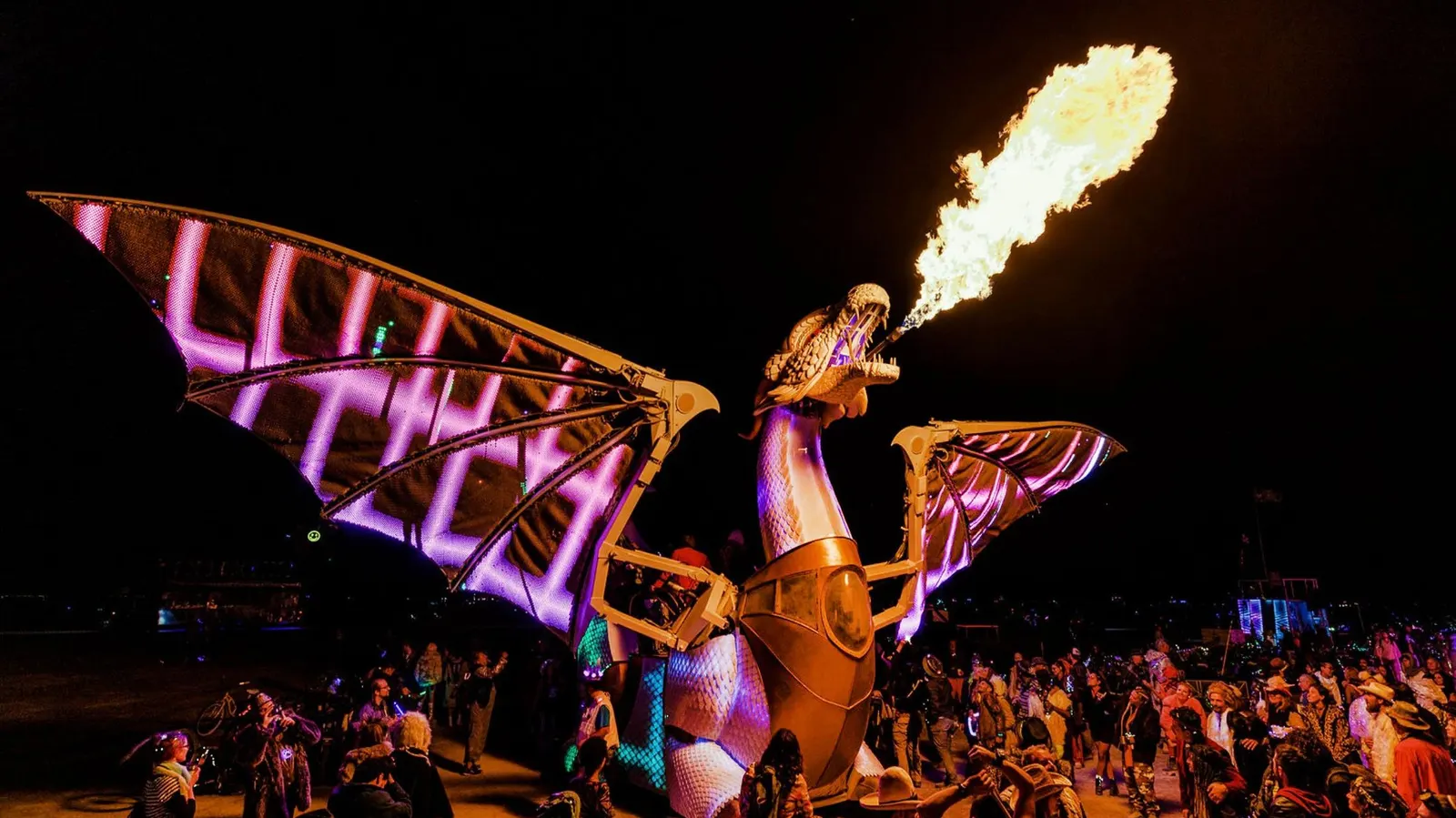
Elektra is a fire-breathing dragon built by Engineered Artworks, with wings stretching about 60 feetScott LondonEvery year, Black Rock City appears on a dry lakebed in one of Nevada’s harshest areas, then disappears just as fast. There are no paved roads or permanent structures. Instead, glowing art moves through dust storms, ships show up on the horizon, and sculptures as large as small buildings fill the empty playa.Burning Man returns to Nevada’s Black Rock Desert in the first week of September and attracts estimated crowds of over 70,000 people. This year’s theme, Axis Mundi, looks at how people, communities, and nature are connected. The art features major Honoraria projects and hundreds of other works, many of which take months to create and use lighting, sound, fire, and engineering.El Pulpo Magnifico by Duane FlatmoScott LondonMutant vehicles are some of the most striking sights at Black Rock City. They look part machine and part ghost, moving slowly across the dry lakebed like relics from a lost civilization that never stopped building. A few years ago, I wrote about some of the most well-known vehicles and the people who made them. In 2026, the playa will see new creations alongside old favorites. Some are quieter this year, some are almost ridiculous, but all of them share a strange sense of purpose. These are carefully built obsessions, brought out into a harsh landscape that will wipe them away by the end of the week. Some of my favorites are coming back too, like El Pulpo Magnifico, Duane Flatmo's fire-breathing octopus, and the Monaco, a 40-foot ship with three masts that sails across dust instead of water.Instead of only admiring the wild designs, I wanted to find out what some of these teams are really building, who is behind the work, and why they would spend months making a complex machine that will only move slowly across a place meant to erase it.Some of these mutant vehicles and big installations have been captured by top Burning Man photographers, including longtime participant Scott London, whose photos are featured in the popular book Burning Man: Art on Fire. These are the projects and stories that caught my attention at Burning Man 2026.THE MUTANT VEHICLESSharkCar is 72 feet long and 17 feet tallScott LondonSharkCarDesign team: Sid Kurtz and crew, Tulalip, WashingtonSharkCar has one of the simplest ideas here and one of the biggest footprints. Burning Man lists it at 72 feet long and 17 feet tall, roughly the length of a large motor yacht. Red LED rope lighting traces the body from head to tail, so the shark keeps its unmistakable outline after dark as it moves across the playa.A shark this large has to be stored, transported, maintained and maneuvered through Black Rock City before anyone gets to enjoy the visual joke. Underneath the spectacle is a serious piece of mobile engineering built to move a sculpture larger than almost anything parked beside it.Chester, Jason Anderholm’s fire-breathing horse art car, includes a performance platform and pole for acrobats.Scott LondonChesterDesigned by Jason AnderholmChester began as a napkin sketch, created by Jason Anderholm, who went from electrician to showman. The frame was once a delivery truck, but now it’s a rearing horse with a driver’s platform, a mane made from welded motorcycle tires, glowing red eyes, and fire-shooting nostrils. A stripper pole on its back transforms it into a moving stage for acrobats.¡AXOLOTL! The Earth GuardianPhoto courtesy of CAMP AXOLOTL¡AXOLOTL! The Earth GuardianDesign team: Camp Axolotl, San Miguel de Allende, Mexico¡AXOLOTL! is almost 50 feet long and feels more like a moving stage than a typical art car. Inspired by Mexico’s endangered axolotl, Camp Axolotl turned this unique amphibian into a huge mobile space for music, performances, and gatherings as it travels through Black Rock City.There is a deeper story behind its playful look. The axolotl, which comes from the shrinking wetlands of Mexico City, is known for its rare ability to regrow limbs and other body parts. This has made it valuable in medical research. As its habitat disappears, the axolotl has also become a strong symbol of both environmental loss and survival.Abraxas, the long-running dragon art car that has appeared at Burning Man since 2006.Photo courtesy of Tim Clark and the Abraxas Dragon TeamAbraxasDesign team: Tim Clark and the Abraxas Dragon TeamAbraxas has been a familiar sight at Burning Man since 2006. This dragon-shaped art car stands out for its music, performances, and unmistakable silhouette. Beyond the playa, the team has helped with disaster relief through the Grassroots Aid Partnership, including work after Hurricane Helene in North Carolina, and has supported the Moonlight Orphanage in Uganda. Abraxas has also shown up at events like Catharsis on the Mall in Washington, D.C., and the MAPS Psychedelic Science conference in Denver.Blue Bull transforms Maria Prymachenko’s 1947 painting into a massive UV-reactive mutant vehicle.Photo courtesy of Yaroslav Korets, Kurenivka, Wonders Workshop Blue BullDesign team: Yaroslav Korets, Kurenivka, Wonders Workshop and Ukrainian collaborators in Kyiv, Odesa and the United StatesBlue Bull started as a painting nearly 80 years ago. The vehicle is inspired by Ukrainian artist Maria Prymachenko’s 1947 Blue Bull, one of the imaginative animals central to her work. At Burning Man, this artwork becomes a three-dimensional piece with a large body covered in bright blue UV-reactive fur, along with lighting and sound that make it stand out at night on the playa.The project was created through teamwork in Kyiv, Odesa, and the United States, which gives it a deeper meaning beyond just being a spectacle. The creators bring Prymachenko’s artistic style to a place she likely never imagined. Watching a giant blue bull move through the Nevada desert feels surreal, and with Ukrainian collaborators building it, the piece strongly shows cultural identity and resilience.Golden Mean, created by Kyrsten Mate and Jon Sarriugarte, takes its form from the mathematical golden ratio.Photo courtesy of Form and ReformGolden MeanDesign team: Kyrsten Mate and Jon Sarriugarte and EODGolden Mean takes its name from the golden ratio, a mathematical proportion that’s said to produce aesthetically pleasing art and architecture. Other inspirations for the project include the Giant Pink Sea Snail from Doctor Dolittle, giant mechanical elephant puppets by Royal de Luxe and Jules Verne’s imaginative creations. Jon Sarriugarte tells me, “My motivation to make things is to encourage others to create what they imagine. The Golden Mean snail car came from my wife Kyrsten Mate's dream. We sketched it on a napkin and made it over the summer with 6 of our friends and her dad. I'd like to see people make something they imagine and show people.”Eileen, the Pearl PeacockRobin DamoreEileen, The Pearl PeacockDesign team: Rainbows and Dragons CampEileen is a pearl-white peacock with five big metal tail feathers that stand tall behind her lace-covered body. During the day, you can see all the fine details in the sculpture. At night, the feathers light up and the whole bird glows across the playa. The camp calls it a celebration of creativity and storytelling, but the story behind it is much more personal.“Building an art car is by far the dumbest, hardest, and most expensive thing I’ve ever done that had no purpose other than to make people happy,” Project Co-Lead Cassidy Damore tells me. “And it completely changed my life. It reignited my passion for building. I left my career in film and went back to school. I graduated with my second bachelor's in mechanical engineering in May.”The car is a tribute to Damore’s grandmother, Eileen Hoard. “It’s built on her ’97 Honda Civic,” Damore says. “She was a creative powerhouse who wrote a book on storytelling for children and started and taught at a preschool in Phoenix, Arizona.”This year, the family sold the car to a Burning Man camp in Kidsville. “More children than adults will be riding on her,” Damore says. “I can't think of a better home or purpose for her car than taking children around to all the magic on the playa.”Eileen’s daughter, Kristen Hoard, says the project grew into something bigger for the family. “Creating art together and sharing it with the Burning Man community has been one of the most meaningful experiences of our lives. Most importantly, the art car became a timeless tribute to my mother, Eileen, whose creative spirit continues to flow through our entire family. We were so happy that it eventually found a new home surrounded by children, a place my mom would have loved.”Elektra is a fully engineered, fire-breathing dragon with wings spanning roughly 60 feet.Scott LondonElektraDesign team: Engineered ArtworksElektra is a fire-breathing dragon built by Engineered Artworks, with wings stretching about 60 feet and wrapped in addressable, sequenced LEDs. The scale is theatrical even before the flames start. At night, the lighting turns the wings into a moving field of color while bursts of fire give the dragon the kind of oversized entrance Burning Man was made for.The Art InstallationsRendering of Above & Below rises 50 feet above the playa and allows visitors to climb through its house, twisting beanstalk and Victorian cottage.Engineered Artworks / Sean OrlandoAbove & BelowDesign team: Lead artist Sean Orlando; fabrication by Engineered Artworks in partnership with Five Ton Crane Arts Collective; structural engineering by Tipping Structural, with Andrew O’Keefe of Figure 13 as lead technical designer.Sean Orlando’s Above & Below stands 50 feet tall on the playa. It starts with a house at ground level and winds up a twisting beanstalk to a Victorian cottage near the top. Made from steel, wood, found objects, and recycled materials, this piece is meant to be explored up close. Visitors are invited to climb through it. Since June, over 130 artists, fabricators, and volunteers have worked on the project at Seaport Studios in Richmond, California.For Orlando, the size of the piece is just one aspect. “Above & Below started as a very personal project, it's my version of a self-portrait, built around an inventor and his daughter who create a home for themselves inside a living beanstalk,” he told me. “It mirrors my experience building a world with my daughter filled with imagination, creativity, and community.”The world Orlando imagined takes place after the apocalypse, not in the middle of it. People are rebuilding with old artifacts, scraps, and whatever creativity they have left. He drew inspiration from fairy tales, unusual workshops, and sketches of impossible machines. Still, he does not want visitors to follow a set story. “I don't want to hand people a fixed meaning though, I want them to climb through it, find their own artifacts and clues, and leave with their own wonder-filled story.”Bringing this fantasy to life in the Black Rock Desert is a different challenge. The structure is modular, so it can be taken apart, loaded onto 48- and 53-foot flatbed trucks, and reassembled in just a few days at Black Rock City. It also needs to stand up to desert winds and dust while thousands of people explore it. “It has to come apart into truckable pieces that can be assembled in a matter of days, and still feel like a fairytale and not a jungle gym,” Orlando said. “Getting the engineering and the storytelling to hold together at the same time, on that timeline, that’s the real challenge.”Temple of the Moon surrounds a 30-foot central tower with an organic, inward-folding design intended for gathering and reflection.Rendering by James Gwertzman & Annie Locke SchererTemple of the MoonDesign team: Moonlight Collective and the Temple Build Crew, lead artist James Gwertzman; architect Annie Locke SchererThe Temple of the Moon is inspired by the Queen of the Night, a desert cactus flower that blooms for just one night before fading at sunrise. Its flowing, inward-curving shape wraps around a 30-foot central tower, forming a space where people can come together to reflect, remember, and gather.Gwertzman worked on the project with architect Annie Locke Scherer, the Moonlight Collective, and the Temple Build Crew. Burning Man calls the temple a sacred communal space before it is released by fire on Sunday night. The design reflects the cycles of the moon and the short life of the cactus flower, giving this important structure a unique and personal feel.Gwertzman tells me, “It’s magical to see this Temple take shape, having lived with it as a constant companion in my head for nearly a year. What makes it so special, though, is not the structure that we've built, but the community of more than 100 builders who have given up their time and energy to bring it to life. It's the love that binds this team together that makes this Temple sacred.”Cryptomeria, Alexander Rose’s three-level pavilion surrounding the Man, is inspired by Japan’s ancient Jōmon Sugi cedar.Annie Locke SchererCryptomeria: The 2026 Man PavilionDesigned by Alexander RoseAnother key Axis Mundi structure this year is Cryptomeria, the pavilion that surrounds the Man. Alexander Rose designed it, drawing inspiration from Japan’s ancient Jōmon Sugi cedar tree. The pavilion has three levels, starting with roots and the natural world, moving through the human realm, and reaching toward the sky. Paths shaped like roots guide visitors inside, and a double spiral staircase leads upward. This pavilion directly reflects the year’s theme and serves as the physical center of Black Rock City.TITANIC creates the illusion of a massive ocean liner breaking apart and sinking beneath the Black Rock Desert.Rendering courtesy of Chris DNTITANICDesign team: Titanic’s End, led by Chris DNTITANIC could become one of the standout sights at Burning Man 2026. The San Francisco group Titanic’s End is creating a large wooden ship that looks like it has split in two and begun to sink into the desert. The way the two parts are arranged makes it seem as if the ship is vanishing under the playa. The wreck will also serve as a casual amphitheater for performances and watching the sunset.At night, lights shine on the wreck, and flames will shoot from the smokestacks. The group says their work raises questions about our trust in technology, how we use resources, and the belief that complicated human systems cannot fail. Still, the main impact may be the striking image itself. A shipwreck sinking into the Nevada desert is the kind of surprising scene Burning Man is known for.Eiffela Broken Dream splits the Eiffel Tower into two sections, with a cable stretched between them for a tightrope crossing.Rendering by Florine Maudet / Maindron ProductionsEiffela Broken DreamArtist: Philippe MaindronThis piece is a metal model of the Eiffel Tower, first built for Paris’s 1889 Exposition Universelle, shown here at one-tenth its original size. In this version, the tower is split in two, as if it crashed into the desert after a wild journey. The lower part, with its four legs on the ground, stands for the fall of a lost civilization. The top, reaching up, suggests hope for a better future. A cable will connect the two parts, allowing a tightrope walker to cross from one side to the other.ZARVAN rises 23 feet above the playa as a monumental human head inspired by the ancient Persian deityGazelle DastiZARVANArtist: Gazelle DastiGazelle Dasti’s ZARVAN stands 23 feet tall on the playa, shaped as a large human head inspired by the ancient Persian deity linked to time. The sculpture features patterns from Persian rugs, hand-painted details, and a glowing crown inspired by traditional stained glass. These elements give it a look grounded in Persian art, which is different from the futuristic style usually seen at Burning Man.Inside, the experience is different. Periscopes behind the eyes let visitors see across Black Rock City, and speaking tubes through the ears allow people on opposite sides to talk to each other. Dasti is the first Persian woman to receive a Burning Man honorarium, which adds more meaning to a piece focused on time, perception, and cultural memory.Black Rock City spreads across Nevada’s Black Rock Desert during Burning Man.Scott LondonWhat It Takes To Build The ImpossibleIt’s easy to capture Burning Man’s wildest creations in photos, but the real stories behind them often reveal much more than the spectacle itself. This year, artists are turning an 80-year-old Ukrainian painting into a moving sculpture, building a 50-foot fairytale world you can climb, and creating a broken Eiffel Tower for a tightrope walker to cross high above the playa.This is why the best Burning Man projects are worth seeing for more than just their looks. They might be impractical, costly, and tough to build, but they let artists, builders, and engineers try things they wouldn’t get to do anywhere else. For one week in Black Rock City, a 72-foot shark, a giant blue bull, a sinking Titanic, and a fire-breathing dragon can all share the same space, and somehow, they all fit right in.MORE FROM FORBESForbesThe 15 Best Off-Grid Destinations For 2026, Per Lonely PlanetBy Jim DobsonBurning Man
Burning Man 2026: The Most Outrageous Mutant Vehicles And Art Installations In The Black Rock Desert
A fire-breathing dragon with 60-foot wings, a 72-foot shark and a sinking Titanic are among the extraordinary moving sculptures and large-scale artworks rising from the Nevada desert this year.
2,788 words~13 min read