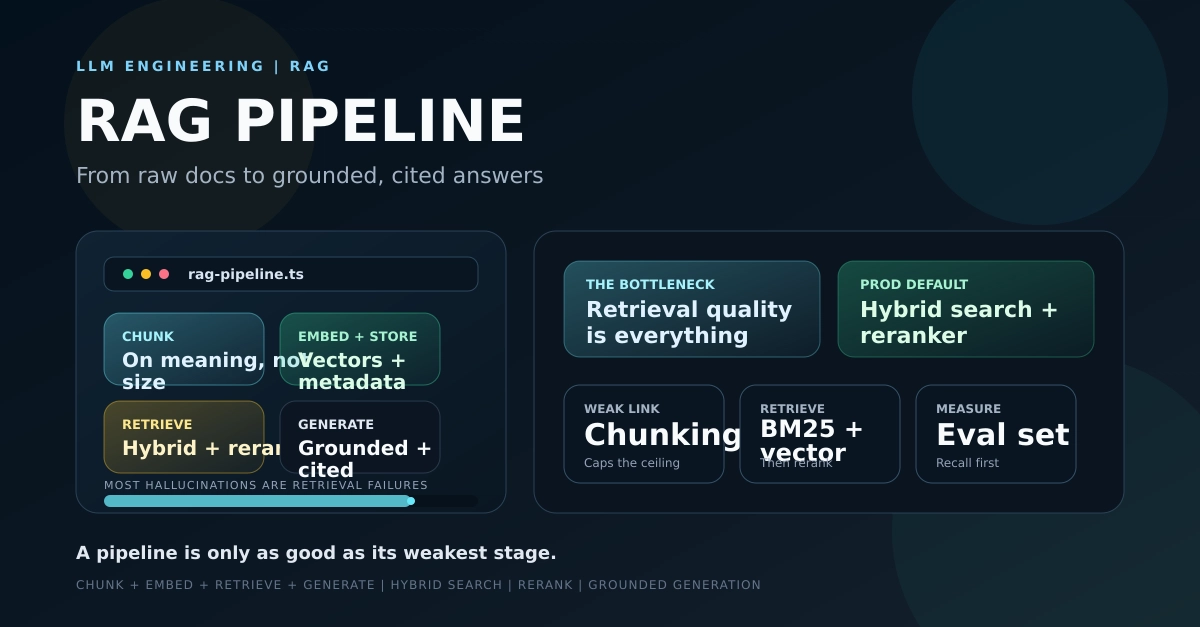
Retrieval quality begins before the embedding model. If your pipeline indexes navigation labels, cookie notices, duplicated sidebars, and unattributed fragments, even an excellent model will retrieve noisy evidence. The web scraping layer is where you fix that.
When I was building the extraction pipeline for ToolTrace, this became obvious fast. The raw HTML was a mess of nav bars, footers, tracking scripts, and cookie consent banners mixed in with actual content. Feeding that directly into a vector store produced terrible retrieval results.
The solution was a proper normalization layer between unpredictable webpages and the controlled document model an AI system needs. This post lays out a practical architecture for that layer.
Why extraction quality matters for AI
Raw HTML is designed for browsers, not retrieval. It mixes content with menus, scripts, styling, tracking markup, and repeated site furniture. Feeding that into a chunker wastes tokens and creates semantically weak fragments.