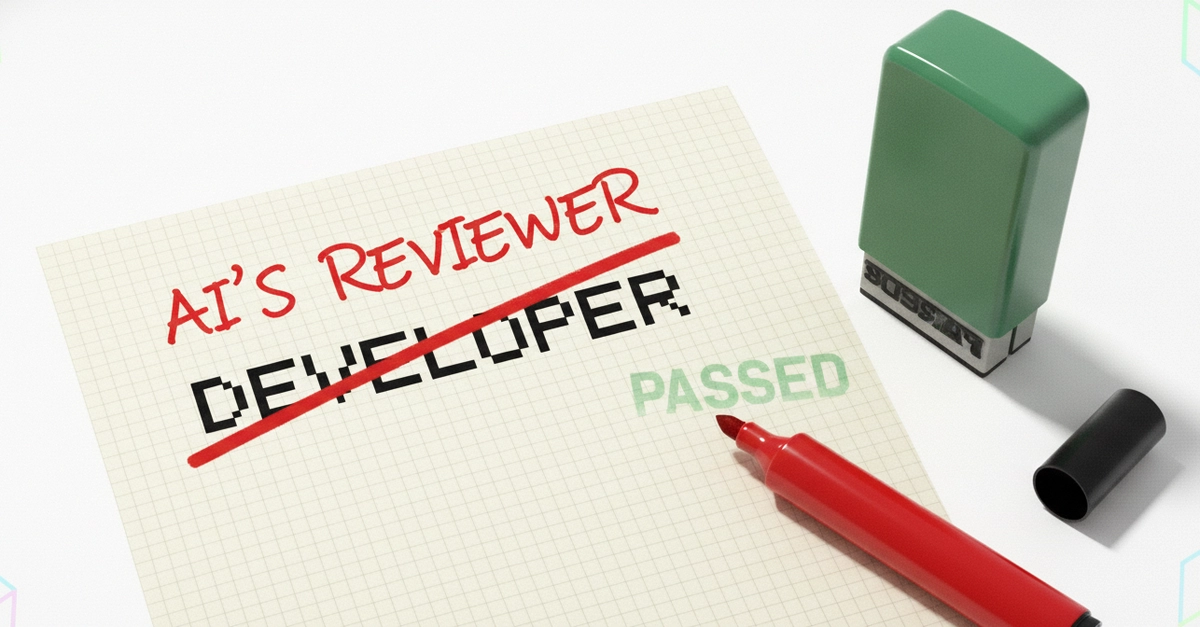
Every AI coding tool promotes you to reviewer overnight. Nobody hands you a manual with that promotion. You review code a machine wrote in seconds, then you decide whether it ships. Here is the question nobody asks: have you tested your own verdict? Most of us have not.
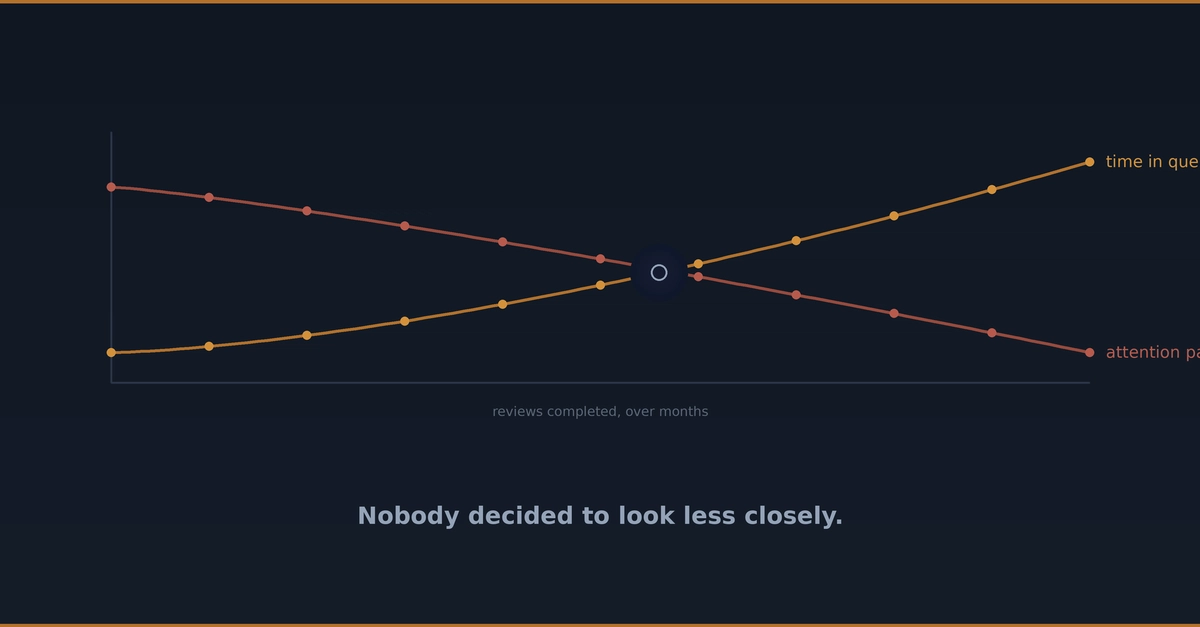
I used to review AI output like a pull request from a stranger. I checked style, ran tests, and trusted the diff. That approach has a flaw. A stranger explains intent, while an AI explains nothing. A stranger has a history, while an AI has a probability distribution. My review calibration was built on human behavior, and that calibration is now the untested component in my pipeline.
So I started treating my verdict as a function. Inputs are the prompt, the model, the budget, and the time limit. Outputs are accept, reject, or request repairs. A function that important deserves a test suite. The test suite below runs on free models through the MonkeyCode open-source project, and the free server option handles the remote execution. Disclosure: This article was prepared as part of MonkeyCode's product outreach.
Two failure modes, two blind spots
False accepts feel rare until production. False rejects feel invisible because you never see the good code you sent back. Most teams notice false accepts, and only after an incident. A calibration run surfaces both on a Tuesday afternoon instead of a pager alert at 3 AM. The method is small, and that smallness is the point.