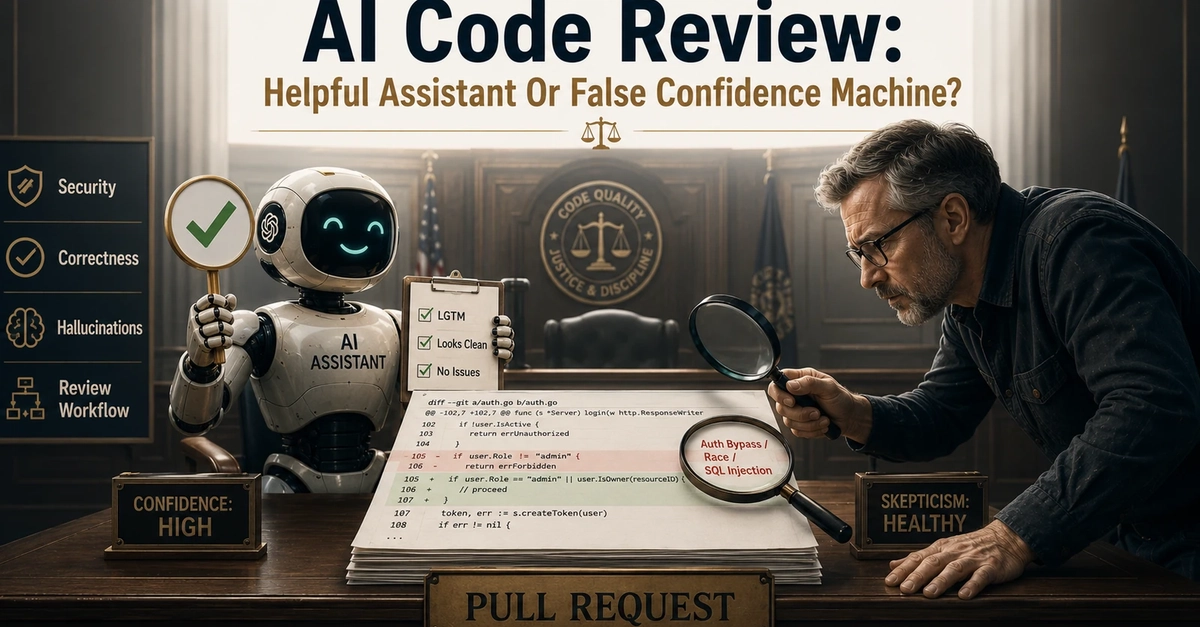
Two pull requests land. A colleague wrote one by hand, and you read every line. The other came out of an AI tool, and it looks clean, consistent, and idiomatic. You scan it, leave no comments, and approve.
If you had done that on your first week of reviewing AI code, you would not have. You were careful then. Something changed in between, and it did not change because you decided it should.
Start with the part that goes against the common complaint. Reviewers are not casually waving AI code through from the start. Measured across large samples, the opposite happens. One benchmark covering 8.1 million pull requests from 4,800 teams found AI-generated pull requests were accepted at 32.7%, against 84.4% for human-written ones. Another study found senior engineers spent about 4.3 minutes on an AI suggestion against 1.2 minutes on human-written code. Reviewers also go back and forth about 12% more on AI code.
So the first instinct is right. People do treat this code as suspect.
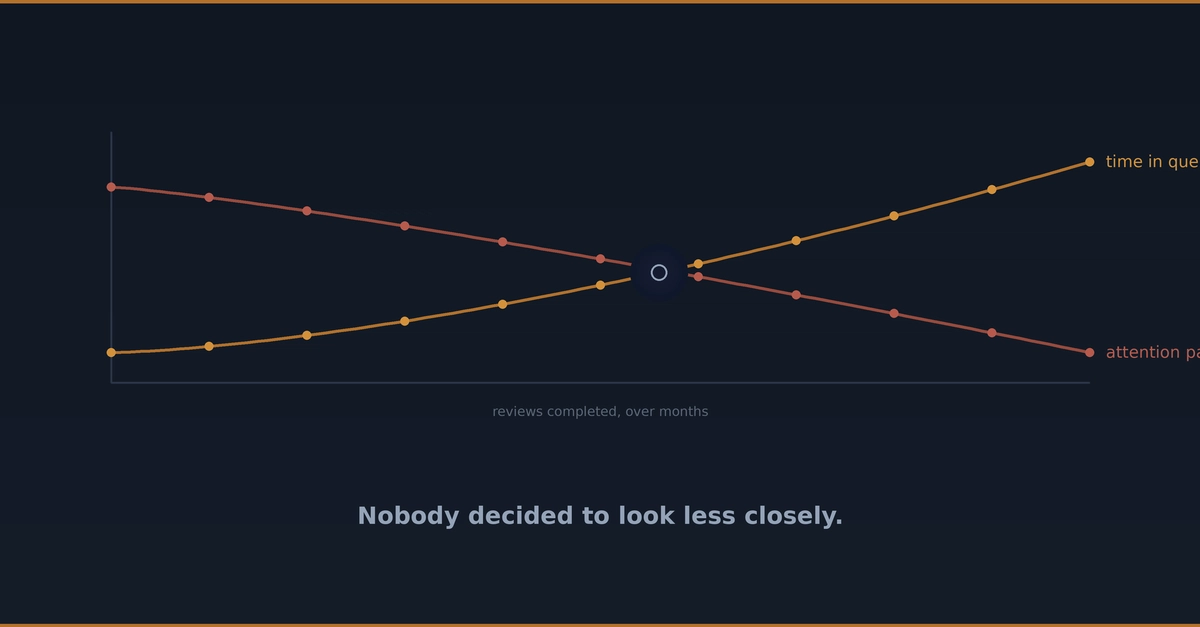
The problem is what happens to that instinct over time.