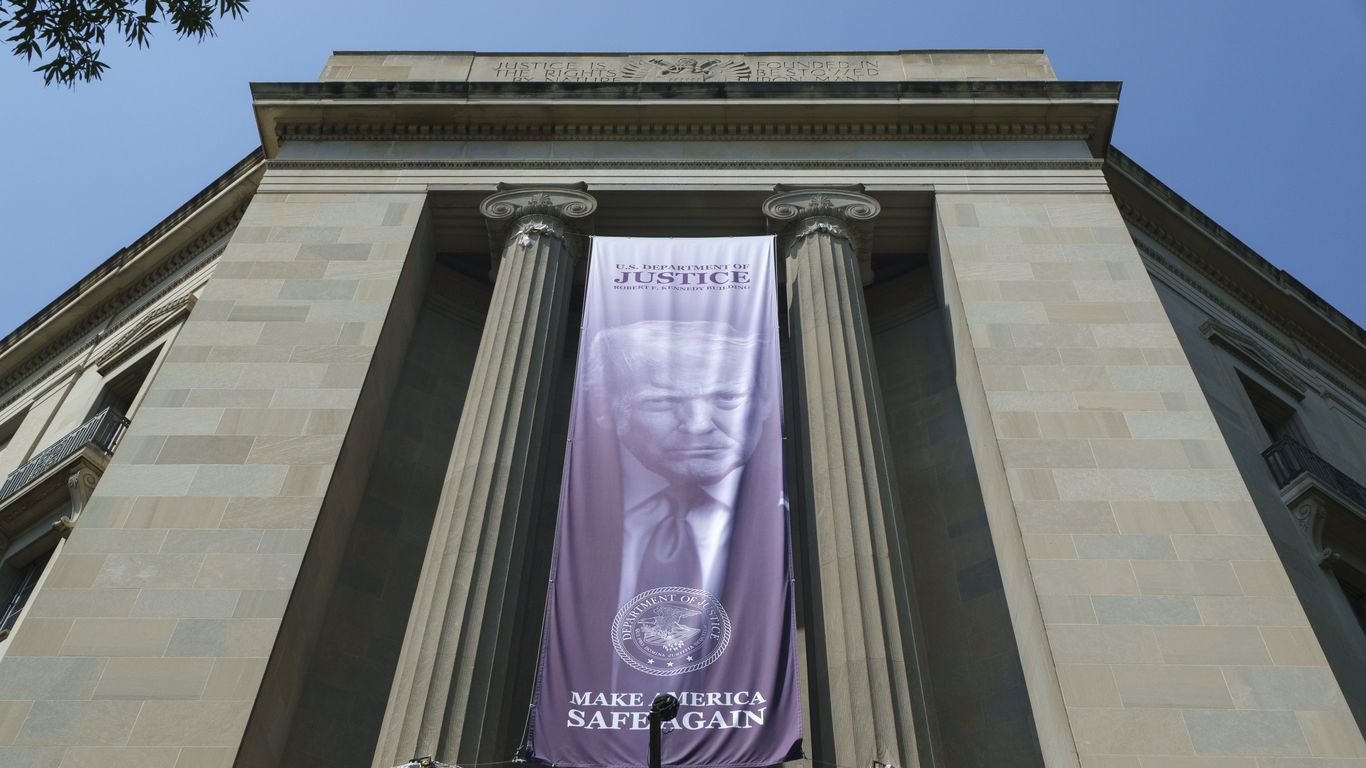
At this point more than two months before the midterm elections, Democrats retaking control of Congress and its subpoena power is far from certain. But President Donald Trump is already laying down legal markers for how he’ll fight any attempt by lawmakers to investigate him.
In a Justice Department memo and legal filings, the Trump administration is arguing that the president can keep secret not just the conversations he has with his advisers within the White House, but that his dealings with individuals outside the government can be shielded as well. The White House is also saying in court that even disclosing the identities of the people who worked on significant policy efforts would infringe upon the presidential confidentiality to which Trump is entitled. And the administration has taken the stance that it can ignore a Watergate-era law prohibiting the destruction of White House documents.
The posturing comes as Trump, in his second term, has been notably reliant on a constellation of business moguls, non-government attorneys and old friends to help shape his agenda.
“There has been an unprecedented amount of interaction between the Executive Branch — particularly the White House — and the private sector that Congress has made clear is going to be the subject of oversight,” said Jamie Bair, a partner and head of congressional investigations at the law firm Crowell & Moring.