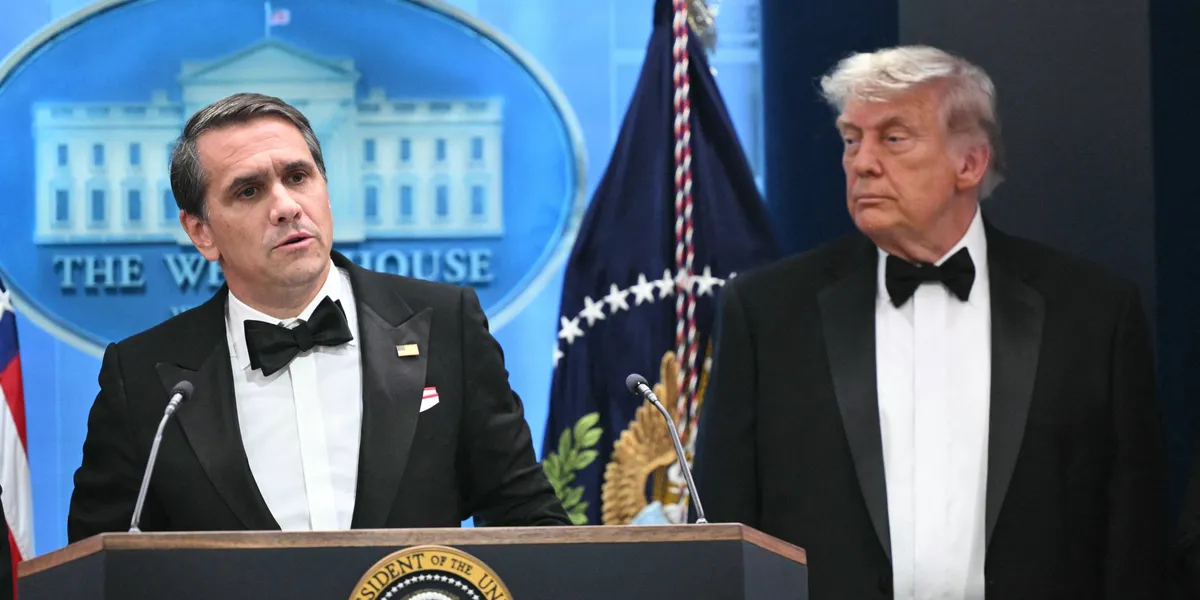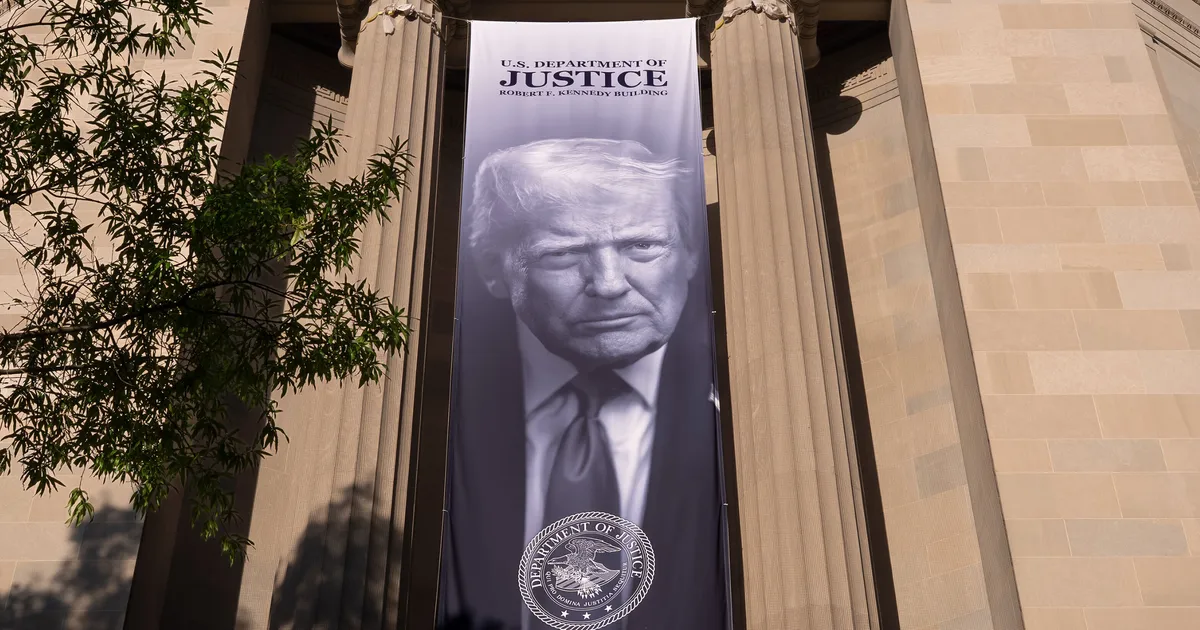
A new Justice Department opinion could give President Donald Trump a stronger legal basis to shield his communications with private advisers from congressional scrutiny if Democrats regain control of the House in November and win back their ability to lead investigations into the Trump administration.The Office of Legal Counsel quietly posted the 21-page memorandum opinion on Monday, without a press release or public announcement. It was issued the same day Attorney General Todd Blanche was sworn in at the White House, and just days after Trump announced White House staff secretary Will Scharf will soon take over as White House counsel following the departure of David Warrington.The memo, signed by Assistant Attorney General for the OLC T. Elliot Gaiser, concludes that executive privilege can apply to presidential communications with private advisers, including attorneys outside the government, if the exchanges concern official presidential decision-making, involve or reflect communications with Trump or his direct advisers, and otherwise remain confidential.
The opinion could give the DOJ and White House a framework for responding to subpoenas from a Democrat-led House of Representatives if Democrats were to regain control of the chamber following the November elections, when lawmakers would likely begin to investigate Trump’s dealings with outside lawyers, business executives, and political advisers.OLC relied in part on a 2007 department opinion by then-Solicitor General and Acting Attorney General Paul Clement, involving the dismissal of U.S. attorneys and the D.C. Circuit’s 1997 decision in In re Sealed Case. That decision held that the “presidential communications privilege” can cover information direct presidential advisers solicit or receive from outside sources while preparing advice for the president. But it also warned against extending the privilege so broadly that government material becomes “sequestered” from public view.A source familiar with the matter pointed the Washington Examiner toward some of the limiting principles outlined in the memo.“While the issue has not been litigated frequently, the Opinion reaffirms the longstanding position of the office going back at least as far as Paul Clement in 2007 and arguably as far back as 1972,” the source said, referring to former President George W. Bush’s solicitor general and the Nixon administration, respectively.For example, the guidance would not assert an automatic block on subpoenas or bar testimony. Instead, the White House would need to assert executive privilege over particular records or questions. A court could then decide whether the communications satisfy the OLC test and whether the party seeking the information has demonstrated a sufficient need for disclosure.While Democrats’ success in the upcoming midterm elections is largely still an open question, the guidance could have more immediate consequences in the Trump administration’s fight with the American Bar Association over its effort to subpoena Boris Epshteyn, Trump’s personal lawyer and a longtime informal adviser.Boris Epshteyn, adviser to former President Donald Trump, returns to the courtroom after a break in Trump’s trial at Manhattan Criminal Court, May 20, 2024, in New York. (Michael M. Santiago/Pool Photo via AP)