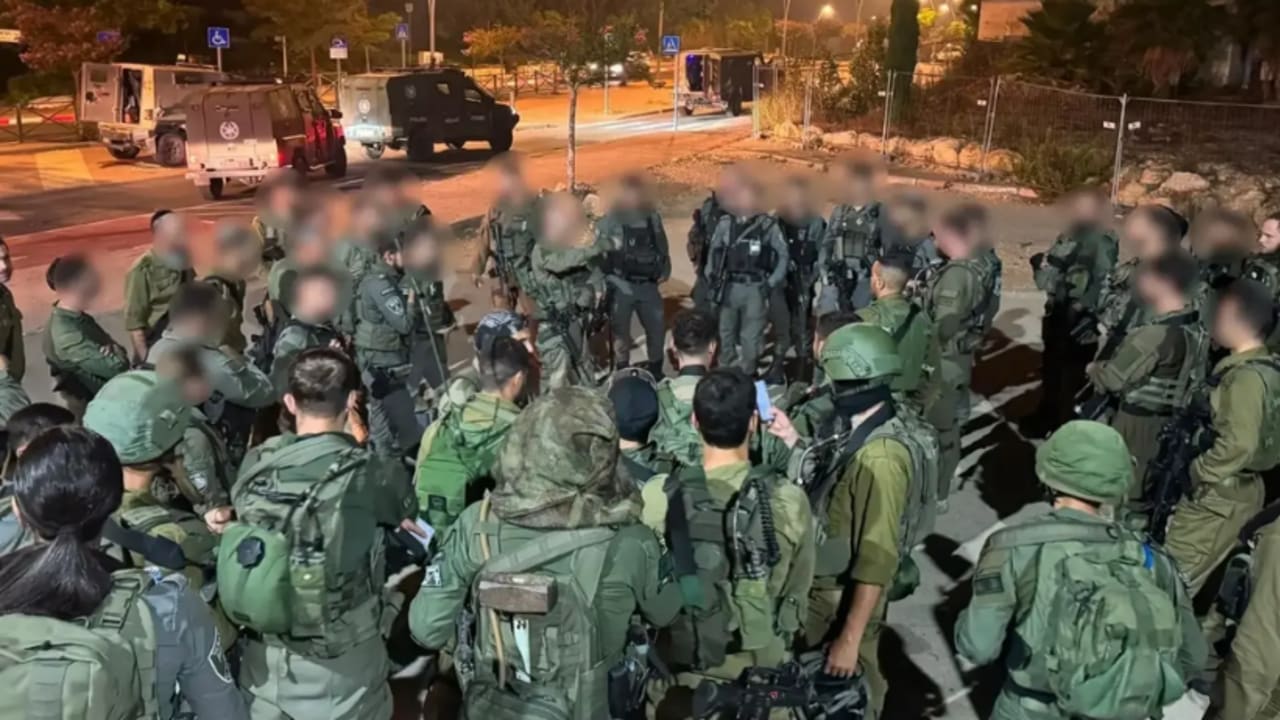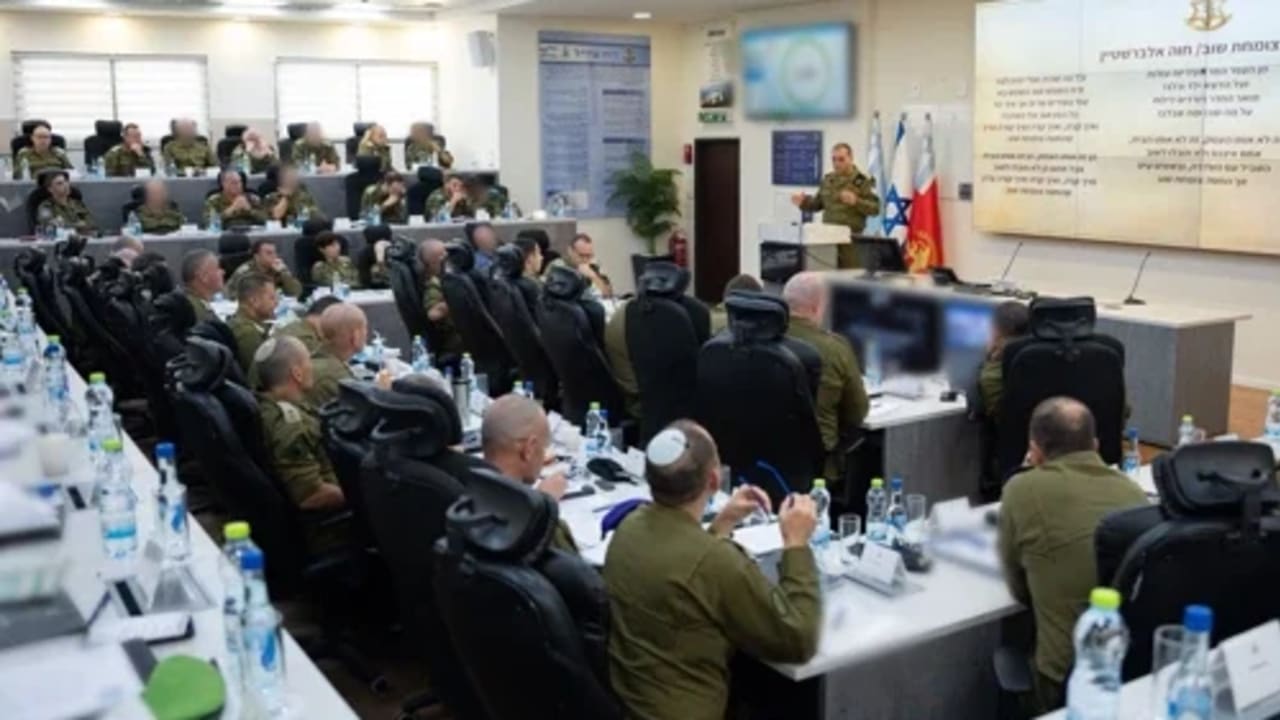
Oct. 7, 2023, Re'im base: Female IDF operations soldiers recount for the first time what they endured, the scars left behind and the moment they learned Col. Asaf Hamami had fallen, with his son behind themEti Abramov|On the morning of October 7, just before 6:29 a.m., they were still four young operations room soldiers talking about officer training, dreaming about their post-army trips and enjoying life on what, to them, was the safest base in the world, even though it sat just five kilometers from the Gaza border.Moments later, they found themselves without a brigade commander or deputy brigade commander, managing a battle, trying to dispatch forces and holding one another together inside a bubble of very real, mortal fear.Gallery‘We ran the Southern Brigade’s war, four nice little girls’; Lihi, Tahel, H. and Liel (Photo: Yonatan Blum)For three years, they remained silent. At first, they tried to live normal lives and continue their service as usual. Three have since been discharged, but what was burned into them during those 24 hours has never let them rest.Now, at last, they have names, faces and a harrowing story that has never been told.Tahel Dahan, 22, from Yavne; Liel Gehari, 23, from Gedera; Lihi Moskovitz, 22, from Rishon Lezion; and Lt. H., 22, from Kiryat Gat, are the women who served in the Southern Brigade operations room of the Gaza Division, under the command of the late Col. Asaf Hamami.They became, against their will, the heroines of the shift that began on that Black Saturday and, in many ways, has never ended.This is their story.Hamas’ Oct. 7 breach of the Gaza Division base at Re’im The most senior of the four is Liel, who enlisted in December 2021 and was discharged exactly two years later, three months after the war began. The youngest is H., who enlisted in March 2023 and chose to pursue officer training. This week, she begins a new position in the Givati Brigade, which she asked to join in order to continue the path of Hamami, the commander she admired.All four went through the same training track for operations room soldiers.“Basic training and a course at Julis,” Liel said. “After that, you’re assigned to a general sector — Gaza, Lebanon, the West Bank, Egypt. Then, after a few days of screening, they decide which operations room you’ll be assigned to. All of us, at different times, were assigned to the Gaza Division’s Southern Brigade at Re’im Camp.”Inside the operations room, they worked in fixed pairs: a shift supervisor and an operations room soldier. In practice, the positions are similar, with the difference mainly in the level of responsibility. Tahel was Lihi’s shift supervisor and Liel was H.’s.They describe a lively military routine among young women serving week-on, week-off schedules and spending 12 hours a day together in the same operations room.As happens every year shortly before the Jewish High Holidays, they were asked to choose which holiday they would remain on base for and which they would spend at home. All four chose to stay on base for Yom Kippur and Simchat Torah, but even when they were on leave, they stayed together.“On the first day of Sukkot,” H. recalled, “they all came to our sukkah. My mother made challah, schnitzel, sfenj. They’re all like her daughters.”‘They dragged bodies like rugs. I remember an entire family on their knees. You see kidnappings’; terrorist Ahmad Biyoukh, dubbed ‘the smiling terrorist,’ who was later killed They remember returning to Re’im Camp on Monday, Oct. 2, 2023, straight into a surprise inspection that ended with disappointing results.“They let an unfamiliar person into the operations room,” Liel recalled. “Hamami was furious because the brigade had been a candidate for the Chief of Staff Award and this basically disqualified us. He took it very hard and changed things. For example, he canceled the entrance code to the operations room and instead handed out electronic access chips to only a few people.”That decision, as they would discover, became critical five days later.Because of the failed inspection, morale on base was somewhat low.“Then Friday came,” Liel said, “and we felt like we had to lift everyone’s spirits. Of course, it was Friday, so we made shakshuka for lunch and meatballs from Tahel’s mother’s recipe. She was literally on FaceTime with us while we fried them. We ate the shakshuka and put the meatballs in the refrigerator. During the attack on the base,” she added, smiling briefly, “the terrorists went into the kitchenette, wrecked the whole place and ate our meatballs.”“My shift with H. ended Friday at 9:30 p.m.,” Liel continued, “and Tahel and Lihi replaced us. Because we’re operations room soldiers and spend all day in the operations room, we don’t usually go to the base Kiddush. That Friday, something made H. tell me, ‘Go, sit with them.’ And I did. I saw people there I hadn’t seen in a while, some of whom are no longer with us.“Afterward, we sat until 3 a.m. in the operations soldiers’ kitchenette with Tomer Ahimas, who was part of Hamami’s command team,” she said. Ahimas was killed on October 7; his body was taken hostage and returned to Israel in July 2024.Liel Gehari (Photo: Yonatan Blum)The base, they said, felt safe and protected.“Imagine arriving somewhere,” Lihi said, “and everything you’re taught is that the Gaza barrier is legendary, powerful and impossible to breach, and that there are so many fences and an underground barrier. So the second I saw on the cameras that they had crossed it, it shattered me. I felt like everything was exploding in my face, like everything had been a lie.”The Southern Brigade is responsible for the Kissufim and Kerem Shalom sectors. The observation soldiers subordinate to it are stationed at Kerem Shalom, the Magen-Nir Yitzhak outpost and Kissufim. Their reports are relayed to the brigade operations room at Re’im, where the operations room soldiers sit.“From there,” H. said, “we update the higher-ranking officials, from the operations room officer all the way up to the brigade commander, and they tell us what to do: dispatch a patrol, request resources from the division, make sure that in an extreme event there is a Zik drone overhead and so on.”The brigade had 10 operations room soldiers, they said. Five remained on base over the holiday: the four women and one new soldier who was still in training and assigned to the morning shift.Lihi began her shift with Tahel on the night between Oct. 6 and 7 and remembers it as relatively quiet.“Just annoying little tasks, like a malfunctioning point along the fence and debating whether to wake people up and dispatch forces. Those were our problems.”A few minutes before 6:29 a.m., she asked to step outside for a break.‘His son was in the operations room. We decided not to talk about it. Welfare NCOs played with him’; Col. Asaf Hamami with Staff Sgt. Tomer Ahimas (Photo: Courtesy of the family)Then the sirens began.“When you’re inside the operations room,” Tahel said, “you don’t hear the sirens. They just appear on the computer. You see a red line on the screen, the launch point and the impact point, and then you wait a few minutes for the systems to determine whether it’s real. We were used to seeing one line, two lines. Suddenly, I saw a million lines.”Tahel called Lihi back in, and the two switched positions and opened the commander’s operations room.“I opened the system,” she recalled, “and all I could see were lines everywhere. I called communications to tell them there was a system malfunction.”But the red lines on the screens were not a malfunction.“One of the battalion operations soldiers called me,” Tahel recalled, “and asked, ‘Does this look real to you?’ Then we heard this insane boom, and you say, ‘OK, it’s real.’ Once the officer confirmed that it was real, you think, ‘OK, how do we handle this?’ No one had ever taught you what to do in something on this scale.”A few minutes later, their commander, Hamami, entered the operations room.“You understood the entire situation from his face,” Tahel continued. “He was very pale, completely white. He told us, ‘I’m heading to Nirim,’ threw the key to our officer and told her, ‘Go get the boy from the room,’ because his son Alon, who was 6, was spending the holiday with us.“She left, and Lihi and I looked at each other with this ‘What the hell?’ expression. What do we do now? The joke about me had always been that while all the other shift supervisors were looking for action, I was the only one who said that if there was ever a raid while I was at home, don’t call me. And now it was happening on my shift.”Lt. H. (Photo: Yonatan Blum)The commander’s operations room can hold up to 15 personnel, but that night everyone who was not fighting eventually came inside.During the first hour, Lihi and Tahel managed the event through four screens showing what the observation soldiers at the battalions were seeing.“A bulldozer breaking through the fence,” Tahel recalled, “and at the same time motorcycles crossing. Not what you saw at home. We saw the uncensored version.”“Terrorists abusing bodies,” Lihi said. “Dragging them like rugs. I remember an entire family on their knees. You see people being kidnapped.”“You don’t really see faces,” Tahel clarified, “but I remember they took a soldier, and I don’t know whether he was already dead or not. They carried him like a casualty and simply crossed the fence with him.“During our service, we watched the investigation into Gilad Shalit’s kidnapping many times so we could learn from it. And I’m thinking, God, I’m in the operations room and it’s happening here. There’s a ‘Gilad Shalit 2’ happening on my shift.”Were you afraid you would be next?
'We decided we would not be taken alive': Female IDF observers recall Oct. 7 attack on Re'im base
Oct. 7, 2023, Re'im base: Female IDF operations soldiers recount for the first time what they endured, the scars left behind and the moment they learned Col. Asaf Hamami had fallen, with his son behind them
5,791 words~26 min read