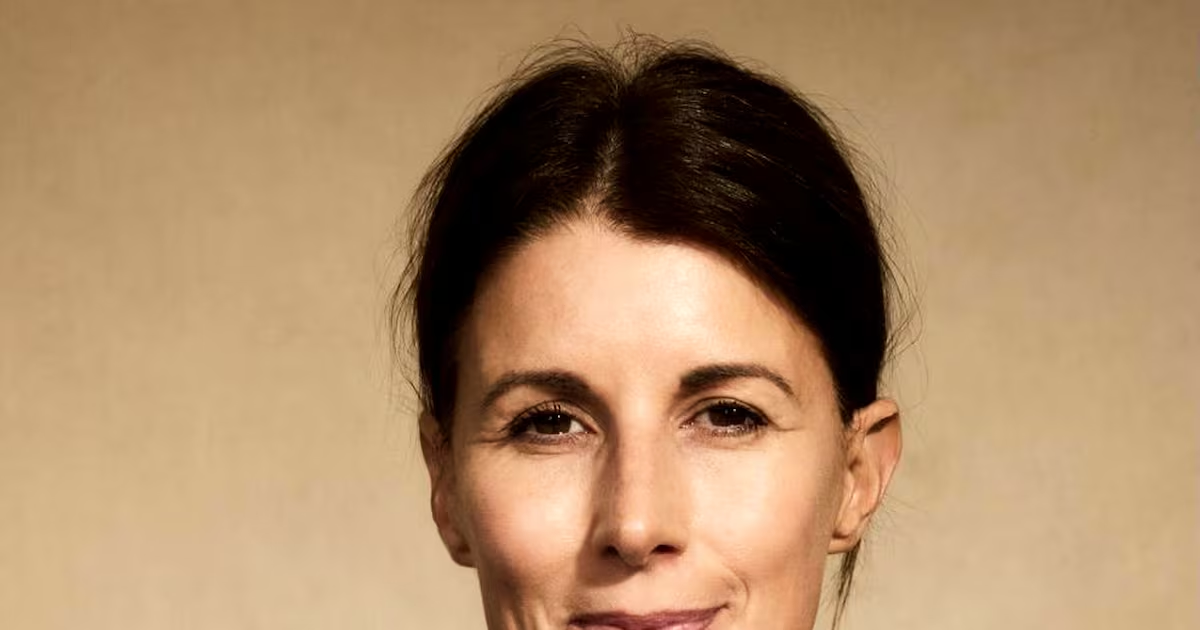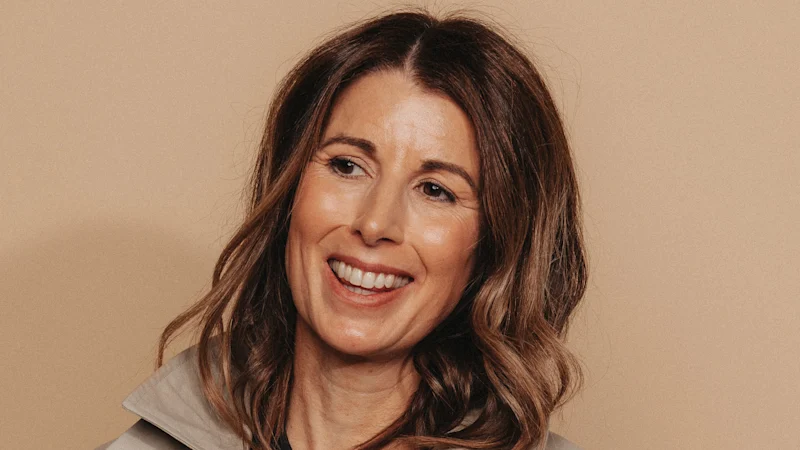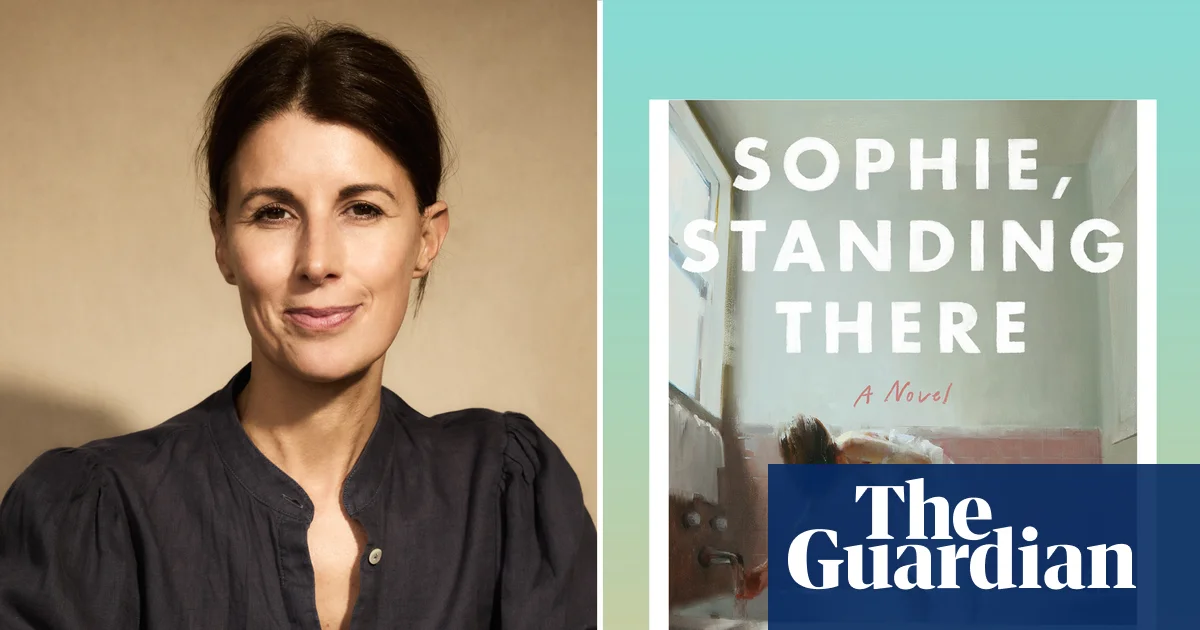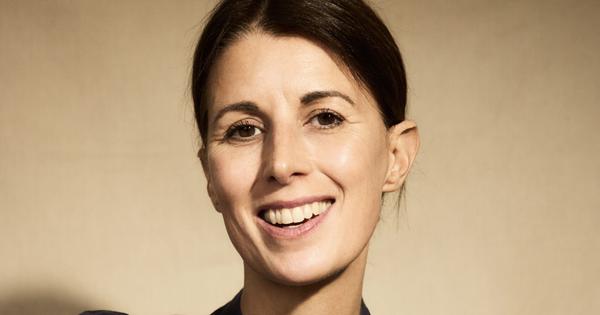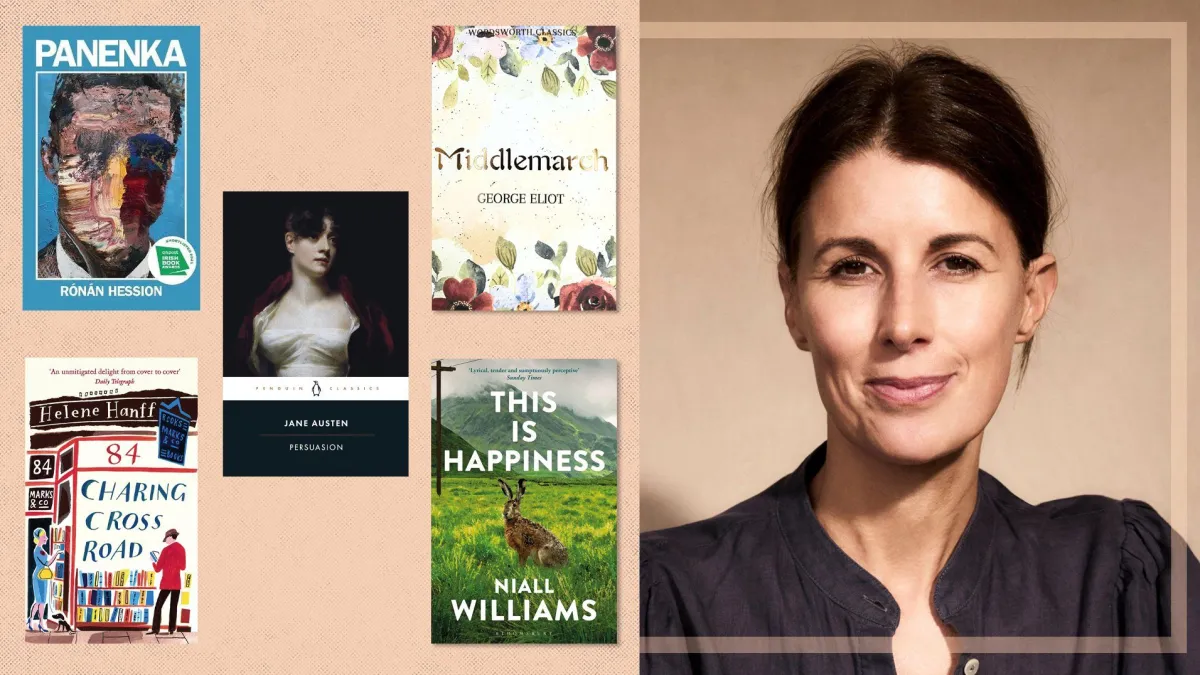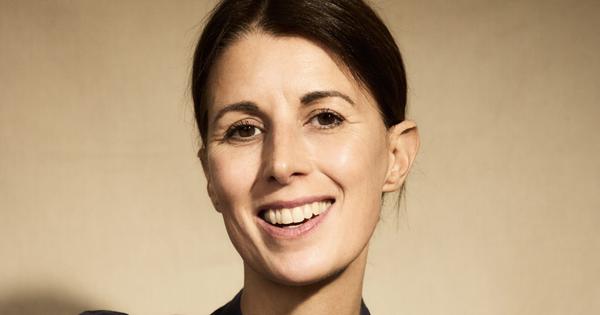
Meg Mason is the author of the novels You Be Mother, Sorrow and Bliss, and, most recently, Sophie, Standing There, along with a motherhood memoir, Say It Again in a Nice Voice. A novel about bohemian parents, unemployment, the end of a marriage, and starting over at 40, Sorrow and Bliss was notable for its realistic portrayal of mental health and marriage and became a major international bestseller for that very reason. It was shortlisted for the 2020 Women’s Prize. Her first career was in journalism, beginning at The Times of London, later writing for Vogue, ELLE, GQ, Sunday Style and The New Yorker’s Daily Shouts.Born in New Zealand, she now lives in Sydney, Australia.In Sophie, Standing There, Mason takes the reader behind the scenes of literary stardom and anxiety. Sophie, freelance sound technician for literary festivals. She is a big reader and recently single. She hasn’t felt so lonely ever before in her life. But then, Sophie discovers Lilac Dunne, an author of great fame, through books, podcasts, and social media. She becomes obsessed – but it feels like love. There’s a slim chance of Lilac and Sophie crossing paths, despite their shared professional world. But what if they did?Sophie, Standing There is a novel about readers, and what Mason insisted, by a reader. It is a moving, character-driven story, uninhibited in its exploration of loneliness and the desperate lengths we might be ready to go for affection. For Sophie, this connection comes in the form of enigmatic Lilac. After great attempts to turn their relationship into something bigger, Sophie will walk away wiser, knowing what genuine companionship actually looks like.In a conversation with Scroll, Mason talked about why she couldn’t have written the novel from an author’s perspective, why she quit social media, and what her relationship with fame has been like. Excerpts from the conversation:Sophie, Standing There is very much a book about readers. Why did you think that the reader needed to be in your novel? Contrary to what everybody imagines for authors, I didn’t read books as a child for pleasure. I was not a reader at all, even though I came from a really bookish household. Reading just didn’t move me. I was more interested in drawing or being outside, that sort of thing. I became a reader really late – in my last year of high school and that was only because my parents had moved countries. I moved countries with my parents and left my brother behind in New Zealand, where I was born. Suddenly I had no friends. And the only thing to do when you have no friends is read books.It was only then that I came to understand what a joy and a pleasure reading is. I was soon pursuing a career in journalism and somehow ventured into fiction. I had a terrific sense of inferiority, almost like imposter syndrome – how could I aspire to be an author when my own knowledge of literature was so patchy? I read a lot now; there are still whole worlds of things I’ve never read because I was so late to it. But I loved it anyway and as my career has progressed, I was able to dabble with different themes. I think this book became a book about readers because after Sorrow and Bliss came out, I started meeting other readers all the time. I’ve got bookish friends, but suddenly I was on this book tour circuit and half of the job was just to meet readers constantly and to talk about books and then to meet other authors, which I’d never done.Before Sorrow and Bliss, I had met only two authors in my entire life but suddenly I became a part of this world. How it’s worked for me is I always write a version of what’s happening to me. Not that every novel is a flat-out autobiography, but it is sometimes what happened to me. I was observing a new world that I had landed in. I was not expecting to go home and immediately turn my experiences into material. And in fact, I didn’t really think of it as material because I believed it was very niche. If I were to write about what it’s like to be an author or if I’d written this book from the author’s perspective, I think it would have felt really self-indulgent. People would assume that I see myself as a famous author at the epicentre of the literary world, which couldn’t be less true. But then to flip it around and put myself on the side of the reader, which is where I feel I am, gave me a window into this whole world. The book really came out of that interesting collision of what happens when we, as readers, meet our heroes and what authors feel about their readers.Because on the one hand, there is immense gratitude for the fact that readers have given you this life. You can only do this job if people buy your books. But at the same time, books have a way of making readers feel that they know authors when they really don’t. So it can be a really strange, unbalanced relationship. And that’s probably one thing that I did experience as an author – suddenly having complete strangers come up to me and tell me that they loved me. And they didn’t always say I love the book. They would say I love you. And I’d think, but you don’t know me. I did not think I deserved such adulation. Yet it happens and you have to find a way to process and deal with it before you come back to your normal life where perhaps you’re just tolerated by those who actually know you.You were talking about being at literature festivals and meeting your readers. Was there any one festival or any one moment at a literary festival where you thought that there is a story here? So much of the novel happens at literature festivals…There is one exact moment at one exact festival where the whole book came to be. It was the Auckland Writers Festival in New Zealand in 2024, which I was doing with Ann Patchett. I was interviewing her. And I think because it was New Zealand and it was a home crowd, and Ann was a good friend by then, I didn’t prepare properly, which I would never otherwise do. I was casual about the whole thing. Five minutes before we were due to go on stage, I realised there was a whole section of the notes I hadn’t read and I had to call on a member of the production team to come and help me.It turned out that the woman who helped me was someone I’d gone to school with, whom I hadn’t seen for 35 years. I had a connection with her that was beyond the usual author–technician relationships at these festivals. I realised we were doing our jobs – backstage and on stage – and I started to wonder more about the other side and what it feels like to facilitate these conversations, while being invisible.In Sophie’s case, I wanted to create a character who was very shy and quiet. What she seeks is connection. Her only moment of connection is when she’s mic-ing these authors, which is fine, but then of course she wants the metaphorical connection with an author that she loves. She finally meets this author in the wings, which is also a completely different world. I found it fascinating to create a whole world out of what is essentially five square meters of space. It is dark and full of cables!The character Lilac Dunne, who’s such a popular author in the book, has a very interesting relationship with fame. She thinks of it as a nuisance. What has your relationship with fame or at least popularity been like, especially after Sorrow and Bliss?David Nicholls says that for authors, fame is a very mild sensation, which I think is hilarious because the world in which an author might be famous is very small. Margaret Atwood might be the queen of literary fiction, but on the street, she wouldn’t necessarily be recognised.Every novel has to be more exaggerated and keener and more extreme than real life to be interesting. So I made Lilac real-world famous – she’s 37 in the book, but like pop stars, I made her famous since she was 20. And because I was in this little world, you know, proximate to fame, you can’t deny how wonderful it feels but it also has a corrosive impact. You may genuinely believe you’re very special and it gets to you. I think everybody famous probably has to work out a way of living next to their public persona, one that is separate from their real selves. But one has to keep the “fans” happy too. If a reader has bought a book and has waited in a signing line, I must acknowledge it in my small way. I must make their time worthwhile and not be dismissive. The goal was to create two Lilacs and to show her veneer (really her armour) and how Sophie kind of broke through in her peculiar way. What was trickier was working out why Lilac, who claims never to make friends, who claims not to want to ever become entangled with readers or even other authors, what her attraction is to this momentary relationship they have. And to be honest, I feel like I never figured it out. I thought about it for months and months, but then I realised I am perhaps not meant to know.I decided that it was not possible for me to know why that moment in time happened, because the whole point of a famous person is to stay removed and to stay opaque at all times, and even if we see Lilac’s brief humanity, she shuts it down almost instantly. I don’t know why she is this way.I was interested in one more thing: we see that Sophie reads Lilac’s books over and over again, but we never really know what she feels about the books. We see that she’s very enamoured with the person, whoever Lilac is, but we don’t know her feelings about her writing or her books. Is there a reason why you did not want to foreground her opinions or her feelings on Lilac’s writing career?That’s such a good question! No one’s ever asked me that before and I’ve been waiting for it because it’s true. You don’t really get a sense of what the books are really about. There are only five or six lines in the novel that I attribute to Lilac. I think it’s because Sophie’s fascination doesn’t really have to do with the books. In fact, she explains how they didn’t resonate with her when she first read them, but then, discovering them again, in this period of great personal tumult, they somehow connect with her. But soon she’s thinking only about the author who has become an object of her sort of parasocial love. What I find really amusing, having given only a sample of a few lines, is: are her books very good?Clearly she’s famous and has made a lot of money, but is she deserving of either because that’s just how good she is? What was so challenging right at the beginning, when I was setting up this moment of Sophie coming across these books and reading them, was thinking about how I had to write incredibly well if I was going to convince my reader that Lilac was an incredibly talented writer. I would have to write the way perhaps a literary doyen would – and I didn’t think I had it in me. That is why you also see so little of Lilac’s writing in the book.This parasocial relationship that you’re talking about with the writer – we already have that kind of relationship with actors and pop stars and even influencers these days. So are you also imagining through this book a time maybe in the future, perhaps it’s already here, where the author’s persona is more important than the book itself?For an author, there really is no option but to go out there and sell their books. You thought you had one job but suddenly you have another, and it is very different from what you know you can do. The first job is to stay at home alone and write the book. Once that is done, you might have to step out into the world and start functioning like a car salesman – talking to everybody and selling, selling, selling. They’re just diametrically opposed in terms of the skills that they require and for some authors, the selling is the more stressful part.You have to go on stage, you have to meet readers, you have to sign books… which fortunately I don’t mind. For me, writing is the more painful part. Now that authors have become so accessible through social media, we have realised we still feel differently about them as opposed to how we might feel about actors or pop stars. We believe we have a much more intimate connection with an author. It has a lot to do with the delivery mechanism – it’s just you and them when you’re reading. You have to really concentrate. It can be really intimate. We treat this relationship as almost sacred. I know I do – I feel that if I were to ever meet certain authors, we would definitely be friends, even though they have literally no idea I exist.This is interesting because Lilac stays off social media, but she is quite literally everywhere. You are also not on social media, but I have seen you in reels. The one where you are recommending books is viral now. I wanted to know what kind of relationship you have with social media and as someone who’s not on it, are you anxious about missing out on this one-on-one connection with your readers?I was on Instagram until 2018. And what happened was I wrote a manuscript that was really bad and it was due to be published and I had to throw it away. It was so gutting to throw away a finished book that I went into this state of shock and grief and the sense that my career was over. I was so sure I was throwing away what was going to be my one and only novel. Thankfully, the yearning to write again grew and I looked around me at every single thing I could change in support of the work. One of them was to be off social media because I found that a lot of emotion that should be directed towards the book and was being drained every day on social media. As a writer, you do have to manage your emotions minute by minute. You’re alone; there’s no feedback for years, and every single word has to be thought of and written by you and you really have to keep your calm through it all.I would pick up my phone, I would look at social media, feel perfectly fine and then ten minutes later I was in the depths of depression. I couldn’t afford to squander my emotional resources. I’m sure there are people who find social media energising, but I have to write in total privacy. I couldn’t bear to think that there was anyone out there waiting for my book. I wanted to be alone with my manuscript. Social media created too much noise for me. On top of everything, I was seeing other authors with their bestsellers and their prizes, and I don’t need any of that while I’m working on my own terrible draft! As soon as I got rid of it, I felt so incredibly liberated and so free. I’ve never been tempted to go back on it.When Sorrow and Bliss was about to come out, I remember my publisher saying there are certain upsides to having an account, but I felt like I could either use my words in a book or I could use them in a caption. A book was the saner choice. Moreover, I would have to restart my life on social media and it would be embarrassing for my publisher to have an author with only two followers! I’m so glad because the Sorrow and Bliss experience was so incredible, but I think it would have been overwhelming if I’d been tracking it on social media.It would have also made me a little bit too contactable because Sorrow and Bliss was about mental health. I was very mindful of people wanting to talk about their mental health with me, which is a privilege when it’s in person, but I don’t think I could have dealt with a lot of messages on that topic and waking up to them every single day.I know writers who aspire to be authors complain that they don’t have the time in the day to write. I urge them to look at their screen time and see how much of their day has been spent on Instagram. If it’s more than an hour, then they certainly have the time but they’re probably not prioritising it. What I always say, because I really believe it’s true, is that writing can’t be as well as; it has to be instead of. It cannot be the last thing you do in the day. It has to be the first if you really want to do it. And as for me, I couldn’t waste all my time looking at people’s lunches.A few years ago, when I interviewed Hernan Diaz, I asked him whether a reader should absolutely trust the author. He said that it is the stupidest thing a reader can do. So I wanted to ask you, since in your novel the author and reader are also physically close to each other, do you think a reader should trust an author to tell them the right story? For instance, should I believe your version of Sophie’s story, so to speak?It is so subjective, isn’t it? If I wrote the novel again and this is true of every novel, it would be an entirely different story. For example, if Lilac was the narrator, then this novel would become absolutely unrecognisable as the same book. There’s a saying which goes something like this: All of it happened, but none of it is true. You can also think of it in this way: All of it’s true, but none of it happened. That’s the thing: all of it comes from a place of truth, but ultimately it’s all lies, both on the part of the author and on the part of any character, because, after all, it is just one of the many ways to tell a story. Now that you say it, I realise that, like you, Sophie also was a late bloomer when it comes to reading.It’s true. It’s the first time I’ve really mined my own experience for a character. It was also a safeguard for me against anyone saying, so are you this famous author? What if they were to think I was Lilac? I want to say, No, no, no, I’m Sophie. I’m definitely the quiet observer on the sidelines.You have had many authors make a cameo in your book. All of it is very positive, but did you ever worry what they’d think about it?I started writing Sophie as a short story for my own amusement that I didn’t think would ever see the light of day. I was back from a festival but I couldn’t stop thinking about it. So I started to write it and I found it really funny. I really enjoyed how it was shaping up. But suddenly there was a momentum to it and I started putting real authors in it because, again, they were never going to see it. It was more like fan fiction! Then one day, I thought this could become a novel. And I was like, well, I can’t take them out because to create Lilac’s world, it has to be populated by real people. I know she’s a made-up author, but if I surrounded her with 20 other made-up authors, there would be no reality to what I’m trying to create. One of the things I love to do the most – one of my highest goals and values as an author – is to make something seem so incredibly, desperately real and recognisable. I’m interested in the granular details, really specific little details. And so to make up too much would have swayed it in the direction of total fantasy. But of course, I wasn’t just name-checking these real-life authors; I was using them as characters and I didn’t think you could possibly do that without asking permission. So I did. I contacted them all by one means or another. It turned out I could have just done it without ever asking them. But if I one day found myself in someone’s book by surprise and I didn’t know, I would be so discombobulated, possibly mortified by it, especially if I didn’t like the book. Anyway, all of them incredibly said yes. There are ten of them in the book and it was probably one of the most precious experiences of my writing life. There’s nothing in it for them. It’s an act of total generosity. I already loved them before and I love them even more now.
‘My highest goal as an author is to make something seem incredibly, desperately real’: Meg Mason
An interview with the bestselling author of ‘Sorrow and Bliss’, whose latest novel, ‘Sophie, Standing There’ is about readers observing their favourite authors.
3,616 words~16 min read