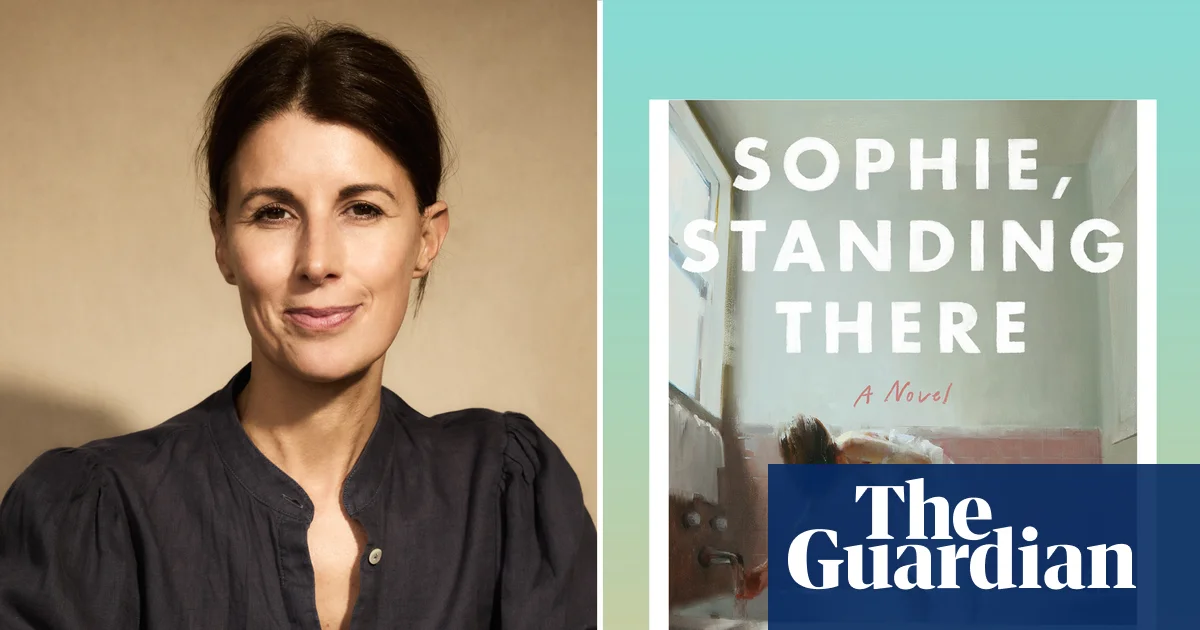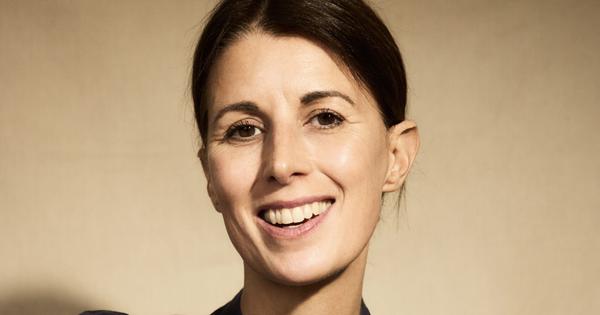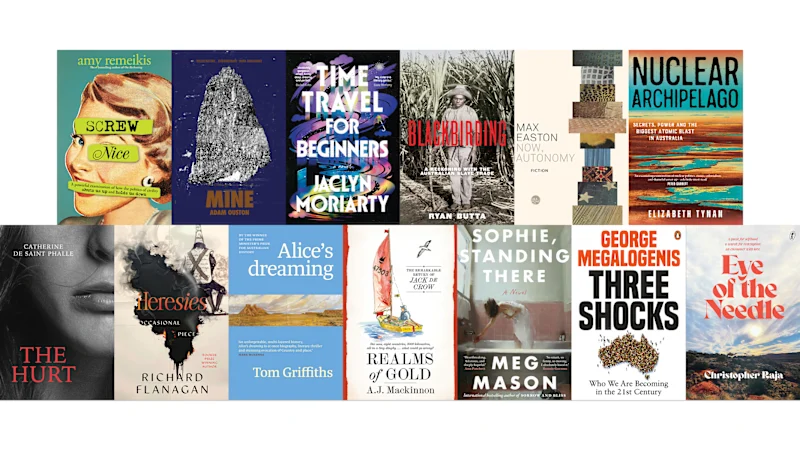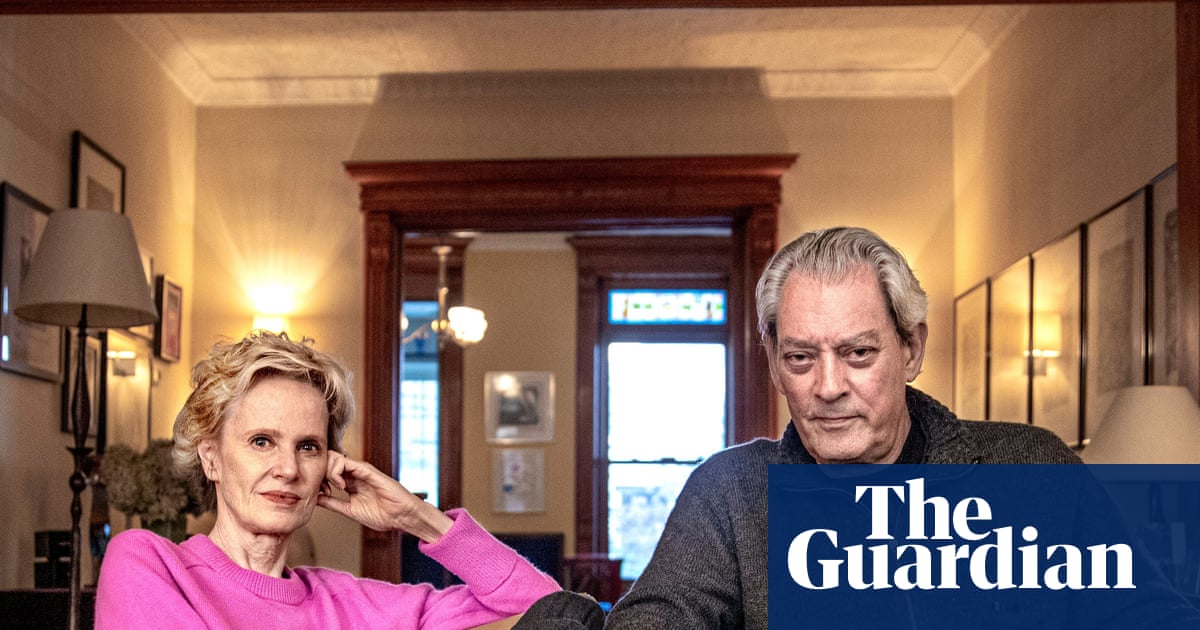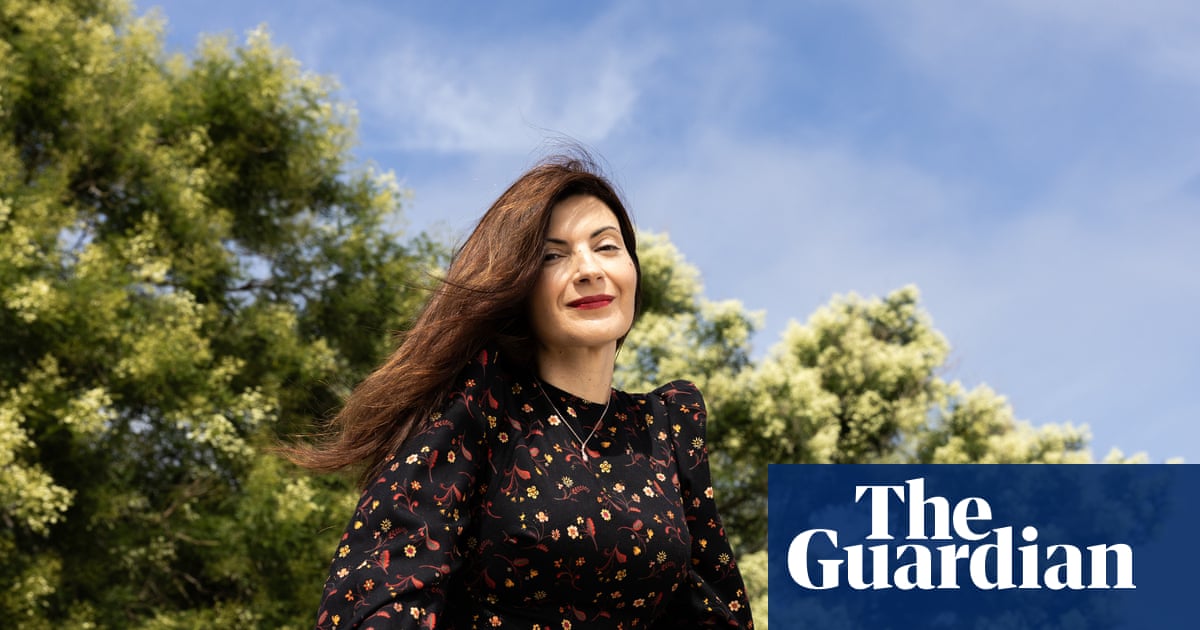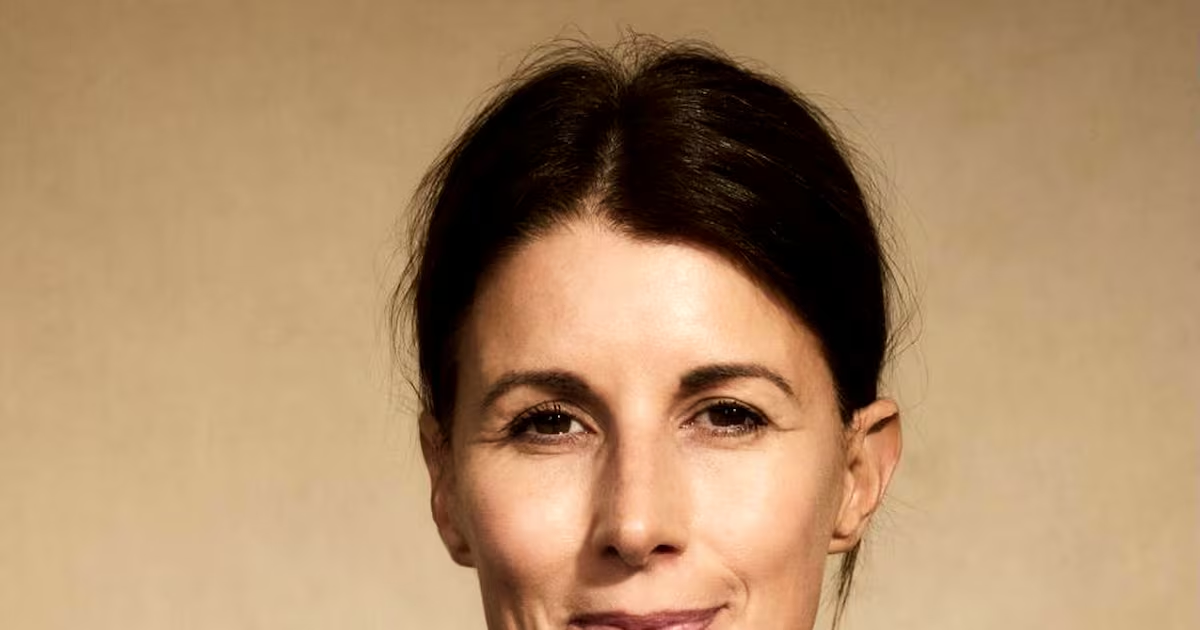
‘I don’t usually think of writing as catharsis. I usually think of it as something that compels you into therapy,” Meg Mason says. But when the endearing eponymous heroine of her new novel, Sophie, Standing There, “just walked in” to her brain, it soon became clear. Through her story of a lonely literary-festival worker who develops a parasocial relationship with a famous author, she was processing everything she experienced when her previous novel, Sorrow and Bliss, became an international hit.“It just dramatically changed the nature of my everyday existence and my work, and my sphere expanded enormously,” she says of the “hinge point” that was the book’s success. “It was wonderful, but it was also an upset, in the sense that it turned everything upside down. And I had this desire not to stay too long at the fair.”Mason, who was born and grew up in New Zealand, escaped the whirlwind by returning to her home in Sydney and starting to write again. But the inspiration for Sophie, Standing There only arrived three years later, when she went to Auckland to do an event with American novelist Ann Patchett.“We were in the wings, and a girl who I went to high school with walked in. I hadn’t seen her for 35 years, but I remembered her name, and it was such an amazing collision of my worlds because I was in my home country with someone from my school, but I was also there with Ann Patchett, who sort of represents this new life that I have as a fiction writer.”Something about this percolated for a couple of weeks, then her (still intact) first line – “The Talent never spoke to Sophie Pattison” – came to her. “It was sort of like a weather system. It just happened. I had the first 15,000 words at the end of that day.”Sophie, Standing There isn’t shy of well-known writers – Patchett, George Saunders, Douglas Stuart, David Sedaris and Sally Rooney are all namechecked in the first chapter alone – but Mason never wanted to write from the perspective of her own profession. “I feel much more aligned with the person who’s on the outside looking in,” she says.So instead we meet Sophie, a sweet but struggling freelance festival “tech” who loves books, has not been in touch with her best friend lately and is in the middle of a divorce. These become the tinderbox conditions for her obsession with Lilac Dunne, an actor-turned-novelist whose fame is so great her name autocompletes in search bars after three letters. Sophie is not a stalker. She is content staying in the wings. “It’s just that she’s in this lonely period of life and in the absence of anyone real around her, like many of us, she forms an attachment.”Mason didn’t set out to focus on parasocial relationships, or the isolation and rejection that can fuel them. She’s a “let the themes take care of themselves” kind of author. But, happily, the subject has only become more zeitgeisty since she finished writing the book in mid-2025. Months later, Cambridge Dictionary picked “parasocial” as its word of the year, defining it as “involving or relating to a connection someone feels between themselves and a famous person [or character or chatbot] they do not know”.In the books world, this is nothing new, Mason notes. “Reader-author relationships of the parasocial kind have existed forever, since the advent of the novel, and that’s one of the most beautiful things about reading. There’s just something so special about authors and the way they are our company, whether or not we ever meet them.”It just so happens that they are more accessible than pop stars and film stars. “If you really want to, you can meet your favourite author. You can go to the event. It’s not like Taylor Swift does a signing queue, you know.”She has long felt a “really close connection” to the late New Zealand author Janet Frame, though she doesn’t “chat to her in my head”, as Sophie initially does with Lilac. When she meets someone she adores now, it tends to all come pouring out. “There is just no way of containing it when you finally meet this person who has meant so much to you. Even if you’re a relatively self-contained person, you just hear it gushing out.”Sophie, Standing There is, at heart, a novel about loneliness that doubles as a “loving and admiring satire” of literary festivals and publishing. Its premise is delicious. What if you meet the object of your parasocial affection? What does it feel like when the real person conflicts with the imaginary version you have constructed in your mind? Is their fame, and the power dynamics that come with it, an unsurmountable barrier to normal interaction, or is it possible to break through the famous person’s protective shield, even for a short time?Mason, speaking over video before a backdrop of bookshelves that Sophie would die for, is “absolutely” not Lilac, she says, and proves it by being charming and patient when I’m late to our call – the often ghastly Lilac would have been brusque at best. Still, she understands why her creation has become the entitled, walled-off and sometimes cruel person she is.“All of her most terrible behaviours are behaviours that I could see oneself falling into if one wasn’t careful. In this very brief exposure I had to being in the public eye and being treated like I was special and being complimented all day long, I was really aware of it as something that was very unusual and wasn’t going to define my life forever. I knew it was for a time. But at the very beginning, you’re sort of so shocked and humble and grateful that when a publicist says, ‘Let me get you a water,’ you’re like, ‘Oh, I couldn’t possibly, I’ll get it myself.’ By the end, you’re so exhausted, you can stop being your best self and you’re demanding a water from someone.”It’s a tiny example, she says, but an illustrative one. “If you don’t keep concentrating on the fact you are a normal person, and so is everyone around you, you could really fall into bad behaviour. Everything that I was scared of becoming, I put into that author character.”Meg Mason. Photograph: Anne Peeters In the book, Sophie’s friend Emma dismisses the “famous people are just like us” claims she sees in magazines. “No, they’re not. They’re better than us. That’s why they’re famous,” she says. Sophie agrees, up to a point: “No question, they were intrinsically better but, over time, fame made them worse.”Mason has some sympathy for Lilac because she has been famous from an early age. “I do have such a deep respect for anybody who has lived with fame for a really, really long time and managed to stay sane and retain a sense of who they really are. And I also have such sympathy for people who haven’t managed it – the people who have flamed out in the public eye. Because it’s really warping, all these people who don’t know you, who feel like they know you, who want to be known by you.”As I share with Mason, right before I read Sophie, Standing There, I’d gone through a string of novels in which the central protagonist was a writer of some kind, making her heroine – the competent, essential but uncelebrated behind-the-scenes person who makes the whole ecosystem function – seem extra-refreshing. “I have always felt that if you took the planet and populated it only with characters from novels, 90 per cent of the population would be a writer. We are kind of obsessed with ourselves,” she says.In any case, through the relatable figure of Sophie, Mason was able to channel everything she observed during her time on the promotion circuit, such as the occasional presence of gender blindness when it comes to the ergonomics of the festival stage.“If you put a female writer on a high stool, then you hate women. Do you know what I mean? The high stool belongs to the patriarchy,” she says, all the wit of her writing intact in her speech.‘When I was writing it, I didn’t know if I would be allowed to mention real writers. Because I don’t just mention them, I use them as characters’Another observation Mason gives to Sophie is that while male authors are given both male and female moderators at book events, female authors tend to be matched up with female moderators. “It just seems to me that there is some idea deep down, ‘Oh, you’ve got to put the girls together.’ Maybe there’s even a sense that a man’s not going to be interested enough to read a female author’s book.”Mason has been told by the artistic director of one book festival that they now subject their programme to “the Sophie test”, meaning they check that they have at least some men moderating female authors’ events. “That made me really happy. That can be my legacy for life. That’s enough.”All the things that irritate her in fiction, such as the female protagonist who is beautiful but doesn’t know it, she let irritate Sophie as well. Indeed, one of the reasons Sophie becomes enamoured with Lilac Dunne is that in her new novel, Human Beings – a title that encapsulates Mason’s fond ribbing of the literary world – the central character is beautiful and does know it.Mason stresses that Sophie, Standing There is not exclusionary and “strives to be as quotidian and anti-literary as possible”. It can be enjoyed by someone “who reads one book a year”. For the widely read, however, her references to real-life authors will be a particular delight. They also show how even the most banal of encounters are bizarrely elevated by celebrity. Colm Tóibín has his mislaid jumper returned to him in his hotel. Richard Osman comes into a room, looks around, then decides to go somewhere else. David Nicholls heroically ad-libs a speech to fill a scheduling gap. And Sophie’s literary crush ends up at the festival only when Elizabeth Strout drops out with Covid.“When I was writing it, I didn’t know if I would be allowed to mention real writers. Because I don’t just mention them, I use them as characters. Like, I have Mick Herron standing on someone’s foot and George Saunders has a tantrum in the wings about his microphone, even though he couldn’t be less like that in real life. But I did it because it wouldn’t seem true and real otherwise.”She decided to ask for all of their individual permissions before using their names. “I think it would be really weird to open a book and see that you were in it, supposedly doing something, so I found ways to contact them. And they all said yes, which was incredible, and I wasn’t expecting it. I thought I’d get some very awkward ‘Please don’t contact me again’ type letters.”Mason anticipates that publicity events for this novel will be a little meta. Mostly the path to publishing feels “entirely different” this time. Sorrow and Bliss – the darkly funny story of a woman with an unnamed mental health condition whose marriage has disintegrated – was not her first book. It followed her 2012 motherhood memoir, Say It Again in a Nice Voice, and her 2017 debut novel, You Be Mother. When she wrote what became a bestseller “in the privacy of my own garden shed, pre-Covid”, she had no hope that it would be read. First published in Australia in 2020, it broke through only after a series of staggered publication dates across various book markets. It all seems like a long time ago, she says. “I definitely feel a lot older now.”One thing hasn’t completely changed. Before Sorrow and Bliss, Mason abandoned another novel. This time, she threw away “three or four” drafts of about 30,000 words each. “If it’s six next time, I’m just going to die.”The first half of Sophie, Standing There took her three weeks to write, the second half about nine months. She had a few “moments of deep insecurity” along the way. “There is obviously anxiety about the idea of following up a book that people really liked. Will they like this one?”The only thing she can do now is try to get the new novel into readers’ hands. “Sophie was such a joy to write and to spend time with. I just want people to love her, more than I even want them to love the book. I certainly don’t need them to love me.”Sophie, Standing There by Meg Mason is published by Bloomsbury on August 27th
‘It’s really warping, all these people who don’t know you, who feel like they do’
Meg Mason, the author of bestseller Sorrow and Bliss, returns with Sophie, Standing There, a meta novel about a lonely literary-festival worker’s parasocial relationship with a famous writer
2,111 words~10 min read