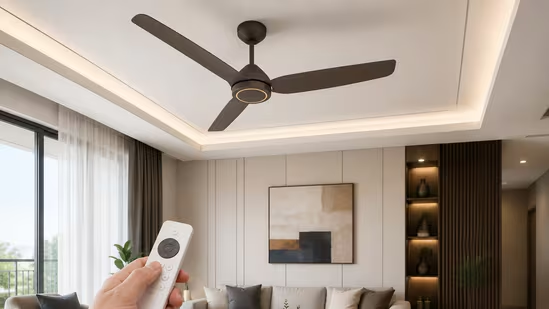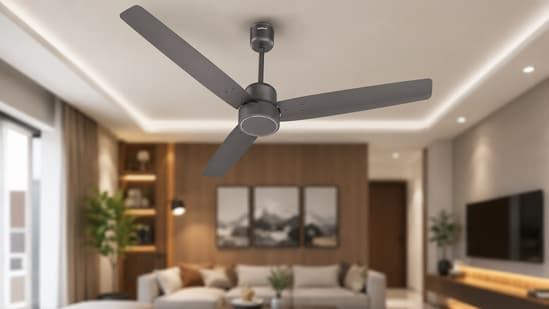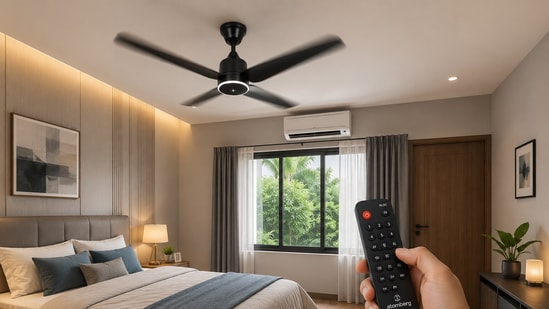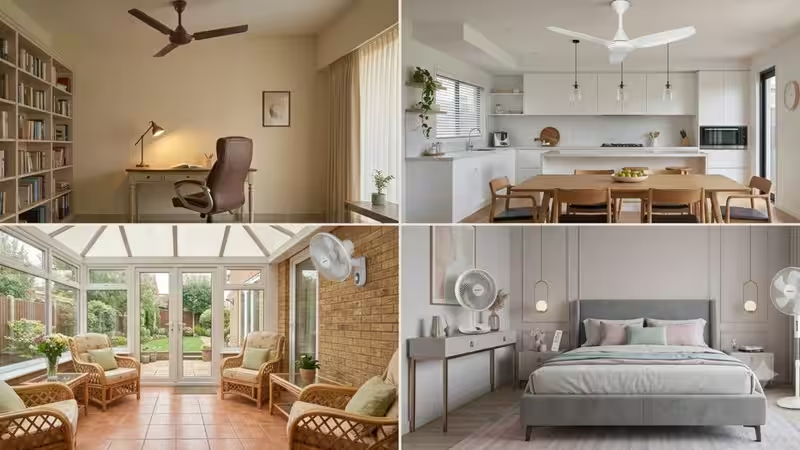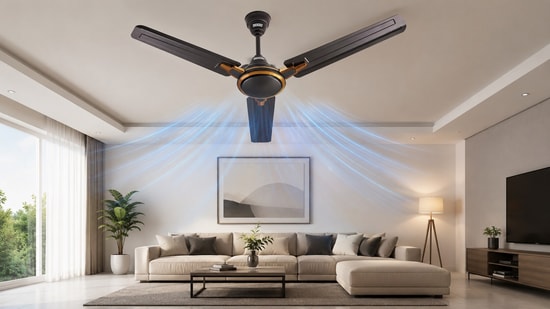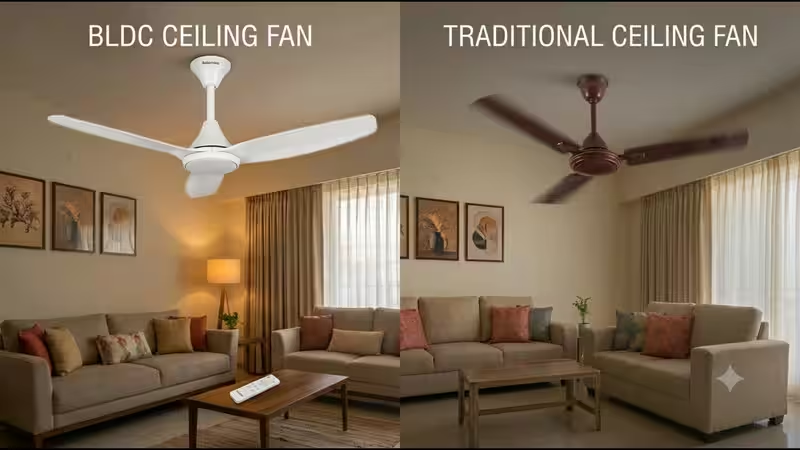
Ceiling fans work harder than most appliances in an Indian home. They run through hot afternoons, continue overnight and often remain switched on even when an air conditioner is operating.A fan does not necessarily consume the most electricity in a house. Appliances such as air conditioners, water heaters and refrigerators can draw substantially more power. However, the number of hours for which a ceiling fan runs means that even a modest difference in wattage can add up over several years.This is the main reason BLDC fans have become popular. A typical BLDC ceiling fan draws around 28W to 35W at full speed, while many regular ceiling fans consume between 45W and 75W, depending on their motor, blade design and BEE rating.The trade-off is straightforward. BLDC fans generally cost more to buy, contain an electronic motor controller and may be more expensive to repair outside warranty. Regular fans are cheaper, mechanically simpler and supported by almost every local electrician.The right choice therefore depends on how frequently the fan will be used, rather than the motor technology alone.BLDC Fan vs Regular Fan: What Is Actually Different?A regular ceiling fan generally uses a single-phase AC induction motor with a capacitor. The motor receives alternating current from the household electricity supply, while a wall regulator changes the amount of power reaching the fan.A BLDC fan uses a permanent-magnet motor and an electronic controller. The household AC supply is converted and electronically switched through the motor windings to manage speed. This design reduces energy losses and allows the motor to operate more efficiently.One common explanation about these motors is incorrect. A regular ceiling fan does not normally use a brushed motor. Both conventional induction ceiling fans and BLDC fans can operate without carbon brushes. The important difference lies in how the motors are built and controlled.Trending StoriesFeatureBLDC ceiling fanRegular ceiling fanMotor systemPermanent-magnet BLDC motor with electronic controllerAC induction motor with capacitorTypical full-speed consumptionAround 28W to 35WAround 45W to 75WSpeed controlRemote, app or compatible regulatorWall regulatorBEE ratingCommonly available with a 5-star ratingVaries by modelInverter runtimeLonger because of lower wattageShorter at the same battery capacityMotor noiseUsually lowerElectrical hum may be more noticeableUpfront costHigherLowerRepair processMay require authorised serviceUsually easier for local electriciansSmart featuresCommonUncommonBest suited toFrequently used roomsOccasional-use rooms and tight budgetsHow Much Electricity Can a BLDC Fan Save?The saving depends on the two fans being compared.A 35W BLDC fan does not automatically save 65 per cent against every regular ceiling fan. Such claims usually compare the BLDC model with an older or less efficient fan that draws around 75W to 90W.The difference will be smaller when a 35W BLDC model is compared with a newer regular fan consuming between 46W and 52W. The saving can still be meaningful if the fan runs for several hours every day.Here is the estimated electricity consumption when a fan operates at its rated maximum power:Rated powerEight hours a dayTwelve hours a day35WAbout 102 units a yearAbout 153 units a year46WAbout 134 units a yearAbout 201 units a year52WAbout 152 units a yearAbout 228 units a year75WAbout 219 units a yearAbout 329 units a yearOne electricity unit is equal to one kilowatt-hour.A 35W fan used for 12 hours a day would consume around 74 fewer units a year than a 52W fan. Compared with a 75W conventional fan, the annual difference would increase to around 175 units.Actual consumption will vary because fans do not always operate at full speed. The final saving will also depend on the local electricity tariff, seasonal usage and the difference in purchase price.RPM or CMM: Which Number Matters More?RPM tells you how quickly the fan blades rotate. CMM, or cubic metres per minute, measures the volume of air delivered by the fan.A fan with a higher RPM does not automatically produce better airflow. Blade width, blade pitch, sweep, motor torque and aerodynamic design all affect how much air reaches the room.A well-designed fan may move more air at a lower speed than another fan with narrower or less efficient blades.CMM is therefore the more useful number when comparing airflow, particularly when the fans have the same sweep size. RPM remains relevant, but it should not be considered on its own.Airflow efficiency can also be calculated by comparing CMM with power consumption. A fan delivering 230 CMM while consuming 35W provides around 6.57 CMM per watt. A fan delivering 215 CMM while consuming 52W provides around 4.13 CMM per watt.The first fan is not necessarily better in every area, but it converts electricity into airflow more efficiently.What Should You Check Before Buying a Ceiling Fan?Power consumptionLook for the rated wattage at full speed. Do not rely only on broad phrases such as “energy saving” or “up to 65 per cent lower consumption”.The percentage saving depends on the fan used for comparison.Air deliveryCheck the CMM figure. For a standard 1200mm fan, an air-delivery figure of around 210 CMM or above should be adequate for many average-sized bedrooms.Room shape, ceiling height, ventilation and blade clearance will also influence how the airflow feels.Sweep sizeA 1200mm fan is commonly used in bedrooms and medium-sized rooms. Larger rooms may require a 1400mm fan or more than one ceiling fan.A fan that is too small for the room may need to operate at its highest speed more frequently.BEE ratingCheck the BEE label attached to the exact model or SKU. Manufacturers sometimes sell visually similar fans with different power ratings, motors and star ratings.Do not assume that every model under the same series name has identical specifications.ControlsMany BLDC fans use a remote instead of a conventional wall regulator. Some support both types of controls, but buyers should not assume that a standard electronic regulator will work.Check the installation instructions before fitting the fan.Warranty and service networkA longer warranty can be useful with BLDC fans because the motor controller is more complex than the capacitor-based system used in a conventional fan.Check whether the warranty covers the motor and electronic controller, whether home service is available and whether extended coverage requires online product registration.Popular BLDC Ceiling FansAtomberg Renesa Smart BLDC Ceiling FanThe Atomberg Renesa Smart is aimed at buyers who want energy efficiency along with connected features.Its 35W BLDC motor runs at up to 360 RPM and delivers around 235 CMM of air. It includes six speed settings, Boost and Sleep modes, remote control, Bluetooth connectivity and support for the Atomberg app.Selected versions also support Alexa and Google Assistant. The fan is designed to maintain relatively stable performance across a wide voltage range, making it useful in homes that experience voltage fluctuations.These smart controls make the Renesa Smart more capable than a basic remote-controlled fan, but they also make it more complex. Buyers who do not need app or voice controls may be better served by a simpler BLDC model.Key specifications35W BLDC motorBEE 5-star rating1200mm sweepUp to 360 RPMAround 235 CMM air deliverySix speed settingsBoost and Sleep modesRemote and app controlsVoice-assistant support on compatible versionsThree-year product warrantyWide operating-voltage rangeBest for: Buyers who want smart-home controls, low electricity consumption and stable operation during voltage fluctuations.EcoLink AiroQuad 3B BLDC Ceiling FanThe EcoLink AiroQuad 3B combines the speed associated with a conventional high-speed ceiling fan with the lower power consumption of a BLDC motor.The 1200mm fan consumes 35W and delivers 230 CMM of air at 370 RPM. This gives it an estimated airflow efficiency of around 6.57 CMM per watt, considerably higher than the regular fans in this comparison.The fan includes remote-based controls and a modern canopy and blade design. EcoLink sells multiple products under the AiroQuad name, including three-blade and four-blade versions, so buyers should check the specifications of the exact model before ordering.Warranty terms may also differ between models and sellers. Extended coverage may require product registration.Key specifications35W BLDC motor1200mm sweep370 RPM230 CMM air deliveryRemote controlEnergy-efficient operationExtended warranty available on eligible models and registrationsBest for: Buyers who want the speed of a conventional high-speed fan with lower electricity consumption.Affordable Regular Ceiling FansCrompton Surebreeze Sea Sapphira Ceiling FanThe Crompton Surebreeze Sea Sapphira is a simple regulator-controlled ceiling fan. It does not offer an app, remote, timer or smart-home integration.Its main advantages are the lower purchase price and conventional motor design, which most local electricians can service.Different Sea Sapphira listings have appeared with different specifications. Older versions have been listed at around 51W, 380 RPM and 210 CMM, while newer BEE-rated versions may use around 46W and run at approximately 390 RPM with the same 210 CMM air delivery.Buyers should check the wattage, BEE label and model code of the exact unit being purchased.The 46W version is reasonably efficient for a conventional fan, although it still consumes about 31 per cent more electricity at full speed than a 35W BLDC model.Key specifications for the newer 1-star version46W induction motor1200mm sweepAround 390 RPM210 CMM air deliveryBEE 1-star ratingCopper motor windingDouble ball bearingsWall-regulator controlTwo-year warrantyBest for: Buyers seeking a simple and affordable fan for a guest room, rented property or occasionally used space.Havells Ambrose ES Ceiling FanThe Havells Ambrose ES places more emphasis on design than many regular ceiling fans. Its metallic and wood-style finishes make it suitable for rooms where the fan is intended to complement the furniture and interior décor.Underneath the decorative finish, it remains a conventional regulator-controlled fan.The Ambrose ES uses a 52W induction motor and delivers around 215 CMM at approximately 390 RPM. It uses a copper-wound motor and carries a BEE 1-star rating.Its airflow is slightly higher than that of the Crompton Sea Sapphira, but its power consumption is also higher. At around 4.13 CMM per watt, it is the least energy-efficient of the four models compared here.Key specifications52W induction motor1200mm sweepAround 390 RPM215 CMM air deliveryBEE 1-star ratingCopper motor windingDecorative trims and finish optionsWall-regulator operationTwo-year warrantyBest for: Buyers who prioritise a decorative design and traditional wall-regulator operation over maximum energy efficiency.BLDC Fans vs Regular Fans: Model ComparisonFanTypePowerAir deliverySpeedApproximate airflow per wattAtomberg Renesa SmartBLDC35W235 CMM360 RPM6.71 CMM/WEcoLink AiroQuad 3BBLDC35W230 CMM370 RPM6.57 CMM/WCrompton Sea SapphiraRegular46W210 CMM390 RPM4.57 CMM/WHavells Ambrose ESRegular52W215 CMM390 RPM4.13 CMM/WThe figures show why RPM alone can be misleading. Both regular fans rotate faster than the Atomberg Renesa Smart, yet the Atomberg delivers more air while consuming considerably less power.The EcoLink AiroQuad 3B also comes close to the conventional fans in terms of speed while maintaining a clear efficiency advantage.Among the four models, the Atomberg Renesa Smart has the highest airflow-per-watt figure. The EcoLink AiroQuad 3B follows closely and operates at a slightly higher speed.BLDC Fans vs Regular Fans: Pros and ConsThe lower electricity consumption of a BLDC fan makes it attractive, but energy efficiency is not the only factor that matters. Purchase price, repair costs, controls, service support and room usage should also influence the decision.Pros of BLDC FansLower electricity consumption: Most BLDC fans use around 28W to 35W at full speed, compared with approximately 45W to 75W for many regular fans.Lower running costs: The reduction in power consumption can produce meaningful savings when the fan runs for several hours every day.Longer inverter backup: A BLDC fan draws less power, allowing it to run for longer during a power cut when connected to the same inverter battery.Remote-control operation: Most models include remote-based speed controls, timers, Sleep modes and Boost modes.More consistent speed: Several BLDC fans are designed to maintain relatively stable performance during voltage fluctuations.Lower motor noise: BLDC motors generally produce less electrical hum than conventional induction motors.Better airflow efficiency: A well-designed BLDC fan can deliver as much or more air than a regular fan while consuming less electricity.Modern features: Select models include app controls, voice-assistant support, LED indicators and reversible rotation.Cons of BLDC FansHigher purchase price: BLDC fans generally cost more than comparable regular ceiling fans.More complex repairs: A failed electronic controller, receiver or motor driver may require authorised servicing.Potentially higher repair costs: Replacing an electronic control board can cost more than replacing the capacitor in a conventional fan.Dependence on a remote: Some models cannot be fully controlled using a traditional wall regulator, making a lost or damaged remote inconvenient.Limited regulator compatibility: Many remote-controlled BLDC fans should not be connected to an ordinary electronic wall regulator.Savings depend on usage: A BLDC fan installed in a rarely used room may take several years to recover its higher purchase price.Service coverage varies: Smaller brands may not have the same service reach or spare-part availability across India.Pros of Regular Ceiling FansLower upfront cost: Regular fans are usually more affordable and available across a wider range of price points.Simple operation: They work with familiar wall regulators and do not require a remote, app or pairing process.Easy repairs: Most local electricians can replace the capacitor, bearings or regulator without specialised equipment.Widely available spare parts: Components for conventional fans are generally easy to source.Suitable for occasional use: They can offer better value in guest rooms, storage rooms or other spaces where the fan runs infrequently.Large choice of designs: Buyers can choose from basic, decorative, high-speed and premium-finish models.Lower dependence on electronics: A conventional induction fan contains fewer electronic components that can fail.Cons of Regular Ceiling FansHigher electricity consumption: Most regular fans consume more power than comparable BLDC models.Higher long-term running costs: The lower purchase price can be offset by larger electricity bills over several years.Shorter inverter runtime: Higher power consumption drains the inverter battery more quickly.Fewer convenience features: Remote controls, timers, Sleep modes and app support are uncommon.More noticeable motor hum: Conventional motors may produce more electrical noise, particularly as the fan ages.Performance may fall during low voltage: Some regular fans slow down noticeably when household voltage drops.Lower airflow efficiency: A high RPM figure does not necessarily mean better air delivery, and some regular fans consume substantially more power for similar airflow.Pros and Cons at a GlanceFactorBLDC fanRegular ceiling fanPurchase priceHigherLowerElectricity consumptionLowerHigherLong-term running costLowerHigherInverter backupLongerShorterRemote and timerCommonUncommonRepairsMore specialisedSimplerSpare-part availabilityDepends on the brandWidely availableWall-regulator supportModel-dependentStandardVoltage stabilityOften betterVariesBest use caseFrequently used roomsOccasionally used roomsVerdict: Should You Buy a BLDC Fan or a Regular Fan?Buy a BLDC fan for a bedroom, living room, study or any other space where the fan runs for several hours every day.Its lower electricity consumption will reduce long-term power use, while remote controls, timers and longer inverter backup make it more convenient. The higher purchase price becomes easier to justify when the fan is used regularly.The Atomberg Renesa Smart is the strongest option in this comparison for buyers who want app controls, voice-assistant support and protection against voltage fluctuations.The EcoLink AiroQuad 3B is better suited to someone who wants high speed and strong airflow without moving to a conventional induction fan.A regular ceiling fan still makes sense in a guest room, storage room, rented property or another space where usage is limited.The Crompton Sea Sapphira offers a simple and relatively economical package. The Havells Ambrose ES is better suited to buyers who place greater importance on decorative styling.The decision should not be based only on the words “BLDC” or “high speed”. Compare the exact wattage, CMM rating, sweep, BEE label, controls, warranty and local service availability.Those figures will tell you more about a fan’s performance and long-term value than the motor name printed on the box. FAQsAre BLDC fans worth the higher purchase price?BLDC fans are usually worth considering for rooms where the fan runs for several hours every day. Their lower electricity consumption can recover the additional purchase cost over time. The payback period will depend on usage, local electricity tariffs and the price difference between the BLDC fan and the regular model being compared.Do BLDC fans provide less airflow than regular fans?No. The motor type does not determine airflow by itself. Blade design, sweep, pitch, speed and motor torque all influence air delivery. Several BLDC fans provide as much or more airflow than regular fans while consuming less electricity.Is higher RPM always better?No. RPM measures how quickly the blades rotate, not the amount of air reaching the room. CMM is the more useful airflow figure. A fan with a lower RPM can still deliver more air if its blades and motor are designed more efficiently.Can BLDC fans run on an inverter?Yes. Their lower power consumption generally allows them to run for longer on the same inverter battery. The actual improvement in backup time will depend on the battery capacity, fan speed and the other appliances connected to the inverter.Can a BLDC fan use a normal wall regulator?Some models can, but many remote-controlled BLDC fans are designed to receive a constant power supply. Connecting such a fan to a conventional electronic regulator can cause speed-control problems or affect performance. Buyers should follow the installation instructions supplied with the exact model.Are BLDC fans completely silent?No ceiling fan is completely silent. BLDC motors generally produce less electrical hum than induction motors, but blade movement and air turbulence will still create noise, particularly at full speed.Are regular ceiling fans still worth buying in 2026?Yes. Regular fans can still be a sensible choice for occasional-use rooms or buyers with a strict upfront budget. However, a BLDC model is usually the better long-term choice for rooms where the fan runs throughout the day or night.Which fan has the best airflow in this comparison?The Atomberg Renesa Smart has the highest listed air delivery at approximately 235 CMM. The EcoLink AiroQuad 3B follows at around 230 CMM.Which fan is the most energy-efficient?Based on the published power and airflow figures, the Atomberg Renesa Smart provides the highest airflow per watt, followed closely by the EcoLink AiroQuad 3B.How long does a BLDC fan take to recover its higher price?There is no fixed payback period. It depends on how much more the BLDC model costs, how many hours the fan runs each day and the electricity tariff in the buyer’s area. A fan used throughout the day will recover the difference sooner than one used only occasionally.Does a 5-star rating guarantee better airflow?No. A BEE star rating primarily measures energy efficiency. A 5-star fan may use less electricity, but buyers should still check its CMM air-delivery figure, sweep and RPM to understand its actual airflow performance.end of article
BLDC Fan vs Regular Ceiling Fan: Which One Saves More Power and Which Should You Buy?
Ceiling fans consume significant electricity, prompting interest in energy-efficient BLDC models. BLDC fans use less power, offering lower running costs and longer inverter backup. Regular fans are cheaper upfront and easier to repair locally. The choice depends on usage frequency and budget considerations. Comparing wattage, air delivery, and BEE ratings ensures informed purchasing decisions.
2,980 words~14 min read